 BBBAccredited Business

Kaminskiy Care and Repair patches stucco cracks and chips and matches the existing texture so the repair blends in. Hairline cracks are cosmetic; widening or bulging ones deserve a call, and the quote is free either way. We serve Palm Desert and the surrounding California communities. Wood, fiber cement, T1-11 and vinyl siding, fascia and trim have their own page: siding repair in Palm Desert.
Our office is on Highway 111. Sun chalking, parapet caps and drip-line damage lead the Palm Desert stucco list.
Palm Desert is a stucco city, and the desert works on it from two directions. Highs above 108 chalk the finish and powder the paint on the south and west walls, the blowing sand scours the north-side homes, and then the drip emitters at the base and the late-summer monsoon storms put water into every open hairline and over every flat parapet cap. We cut the chalked and hollow sections back to sound lath, rebuild them in three coats, recap the parapets and sills, and match the texture and the club's color, from our office on Highway 111.
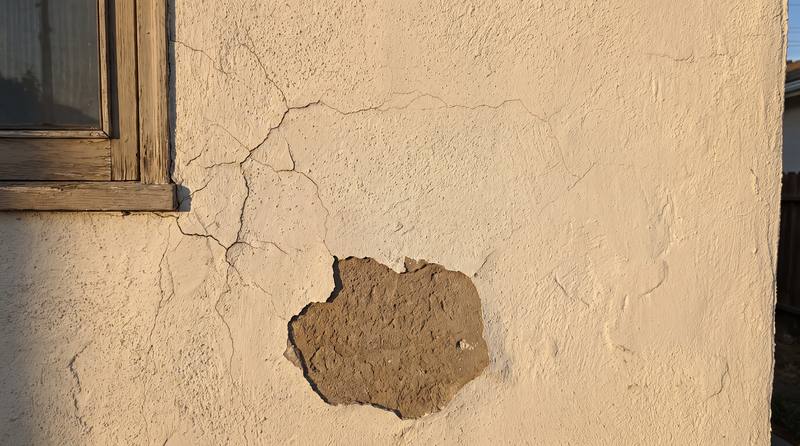
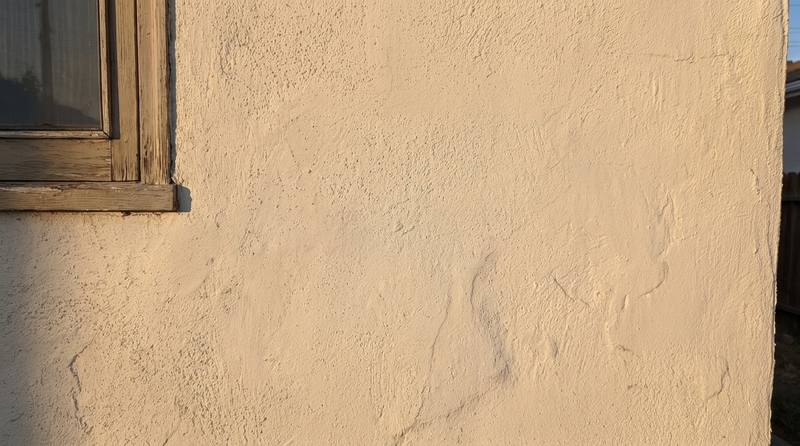 AFTERBEFORE
Each of these is a repair, not a re-stucco, for a Kaminskiy-certified technician who starts the day on Highway 111. One look, a written scope, and three coats kept damp through the cure the desert tries to skip.

Priced and on the calendar during the first call.

A written quote you approve before anyone drives out.

Three coats, each one cured, warranty in writing.
A one-year workmanship warranty, in writing, on every Palm Desert stucco repair.
The sun does half the damage and the water does the rest. Highs above 108 pull the oil out of paint and the moisture out of a stucco finish, so the south and west walls chalk and powder years before the shaded sides, and the blowing sand on the north side of the city scours what the sun left. Once the paint is gone, every hairline is open, and the late-summer monsoon storms drive water into them and across every flat parapet cap. At the base, the drip emitters run against the wall all summer with nobody home, the weep screed is buried under decomposed granite and planter soil, and wet paper behind the stucco is where a wall goes soft or hollow.
A hairline off a window corner, or a fine crack along a foam trim joint, is the wall moving with the heat: seal it and watch it. Call about a crack that takes a dime, a crack along the top of a parapet, a stretch that sounds hollow when you knock, a stain under a cap or a sill that returns after every storm, or a base course that gives under a screwdriver at the emitter. A crack that follows a settling foundation or a dropped header is an engineer's question first and our finish work after.
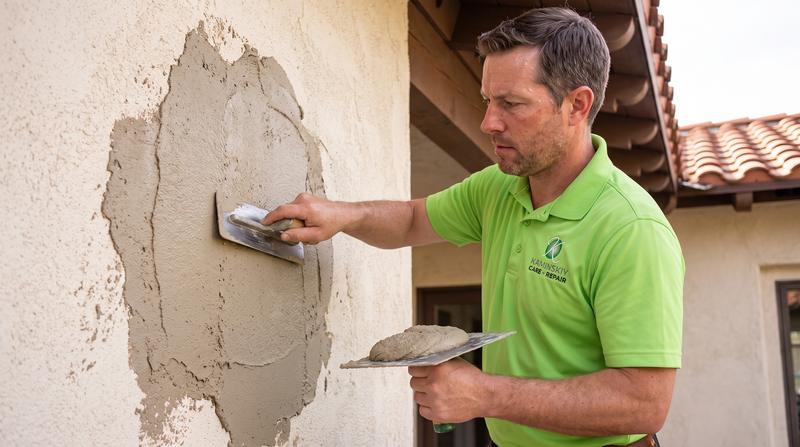
The wall was built in three coats and the patch is too. We cut the chalked or loose stucco back to sound lath, replace torn paper and rusted lath, and put on a scratch coat, a brown coat and a finish coat floated or dashed to match the texture around it. Each coat has to cure before the next goes on, and in the desert that means shading and misting the fresh coat so it sets instead of baking and cracking, so a patch comes in visits spaced days apart, not one afternoon. A hole filled and painted in one stop has skipped two coats and shows a ring by the next summer.
Paint is the wall's sunscreen, so repaint the south and west walls with an elastomeric or a good acrylic before the old paint chalks through, and expect the sun sides to need it more often than the rest. Keep the parapet and sill caps sloped and sealed so the monsoon rain sheds. Move the drip emitters off the wall and rake the granite and planter soil down until the weep screed shows. For a seasonal home, put the walls on the list we check before you come back in October, because a soft spot found then is a patch, not a re-lath.
Mid-century and 1970s homes with three-coat stucco over wood frame, flat or low rooflines with stucco parapets, and fifty desert summers on the finish. The parapet caps crack along their length and let water into the top of the wall, the sun side chalks and powders, and the base course softens where the planter irrigation reaches. We rebuild the caps with a slope to shed, cut back and re-lath the soft sections, and match the sand or dash finish so the repair reads as original.
Villas and stacked condominiums behind a gate, under an architectural committee, many of them empty from May to October while the drip emitters keep running against the walls. The work is the soft base at the emitter, the chipped corner at the garage, the crack at the fairway slider header, and the stucco at a balcony edge the inspection report flagged, all matched to the club's color and texture with the scope in writing for the committee, and photos sent before you fly in.
Newer stucco homes with foam trim, many with one-coat systems, in the windiest part of the valley where the blowing sand scours the finish and the paint off the corners. Cracks at every foam trim joint, corners sanded dull, a chip at the garage, and the patch after a plumber opened a wall, each one blended to the association's color with the materials in writing for the form.
Call 760-284-6993 or text a picture of the crack, the cap or the soft base with a hand or a coin for scale; a house manager can send them for a seasonal home. Most Palm Desert stucco repairs get a range on the call and a date for the look.
A technician knocks the wall for hollow spots, checks the parapet and sill caps, the weep screed and the emitters, opens a soft section far enough to see the lath, and writes the scope: the cut-back, the coats, the texture and the club's color, and whether an engineer needs to look. The price is on it.
Cracks cut and filled, caps rebuilt to shed, soft sections cut back to sound lath with new paper and lath, then scratch, brown and finish coats, each one shaded, kept damp and cured before the next, in visits spaced for the cure.
The finish is floated to match and the color blended or the wall painted out to a corner in the approved scheme, the debris leaves with us, photos go to you or the house manager, and the one-year workmanship warranty is on the invoice at the price you approved.
California lets anyone take a repair under a set small amount without a license, as long as it needs no permit and nobody is employed to do it; that covers sealing a hairline and not a cut-back patch with new lath and three coats. Kaminskiy Care and Repair holds a California contractor license (License #1106209), carries the insurance, and puts every job over the state's written-contract threshold on paper before the first coat, which is why even a small patch comes priced in writing.
Palm Desert adopts the state residential code with its own amendments, and those amendments are about sheds, fences and retaining walls, not repairs: the code's ordinary-repairs clause stands as the state wrote it, so filling cracks, patching a hole or a hollow section, recapping a parapet and matching texture and color need no application, and painting is exempt outright. Cutting a structural member is a full permit, and replacing the paper and lath across a large section of wall is where we ask the city first and tell you what it said.
Much of Palm Desert lives behind a gate with an architectural committee, and the city can defer to it. A stucco patch finished to the club's color and texture rarely needs more than a note to the association; a new color or a changed profile goes to the committee, and we put the materials and finish in writing for it. Where the units stack, California requires the association to have the balconies, decks and railings inspected, and the stucco at a balcony edge the report flags is scoped with that carpentry, not around it.
Our office is on Highway 111. The Palm Desert crew starts the day at 74-710 Highway 111, which is why a call anywhere in the valley is usually on the calendar within days, seven days a week. Call 760-284-6993, text a photo, or send the form.
Can't find your answer? Call 760-284-6993 and ask us anything.
Call 760-284-6993Three coats, each one cured before the next, so it runs across visits. After the loose stucco is cut back and the lath is repaired, the scratch coat goes on and sets, then the brown coat and its cure, then the finish coat floated to match the wall. In the desert each coat is shaded and kept damp so it cures instead of baking, and each needs days before the next, so a patch is a day of work spread over a few visits. In summer we start early. The visits are on the written scope before we start.
The texture will, because we match the sand, dash or lace finish already on the house and carry the patch to a corner or a trim line where we can. Color is the harder half on a wall the desert sun has faded, and in a club it also has to be the approved color, so we blend into the patch or paint the wall out to a natural break in the scheme, and we tell you which before the finish coat goes on.
Not about a hairline off a window corner or a fine crack along a foam trim joint; those are the wall moving with the heat, and sealing them before the monsoon season is enough. Worry about a crack that takes a dime, a crack along the top of a parapet, a hollow sound when you knock, a stain under a cap that returns after every storm, or a base course that gives under a screwdriver at the emitter. Those get a look, and a crack that follows the foundation gets an engineer first.
No. EIFS is foam board with a thin base coat and mesh, and it has to be repaired with that system's materials by its certified installer or the drainage plane and the warranty are gone. Foam trim on a cement stucco wall is not EIFS, and we do fix that. If a Palm Desert home turns out to have a true EIFS wall, we tell you on the call and point you to the right installer.
It depends on how much is chalked or loose, whether the paper and lath behind it need replacing, how many caps are involved, and how the color will be handled. Text a photo with a hand in it for scale, or have the house manager send one, and we give a range on the call; the look turns it into a written scope with the cut-back, the caps, the coats and the color plan priced before any stucco is removed. The scope you approve is the invoice you or your house manager will see.
Yes. Every stucco repair carries a one-year workmanship warranty in writing and is done by Kaminskiy-certified, background-checked technicians under California contractor License #1106209, bonded and insured.
Yes, and it is a regular October job for us. We walk the walls, knock for hollow spots, check the parapet and sill caps after the monsoon storms, look at the base of every wall where the drip emitters ran all summer, and send you photos and a written scope. The small items get patched before you land; anything that needs three coats is scheduled so the last coat is on before you arrive, or worked around you if it is not.
All of Palm Desert from our office on Highway 111, including Palma Village, Shadow Mountain, Cahuilla Hills, Bighorn, Ironwood, Indian Ridge, Desert Willow and University Park, plus Rancho Mirage, Indian Wells, La Quinta, Bermuda Dunes and Sun City Palm Desert. Call 760-284-6993 to confirm your address.
Send a photo of the wall and the address. We call back with a written price and the visits it takes. Calling is still fastest: 760-284-6993.
Priced on the call, blended to match, warranted in writing.
We answer in under three rings, 24/7.No price games. You get a clear written quote before any work begins, backed by our workmanship warranty.
