 BBBAccredited Business

Kaminskiy Care and Repair repairs commercial doors on commercial and multi-unit property. Our commercial door repair and commercial door installation cover swinging doors and their hardware: storefront and entry doors, back-of-house doors, apartment unit doors, closers, exit devices, thresholds, locks and keypad locks, plus in-kind fire door replacement. Work is scoped in writing and scheduled around occupancy. Glass, automatic operators, roll-up doors and wired access control go to their own trades. For a dragging entry, see storefront door repair. Doors and hardware is one category of our commercial handyman services.
The entry sets the first impression and carries the most traffic. Sagging and dragging glass entries are handled as storefront door work. A hollow metal or wood door that has rusted, split or been pried is replaced outright. The push bars on the exits are serviced as exit devices. All three are scheduled before opening or after closing, so the public never meets a door off its hinges.
Behind the sales floor, doors take carts, weather and break-in attempts. Rusted bottoms, bent frames and torn hinges are back-of-house door repair, set out further down this page. The gap that lets pests under the delivery door is closed with threshold and sweep replacement. Labeled mechanical and stair doors follow the fire door rules below.
Between tenants, managers send door lists. Damaged apartment doors are tenant unit door replacement. Worn locksets and deadbolts are swapped and fitted as lock replacement at turnover, and doors that should run on codes get standalone keypad locks.
Send a door list by building, suite or unit, or ask for a walk. We group the doors by type so the right parts and the right technician arrive together.
Every door gets its own line: what is wrong, what will be done, which parts, what price. Items that belong to a glazier, a locksmith or a fire alarm contractor are marked as theirs.
Entries are done before opening, back doors between deliveries, unit doors while vacant, corridors when traffic is lightest. A door is not left off its hinges overnight.
Each door is cycled, latched and, where it applies, timed or push-tested. You receive photos and a parts record sorted the same way as your list.
Model building codes expect an occupied building's exit doors to open from inside without a key, a code or special effort, and the International Building Code (2021, section 1010.2.1) limits unlatching to one motion. That governs what locks, bolts and bars may go on a door. Most jurisdictions adopt some edition of the IBC, and the building official interprets it.
The 2010 ADA Standards (section 404) deal with clear width, thresholds, hardware that works without tight grasping, closing speed and opening force. We install and adjust to those dimensions and correct items an access report lists; we do not survey or certify a property. Lever and hardware corrections have their own page: ADA door hardware and lever installation.
Labeled fire doors are a system governed by NFPA 80, which the model building and fire codes reference. They must close and latch unaided, keep their labels and be inspected yearly by a qualified person. We replace them in kind and repair what a report lists, as set out under fire-rated door installation. In rental units, door work often pairs with smoke and CO alarm replacement.
Sources for the rules on this page: International Building Code (2021), sections 1010.2 and 1010.2.1; 2010 ADA Standards for Accessible Design, sections 404, 404.2.5 and 303; OSHA exit routes standard, 29 CFR 1910.36(d)(1); NFPA 80 (2010 edition), as quoted on the Kansas State Fire Marshal Fire Door Checklist, Form 817; FDA Food Code, section 6-202.15, as adopted in Minnesota Rules 4626.1395; International Building Code (2021), section 716.1; International Fire Code (2021), section 705.2.
Kaminskiy Care and Repair repairs the swinging doors customers never see: receiving and rear exit doors, and utility, janitor and mechanical room doors. They fail where they are hit. Bottom seams rust, frames spread at the strike, hinge screws strip and pry bars chew the lock edge. A technician re-anchors the frame, caps a rusted bottom with a steel channel, through-bolts the hinges or fits a continuous hinge, and adds a latch guard and a kick plate. One rule governs the security work: OSHA's exit routes standard (29 CFR 1910.36(d)(1)) has an exit route door open from inside at all times without keys, tools or special knowledge. So a back door is hardened on its outside face, never with a padlock or a drop bar.
Yes, we repair the double-acting doors between a commercial kitchen and the dining floor. They hang on gravity pivots or spring hinges and take a tray or a hip all shift, so they sag, stop returning to center and open a gap where the two leaves meet. We replace pivots, springs, bumpers and impact plates and reset both leaves to center. A door body cracked through is ordered from its maker and hung by us. Window panels arrive in the new door; cutting glass or acrylic is not our work. Roll-up counter shutters and coiling grilles beside the pass belong to an overhead door company.
Kaminskiy Care and Repair replaces the parts that seal the bottom of a commercial door: saddle and bumper thresholds, door sweeps, automatic door bottoms and the weatherstrip around the frame. It cures rain tracking inside, entry drafts and a threshold that rocks under a cart. We level and seal the sill, anchor the new threshold and set the sweep to touch without dragging. Height is the limit: the 2010 ADA Standards (section 404.2.5) cap a threshold at 1/2 inch, beveled above the first 1/4 inch, or 3/4 inch for an existing or altered threshold beveled on each side. Strips between rooms are floor transition strip work; a step that needs a ramp is threshold ramp installation. Sill grinding goes to a concrete contractor.
A strip of daylight under a door is usually a worn sweep, and it is what a pest control report or a health inspector writes up. The FDA Food Code (section 6-202.15), which many state and local health departments adopt, has the outer openings of a food establishment protected by solid, self-closing, tight-fitting doors. It gives no gap in inches, so the inspector judges. We close the gap until no light shows from inside with the lights off, confirm the closer still latches the door against the new seal, and photograph the result. On a labeled fire door only gasketing and sills listed for rated openings are used.
Each card below is its own page with its own scope. If your list spans several, send it whole and we sort it.
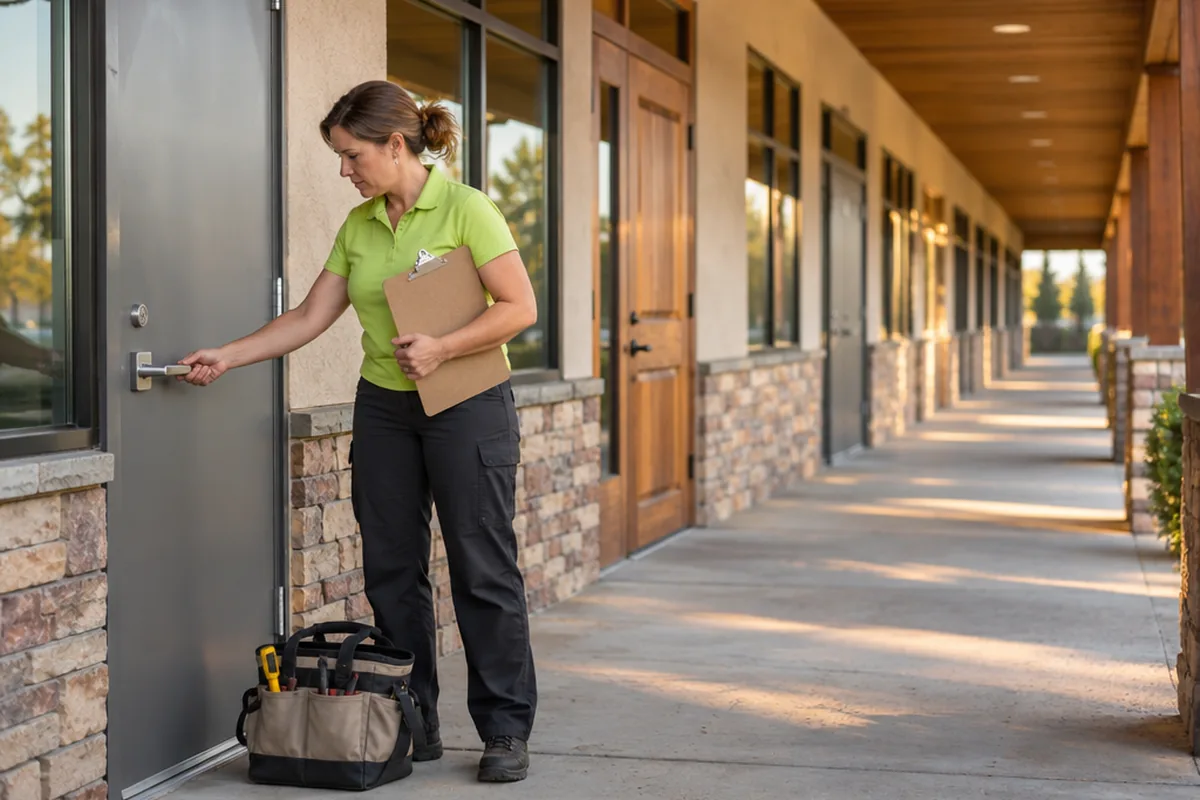
For a new property we often begin by walking every common and exterior door with the manager. Each one is opened, closed and locked. What we find is written up by door number: closers that slam, closers that need replacing, latches that miss, sweeps worn through, labels painted over. You decide what gets done first, and the list becomes the maintenance baseline.
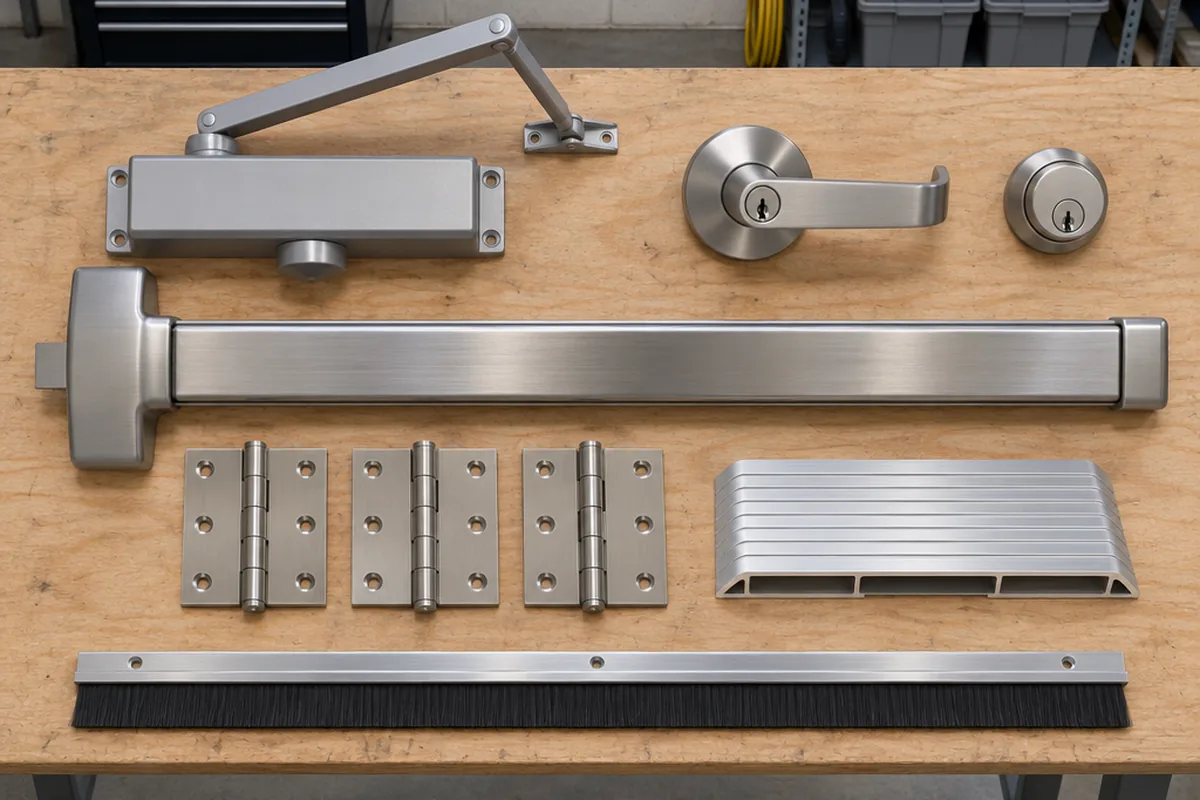
Six complaints, one vendor. Send the list as it stands and we sort it into scopes, flag what belongs to another trade and schedule the rest around the people in the building.

Send your door list by building or suite, or ask us to walk the property with you.

You receive a written scope with a line and a price for every opening.

Doors are corrected in a planned sequence, and the photo record comes back sorted by your list.
The work is backed in writing by our workmanship warranty and done by a Kaminskiy-certified, background checked technician.
Hinges, closer, latch, frame and threshold depend on one another. A closer cannot latch a door that sags on worn hinges, and a new lock will not throw into a strike that has shifted. A vendor who only swaps the part named on the ticket will be back. We check the whole opening first and fix the cause, which is why our scopes sometimes name a different part than the one reported.
Most door problems are repairs: adjust, tighten, replace a worn part. Some are replacement in kind, such as a new entry door in the existing frame or a like-for-like exit device. A few are redesign: a wider opening, a new exit, wired access control. The first two are our work. The third needs a design professional, a permit and specialist trades, and we say so at the start.
A hollow metal door is two steel faces around a core, closed along its lower edge by a channel. Mop water, rain and de-icer collect in that channel, the seam swells and the faces part. Catch it while the skins are still bonded and a steel cap, rust treatment and paint buy the door years. Once the faces have separated, or rust has reached the lock, the slab is finished and a new door is the sound spend.
A gap that is even from hinge to latch is a worn sweep or a low threshold, and new parts close it. A gap that widens toward the latch means the door has dropped on its hinges or pivots. A sweep fitted over that tears within weeks, so the sag is corrected first. Brush inserts ride rough concrete and suit pest exclusion; solid vinyl or silicone fins seal better against water and wear faster.
Closers drift with the seasons. Sweeps wear through. Exit devices loosen. Fire doors are due a yearly inspection by a qualified person under NFPA 80. A property that checks its doors on a calendar spends less than one that waits for complaints. Many of our clients fold doors into a recurring maintenance round with a simple log per opening.
A list by door is enough: location, what it does wrong, and a photo of the whole door plus the trouble spot. Add your hours, the delivery schedule and any inspection report. From that we can usually separate adjustments from parts, name anything that belongs to a glazier, locksmith or licensed low-voltage contractor, and draft most of the scope before anyone drives out.
Can't find your answer? Call 855-695-1195 and ask us anything.
Call 855-695-1195Kaminskiy Care and Repair repairs commercial doors in the markets we serve. Our technicians repair, adjust and replace swinging doors and their hardware: storefront and entry doors, service doors, apartment unit doors, closers, panic bars, thresholds and sweeps, locksets and standalone keypad locks. A glazier handles the glass, an overhead door company handles roll-up doors, and a locksmith cuts the keys.
Yes. Commercial door installation is part of the same service. We hang replacement hollow metal, wood and fiberglass doors in an existing frame or a new one, with hinges, closer, lock prep and threshold, and we replace labeled fire doors in kind. Aluminum and glass storefront systems, automatic operators and roll-up doors are installed by their own trades.
Glass and glazing, automatic door operators, roll-up and overhead doors, wired access control, and key cutting or master keying. Those go to a glazier, the operator's service company, an overhead door company, a licensed low-voltage contractor and a locksmith. We name the right trade on the scope so nothing is left unassigned.
It can be repaired when the rust is confined to the bottom edge and the two steel faces are still bonded. A cap channel, rust treatment and paint keep that door in service. If the faces have come apart or rust has reached the lock area, replacement is the better spend, and we quote it as an entry door installation.
The frame. Once the opening is secured, we repair in this order: frame anchors and the strike jamb, then the latch and strike, then a latch guard over the gap. A bar or padlock added inside is the usual reaction, and it turns an exit into a locked door. The repair makes the door hard to force from outside and free to open from inside.
Any gap that shows daylight is worth closing, for pests and for weather. On a labeled fire door the figure is firm: NFPA 80 limits the clearance under a swinging fire door to 3/4 inch, quoted here from the 2010 edition as a state fire marshal's inspection form reproduces it. We measure both ends of the door and name the parts that will close the gap.
Yes. Send a list by building and suite. We group the work by door type and location, schedule it in rounds and return the photo record in the same order as your list. Recurring door checks can be added to a maintenance plan.
No, and no repair company honestly can. We install and adjust to the published dimensions, use listed parts on rated doors and document what we did. Whether an opening is acceptable is decided by the building or fire official, or by an access specialist. Our workmanship itself is warrantied in writing.
By the opening. Each door gets a line stating the work, the parts and the price, so you can approve all of it or part of it. Parts grade, door type and after-hours scheduling affect the figure. Nothing outside the written scope is done without your approval.
Yes. Entries are worked before opening or after closing, back doors between deliveries and unit doors while vacant or with notice. We do not leave an opening without a closing, lockable door at the end of a shift.
Attach the list, any inspection report and a few photos, and tell us the hours each building keeps. We reply with a scope by opening. For a walk-through, call 855-695-1195.
Send the list. Get a scope by opening. Keep the building running while we work.
We answer in under three rings, 24/7.No price games. You get a clear written quote before any work begins, backed by our workmanship warranty.
