 BBBAccredited Business

Kaminskiy Care and Repair replaces lifted, cracked and missing vinyl composition tile (VCT), repairs seams and tears in sheet vinyl, and resets rubber tile in schools, clinics, stores and back rooms. Work is done after hours, piece by piece, with new material matched as closely as the lot allows. Floor tile, sheet backing and black adhesive from the asbestos era are tested by a lab before anything is disturbed, and a licensed abatement company removes material that tests positive. Resilient floor repair is part of our flooring services for commercial property.
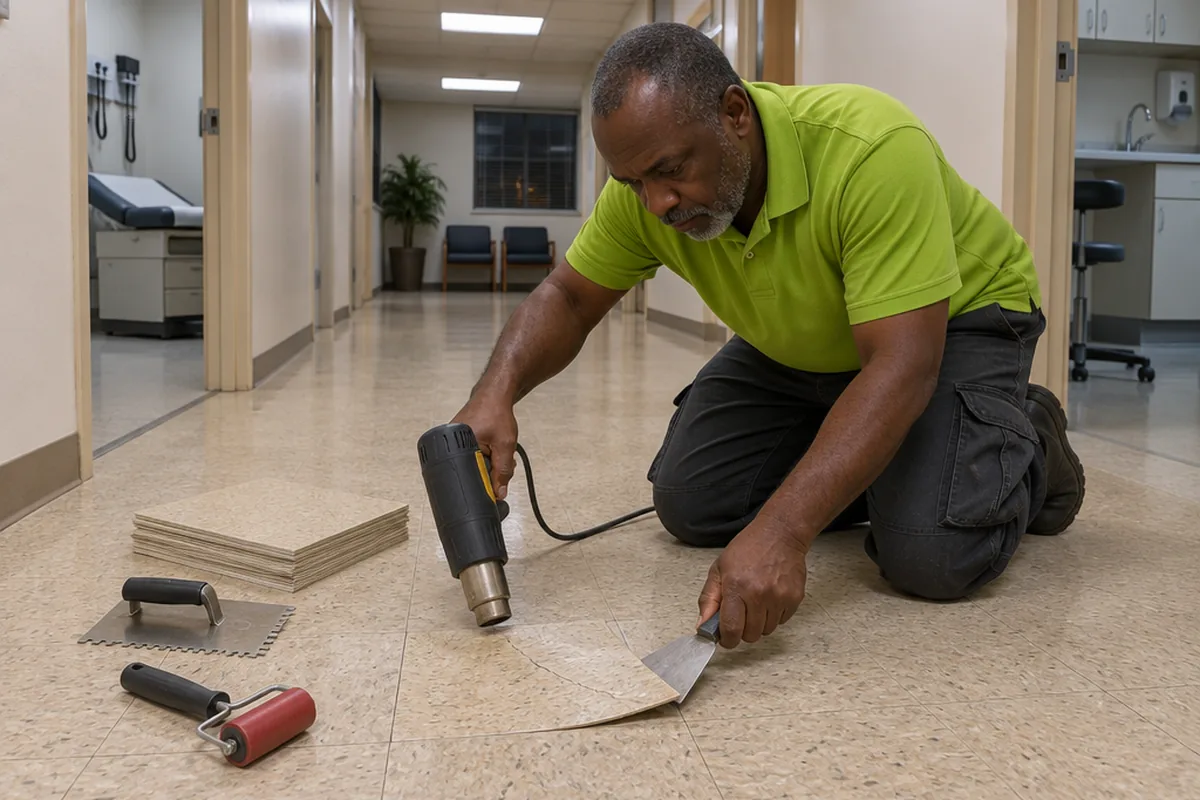
Corridor VCT lifts at the corners where mop water sits in the joints and softens the adhesive. A lifted corner snaps off under a cart wheel. We warm and remove the damaged tiles, scrape the bed clean, spread fresh adhesive and set new tiles tight to the old ones. A corner that already stands proud is a trip hazard we can secure ahead of the full repair.
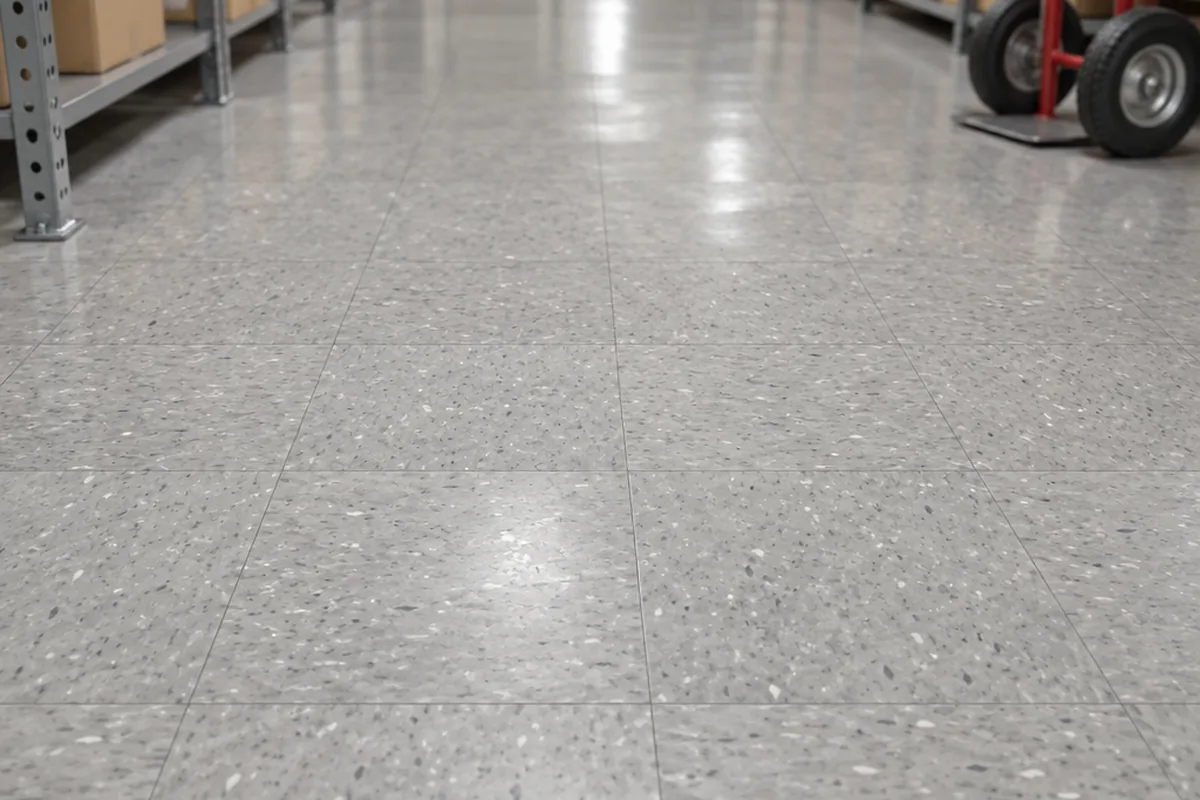
Pallet jacks and loaded carts crack tile wherever the slab has a dip or a ridge beneath it. New tile laid over that spot cracks again. We fill or flatten the low place with patching compound, let it set, and then lay the tile. Where the run ends at another floor, a missing reducer is replaced under transition strip installation.
Sheet vinyl depends on its seams. Once a seam opens, water runs under the sheet and the edge curls. We clean and re-bond the edge, weld or seal the seam the way the material calls for, and patch tears with a piece cut from matching stock so the pattern lines up.
We ask when the floor went in and look at tile size, backing and adhesive color. A floor that may date to 1980 or earlier stops there until a sample has been tested.
Damaged tiles are counted and a loose one is compared with current stock. If tiles are releasing over a wide area, we check the slab for moisture before quoting.
Tiles come up whole with heat. The slab is scraped, patched flat and primed if the adhesive needs it. New tiles are set, rolled and trimmed at the walls.
Adhesive is wiped from the joints. We tell your floor care crew how long to wait before wet mopping or finishing the new tiles, and send photos.
OSHA's asbestos standard for construction work says asphalt and vinyl flooring installed no later than 1980 must be treated as asbestos-containing, along with its backing and mastic, until an industrial hygienist's lab analysis shows it is not. That rule is 29 CFR 1926.1101. The EPA adds that a material cannot be identified by looking at it. So our first question is the age of the floor, and an older one is sampled before a tile is lifted.
The same OSHA standard sets work practices for resilient floors that are presumed or tested positive for asbestos: the flooring and its backing shall not be sanded, dry sweeping is prohibited, mechanical chipping is restricted, and tiles are removed intact where that is possible. That work belongs to a licensed abatement company. EPA's advice for a floor that needs replacing is to install new floor covering over it, if possible.
ASTM F710, the standard practice for preparing concrete floors to receive resilient flooring, says a slab should be permanently dry, clean, smooth and structurally sound, and that all concrete slabs should be tested for moisture regardless of age or grade level. Tiles that release in a wide patch over wet or powdery adhesive are a slab moisture symptom. New tile and new glue will not cure that, and we say so before selling you a repair.
Sources for the rules on this page: OSHA asbestos standard for construction, 29 CFR 1926.1101(g)(8) and (k)(1); U.S. EPA, Learn About Asbestos; U.S. EPA, Protect Your Family from Exposures to Asbestos; ASTM F710, Standard Practice for Preparing Concrete Floors to Receive Resilient Flooring; ASTM F1066, Standard Specification for Vinyl Composition Floor Tile.
Resilient floors are built to be repaired a piece at a time. Done properly, a patch disappears under the next coat of finish.
A replaced tile is only as good as the surface under it. We scrape old adhesive ridges flat, fill chips and low spots with a cement patching compound, and check the area with a straightedge before any glue goes down. The new tile is rolled into the adhesive so every corner is bonded.
Before anyone pries up a loose tile, find out how old the floor is. Nine inch tiles and black glue are common signs of an older floor. Leave those in place and call, because a sample has to be tested first.

Tell us the tile size, the count and roughly when the floor was laid.

We confirm the material is safe to disturb, match the tile and send a written price.

Damaged pieces are replaced after hours and the area is handed back clean and flat.
The work is backed in writing by our workmanship warranty and done by a Kaminskiy-certified, background checked technician.
Vinyl composition tile is a stiff square tile, mostly mineral filler, that gets its shine from floor finish. Sheet vinyl comes in wide rolls with welded or sealed seams, which is why clinics and restrooms use it. Rubber tile is softer and quieter, common at gyms and stair landings. Each takes its own adhesive, and the wrong one is a frequent reason patches let go.
VCT is colored through its thickness, but lots vary and old tile carries years of finish and wear. A new tile beside it looks brighter. We match the pattern number where the line is still made, and set new tiles in a low-traffic test spot first if the difference matters. After the floor crew strips and refinishes the area once, old and new blend much closer.
A few dozen damaged tiles on a sound floor is a repair. A floor with tile releasing everywhere is an adhesive or moisture failure, and patching it is money lost. An older floor that tests positive is often covered instead of removed: a new floor goes over the top where the height at the doors allows it. We lay out the options with the lab result in hand.
Order one extra carton of every tile pattern in the building and store it flat in a closet. Tile from the same production run is the only true match, and patterns are dropped without notice. Write the area and the install year on the box. That year also answers the first question any flooring contractor will ask about an older floor.
Can't find your answer? Call 855-695-1195 and ask us anything.
Call 855-695-1195Yes. That is what VCT is designed for. Each damaged tile is warmed, lifted and replaced with a new one set in fresh adhesive. Twenty tiles in a corridor is a typical after-hours job. The new tiles need floor finish applied by your janitorial crew before they match the sheen around them.
Only a lab test can tell you; nobody can tell by looking, and neither can we. Age is the first clue: federal workplace rules treat vinyl and asphalt flooring installed by 1980 as asbestos-containing until tested. An accredited professional takes a small sample of the tile and the adhesive, and the lab reports on both. We plan our work around that result.
We do not remove that material. A licensed abatement company takes up the affected flooring and adhesive, or the floor is left intact and covered with a new one where that is allowed and practical. Once the area is cleared, we can install the replacement floor. The lab report stays in your building file.
Usually water. Mop water worked into the joints, a leak from a nearby fixture, or moisture rising through the slab will break down the adhesive. If the glue is wet or has turned to powder under several tiles, the slab should be checked for moisture before anything is laid back.
Close, not perfect. We match the manufacturer's pattern when it is still made, or use your stored cartons. Color lots vary and old tile carries years of finish. After one strip and refinish cycle the difference fades. For a visible lobby we can relay a full section to a natural break so no patchwork shows.
Yes, when matching material exists. A tear or burn is cut out along a pattern line and a new piece is bonded in and sealed at its edges. Open seams are cleaned, re-adhered and sealed or heat welded, depending on the product. A sheet that has shrunk away from the walls everywhere is past patching.
It depends on the tile count, how flat the slab is under the damaged area, whether matching stock is on site, and whether sampling is needed first. Lab fees and any abatement are separate and paid to those firms. Our written scope lists the repair by area so you can approve all of it or the worst rooms first.
Send photos, the tile size, a count of damaged pieces and the year the floor went in if you know it. We reply with next steps and a written price. Phone 855-695-1195.
Age checked. Tile matched. Repairs made after the doors lock.
We answer in under three rings, 24/7.No price games. You get a clear written quote before any work begins, backed by our workmanship warranty.
