 BBBAccredited Business

Kaminskiy Care and Repair handles commercial fence repair and replacement on commercial and multi-unit property. A technician resets leaning posts and replaces broken rails, torn chain link, cracked vinyl panels and bent ornamental sections to match. When most posts have failed, the fence replacement is built in kind on the old post line, and privacy slats or windscreen go on sound fence. Work is planned around tenants and photographed. Masonry walls go to a mason, and gates are a separate gate repair scope. Fence repair is the first stop among our commercial fence and gate services.
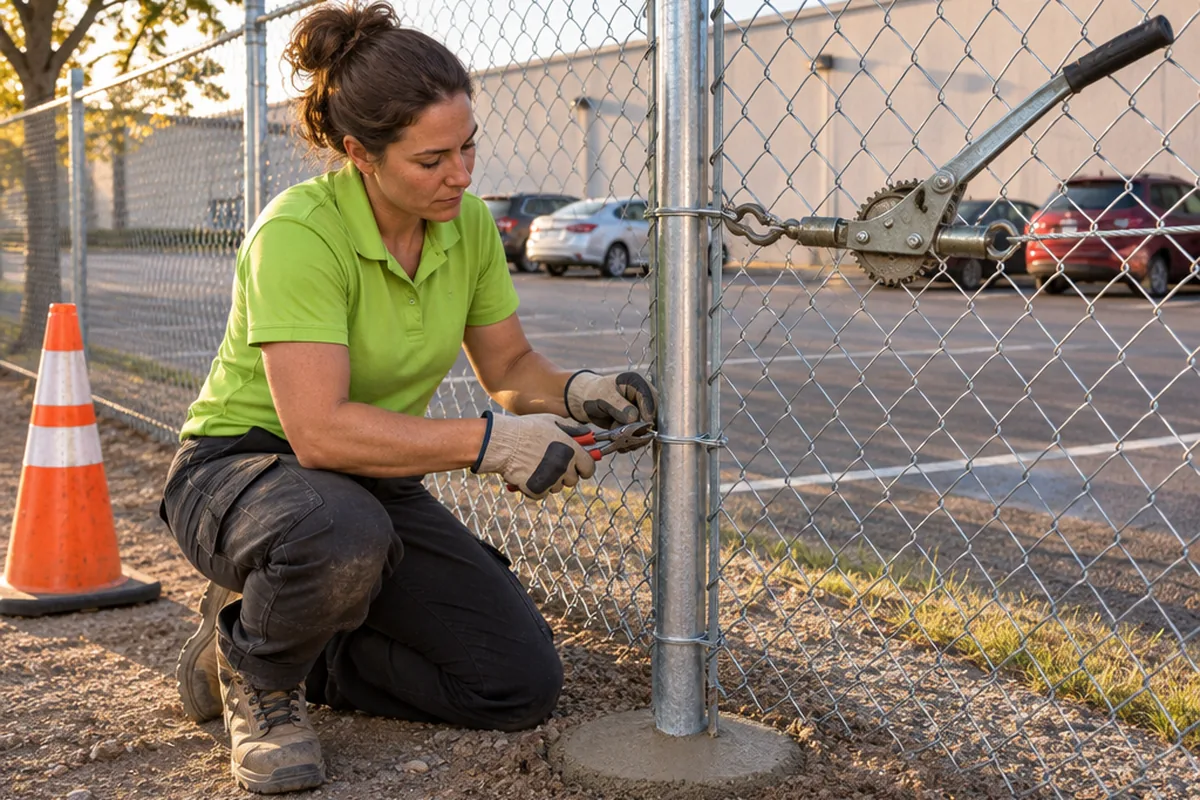
Chain link beside a parking row gets nudged by bumpers and backed into by delivery trucks. The line post bends at its footing, the top rail kinks and the fabric bellies out. We cut out the bent rail, set a new post in a fresh footing, stretch and re-tie the fabric, and photograph the damage first, so the report is ready if the driver's insurer is paying.
Wood fence around a community fails at ground level, where the post sits wet. One rotted post lets three panels lean toward the sidewalk. We replace the post, re-hang the rails and swap split pickets for matching boards. Once most posts along a boundary move, patching stops paying, and the scope turns to replacing the run in kind. Fence around a pool has to stay a barrier, a subject covered under pool gate and barrier corrections.
Wind finds the weak stretch. A vinyl panel pops out of its rails, a limb flattens a bay of ornamental pickets, a screened section acts like a sail. We replace the panels and brackets that failed and check the posts on either side. Fence that carries slats or fabric needs a harder look at its posts, explained in the section on privacy slats and windscreen.
Send photos of the damaged stretch and a rough count of the posts and panels involved. Note the material, the height and whether a vehicle or the weather did it.
On site the technician measures post spacing, rail size, fabric gauge or picket profile, and probes every post in the run. The written scope lists what is replaced and what stays, and says so when replacing the run is the better buy.
The work area is coned off and the remainder of the lot stays in use. Any opening left by a removed section is closed or barricaded before the crew leaves for the day.
You receive before and after photos, the parts list and a note on any post we found weak but did not replace, for the next budget.
A new footing means digging, and gas, power, water and data often run along a fence line. In California, Government Code 4216.2 requires an excavator to notify the regional notification center, reached by dialing 811, at least two working days and not more than 14 calendar days before digging. Other states set their own notice periods. We request the locate before any post is reset.
In California, Civil Code section 841 presumes that adjoining landowners benefit equally from the fence between them and share the reasonable cost of maintaining or replacing it, unless a written agreement says otherwise. The same section asks for 30 days' prior written notice to the neighbor, covering the problem, the proposed fix, the estimated cost, the proposed split and the timeline. Other states have fence statutes of their own. Our scope supplies the facts for that notice, and counsel advises on the law.
Section 105.2 of the International Building Code, a model code many jurisdictions adopt, leaves fences not over 7 feet high out of the building permit requirement. Zoning is separate: cities cap fence height by yard and street frontage, often lower, and a lattice topper counts toward the total. Rebuilding at the existing height is the usual safe path. The local planning or building office decides, and we ask before a fence grows.
Sources for the rules on this page: California Government Code, Section 4216.2; California Civil Code, Section 841; 2021 International Building Code, Section 105.2; Chain Link Fence Manufacturers Institute, Guide for Specifying Commercial Chain Link Fence; 2021 International Swimming Pool and Spa Code, Section 305; 2021 International Building Code, Sections 1015.2 and 1015.3.
Kaminskiy Care and Repair replaces a worn-out run of wood or chain link fence in kind: same line, same height, same material. It is the right call when most posts have rotted or the fabric has rusted through along the bottom. The old fence comes out one stretch at a time and each stretch is rebuilt before the next is opened, so a pool, a yard or a secured lot never sits open overnight. Corner and gate posts are set first. The scope gives length, height, post spacing, the side the finished face points to and the price, written so it can go with a notice to the adjoining owner. Where the line is disputed, a licensed land surveyor stakes it before we dig.
We add privacy to fence that already stands: slats woven into chain link, knitted windscreen tied to the framework, lattice and louver panels on wood fence, and lift-off screens around condensers, patios and trash areas. The limit that matters is wind. A filled fence pushes back against nearly the full force of a storm, and the Chain Link Fence Manufacturers Institute's specification guide says fence carrying windscreen or privacy slats needs a wind load analysis for post size and spacing. So posts and footings are checked first, an exposed run may get a lower-blockage fabric or heavier posts, and tall runs go to an engineer. A topper counts toward the city's height limit, and a pool fence is screened only after the health or building department agrees.
Wood fence fails from the ground up, and it is repaired the same way. Posts rot in the few inches at grade, rails split at their fasteners, and pickets cup, crack or go missing. We set new posts in new concrete footings, re-hang or replace the rails and fit boards that match the style and spacing of the run, so a repaired bay does not read as a patch from the street. New boards stand out at first and weather toward the old color with time, and staining or painting can be quoted alongside. If more than a few posts in a row have gone soft, we price the replacement of that run beside the repair so the board can compare the two.
A vehicle strike is repaired as a documented scope. Photograph the damage before anything is moved, and note the date and whatever is known about the driver. We add measured photos, count the posts, rails and panels involved, and write a priced scope that reads cleanly as a claim document for an insurer or a responsible tenant. The repair itself usually means new posts in new footings and a rebuilt bay between two sound posts. Any gap is closed or barricaded the day the work starts. If the struck fence stood at a drop or around a pool, we say so, because then it was doing more than marking a line.
Most fence does not fail all at once. We replace the posts, rails and panels that are done and leave the sound run alone.
A leaning or struck section almost always comes down to its posts. We pull the failed post, dig out the old footing, set a new post plumb in concrete and rebuild the bay between good posts with matching rails, fabric, panels or pickets. On chain link the fabric is re-stretched so the repair does not sag.
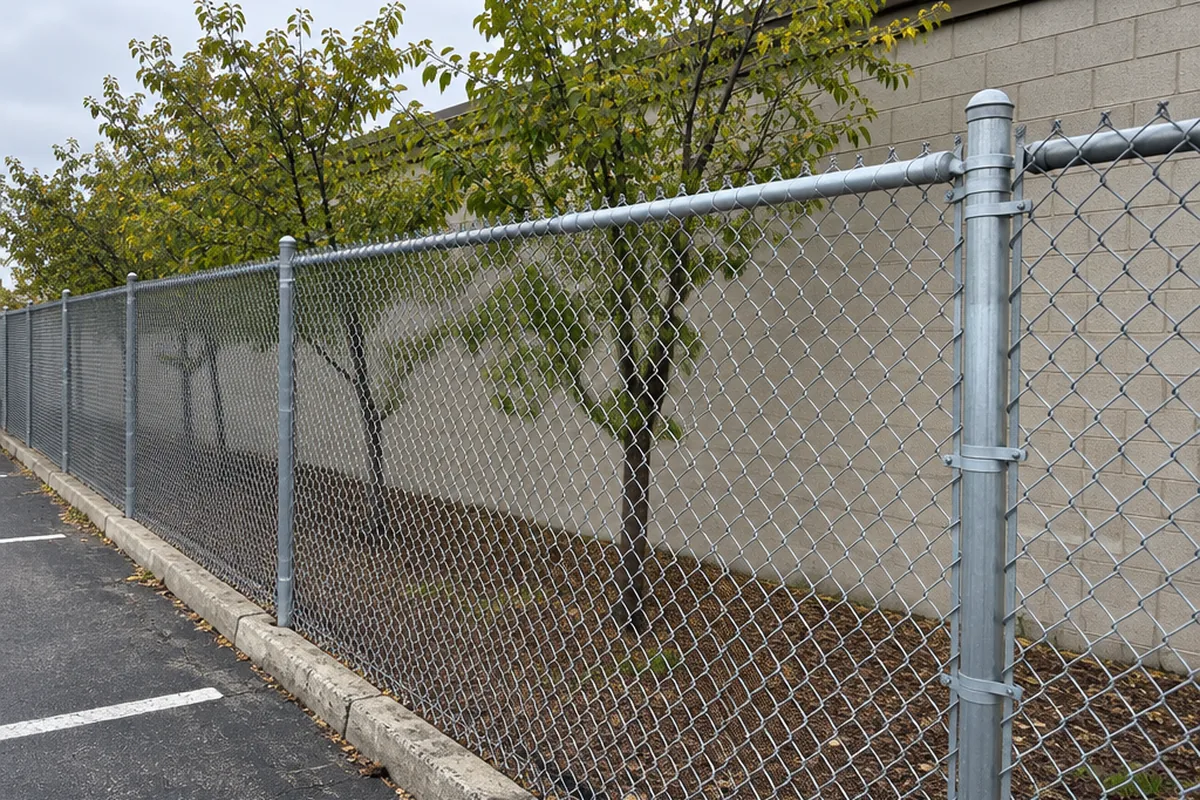
The first three are repairs, the fourth and fifth point to a replacement in kind, and the last is a screening job. Photos of the stretch and a post count are usually enough for a written scope.

Send photos of the damaged fence, the material and where on the property it stands.

Approve a written scope that lists each post, rail and panel to be replaced, with the price.

We rebuild the stretch, close every opening before leaving the site and send the photo record.
The work is backed in writing by our workmanship warranty and done by a Kaminskiy-certified, background checked technician.
A fence is only as straight as its posts. Wood posts rot in the few inches at and just below grade, where air and moisture meet. Steel posts bend at the top of the footing when struck. Push on each post at shoulder height: a sound one does not move at the ground. Count the ones that do, and you have most of your repair scope.
Chain link is a kit: posts, top rail, tension bars, bands, ties and fabric. That makes it the most repairable fence there is. A bent top rail is cut out and sleeved. Torn fabric is unwoven at a single wire and a new piece is woven in the same way. Only when posts are bent along a long stretch does replacing the run beat repairing it.
A cracked vinyl rail or a bent steel picket is not glued or straightened to last. The part is replaced, and the catch is finding the same profile and color. Give us the fence maker's name if the property files have it, or let us measure the rail and picket sizes. An exact match keeps one repaired bay from standing out along the whole frontage.
Repair is the right call when damage is local and the neighboring fence is sound. It stops being sensible when most posts in a run have rotted, or the fabric has rusted through along its bottom edge. At that point each fix buys a season. We say so in the scope and price the replacement of that run as a separate option.
An old fence shows where two owners agreed to live, not where the recorded boundary runs. Posts get set off the line to dodge a tree, a pipe or a slope, and nobody writes it down. We rebuild on the post line that exists, since that is what both sides have used. If either owner thinks the fence belongs somewhere else, settle it before the first hole, with a licensed land surveyor's stakes in the ground and the agreement in writing.
Some fence is more than a boundary. Around a pool it is a barrier: the International Swimming Pool and Spa Code, Section 305, a model code many jurisdictions adopt, puts it at least 48 inches above grade with no opening that passes a 4-inch sphere. Along a retaining wall or a dock it may be a guard, which the International Building Code, Section 1015, requires above a 30-inch drop at not less than 42 inches. The local official decides, and we flag either case first.
Can't find your answer? Call 855-695-1195 and ask us anything.
Call 855-695-1195Yes, and that is most of this work. Posts, rails, fabric, panels and pickets are replaced where they failed and matched to what remains. We recommend replacing a whole run only when most of its posts are gone, and the scope shows both options so the owner can decide.
When most of the posts in a run move at the ground, or chain link has rusted through along its bottom edge. Past that point every patch is short-lived. We replace the run in kind on the existing post line, one stretch at a time, and the scope shows the repair price beside the fence replacement price so the owner can choose.
Photos of the damage before anything is moved, the date, and whatever is known about the driver or the vehicle. We add measured photos and a written scope with a price, which is the package an insurer or a responsible tenant asks for before paying.
Yes, all four. Chain link is repaired by the component. Wood gets new posts, rails and pickets. Vinyl panels and rails are replaced with a matching profile. Ornamental steel and aluminum sections are replaced or re-secured at their brackets. Masonry walls and columns are a mason's work.
State law and any written agreement between the owners decide that. In California, Civil Code section 841 presumes adjoining landowners share the reasonable cost equally unless they agreed otherwise in writing, and it calls for 30 days' prior written notice before the work. Other states differ. We supply the scope and the price, and the owners or their counsel settle the split.
Yes, when the mesh suits the slat and the posts are sound. We check the diamond size, the fence height, and the post size, spacing and footings, repair any leaning bay, then weave the slats in one bay at a time. Gates get slats of their own and are re-balanced, because added weight and wind change how a gate closes.
Yes, it can happen when the posts were chosen for open mesh. A screened fence catches far more wind, and the Chain Link Fence Manufacturers Institute's specification guide calls for a wind load analysis when slats or windscreen are added. We check the posts before quoting and suggest a lower-blockage fabric, heavier posts or an engineer's design where the run is exposed.
Yes. The crew cones off the stretch it is working on and keeps drive aisles and walkways clear. If a section has to come out, the gap is closed or barricaded before the crew leaves, so the perimeter is never left open overnight.
The number of posts to reset is the biggest factor, then the material and height, then access for a truck and concrete. A replacement is driven by length, height, corners and gates. A written price comes before scheduling. For a vehicle strike we can write the scope so it reads cleanly as a claim document.
Usually not when the work matches the existing height and material, but each city writes its own rule. The International Building Code, a model code, exempts fences not over 7 feet high, and local zoning often caps height lower. Pool barriers, taller fences and fences that also serve as guards are the cases to ask about. The local building department has the final word.
Include the address, the fence material, about how many posts or how many feet are involved, and whether a vehicle did it. We reply with a written scope. For a section that is down right now, call 855-695-1195.
Matched materials. An open property while we work. A photo record when we finish.
We answer in under three rings, 24/7.No price games. You get a clear written quote before any work begins, backed by our workmanship warranty.
