 BBBAccredited Business

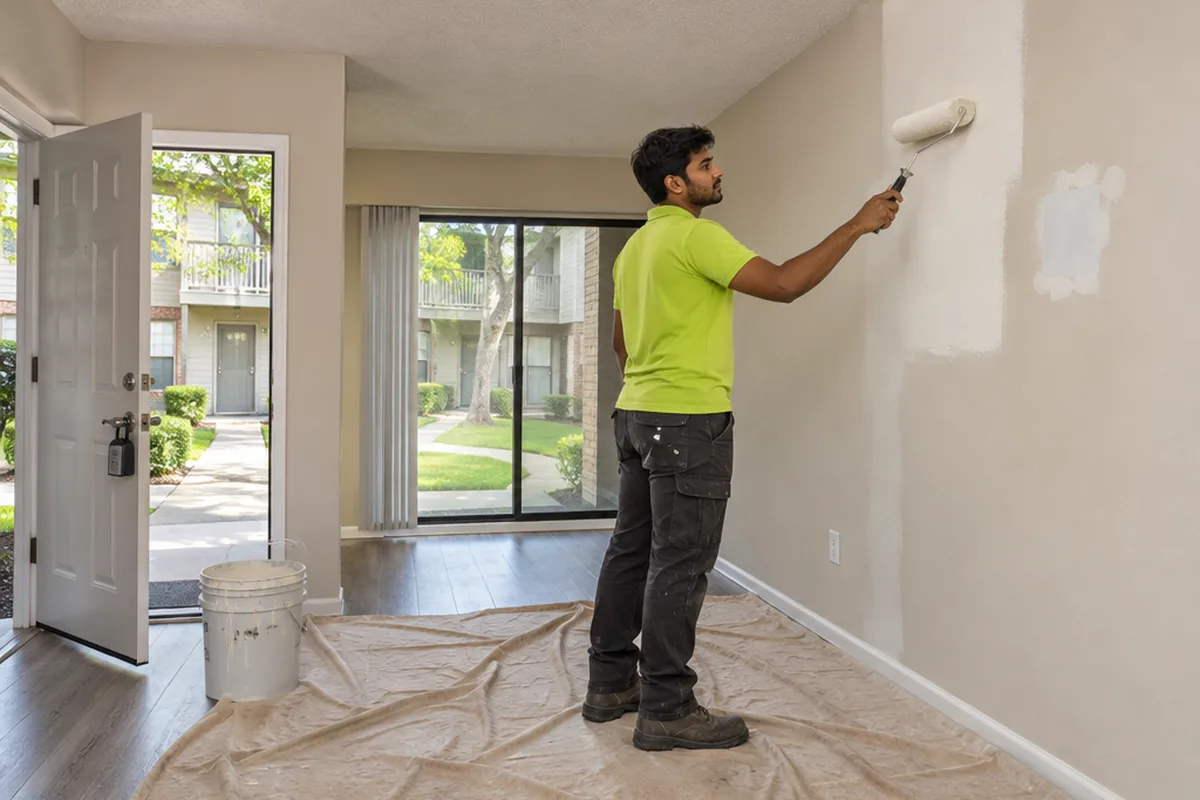
Kaminskiy Care and Repair does apartment painting between tenants: vacant apartments, rental houses and commercial suites painted to the property's standard color and sheen. Each room is scoped as a full repaint or a touch-up, depending on what the walls will take, and the work is slotted after drywall repair and before cleaning, with key or lockbox access. In housing built before 1978, prep that disturbs old paint follows EPA lead-safe (RRP) practices. Holes are patched first as turnover drywall repair. Turnover work sits inside our painting services for commercial and rental property.
A community with steady move-outs needs the same result in every unit. We paint to the property's written standard: one wall color, one ceiling white, one trim enamel, the same sheen each time. That standard is what makes the following turn a smaller job, because clean walls in a known flat or matte can be touched up instead of repainted.
After a tenant of many years, walls carry picture holes, grease near the range, crayon and sometimes smoke. Touch-up is not on the table. Stains are sealed with a stain-blocking primer so they do not bleed back, the whole unit is repainted, and doors and trim get fresh enamel. Older houses are the ones where the EPA lead rule most often applies.
When a commercial tenant leaves, the next one wants a neutral shell. We remove the old tenant's accent colors, prime over deep tones and painted wall graphics, and return the suite to the landlord's standard white. Once the new tenant has moved in, later repaints follow our occupied office repainting approach instead.
From the move-out photos or a walk of the unit, each room is marked full repaint or touch-up, with stains, smoke and wall damage noted for primer and patching.
Paint is booked after trash-out and drywall repair and ahead of flooring and cleaning, with the move-in date written on the work order.
We pick up keys or use the lockbox code you assign, confirm power and water are on, and lock the unit and return the key each day.
The unit is painted to the standard, cover plates go back on, and you get room-by-room photos for the turn file and the next tenant's move-in record.
EPA's Renovation, Repair and Painting rule covers housing built before 1978, and rental housing is squarely inside it. Work that sands or scrapes more than 6 square feet of painted surface in a room is a covered renovation that needs a certified firm and lead-safe practices. EPA also says that simply recoating walls for a new tenant, with no prep that disturbs the old paint, is not a renovation. The condition of the walls decides which job you have.
The 6 square foot limit is counted per room, and EPA treats work done in the same room within 30 days as a single job. Window replacement and demolition never count as minor work, whatever their size. So three small scraping repairs in one bedroom during a turn are measured together. We measure before we prep, and when the total crosses the line the unit goes to an RRP-certified firm.
Before a lease is signed on pre-1978 housing, federal rules require the landlord to give the renter EPA's lead pamphlet, disclose any known lead-based paint or hazards, and keep the signed disclosure for three years after the lease begins. A fresh coat of paint does not change that duty. We mention it because turnover is when the form gets forgotten.
Sources for the rules on this page: U.S. EPA, Frequent Questions About Renovations Covered by the RRP Rule; U.S. EPA, Lead Renovation, Repair and Painting Program; U.S. EPA, Real Estate Disclosures About Potential Lead Hazards.
Painted to your standard, slotted between the drywall patch and the cleaning crew, and documented for the turn file.
Touch-up works when three things are true: the walls were last painted with the property's standard product, the finish is flat or matte, and the paint is recent enough that it has not shifted. Then scuffs and patches blend in. If the old paint is unknown, shiny, smoke-stained or years old, touch-ups show as lighter squares, and a full repaint of those walls is the honest answer.
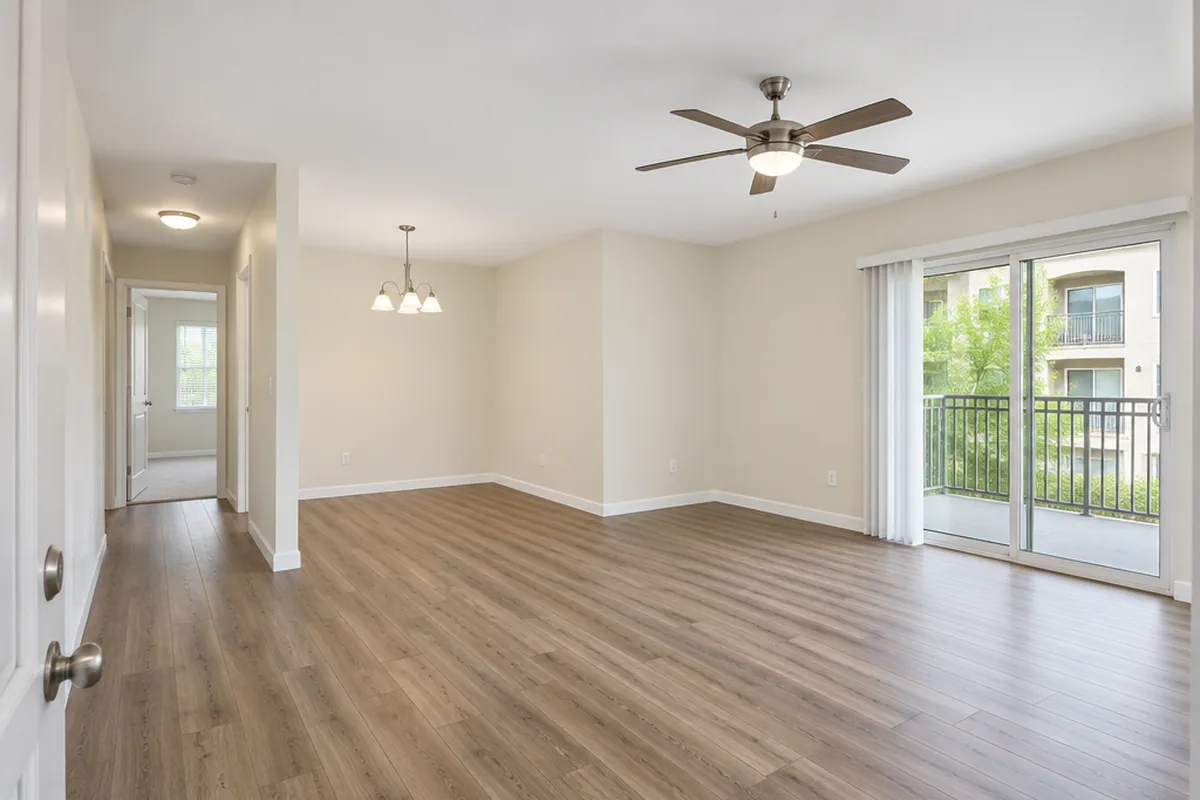
Send the unit number, the move-in date and the move-out photos. If the property has no written color standard yet, we help set one on this turn and record it. Unknown colors on a partial repaint go through a proper color match first.

Send the unit, the move-in date and how we get in: keys, lockbox or staff.

Approve the written scope that says full repaint or touch-up for each room, with primer where stains need it.

We paint after drywall and before cleaning, then send photos of every room.
The work is backed in writing by our workmanship warranty and done by a Kaminskiy-certified, background checked technician.
Pick one wall color, one ceiling white and one trim color for the property, each in a named product line and sheen, and put it in the make-ready binder. Buy from the same store account so the formula is on file. With a standard, any painter can touch up any unit. Without one, each turn adds another near-white to the building and every repair after that needs a full wall.
Touch-up paint lands on top of the old film, so the repaired spot is thicker and newer than the wall around it. In a flat finish that difference barely reflects. In satin or semi-gloss it shows as a shiny or dull patch from across the room, a defect painters call flashing. That is why many properties use flat or matte on living room and bedroom walls and save the sheen for kitchens, baths and trim.
Trash-out and repairs come first, because paint cannot go over holes. Drywall patches are primed, or they will show through as dull spots. Paint follows, with ceilings before walls and walls before trim. New flooring goes in after paint so drips land on the old floor, and cleaning is last. A unit painted out of order gets repainted in places, which is where turn days go.
Smoke residue, water rings, grease, ink and crayon dissolve into waterborne paint and rise to the surface as it dries. Two more coats will not hide them. They need washing where possible and then a stain-blocking primer made for the job, usually a solvent or shellac type with strong odor, which is fine in an empty unit with the windows open. Only then does the finish coat stay clean.
Can't find your answer? Call 855-695-1195 and ask us anything.
Call 855-695-1195No. If the property keeps a standard flat or matte and the last coat is fairly recent, clean walls can be touched up and only damaged rooms repainted. We mark each room full or touch-up in the written scope so you see the reasoning before approving it.
After trash-out and drywall repair, before flooring and final cleaning. Patches need primer before paint, and new carpet or plank should not be in the room while ceilings are rolled. Give us the move-in date and the other vendors' dates and we fit the paint days between them.
By whatever method the property uses: keys signed out from the leasing office, a contractor lockbox with a code you assign, or maintenance staff opening the door. The unit is locked whenever the painter leaves, and keys return to the same place each afternoon.
If the building dates from before 1978, EPA's Renovation, Repair and Painting rule covers work that disturbs painted surfaces beyond small limits, and that work must be done by an RRP-certified firm. Recoating intact walls without sanding or scraping is not covered. Studio units and senior housing are treated differently unless a young child lives there.
The drivers are unit size, whether rooms are touched up or fully repainted, stain sealing, color changes back from a tenant's dark walls, and ceiling and trim condition. Properties with a written standard and regular turns cost less per unit than one-off jobs with unknown paint. Each unit gets a written price first.
If the standard is on record, yes, from the formula. If nobody knows what is there, we take a sample for an instrument match, and we tell you plainly when a touch-up will still show and the wall should be repainted corner to corner.
Waterborne wall paint is dry to the touch within hours, so move-in is not held up for long. The film keeps hardening for weeks, though. We suggest movers keep furniture a few inches off the walls at first and that nobody scrubs fresh paint until the cure time on the product data sheet has passed.
Flat or matte on living room and bedroom walls, because those finishes accept touch-ups at the next turn. Satin or semi-gloss belongs in kitchens and baths, where walls get washed, and a semi-gloss enamel on doors and trim. Whatever the choice, apartment painting goes faster when every unit uses the same product and sheen and the standard is written down.
Either. A single apartment is its own work order with its own move-in date. When several units turn together, we order them by move-in date and by which are already patched, and each one still gets its own scope by room and its own set of photos.
Send the property, the unit number, the move-in date, access details and the move-out photos. We reply with a written scope by room. To talk through a batch of units, call 855-695-1195.
Painted to your standard. Sequenced with the other trades. Photos for the turn file.
We answer in under three rings, 24/7.No price games. You get a clear written quote before any work begins, backed by our workmanship warranty.
