 BBBAccredited Business

Kaminskiy Care and Repair renovates apartments and rental units between leases: new flooring, cabinets or cabinet fronts, counters, sinks and faucets, light fixtures, door hardware and paint, built to a finish schedule the property repeats in every unit. Each apartment renovation is sequenced inside the vacancy, with a ready date agreed before work starts. A patch-and-paint make-ready is a different service: see tenant turnover painting. Moving plumbing, wiring or walls needs permits and licensed trades. Unit work is the residential-rental side of our commercial remodeling and renovation services.
A long tenancy returns a unit with worn-through vinyl, swollen cabinet bases, a stained counter and fixtures two generations old. Patching leaves a unit that still looks patched. We strip the worn finishes, repair what is behind them and rebuild to the property's current standard. Units that only need holes filled are turnover drywall repair.
Owners raising a property's standard rarely empty it. Each unit is renovated as it turns: plank flooring through the living areas, new cabinet fronts or boxes, a solid counter, modern lighting and matching hardware. The finish schedule keeps unit 12 identical to unit 40, and the same crew learns the floor plans.
In housing built before 1978, painted trim, doors and cabinets may carry lead-based paint, and sheet flooring or ceiling texture from that era is tested for asbestos before it is disturbed. We plan the renovation around those results, use lead-safe practices where paint is cut or sanded, and leave abatement to a licensed company.
We walk the unit room by room with your finish schedule, measure floors, cabinets and counters, and photograph the condition on the day the keys come back.
The written scope lists each room's work and the products by name. Items that need a permit or a licensed trade sit on their own lines with the reason.
Tear-out and repairs, then paint, then flooring, then cabinets and counters, then fixtures, lights and hardware. Neighbors get notice of noisy hours and the hallway is protected and swept daily.
Every fixture is run, every door and drawer is cycled, and the unit is photographed room by room. The photos and the product list reach you before the first showing.
The EPA Renovation, Repair and Painting rule covers housing built before 1978. Firms paid to disturb painted surfaces there must be certified and use lead-safe work practices. Jobs that disturb six square feet or less of paint per room indoors are outside the rule, but window replacement and demolition of painted surfaces are always inside it. Tearing out painted cabinets in an older unit is demolition, so we plan containment and cleanup into the job.
OSHA's construction asbestos standard treats asphalt and vinyl flooring installed no later than 1980 as asbestos-containing until it is tested and shown otherwise, and federal air rules require a thorough inspection before renovation in residential buildings with more than four units. We do not scrape or sand suspect flooring, mastic or ceiling texture. A sample goes to a lab first, and a positive result goes to a licensed abatement company.
In California, the building codes list painting, tiling, carpeting, cabinets, counter tops and similar finish work as exempt from a building permit, and removing and resetting a toilet is exempt on the plumbing side when no pipes or valves are rearranged. New wiring, moved plumbing and altered walls are not exempt. Other states and cities keep their own lists, and the local building official decides.
Sources for the rules on this page: U.S. EPA, Lead Renovation, Repair and Painting Program: Contractors; OSHA, 29 CFR 1926.1101, Asbestos (construction), paragraphs (g)(8) and (k)(1); U.S. EPA, Asbestos National Emission Standards for Hazardous Air Pollutants (NESHAP); California Building and Residential Codes, section 105.2, Work Exempt from Permit (2025 code excerpt published by the City of Albany, California).
The vacancy is the only time the floors are clear and the water can be off. We plan the whole renovation to fit inside it.
Most unit renovations repeat one package. Plank flooring through the living areas. Cabinet boxes kept and refaced, or replaced where water has swollen them. A new counter, sink and faucet. A new vanity and toilet on the existing rough-in. Light fixtures swapped in kind. Matching door levers, hinges and stops. Two coats of the property's wall color.
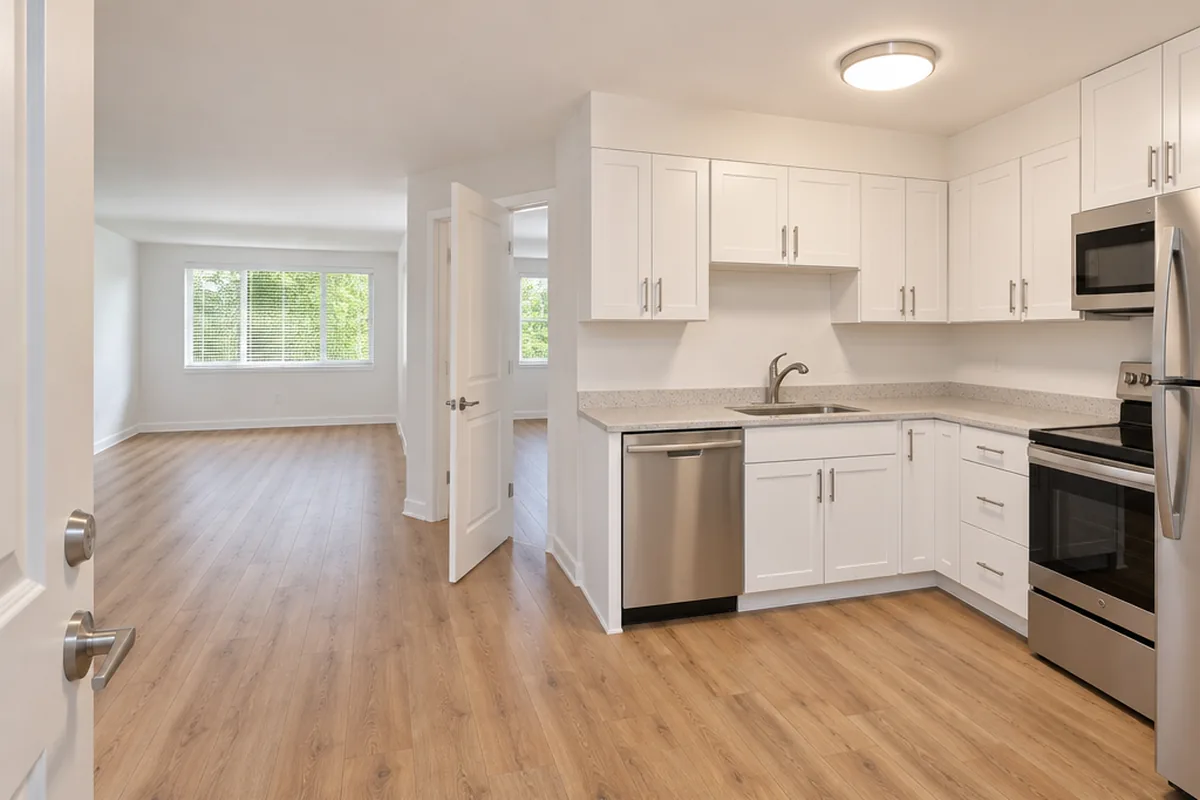
A unit like this has usually outlived the patch cycle. If the walls and paint are the only problem, a turnover is the right call and the smaller bill. For the floor alone, see vinyl plank installation for units.

Send the unit number, the finish schedule if you have one, and the date the next lease begins.

We walk the unit and return a room-by-room scope with a price and a day-by-day sequence.

The unit is rebuilt in order, tested, cleaned and photographed, then handed back for showing.
The work is backed in writing by our workmanship warranty and done by a Kaminskiy-certified, background checked technician.
A turnover restores: fill holes, paint, clean, replace what broke. A renovation replaces finishes that have reached the end of their life. A rough test is age and count. If flooring, cabinets and counters are all past their service life in one unit, three separate replacements mean three mobilizations and three rounds of touch-up, and one planned job avoids that. If only one has failed, replace that one and wait.
Open the sink base first. If the floor of the cabinet is swollen or the sides have delaminated, the box is done. If the boxes are dry, square and firmly fastened, new doors, drawer fronts, hinges and slides give most of the result with far less tear-out. Mixed kitchens are common: new sink base, refaced uppers. Small fixes alone are covered under cabinet and counter repair.
For rentals, glue-down or click vinyl plank with a thick wear layer is a common choice for living areas because one damaged plank can be swapped. The subfloor decides the result: soft spots at the toilet and the tub are cut out and rebuilt before any plank goes down, as our subfloor repair page explains. Keep two spare cartons per unit type from the same lot for later repairs.
List the plank product and color, wall and trim paint with sheen, cabinet door style, counter pattern, faucet, vanity, toilet, light fixtures and door hardware finish. Add the supplier for each. With that page in hand, the next vacancy needs no selections and repairs years later still match. We draft it during the first unit and update it when a product is discontinued.
Can't find your answer? Call 855-695-1195 and ask us anything.
Call 855-695-1195A turnover returns the unit to its previous condition with patching, paint and small replacements. A renovation replaces worn-out finishes: flooring, cabinets or their fronts, counters, fixtures, lighting and hardware. It takes longer and is planned as one sequenced job. We tell you after the walk which one the unit really needs.
Yes, and that is the usual arrangement. We work from the property's finish schedule, or write one during the first unit, so products, colors and hardware repeat. Each later unit gets its own short scope listing only what differs, such as a damaged subfloor or a different floor plan.
It depends on the scope, on product lead times and on whether a licensed trade or a permit is involved. Cabinets and counters are the long items, so we order them before the unit is vacant when the date is known. You get a day-by-day sequence with the scope, and the ready date is agreed before work begins.
Finish work such as flooring, paint, cabinets and counters is commonly exempt. Moving a sink, adding a circuit, changing a wall or replacing a water heater is not, and that work belongs to licensed plumbing and electrical contractors. Rules vary by city, so we mark the lines in question and confirm with the building department.
Suspect flooring, mastic and ceiling texture are tested by a lab before they are disturbed, and a licensed abatement company removes anything positive before we continue. In housing built before 1978, painted surfaces are treated as possible lead-based paint, and we use lead-safe practices under the EPA RRP rule when they are cut, sanded or demolished.
The finish level, the size of the kitchen and baths, whether cabinets are refaced or replaced, the condition of the subfloor and how much sits behind the old finishes. A fixed package repeated across units is the most predictable. Every unit gets a written price before work starts, and hidden damage is priced in writing before it is repaired.
A full renovation needs a vacant unit, because the kitchen, the bath and the floors are all out of use at once. Smaller parts, such as a counter and faucet or new light fixtures, can be done in an occupied unit by appointment, with notice given the way your lease and state law require.
Send the property address, the unit number, the next lease date and your finish schedule or a few photos. A room-by-room scope comes back. To talk it through, call 855-695-1195.
One scope per unit. One finish standard. Photos on the day it is ready.
We answer in under three rings, 24/7.No price games. You get a clear written quote before any work begins, backed by our workmanship warranty.
