
 BBBAccredited Business

Kaminskiy Care and Repair replaces single- and multiple-station smoke and carbon monoxide alarms inside rental units and small offices, in kind: battery for battery, hardwired for hardwired on the existing connector, including ten-year sealed models. Each alarm is tested, dated and entered in a per-unit log for the manager. Building fire alarm systems with panels, pull stations and monitored detectors are a licensed fire alarm contractor's work, never ours. Unit alarms are one of the services in our electrical and lighting work for rental and commercial property.
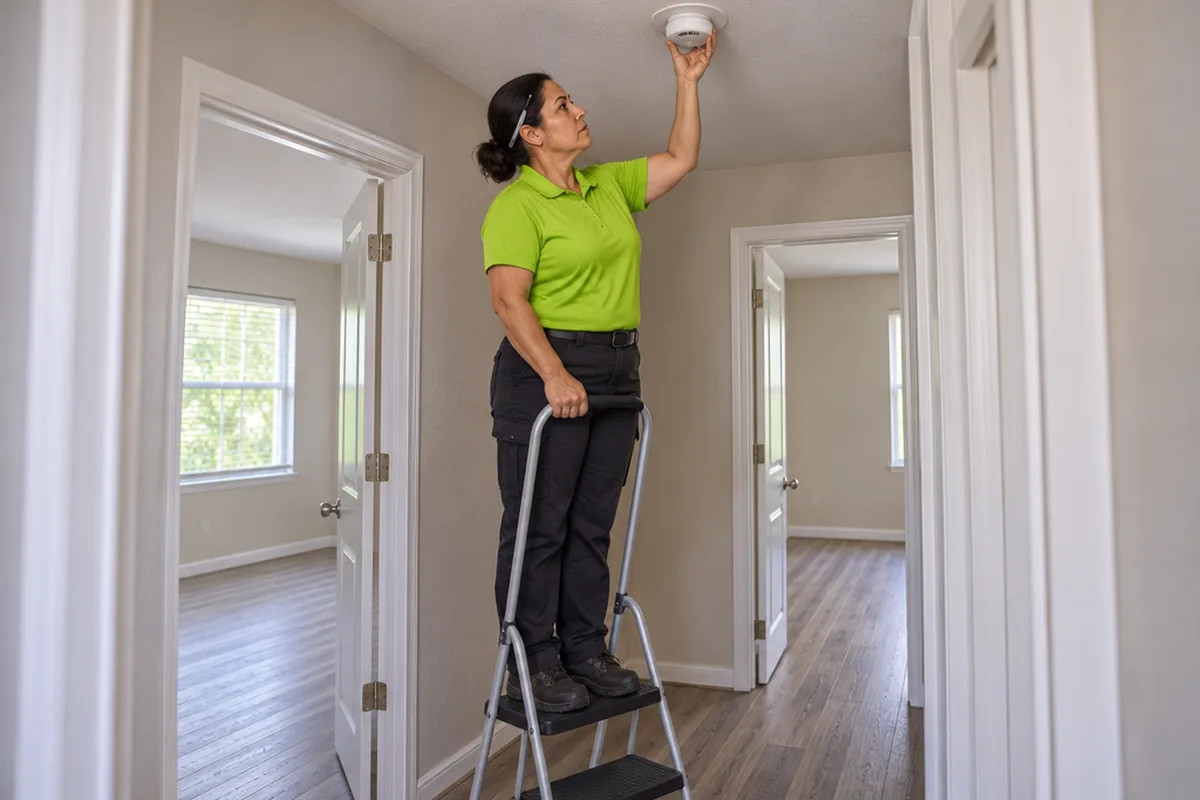
At move-out the alarms are missing, painted over, hanging by a wire or chirping. We check every alarm in the unit against its manufacture date, replace the expired and damaged ones in kind, test them and record model and date, so the incoming resident starts with alarms of a known age.
When a community reaches ten years, the alarms age out together. We work building by building with resident notices, replace each alarm with its like, and keep the interconnect working where alarms are linked. Corridor exit signs and battery lights on the way are a different service: exit sign and emergency lighting testing.
Small professional suites, often in converted residential buildings, carry self-contained alarms and no alarm panel. We replace those exactly as we would in a rental unit. If there is a panel on the wall or pull stations at the exits, it is a fire alarm system, and a licensed fire alarm contractor services it.
Send the unit list, whether units are vacant or occupied, and how entry is handled. For occupied units we work to your notice schedule.
The technician takes down each alarm, reads the manufacture date and type, and notes battery, hardwired or combination ahead of replacing anything.
A battery alarm is replaced with a battery alarm, a hardwired one with a compatible hardwired one on the existing connector and box. Each is tested with its button, and linked alarms are checked together.
The install date is written on the alarm and entered in the log with unit, room, type and manufacture date. You get the log as a file you can sort.
NFPA 72, the National Fire Alarm and Signaling Code, says smoke alarms shall not remain in service longer than 10 years from the date of manufacture unless the manufacturer's instructions provide otherwise, and shall be replaced when they fail to respond to tests. The date is on the back or side of the alarm. NFPA's public guidance adds: if there is no date, replace it.
NFPA's guidance places smoke alarms in every room where someone sleeps, outside each sleeping area and on every level, on the ceiling or high on a wall, and at least 10 feet from a cooking appliance to limit nuisance alarms. Local law decides what is required in your building. We replace alarms where they are and report locations that look short.
Carbon monoxide sensors have a limited life. NFPA's guidance is to replace a CO alarm according to the manufacturer's instructions or when its end-of-life signal sounds, and to replace combination smoke and CO alarms on the manufacturer's schedule. That date can differ from the smoke alarm beside it, which is why the log tracks each device separately.
Sources for the rules on this page: NFPA 72, National Fire Alarm and Signaling Code, section 29.11.1.4 (NFPA public input record, 2025 edition); NFPA Educational Messages Desk Reference, 2026 edition, chapters 1 and 3; U.S. Fire Administration, Smoke Alarms.
Replacing one alarm is simple. Knowing which of six hundred are due is the real job, and the log does it.
Whether it is one vacant unit or a whole community, the routine never changes. Every alarm comes down, its date and type are read, expired or failed alarms are replaced in kind, each one is tested and the install date is written on it. The log grows by one line per alarm.
Chirping that carries on after a battery change means the alarm has reached the end of its life. That and every other item here is a replacement in kind, recorded by unit. Alarms go up after the walls are finished, so we sequence with tenant turnover painting.

Send the unit list, the alarm types if you know them and your access rules.

We answer in writing with a per-alarm price and a schedule by building.

A technician replaces, tests and dates each alarm and delivers the per-unit log.
The work is backed in writing by our workmanship warranty and done by a Kaminskiy-certified, background checked technician.
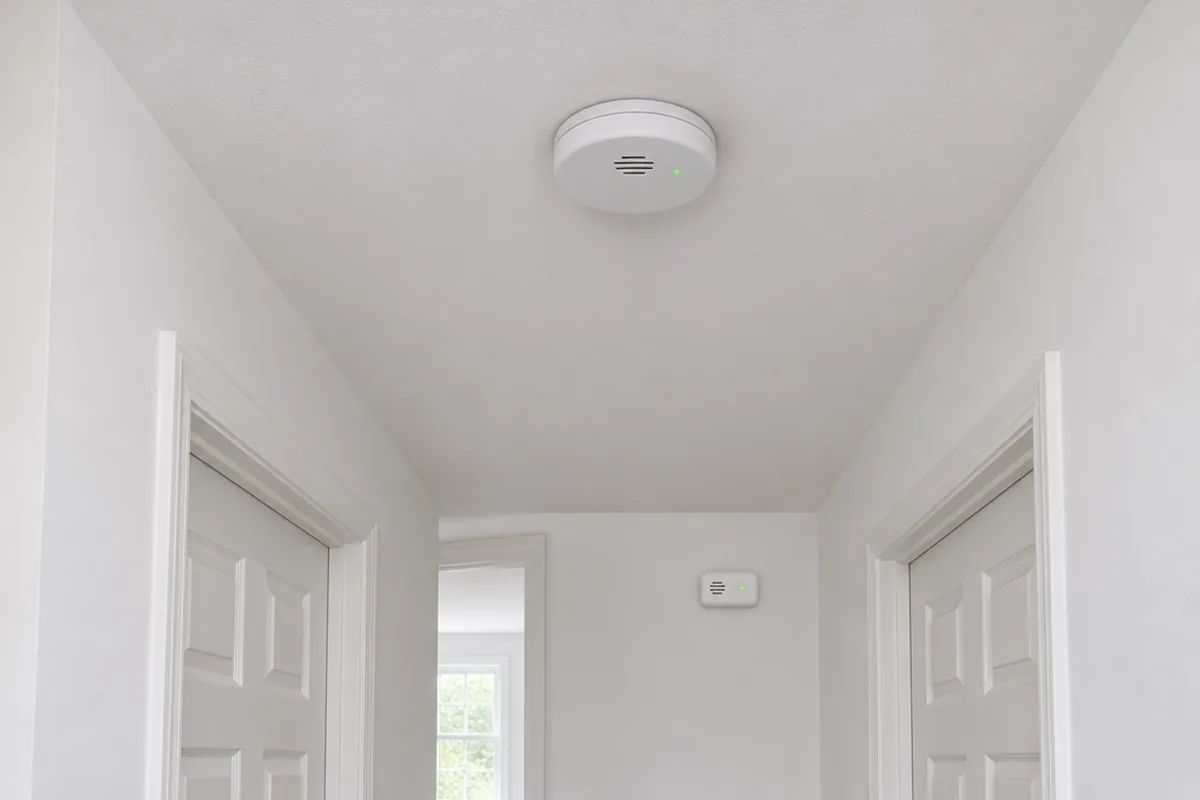
A smoke alarm is one device with a sensor and a horn in the same body. A single-station alarm sounds alone; multiple-station alarms are linked so all sound together. A fire alarm system is different: detectors report to a control panel that runs horns, strobes and often a monitoring line. We replace alarms. A licensed fire alarm contractor maintains systems.
Battery alarms run on a replaceable cell or a sealed ten-year one. Hardwired alarms take building power through a plug-in connector and keep a backup battery. The U.S. Fire Administration advises replacing that backup battery at least once a year and the whole alarm every 10 years. A sealed model removes the battery chore but still expires.
Hardwired alarms in a unit are usually interconnected through a third wire, and different makers' alarms do not always signal each other. Replacing one alarm with a different brand can silently break the link. We replace with a compatible model, change adapters where needed and trigger one alarm to confirm the others respond.
NFPA describes two common smoke sensors: ionization, more responsive to flaming fires, and photoelectric, more responsive to slow, smoky ones, and recommends using both types or dual-sensor alarms. Carbon monoxide needs its own sensor, alone or in a combination alarm. We match what the property standard or local law specifies and note it in the log.
Can't find your answer? Call 855-695-1195 and ask us anything.
Call 855-695-1195NFPA 72 sets the limit at 10 years from the date of manufacture unless the maker's instructions say otherwise, and sooner if an alarm fails its test. The date is printed on the alarm. Where the date is missing or unreadable, the alarm is replaced.
Yes, in kind: a hardwired alarm is swapped for a compatible hardwired alarm on the existing connector and box, and the interconnect is tested. Adding hardwired alarms where there were none is added wiring for a licensed electrician. Some states reserve even the swap for licensed electrical contractors, and we check first.
It matters for who services it. A self-contained unit that senses and sounds by itself is an alarm, and we replace those. A detector wired to a building control panel is part of a fire alarm system and belongs to a licensed fire alarm contractor.
State and local law and the lease decide, and the answer varies. NFPA's guidance notes that maintenance may fall to the landlord or the renter depending on the rental agreement. A dated log shows what the owner installed and when, whichever way your rules divide it.
Yes. Standalone CO alarms and combination smoke and CO alarms are replaced in kind and logged with their own dates, because a CO sensor's service life is set by its manufacturer and may be shorter than the smoke alarm's.
Yes. Property-wide replacements are scheduled by building, with notice given under your lease and local rules. The technician is in uniform, needs a few minutes per alarm, and records any unit that could not be entered so it is not lost.
It depends on the number of alarms per unit, the type specified, battery or hardwired, and whether units are vacant or need scheduled entry. Sealed ten-year and combination alarms cost more per device than basic ones. The written scope gives a price per alarm type.
Tell us the number of units, whether alarms are battery or hardwired, and how access works. We reply with a per-alarm price and a building-by-building schedule. Or call 855-695-1195.
Replaced in kind. Tested. Written into a per-unit log.
We answer in under three rings, 24/7.No price games. You get a clear written quote before any work begins, backed by our workmanship warranty.
