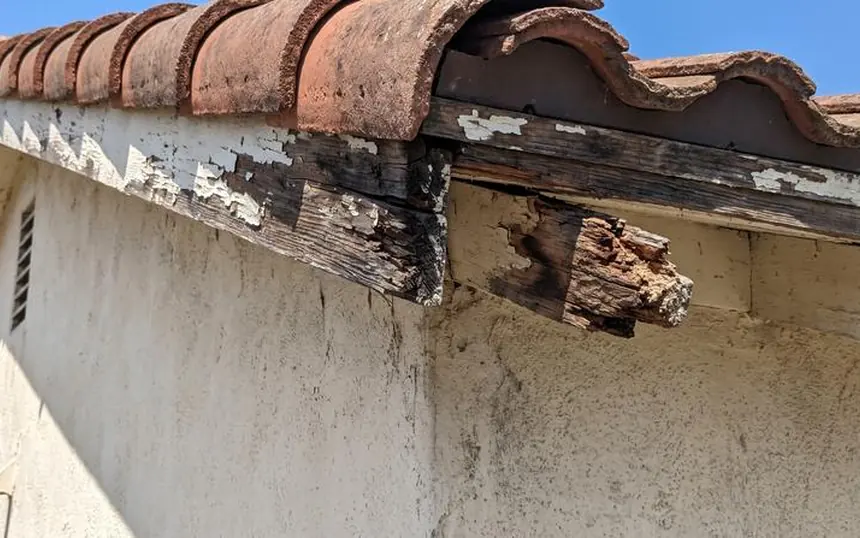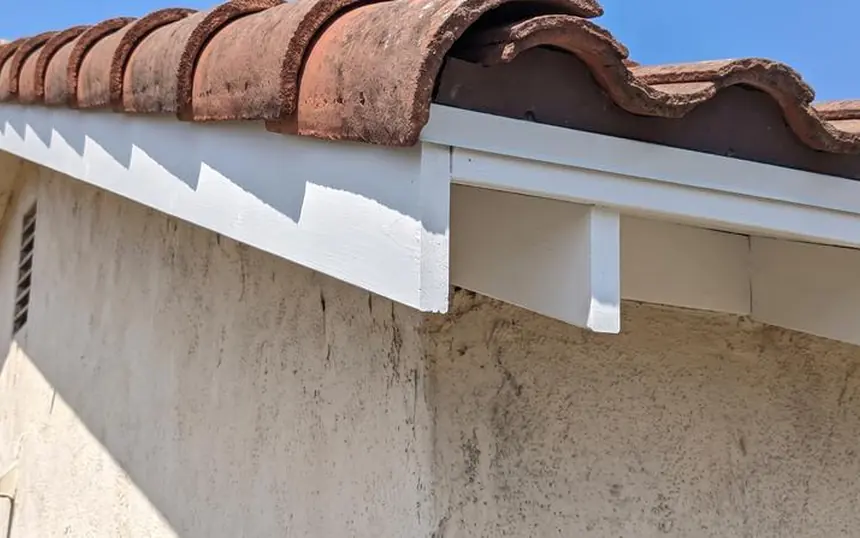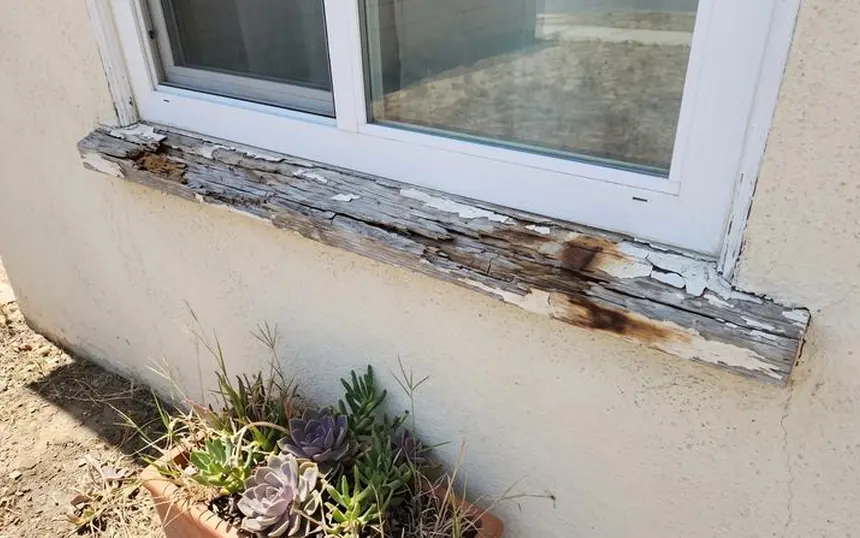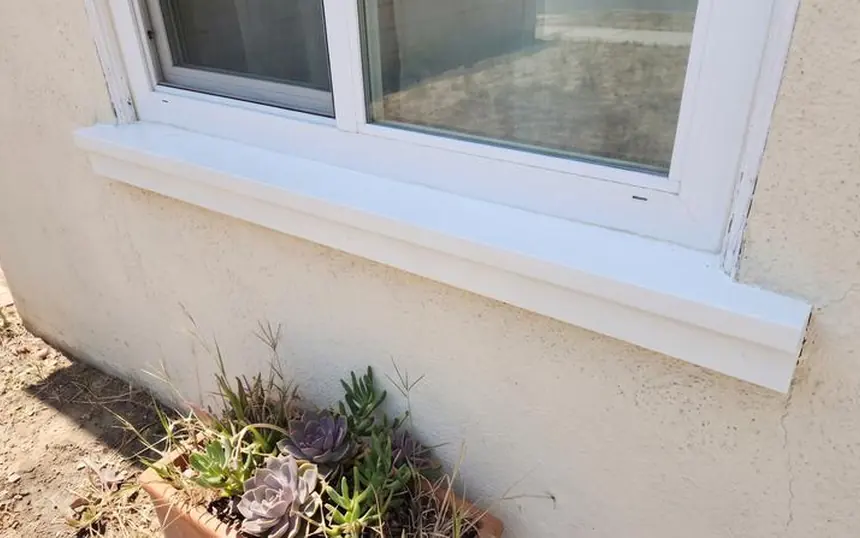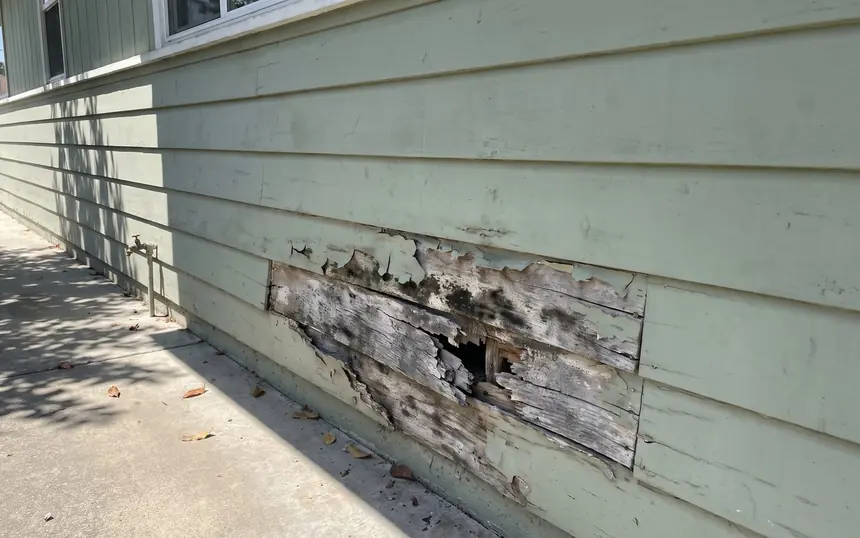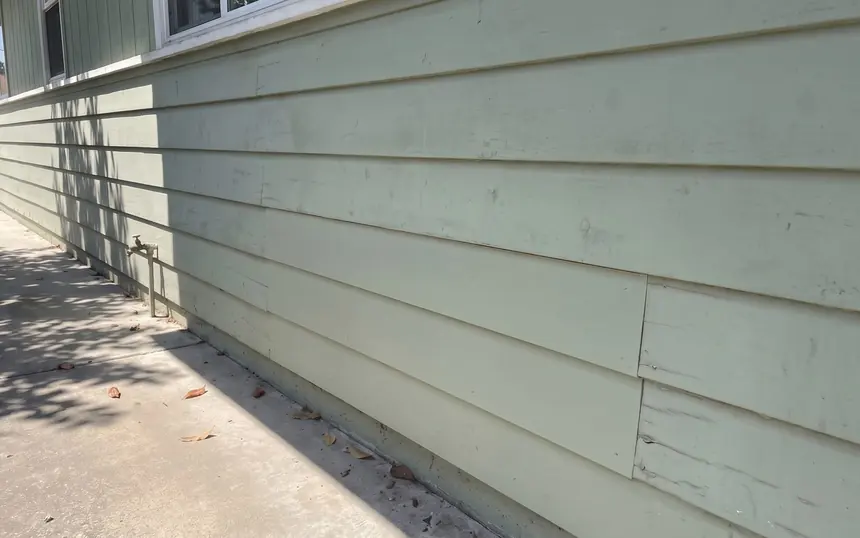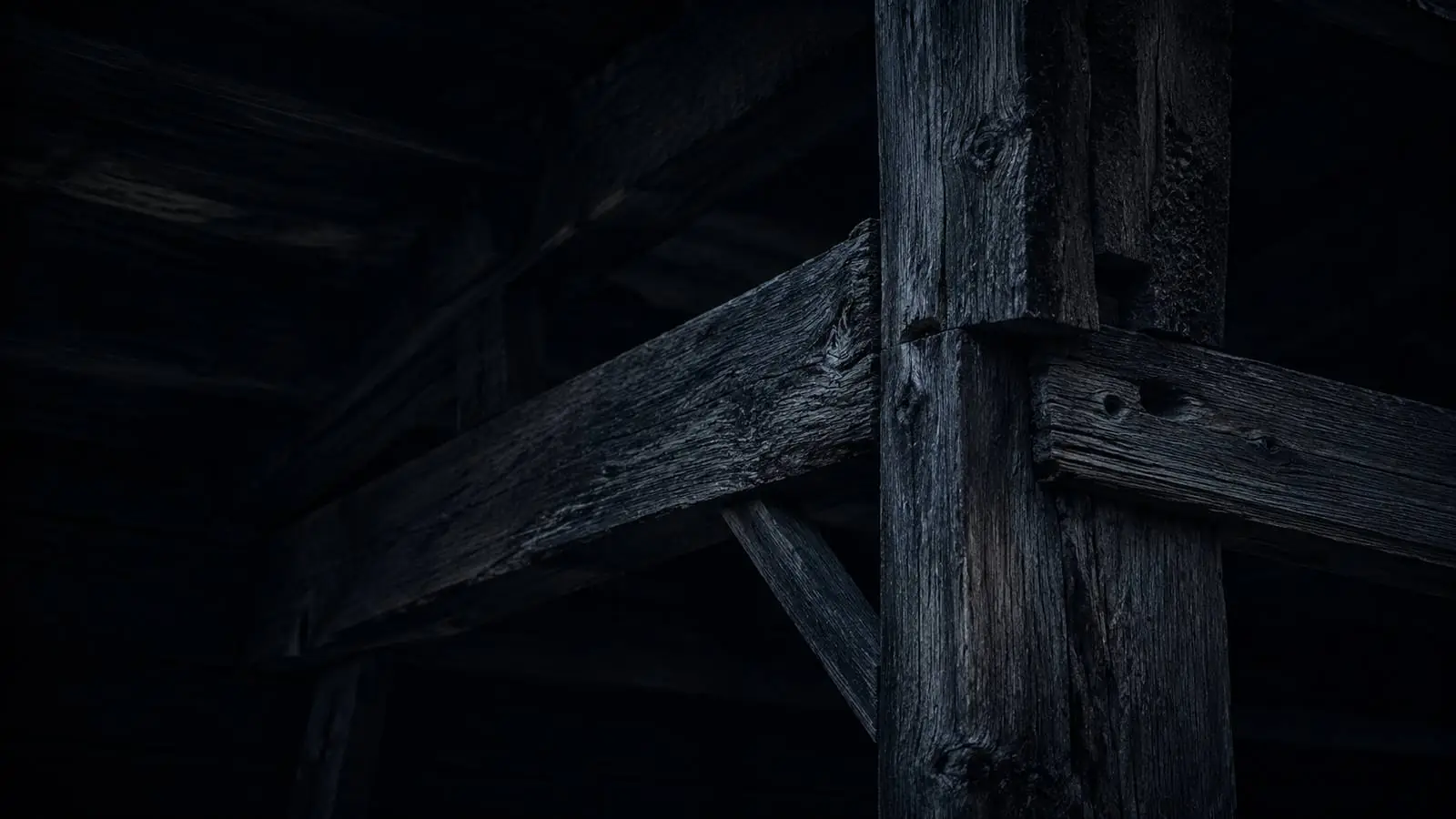
Patio cover beams, fascia, door jambs, gate frames and trellis posts cut out and rebuilt with sound wood, sealed for the desert. Priced in writing before we start.
 BBBAccredited Business
In Palm Desert the sun does half the damage and the irrigation does the rest, and Kaminskiy Care and Repair rebuilds what is left: the patio cover beams and lattice that check and split on the south side, the fascia under the tile, the door jambs and gate frames the drip line soaks, the trellis and pergola posts that rot at the ground, and the trim the termites hollow out. Cut back to sound wood, rebuilt, primed on every face, painted to the club color and sealed. A licensed pest company treats; we rebuild after them, in writing, from our office on Highway 111.
 Eight repairs, one crew, priced in writing before we start.
A hundred and ten in the shade pulls the moisture out of wood and the oil out of paint, so a Palm Desert patio cover checks open in a few summers and the drip emitter at its post fills the cracks every morning. We cut back to sound wood, rebuild with the same profile, prime and paint for the desert, and move the water off the post.
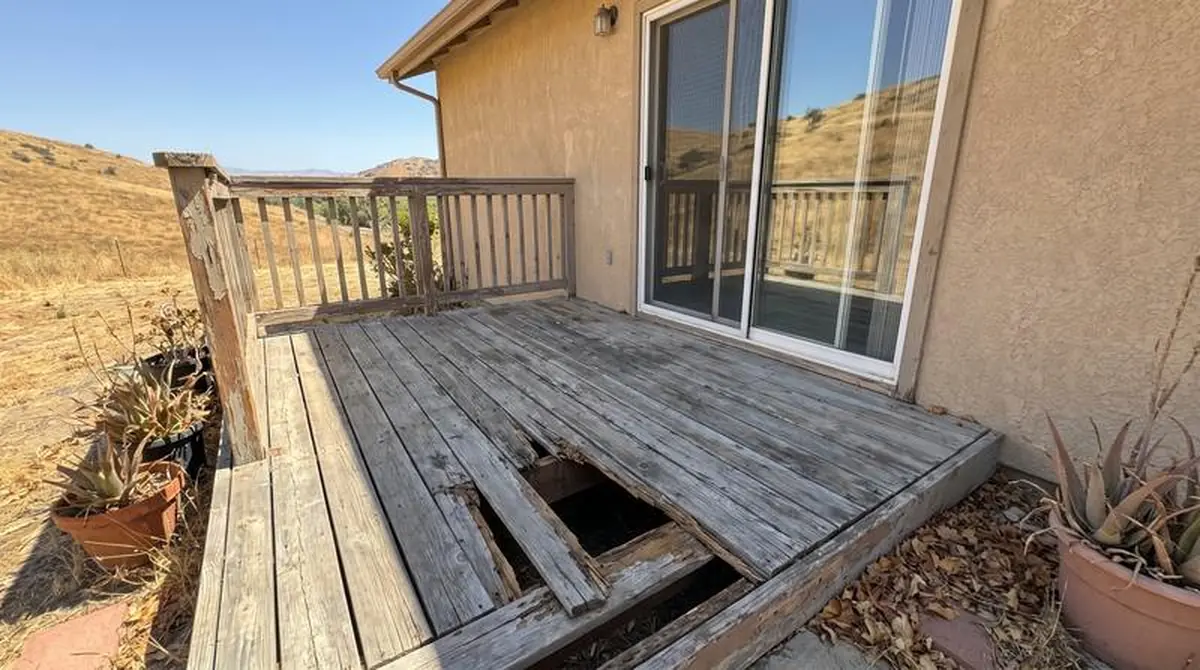
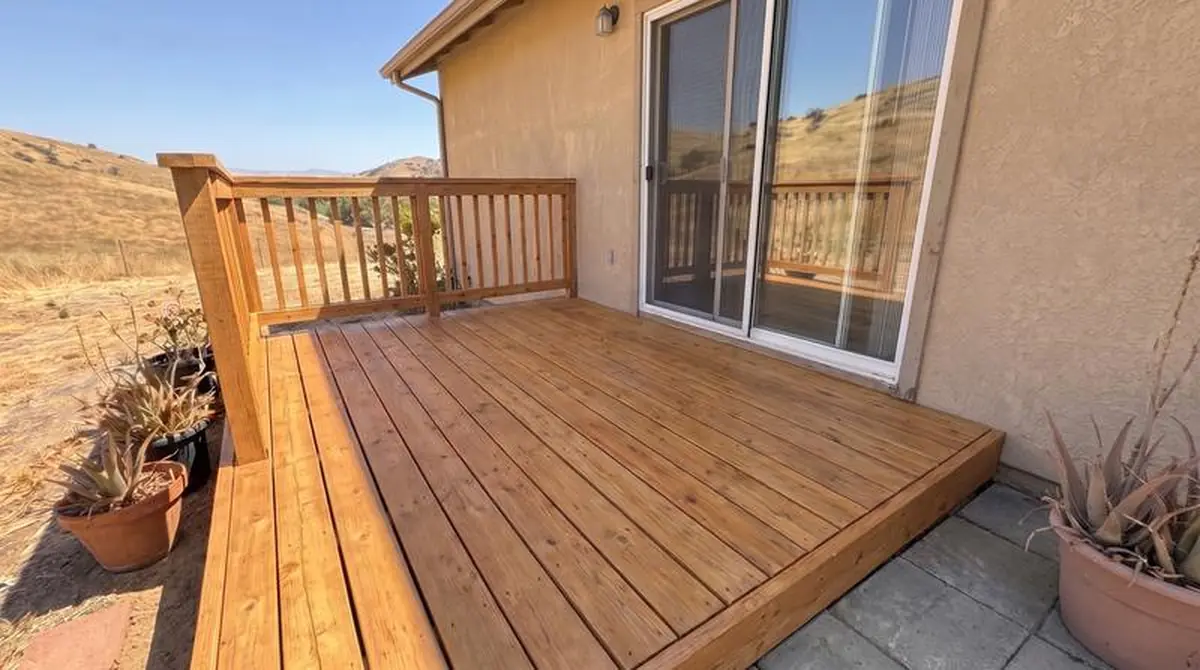 AFTERBEFORE
 Fascia & Eaves
 Window Sills
 Door Jambs & Casings
 Trim & Siding
 Termite Damage Rebuilds
 Deck Boards & Railings
 Stairs & Posts
 Primed, Painted & Sealed
Desert rot moves slowly until the summer heat opens it up, and then it moves fast. A Kaminskiy-certified technician prices most Palm Desert beam end, fascia, jamb and post repairs on the call, in writing; a whole patio cover or a bigger rebuild gets a written scope first.

Priced and on the calendar during the first call.

A written quote you approve before anyone drives out.

One crew, truck stocked, warranty in writing.
A one-year workmanship warranty, in writing, on every Palm Desert rot and termite damage repair.
Dry wood should not rot, and in the desert it does anyway, for two reasons. The sun: hundred and ten degree summers and desert ultraviolet check the surface of every exposed beam, lattice slat and fascia board and powder the paint off, so the wood is open. The water: drip emitters, lawn sprinklers and the late-summer monsoon storms put water into those open checks and into the base of every post, and the hot nights keep it there. Rot in Palm Desert starts where irrigation meets sun-checked wood, and that is where we look first.
Two kinds work Palm Desert. The western drywood termite lives inside dry patio cover beams, lattice, fascia and trim, needs no soil and leaves hard six-sided pellets under a pinhole, swarming on summer and fall days. The desert subterranean termite nests in the irrigated soil and comes up in mud tubes where a post, a gate frame or the stucco meets the dirt; it is the most destructive subterranean species in the low desert. A licensed pest company identifies and treats; we rebuild after them.
A rebuild in Palm Desert is only as good as its finish. We back-prime every new piece on all faces and seal the end grain before it goes in, caulk the joints, and paint it to the house or the club color in a coating meant for the sun. A filler patch on a checked beam end lasts until the next summer; a spliced beam end, primed and painted, lasts.
Move the drip emitters off the posts and the gate frames, and give every post a standoff base so it is not sitting in wet gravel. Repaint or reseal the south and west faces of the patio cover on a schedule, before the surface checks. After a monsoon storm, look at the beam ends and the fascia under the tile for stains. Keep the soil and the decorative rock below the weep screed.
Mid-century and 1970s homes with wood fascia under the tile or the rolled roof, wood patio covers, wood side gates in block openings and wood-framed windows that have taken fifty desert summers. Beam ends split and go soft, fascia checks through, and gate frames rot at the bottom where the drip line reaches. We splice new wood into the old, match the profile and seal it for the sun.
Condominiums and villas with shared patio covers, trellises, balconies and trim under an architectural committee, and under California's balcony inspection law where the units stack. Lattice slats and beam ends go first on the south side; a balcony railing post goes soft at the base. We rebuild to the club's color and profile, put the scope in writing for the board, and name a structural member before anyone opens it.
Newer stucco homes with foam trim and less exposed wood, so the rot hides where wood is still used: the garage door jambs on the slab, the wood side gates and equipment screens, the pergola and trellis posts in the irrigated beds. Smaller fixes, matched to the trim and the color, with the emitter moved so it is the last one.
The Highway 111 office covers the whole Coachella Valley; for the rest of the county, Temecula to Lake Elsinore, the Riverside County dry rot and wood rot repair page has the county-wide picture, the county permit sheet and the pest report in plain words.
A fascia board, a sill or a trim piece is priced on the call, in writing. A bigger rebuild gets a look first and a written price before anything starts.
We cut back to sound wood and probe how far the rot really goes. If it runs further than the photo showed, you hear it before we go further, with the price.
New wood primed on all sides, caulked, painted to match, and the water path that caused it fixed: the drip edge, the flashing, the gutter end, the sprinkler.
The work area is cleaned before we leave, and every rot repair carries our one-year workmanship warranty.
Palm Desert adopts the California Residential Code with its own amendments, and those amendments are about sheds, fences and retaining walls, not repairs: the code's ordinary-repairs clause stands as the state wrote it, so a rebuilt beam end, a fascia board, a jamb or a trellis post needs no application, and painting and finish work are exempt outright. The line is cutting away a structural beam or a load-bearing support, and rot that deep gets a permit and an engineer, which we tell you on the call. A new patio cover is a permit; a rebuilt one is a conversation with the city first.
Selling in Palm Desert means a wood-destroying pest report from a licensed structural pest control company. Section 1 is active infestation and the damage it caused; Section 2 is the conditions that invite it, and in the desert that is usually irrigation against wood. The pest company treats and certifies. The patio cover, fascia, jamb and gate repairs on the list are ours, and they reinspect our work. Send us the report and the address and we price from it, in writing.
Most of Palm Desert's wood sits inside a gated club with an architectural committee, and a rot repair finished to the club's color and profile rarely needs more than a note to the association; a changed profile, a new material or a new color goes to the committee, and we put the materials and finish in writing for it. Where the units stack, California now requires condominium associations to have balconies, decks, walkways and railings inspected, and the rot that report flags in a railing, a board or trim is our lane.
Can't find your answer? Call 760-284-6993 and ask us anything.
Call 760-284-6993Our office is on Highway 111, we answer in under three rings, and a beam end, a fascia board, a jamb or a gate frame is priced on the call and usually scheduled within days. A whole patio cover or a balcony is sized after a look, with the scope in writing before anything starts. In summer we start early.
Yes, after a licensed pest company has treated. We cut out the eaten patio cover wood, fascia, trim, jambs and the framing we can reach, and rebuild it, primed and painted. Treatment and the report are the pest company's trade; the rebuild is ours.
Yes. A beam end, a lattice slat, a fascia board, a jamb or a post is carpentry, and Kaminskiy is licensed, bonded and insured, so a splice into framing is fine too. If the rot has reached the part of the beam that carries the roof, we say so first and tell you who needs to look at it.
How much wood comes out, how high it is, and what the finish has to match: a jamb at the slab and a beam end twelve feet up on the south side are not the same visit, and a club color scheme has to be matched exactly. Text a photo and the price comes back in writing before anything is scheduled.
Not for an ordinary repair. Palm Desert's amendments to the state residential code are about fences, sheds and retaining walls; the code's own rule that ordinary repairs need no application stands, as does the exemption for painting and finish work. A rebuild into a structural beam or a load-bearing support is past that line and gets a permit, which we tell you on the call.
Longer than the original did. New wood is primed on every face and the end grain sealed before it goes in, the joints are caulked, and the paint is a coating meant for the desert. Then we move the emitter off the post, which is what rotted it.
All of Palm Desert from our office on Highway 111, including Palma Village, Shadow Mountain, Cahuilla Hills, the country clubs and University Park, plus Rancho Mirage, Indian Wells, La Quinta, Bermuda Dunes and Sun City Palm Desert. Call 760-284-6993 to confirm your address.
Tell us where the wood has gone soft, or text a photo, and we call back with a written price and a time. Calling is still faster: 760-284-6993.
Priced in writing before we start, rebuilt to last, warranted in writing.
We answer in under three rings, 24/7.No price games. You get a clear written quote before any work begins, backed by our workmanship warranty.