 BBBAccredited Business

Kaminskiy Care and Repair patches stucco cracks and chips and matches the existing texture so the repair blends in. Hairline cracks are cosmetic; widening or bulging ones deserve a call, and the quote is free either way. We serve Portland and the surrounding Oregon communities. Wood, fiber cement, T1-11 and vinyl siding, fascia and trim have their own page: siding repair in Portland.
Stucco is the exception on a Portland street. Cracks, hollow spots and moss stains lead the list.
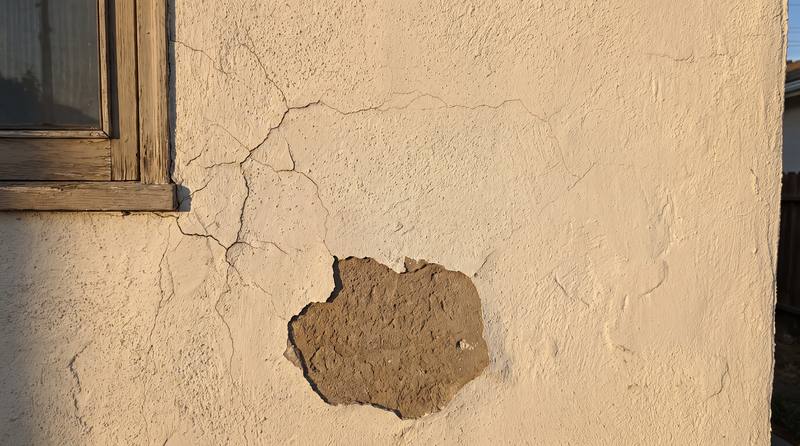
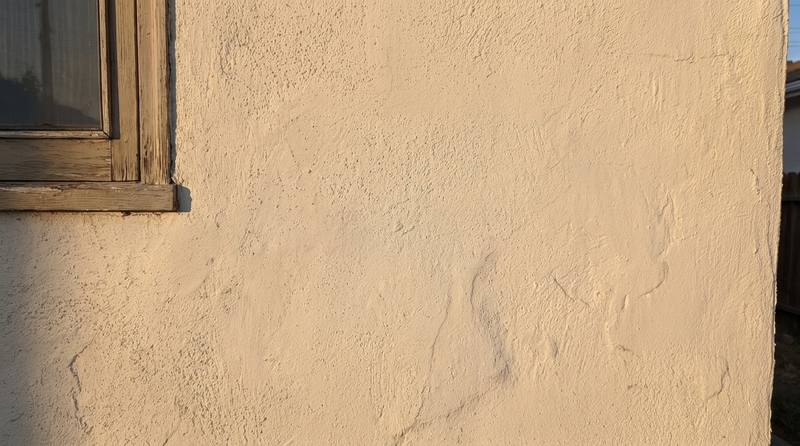
Most Portland houses wear cedar, so the stucco ones stand out: the 1920s and 1930s revival houses in Irvington, Laurelhurst and Alameda with hard-coat stucco over wood lath, the stucco chimneys on the east-side bungalows, and the 1990s and 2000s townhomes with a stucco or synthetic face from before the moisture rules. Nine wet months find every crack. We cut and fill the cracks, cut hollow sections back to sound lath and re-stucco them in three coats, match the texture and the color, and check the base of the wall where water leaves, or should.
 AFTERBEFORE
Each of these is a Kaminskiy-certified technician's work, from our Hillsboro office twenty minutes west on the 26. A crack repair is short; a patch is three coats over several visits, and the written price says which.

Priced and on the calendar during the first call.

A written quote you approve before anyone drives out.

Three coats, each one cured, warranty in writing.
A one-year workmanship warranty, in writing, on every Portland stucco repair.
Water and movement. Nearly all of the year's rain falls between October and May, the north and east walls sit in shade, and a stucco wall that stays damp for months grows moss at the base and lets water into every hairline it has. The houses themselves are old: a 1920s frame has settled, the wood lath behind the stucco has moved with the seasons, and the cracks follow the window corners where the wall is weakest. Hairlines are normal on stucco this age; cracks that widen or let water in are the ones to fix.
A hairline you cannot fit a dime into, with no stain around it, is a seal-and-paint item. Watch it a season. Call about a crack that is widening, a crack with a rust or water stain beside it, a section that sounds hollow when you knock, bubbling paint, or stucco that has fallen off and shows the lath. A crack that runs in a straight diagonal from a window corner toward the foundation on a house that is also showing cracks inside is a foundation question, and an engineer looks before we patch over it.
A hollow or broken section is cut back to sound stucco and sound lath, the paper and lath are replaced where they failed, and the patch goes on in three coats: a scratch coat keyed into the lath, a brown coat that builds the thickness, and a finish coat that carries the texture and the color. Each coat has to set and cure before the next, and in a Portland winter that takes longer than it does in July, so a patch is a day of work spread over several visits. Anyone offering to finish it the morning they arrive is skipping a coat.
Paint it. Stucco that is painted with a breathable masonry or elastomeric coating sheds the rain instead of drinking it, and the paint is where a hairline crack gets sealed. Keep the gutters clear so the wall below them is not running water all winter, keep bark dust and planters below the weep screed, hose the moss off in a dry week rather than blasting it, and recaulk the window and door perimeters when the bead cracks. A wall that drains and is painted every decade or so will outlast the house's second roof.
Among the bungalows and foursquares from the 1900s to the 1940s are the stucco houses: English cottages, Tudors and Mediterranean revivals with hard-coat stucco over wood lath, plus stucco chimneys and porch piers on houses that are otherwise cedar. A century of settling has opened cracks at the window corners, the lath has rusted where water sat behind the wall, and the bottom edge has chipped above the walk. We cut the cracks open, fill them, re-lath and re-stucco the hollow sections, and match a textured finish laid up by hand ninety years ago.
Midcentury and 1970s to 1990s homes on slopes under firs, where a stucco wall on the shaded side never dries out. Moss and algae take the north face green, water running off the hill stains the base, and a planter bed built up against the wall buries the weep screed so the wall cannot drain. We clean and treat the growth, repair the chipped and hollow stucco, open the base of the wall back up and tell you which bed to pull back.
Younger buildings with a stucco or synthetic stucco face, many of them built before Oregon required a drainage space behind the cladding, so water that gets in at a window corner stays in. The calls are a stain below a window, a soft spot at a parapet or a deck door, and cracks at the panel joints. A true stucco wall we repair and flash; a synthetic system goes to its certified installer, and we tell you which you have before anything is quoted.
Call 971-571-5787 or text a picture of the crack, the hollow section and the base of the wall. A crack repair is usually priced on the call; a patch gets a date for the look.
A technician taps the wall for hollow spots, checks the weep screed, the flashing and the window perimeters, and tells you whether the wall is hard-coat stucco or a synthetic system. The written scope lists the repair, the coats and the visits it takes, with the price.
Cracks are cut open and filled. Failed sections are cut back to sound lath, re-papered and re-lathed, then built back in a scratch coat, a brown coat and a finish coat, each one cured before the next.
The finish coat is textured to match the wall around it and colored or painted to match, the cut-offs leave with us, and the one-year workmanship warranty is on the invoice.
Oregon is plain about it: anyone paid to repair, improve or build a home has to hold a Construction Contractors Board license, and that covers a stucco patch as surely as a kitchen. The law's only carve-out is a casual one-off by someone who is not in the business and does not advertise, which is nobody you would find by searching. Kaminskiy Care and Repair holds CCB #252813, is bonded and insured, and sends Kaminskiy-certified, background checked technicians. A whole wall re-stuccoed is a licensed stucco contractor's job, and a synthetic stucco system is its certified installer's, and we say so.
Portland's own page says no building permit is needed to repair or replace siding that is not fire-rated or to paint the outside, and the state code adds that an ordinary repair with like materials needs no application at all. Cutting and filling a crack, patching a section in three coats and repainting the wall is that kind of repair. Stripping a wall to the sheathing and re-lathing a large area is closer to a re-side, where Oregon's moisture rules and the permit question come in, and we tell you on the call when a job is near that line.
In Irvington, Ladd's Addition, the Alphabet District and Portland's other historic and conservation districts, repair and maintenance are exempt from historic review: a crack filled, a section patched in matching texture, the wall repainted. Changing the finish texture, covering stucco with a different material or altering a street-facing feature is an alteration that may need review first, and we tell you when a repair is close to that line.
Twenty minutes west on the 26. Our Portland crew dispatches from the office on Tanasbourne Drive in Hillsboro and covers the whole metro, from St. Johns to Sellwood and the West Hills. Call 971-571-5787, text a photo, or send the form. We answer Monday to Friday, 8 to 4:30.
Can't find your answer? Call 971-571-5787 and ask us anything.
Call 971-571-5787Longer than the drive. A patch is three coats, scratch, brown and finish, and each one has to set and cure before the next goes on, so a patch that is a day of actual work is spread over several visits. A Portland winter stretches the cure; a dry week in August shortens it. The written scope tells you how many visits before we start; a crack repair alone is far shorter than a patch.
We match the texture first, by hand, to the finish around it, whether that is a 1920s dash or a smooth sand float, and then the color. A painted wall gets the patch primed and the area repainted so the edge disappears. On an unpainted, integrally colored wall the new finish coat is tinted to match and will be close, and we show you a sample on the wall before the finish coat goes on.
Usually not. Stucco shrinks as it cures and a frame moves with the seasons, so hairlines are part of owning a stucco house in Portland. Seal them when you paint. Call when a crack widens, when there is a stain beside it, when a section sounds hollow, or when a crack runs straight from a window corner toward the ground on a house with new cracks inside, because that one is a foundation question for an engineer, not a patch.
No. EIFS and the other synthetic stucco systems are foam and mesh with a thin coat, and the repair has to be done with the system's own materials by its certified installer, so we refer it. Many of Portland's 1990s and 2000s townhomes have one. Tap the wall: hard-coat stucco sounds like stone, a synthetic system sounds like a cabinet door. We tell you which you have at the look and point you to the right trade if it is synthetic.
It depends on how many cracks, how large the hollow section is, and whether the lath behind it has failed. Text photos of the crack, the patch area and the base of the wall and we give you a sense of it on the call; the written price comes after the look, with the coats and the visits listed, and that is the number on the invoice.
Yes. Every stucco repair carries a one-year workmanship warranty in writing and is done by Kaminskiy-certified, background checked technicians under Oregon CCB #252813, bonded and insured. Hairline shrinkage cracks that appear in the finish coat are part of stucco, and we tell you that before we start, in writing.
Not a repair. In Irvington and the city's other historic and conservation districts, repair and maintenance are exempt from historic review, and a crack filled or a section patched in matching texture and repainted is exactly that. Changing the texture, covering the stucco with another material or altering a feature on the street face is an alteration that may need review, and we say so before anything is ordered.
The whole metro from our Hillsboro office: Portland's east side including Irvington, Laurelhurst, Hawthorne, Sellwood, Woodstock, Montavilla, Alberta and St. Johns, the Southwest hills including Hillsdale and Multnomah Village, plus Beaverton, Hillsboro, Tigard, Lake Oswego and Milwaukie. Siding repair is its own page, our Portland siding repair page. Call 971-571-5787 to confirm your address.
Send a photo of the wall and the address. We call back with a written price and the visits it takes. Calling is still fastest: 971-571-5787.
Priced on the call, blended to match, warranted in writing.
We answer Monday to Friday, 8 to 4:30.No price games. You get a clear written quote before any work begins, backed by our workmanship warranty.
