 BBBAccredited Business

Kaminskiy Care and Repair patches stucco cracks and chips and matches the existing texture so the repair blends in. Hairline cracks are cosmetic; widening or bulging ones deserve a call, and the quote is free either way. We serve Clackamas and the surrounding Oregon communities.
Town Center tracts, river-side lots, hillside subdivisions. Moss and cracks lead the Clackamas stucco list.
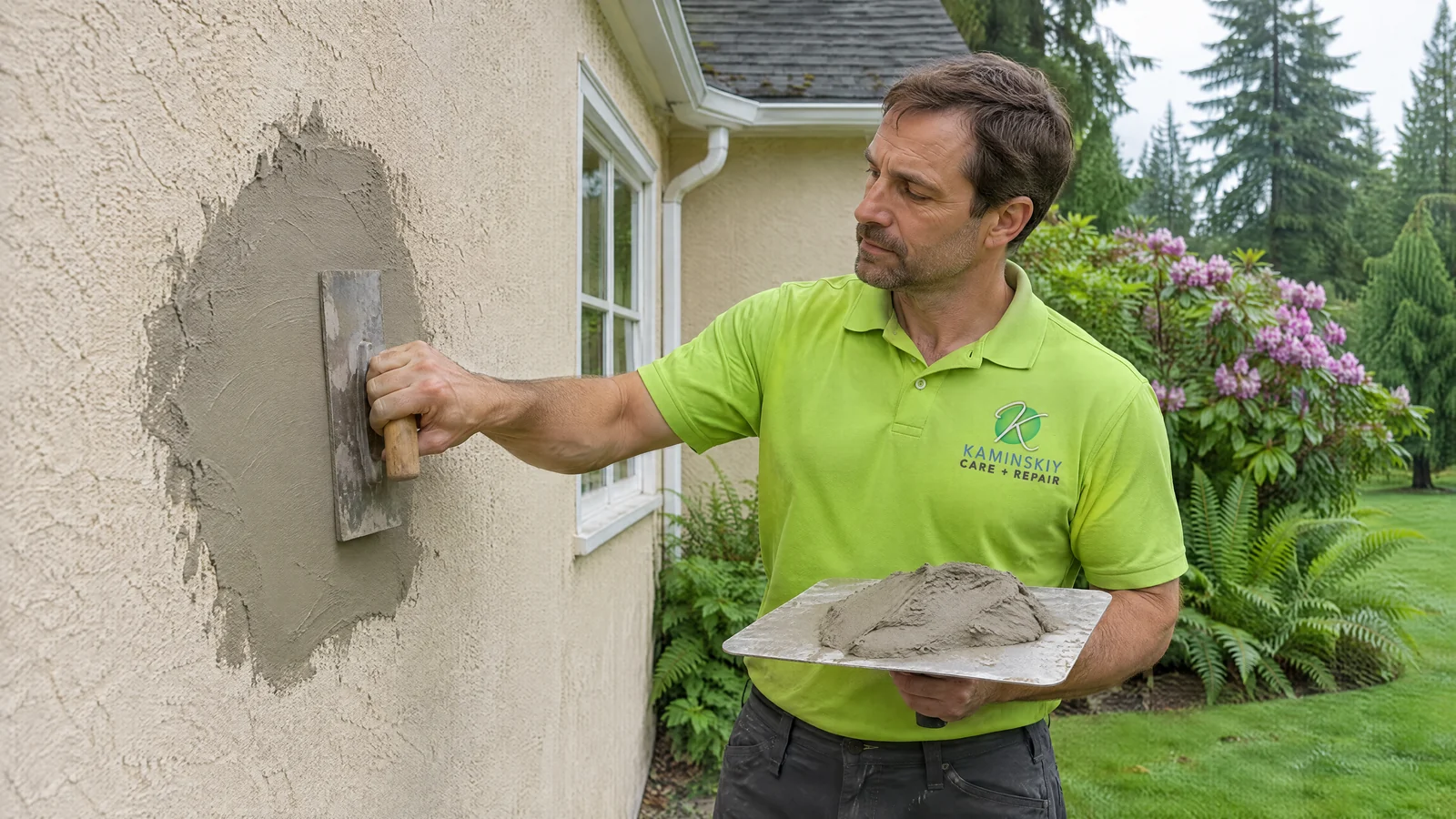
Clackamas is a mix, and so is its stucco: a 1960s chimney or ranch front on the Town Center tracts with fifty years of cracks at the corners, a stucco wall on a big river-side lot in Oak Grove that the firs have kept green and wet since October, and a stucco or synthetic face on a Sunnyside or Carver hillside house from before the moisture rules with a stain under the sill. We clean and treat the growth, cut and fill the cracks, cut the hollow and crumbling sections back to sound lath and rebuild them in three coats, match the texture and the paint, and get the needles and the mulch off the base so the wall can drain again.
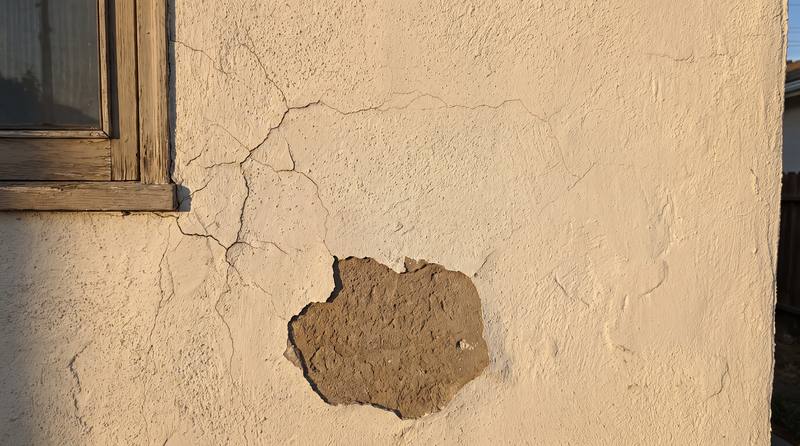
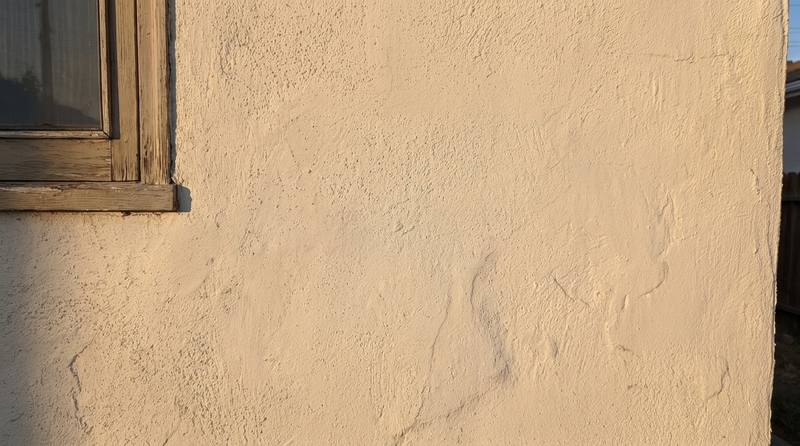 AFTERBEFORE
Each of these is a Kaminskiy-certified technician's work from our Lake Oswego office, across the 205. Cracks are a short job; a patch is three coats with cure time between them, and the written scope says which you have and how many visits.

Priced and on the calendar during the first call.

A written quote you approve before anyone drives out.

Three coats, each one cured, warranty in writing.
A one-year workmanship warranty, in writing, on every Clackamas stucco repair.
Shade and needles, mostly. The big lots on the river side sit under firs that keep the walls dark from October to June, moss holds the wet against the stucco, and needles pile at the base and bury the weep screed the wall was built to drain through. On the tracts the frames are fifty years old and the stucco has cracked at the window corners where it is thinnest; on the hills the rain comes sideways into walls built before the drainage rule. None of it is dramatic, and all of it is cheaper this year than next.
A hairline on a painted wall with no stain beside it is sealed at the next repaint; give it a winter and watch it. Call about a crack that is widening, a crack with a dark or rusty stain beside it, stucco that sounds hollow when you knock, paint lifting off the surface, or a bottom edge that crumbles when you press it with a screwdriver. A straight diagonal crack from a window corner toward the foundation on a house that is also showing new cracks inside is a foundation question, and an engineer looks at it before we patch over it.
The soft or hollow section is cut back to stucco that rings solid and lath that still holds, the paper and lath are replaced where they rotted or rusted, and the wall is rebuilt in three coats: a scratch coat keyed into the lath, a brown coat that brings it flush, and a finish coat that carries the texture and the color. Each coat has to set and cure before the next, so a patch that adds up to a day of work is spread across several visits over the 205, more of them in a wet month than a dry one, and the scope says how many before we start.
Rake the needles and the bark dust off the base until the weep screed shows, and keep it clear; limb the firs up so the shaded wall gets some air. Hose the moss off in a dry week rather than pressure-washing it into the wall, keep the gutters clear so the wall below them is not running water all winter, recaulk the window and door perimeters when the bead splits, and repaint with a breathable masonry or elastomeric coating before the old paint fails, because that paint is what seals the hairlines.
Tracts from the 1960s and 1970s, mostly T1-11 and lap siding, with stucco where the builder used it: a front elevation, a chimney, a planter wall under the window. Fifty years of settling has cracked the window corners, the chimney cap has let water into the stucco below it, and the bottom edge has crumbled where the grade and the bark dust crept up. We fill the cracks, rebuild the cap, cut the crumbled base back to sound lath and re-stucco it in three coats, then pull the mulch down so the wall drains.
Older homes and a few 1920s and 1930s stucco houses on big lots under tall firs, where a stucco wall on the shaded side never sees the sun from October to June. Moss and algae take the base green, needles pile against the weep screed and hold the water there, and the stucco softens and chips along the bottom course. We clean and treat the growth, repair the chipped and hollow stucco, rake the base clear and tell you which trees to limb up so the wall dries.
Newer subdivisions on slopes with association standards, some faced in stucco or a synthetic system from before Oregon required a drainage space behind the cladding. Rain driven across the slope finds the sills and the deck-door corners, and a stain below a window means water behind the wall. We tell you first whether it is hard-coat stucco or synthetic; the stucco we open, flash, rebuild in three coats and match to the association's scheme, and the synthetic system goes to its certified installer.
Call 971-571-5787 or text pictures of the crack, the hollow or mossy area and the base of the wall where it meets the ground. Crack work is often priced on the call; a patch gets a date for the look, twenty minutes over the river.
A technician knocks on the wall for hollow spots, finds the weep screed under the needles, checks the chimney cap and the window flashing, and tells you whether the wall is hard-coat stucco or a synthetic system. The written scope lists the repair, the coats and the visits, with the price, and confirms whether your address answers to the county, Happy Valley or Milwaukie if a permit question ever comes up.
The moss is cleaned and treated. Cracks are cut open and filled. Failed sections are cut back to sound lath, re-papered and re-lathed, and rebuilt in a scratch coat, a brown coat and a finish coat, each cured before the next.
The finish coat is textured by hand to the wall around it and painted or tinted to match, the base is raked clear, the debris leaves with us, and the one-year workmanship warranty is on the invoice.
Under Oregon law a person paid to repair or improve a house needs a Construction Contractors Board license, for a stucco crack as much as for a kitchen, and a handyman is a contractor in the state's eyes; the only small-job exception is a casual one-off by someone outside the trade who does not advertise. Kaminskiy Care and Repair holds CCB #252813, is bonded and insured, with Kaminskiy-certified, background checked technicians. A whole wall re-stuccoed is a licensed stucco contractor's, a synthetic system its certified installer's and a foundation crack the engineer's, and those are hand-offs we name.
The unincorporated Clackamas streets are served by Clackamas County Building Codes, which administers Oregon's statewide residential code: no permit to repair or replace cladding that is not fire-rated or to paint, and no application for an ordinary repair with like materials, which is what cracks filled, a section patched in three coats, a chimney cap rebuilt and a wall repainted are. Stripping a wall to the sheathing and re-lathing a large area is where the permit question and the moisture rules start, and we check with the county, or with Happy Valley or Milwaukie if your address is in one, before a job like that.
Sunnyside, Carver and many of the newer east-side streets have associations; a stucco patch textured and painted to match rarely needs a form, a new color or a changed finish sometimes does, and we put the materials and the color in writing for it. Oak Grove, Jennings Lodge and Oatfield mostly have none. Oregon's moisture rules for cladding apply to a re-side, not to a filled crack or a rebuilt section, and we say so when a wall is past repairing and belongs to the licensed stucco contractor.
Across the 205 from our office. Your Clackamas crew dispatches from our Lake Oswego office on Centerpointe Drive, twenty minutes over the river, so most calls are scheduled within days. Call 971-571-5787, text a photo, or send the form.
Can't find your answer? Call 971-571-5787 and ask us anything.
Call 971-571-5787Several visits, because it is three coats and each cures before the next. Scratch coat, then it sets; brown coat, then it cures; finish coat with the texture and the color last. The work itself adds up to about a day; the calendar depends on the weather, and a shaded Oak Grove wall in December cures slower than a sunny Sunnyside wall in August. The written scope lists the visits before we start. A crack repair alone is a much shorter job.
The texture is matched by hand to the finish beside it first, whether that is a 1960s heavy dash on a ranch front or a builder's sand float on the hill, and then the color. A painted wall gets the patch primed and the area repainted so there is no edge. On a wall with the color in the finish coat the new coat is tinted to match, and we show you a sample on the wall before it goes on.
Not on their own. Stucco shrinks as it cures and a frame moves a little every season, so hairlines at the window corners are normal on a fifty-year-old tract house and on a twenty-year-old hill house, and they get sealed at the next repaint. Call when a crack widens, when there is a stain or rust beside it, when a section sounds hollow, or when a straight crack runs from a window corner toward the ground on a house that is also cracking inside; that one is for an engineer, not a patch.
No. Synthetic stucco systems are foam and mesh under a thin finish coat, and a repair has to use the system's own materials and its certified installer, so we refer it. Some of the Sunnyside and Carver homes from the 1990s and 2000s have one rather than hard-coat stucco. Knock on it: stucco sounds like rock, a synthetic system sounds light and hollow. We tell you which you have at the look and point you to the right trade if it is synthetic.
It depends on how many cracks there are, how large the failed section is, how much growth has to come off and whether the lath behind the stucco has to be replaced. Text photos of the crack, the patch area and the base of the wall and we give you a sense of it on the call; the written price comes after the look, with the coats and the visits listed, and that number is the invoice.
Yes. Every Clackamas stucco repair carries a one-year workmanship warranty in writing and is done by Kaminskiy-certified, background checked technicians under Oregon CCB #252813, bonded and insured. Fine shrinkage hairlines in a new finish coat are the nature of stucco, and the scope says so before we start.
Moss means the wall stays wet, not that it has failed. Knock on the green area and press the bottom edge: if it sounds hollow or crumbles, that is a patch; if it rings solid, we clean and treat the growth in a dry week, rake the needles off the weep screed, name the firs to limb up and repaint that wall with a breathable coating before the paint fails, and the moss has a harder time next year. Pressure-washing it hard drives the water into the wall, so we do not.
Clackamas and the unincorporated streets around it from our Lake Oswego office, including the Town Center area, Sunnybrook, Oak Grove, Jennings Lodge, Oatfield, Sunnyside and Carver, plus Johnson City, Milwaukie, Gladstone, Happy Valley and Damascus. T1-11, lap siding and shingles are on our Lake Oswego siding repair page. Call 971-571-5787 to confirm your address.
Send a photo of the wall and the address. We call back with a written price and the visits it takes. Calling is still fastest: 971-571-5787.
Priced on the call, blended to match, warranted in writing.
We answer Monday to Friday, 8 to 4:30.No price games. You get a clear written quote before any work begins, backed by our workmanship warranty.
