 BBBAccredited Business

Kaminskiy Care and Repair patches stucco cracks and chips and matches the existing texture so the repair blends in. Hairline cracks are cosmetic; widening or bulging ones deserve a call, and the quote is free either way. We serve Happy Valley and the surrounding Oregon communities.
Hillside subdivisions from the 1990s on. Stained sills and cracked window corners lead the stucco list.
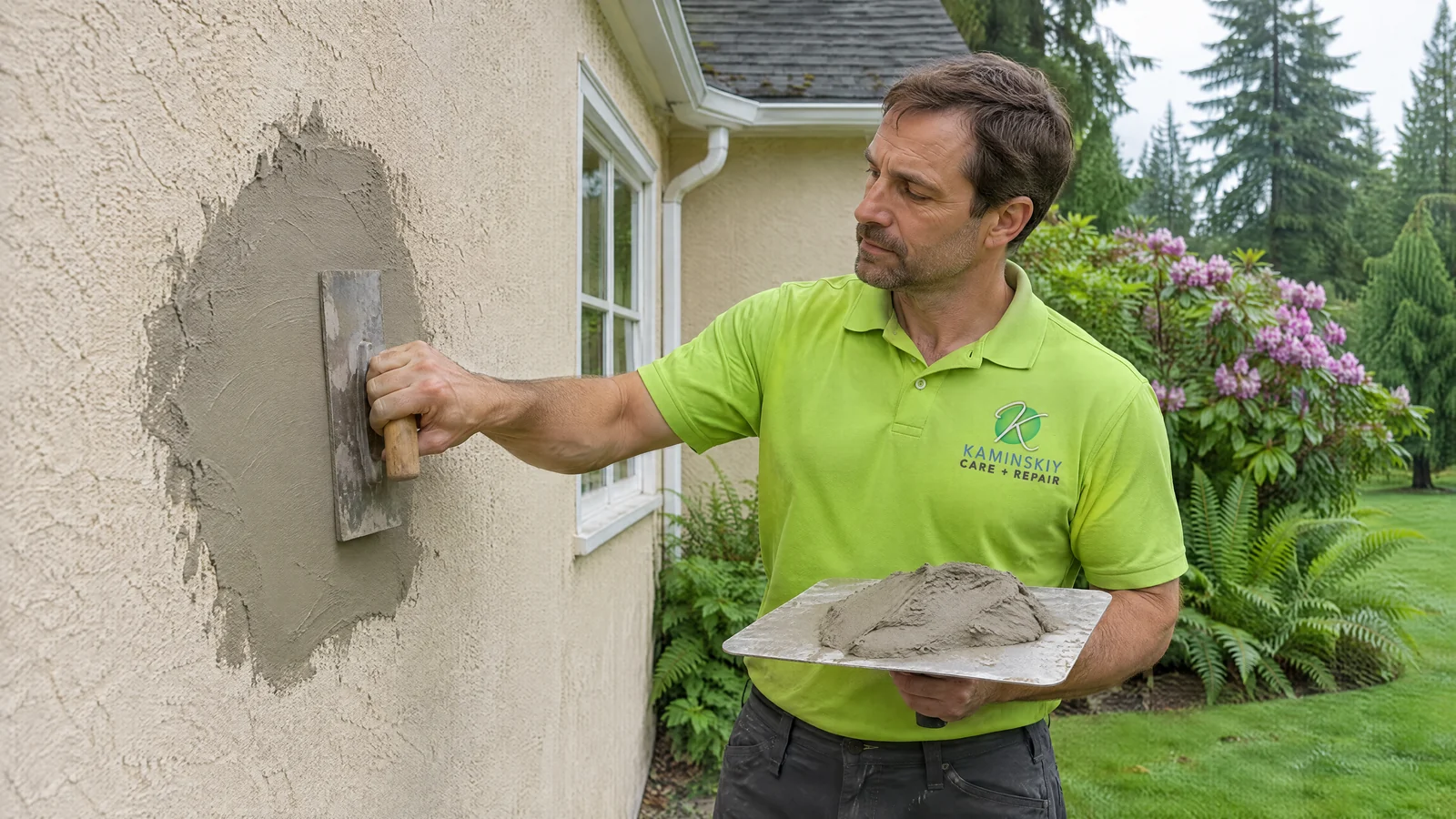
Happy Valley's stucco is young and it sits on a hill. The homes that went up on the slopes of Mount Scott and Scouters Mountain in the 1990s and 2000s used stucco and synthetic stucco for entries, garage fronts and whole elevations, before Oregon required a drainage space behind the cladding, and nine months of wind-driven rain have had twenty years to find a window corner with the flashing done wrong. The first thing we do is tell you whether your wall is hard-coat stucco or a synthetic system, because only one of them is ours. The stucco we open at the stain, flash, cut back to sound lath and rebuild in three coats, textured and colored to the association's scheme.
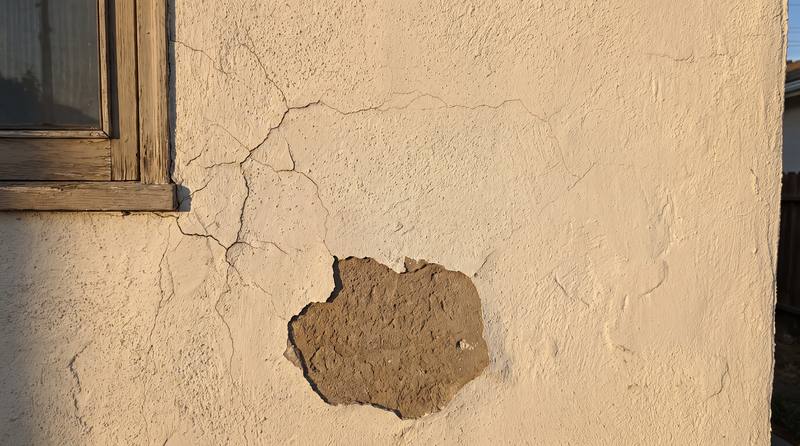
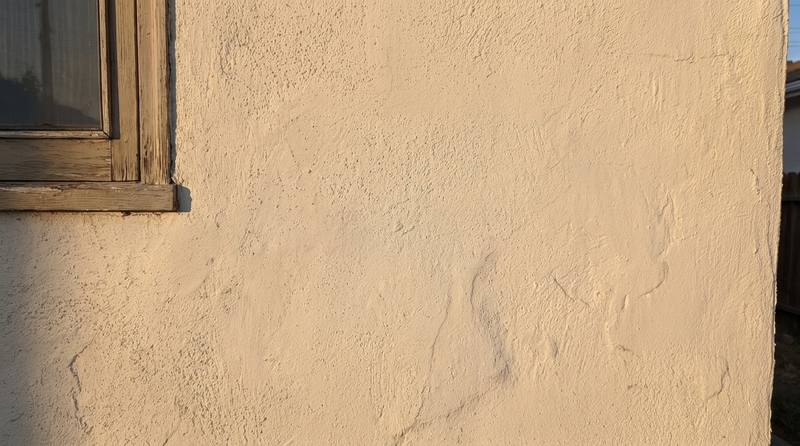 AFTERBEFORE
Each of these is a Kaminskiy-certified technician's work from our Lake Oswego office, up the 205. A patch is three coats with cure time between them, so the price and the number of visits are set before the first drive up the hill.

Priced and on the calendar during the first call.

A written quote you approve before anyone drives out.

Three coats, each one cured, warranty in writing.
A one-year workmanship warranty, in writing, on every Happy Valley stucco repair.
Builder details and the hill. Most of Happy Valley went up from the 1990s on, on slopes that face the weather, with nine months a year for wind-driven rain to find a window flashing that was done wrong or a deck door set against a wall with no drainage gap behind it. The stucco itself is young; the water path behind it is the problem, and water that sits against the sheathing softens the stucco from the back and stains it from the front. Add a frame that has settled on a cut-and-fill lot and the window corners crack first, because that is where the wall is thinnest.
A hairline fanning from a window corner with no stain beside it is normal on stucco and gets sealed at the next repaint; watch it through a winter. Call about a crack that is widening, a brown stain below a sill or beside a crack, stucco that sounds hollow when you knock, a soft spot you can dent with a thumb, or paint lifting off the surface. A straight diagonal crack from a window corner toward the foundation on a house that is also cracking inside is a foundation question on a hillside lot, and an engineer looks before we patch over it.
The stained or hollow section is cut back to solid stucco and sound lath, the paper and lath behind it are replaced where they failed, the flashing is corrected so the water has a path out, and the wall is rebuilt in three coats: scratch, brown and finish. The scratch coat keys into the lath, the brown coat brings it flush, and the finish coat carries the texture and the color. Each coat has to set and cure before the next, so a patch is a day of work spread over several trips up the hill, more of them in a wet month than a dry one, and the scope says how many before we start.
On a pre-rule wall the caulk bead at the windows, the doors and the deck ledger is the only thing keeping the rain out of the sheathing, so recaulk it when it splits and have a stain below a sill looked at the first winter it appears rather than the fifth. Keep the beds and the bark dust below the weep screed so the wall can drain, keep the gutters clear on the weather side, and repaint with a breathable masonry or elastomeric coating before the old paint chalks off; that paint is what seals the hairlines.
Steep lots with terraced yards and walls that take the weather straight off the valley, many with stucco or synthetic faces two stories tall. Rain driven across the slope gets in at the sills and the deck-door corners, the sheathing behind the stucco stays wet, and a stain, a soft spot and a crack follow. We tell you first which system the wall is; hard-coat stucco we open at the stain, re-paper and re-lath, flash so the water has a way out, and rebuild in three coats to match.
Subdivisions from the 1990s and 2000s with association standards, builder stucco on entries and garage fronts, and walls installed before Oregon's moisture rules. Water gets in at a window corner or the garage jamb with nowhere to go, and shows up years later as a brown stain and a hollow spot. We open the corner, correct the flashing, rebuild the stucco in three coats and match the association's color, with the materials in writing for the board.
The newest streets, built with a drainage gap and better flashing, with stucco as an accent band or an entry surround. The list is small and early: a shrinkage crack the first winter, a chip where the trailer hitch caught the corner, a hairline at a control joint. Small patches, textured and colored to the builder's finish, done so the warranty on the house is not an argument.
Call 971-571-5787 or text pictures of the stain, the crack and a close shot of a corner or an edge where the wall's thickness shows. Most crack repairs get a price on the call; a stained corner or a hollow section gets a date for the look.
A technician knocks on the wall and checks an edge to tell hard-coat stucco from a synthetic system, then checks the window flashing, the deck-door corner and the weep screed. The written scope lists the repair, the flashing work, the coats and the visits, with the price and the color noted for the association. If the wall is synthetic, you leave with the right trade's name instead.
Cracks are cut open and filled. The failed section is cut back to sound lath, re-papered and re-lathed, the flashing corrected, and the stucco rebuilt in a scratch coat, a brown coat and a finish coat, each cured before the next.
The finish coat is textured to the wall around it and painted or tinted to the association's color, the debris leaves with us, and the one-year workmanship warranty is on the invoice.
Oregon does not have an unlicensed-handyman category: a person paid to repair, improve or build a home needs a Construction Contractors Board license, for a stucco crack as much as for an addition, and the small-job exception reaches only a casual one-off by someone outside the trade who never advertises. Kaminskiy Care and Repair holds CCB #252813, is bonded and insured, with Kaminskiy-certified, background checked technicians. A whole elevation re-stuccoed goes to a licensed stucco contractor, a synthetic system to its certified installer and a foundation crack to an engineer, and the scope names the hand-off.
Happy Valley has its own Building Division, and it administers Oregon's statewide residential code: no permit to repair or replace cladding that is not fire-rated or to paint, and no application for an ordinary repair with like materials. Cracks filled, a corner opened and flashed, a section patched in three coats and the wall repainted are that kind of repair. Stripping an elevation to the sheathing and re-lathing it is where the permit question and the moisture rules start, and on a job like that we ask the city before quoting rather than guess.
Most of Happy Valley is association communities with exterior standards. A stucco patch textured and painted to match the scheme rarely needs a form; a new color or a changed finish sometimes does, and we put the materials and the color in writing for the board. Oregon's moisture rules for cladding apply when a wall is re-sided; a crack filled or a corner rebuilt is a repair, and we say so plainly when an elevation is past repairing and belongs to the licensed stucco contractor.
Up the 205 from our office. Your Happy Valley crew dispatches from our Lake Oswego office on Centerpointe Drive, so most calls are scheduled within days and the price is set before the drive up the hill. Call 971-571-5787, text a photo, or send the form.
Can't find your answer? Call 971-571-5787 and ask us anything.
Call 971-571-5787Three coats with cure time between them, so several trips up the hill even though the hands-on work is about a day. The scratch coat goes on and sets, the brown coat goes on and cures, and the finish coat with the texture and the color goes on last. A wet Happy Valley month cures slower than a dry one. The written scope lists the visits before we start, so nothing about the schedule is a surprise. A crack repair by itself is a much shorter job.
We match the texture first, by hand, to the builder's finish beside the patch, which on most Happy Valley homes is a fine sand float or a light lace, and then the color. If the wall is painted, the patch is primed and the whole area repainted, so the repair has no outline. On a wall with the color in the finish coat the new coat is tinted to match and we show you a sample on the wall before it goes on. The color is noted in the scope for the association.
Not by themselves. Stucco shrinks as it cures and a hillside frame moves a little every season, so hairlines fanning from the window corners are normal on a twenty-year-old wall and get sealed at the next repaint. Call about a crack that widens, a stain below a sill or beside a crack, a hollow sound, a soft spot, or a straight crack from a window corner toward the foundation on a house that is cracking inside too; that one goes to an engineer before anyone patches it.
No, and in Happy Valley that is the first question we answer. EIFS and the other synthetic systems are foam board and mesh under a thin finish, and a repair has to be made with the system's own materials by its certified installer, so we refer it. Many of the 1990s and 2000s hillside homes have one. Knock on it and look at an edge: hard-coat stucco is thick and sounds like stone, a synthetic system is thin over foam and sounds light. We tell you which you have at the look.
It depends on how many cracks there are, how big the failed section is and whether the lath and flashing behind it need rebuilding. Text photos of the stain, the crack and an edge of the wall and we give you a sense of it on the call; the written price comes after the look, with the coats and the visits listed, and that is the number on the invoice.
Yes. Every Happy Valley stucco repair carries a one-year workmanship warranty in writing and is done by Kaminskiy-certified, background checked technicians under Oregon CCB #252813, bonded and insured. Fine shrinkage hairlines in a new finish coat are part of stucco, and the scope says so up front.
Knock on it. Hard-coat stucco is three coats of cement about an inch thick over lath and sounds solid, like stone. A synthetic system is a thin finish over foam board and sounds light and hollow everywhere, not just in one spot. At an exposed edge, the bottom of the wall or a trim line, stucco shows a thick gray section and a metal weep screed; a synthetic system shows foam. Many Happy Valley homes from the 1990s and 2000s have one or the other, some have both, and we confirm which at the look before anything is quoted.
All of Happy Valley from our Lake Oswego office, including the Mount Scott slopes, Scouters Mountain, Rock Creek, the Sunnyside corridor, Pleasant Valley and North Carver, plus Clackamas, Damascus, Milwaukie, Gresham and Portland's southeast. Lap siding and trim are on our Lake Oswego siding repair page. Call 971-571-5787 to confirm your address.
Send a photo of the wall and the address. We call back with a written price and the visits it takes. Calling is still fastest: 971-571-5787.
Priced on the call, blended to match, warranted in writing.
We answer Monday to Friday, 8 to 4:30.No price games. You get a clear written quote before any work begins, backed by our workmanship warranty.