 BBBAccredited Business

Kaminskiy Care and Repair patches stucco cracks and chips and matches the existing texture so the repair blends in. Hairline cracks are cosmetic; widening or bulging ones deserve a call, and the quote is free either way. We serve Hillsboro and the surrounding Oregon communities.
Our office is on Tanasbourne Drive. Stains below the windows and cracks at the corners lead the stucco list.
Hillsboro's stucco is mostly young and mostly on the planned streets: entry surrounds, garage fronts and whole elevations on the 1990s and 2000s homes of Orenco Station, Tanasbourne and AmberGlen, built before Oregon required a drainage space behind the cladding, so the rain that got in at a window corner had nowhere to go and shows up years later as a stain and a soft spot. Near Old Town there are a few 1920s and 1930s stucco houses and the stucco chimneys on the farmhouses. We open the stained corner, correct the flashing, cut the failed stucco back to sound lath and rebuild it in three coats, textured and colored to match, ten minutes from the truck's first stop.
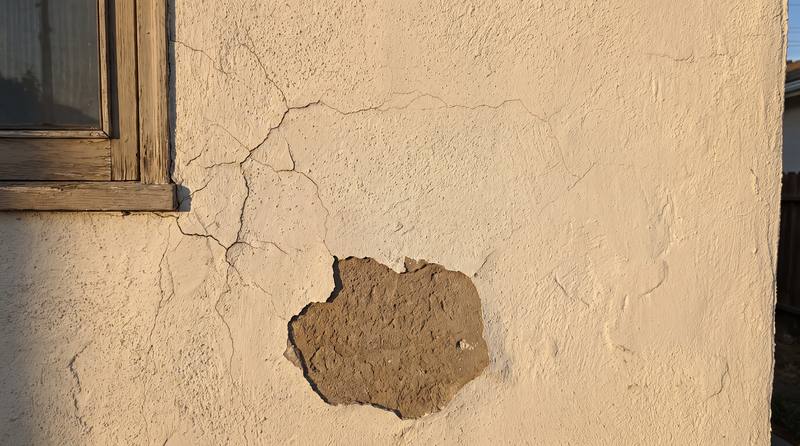
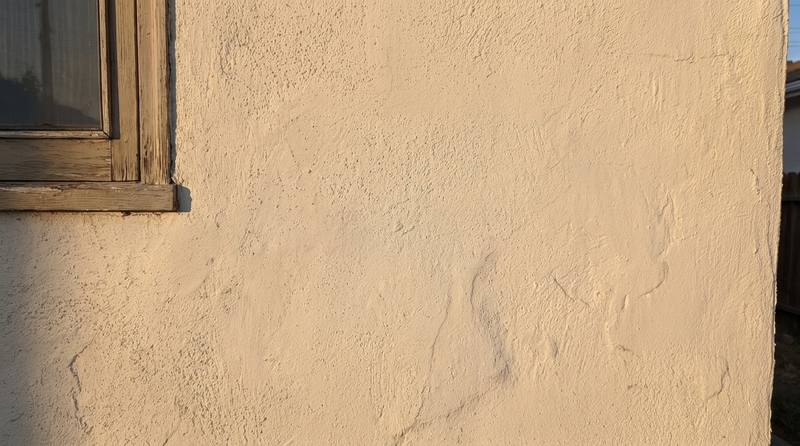 AFTERBEFORE
All of it is a Kaminskiy-certified technician's work from the office on Tanasbourne Drive, which makes the second and third visits a patch needs easy to schedule. The written scope says how many.

Priced and on the calendar during the first call.

A written quote you approve before anyone drives out.

Three coats, each one cured, warranty in writing.
A one-year workmanship warranty, in writing, on every Hillsboro stucco repair.
Water from below and water from the side. The Tualatin Valley floor is silt loam that drains slowly, so the bottom of a stucco wall sits over wet ground from October to May and wicks it if the weep screed is buried. On the 1990s streets the rain came through the other way, in at a window corner or a ledger on a wall that had no gap behind the cladding to drain, and it shows up years later as a stain and a hollow spot. Add a frame that has settled and the window corners crack first, because that is where the wall is thinnest.
A hairline with no stain, on a wall that is otherwise solid, is sealed the next time the wall is painted; give it a winter and watch it. Call about a crack that widens, a brown or rusty stain beside a crack or below a sill, a spot that sounds hollow when you knock, bubbling paint, or stucco soft enough to dent with a thumb. A straight diagonal crack from a window corner toward the foundation on a house with new cracks inside is a foundation question, and an engineer looks at it before anyone patches it.
The stained or hollow section is cut back to solid stucco and sound lath, the paper and lath behind it are replaced where they failed, the flashing is corrected so the water has a path out, and the wall is rebuilt in three coats. The scratch coat keys into the lath, the brown coat builds it flush, and the finish coat carries the texture and the color. Each coat has to set and cure before the next, so a patch is a day of work spread over several visits, and the valley's wet months stretch that. With the office ten minutes away, those visits are easy to fit, but they are still three.
Keep the weep screed above the soil and the bark dust, and keep the downspouts carrying water away from the wall instead of down it. Recaulk the window and door perimeters when the bead splits, because on a pre-rule wall that bead is the only thing keeping the rain out of the sheathing. Repaint the stucco with a breathable masonry or elastomeric coating before the old paint chalks off, and have a stain below a window looked at the first winter it appears rather than the fifth.
Homes and townhomes from the 1990s and 2000s with stucco entries, garage fronts and full elevations, installed before Oregon's moisture rules, with association standards on the outside. Rain gets in at a window corner or where a deck ledger meets the wall, the sheathing behind the stucco stays wet, and a stain, a soft spot and a crack follow. We open the corner, replace the paper and lath that failed, correct the flashing so the water has a way out, rebuild the stucco in three coats and match the association's color.
Farmhouses, bungalows and 1940s to 1960s houses, mostly cedar and fir, with a few 1920s and 1930s stucco houses among them and stucco chimneys on more. Soil that crept up over the decades has buried the bottom of the wall, the chimney caps have cracked and let water into the stucco below them, and settled frames have opened the window corners. We fill the cracks, rebuild the chimney cap, cut the crumbled base back to sound lath and re-stucco it, and get the grade back down.
The newest streets, built with a drainage gap and better flashing, with stucco used as an accent band or an entry surround on many of the homes. The list is small and early: a shrinkage crack in the first winter, a chip where the mower or a trailer hitch caught the corner, a hairline at a control joint. Small patches, textured and colored to the builder's finish, done so the warranty on the house is not an argument.
Call 971-571-5787 or text pictures of the stain, the crack and the bottom of the wall. Most crack repairs get a price on the call; a stained corner or a hollow section gets a date for the look, which is easy from an office in the city.
A technician knocks on the wall, checks the window flashing, the ledger and the weep screed, and tells you whether the wall is hard-coat stucco or a synthetic system. The written scope lists the repair, the flashing work, the coats and the visits, with the price and the color noted for the association.
Cracks are cut open and filled. The failed section is cut back to sound lath, re-papered and re-lathed, the flashing corrected, and the stucco rebuilt in a scratch coat, a brown coat and a finish coat, each cured before the next.
The finish coat is textured to the wall around it and painted or tinted to match, the debris leaves with us, and the one-year workmanship warranty is on the invoice.
In Oregon a Construction Contractors Board license is required of anyone paid to work on a house, and the state makes no separate allowance for handymen or small patches; the lone exception is a casual one-off by someone outside the trade who does not advertise. Kaminskiy Care and Repair is CCB #252813, bonded and insured, with Kaminskiy-certified, background checked technicians. A whole wall re-stuccoed goes to a licensed stucco contractor, a synthetic system to its certified installer and a foundation crack to an engineer, and those hand-offs are named on the call.
Hillsboro's Permit Center administers Oregon's statewide residential code, which asks for no permit to repair or replace siding that is not fire-rated or to paint, and no application for an ordinary repair with like materials. Filling cracks, patching a section in three coats, correcting a window flashing and repainting are that. The city's own pages read repair more carefully than most, so before a job that strips a wall to the sheathing, re-laths a large area or touches framing, we ask the Permit Center and tell you what it said.
Orenco Station, Tanasbourne, AmberGlen and the South Hillsboro neighborhoods have associations with exterior standards. A stucco patch textured and painted to match rarely needs a form; a new color or a changed finish sometimes does, and we put the materials and the color in writing for it. Oregon's moisture rules for cladding apply to a re-side; a crack filled or a corner rebuilt is a repair, and we say so plainly when a wall is past repairing and needs the licensed stucco contractor.
Our office is in Hillsboro. The crew starts the day on Tanasbourne Drive, which is why a Hillsboro call is usually on the calendar within days and a second look is easy. Call 971-571-5787, text a photo, or send the form.
Can't find your answer? Call 971-571-5787 and ask us anything.
Call 971-571-5787It is three coats, and each has to cure before the next, so a patch is spread over several visits even though the hands-on work is about a day. Scratch coat, cure; brown coat, cure; finish coat with the texture. A wet Hillsboro month cures slower than a dry one. Our office is ten minutes from most of the city, which makes the return visits easy to schedule, but the coats still take the time they take. The written scope lists the visits before we start.
We match the texture first, by hand, to the finish beside the patch, whether that is a builder's fine sand float or a heavier older dash, then the color. On a painted wall we prime the patch and repaint the area so no edge shows. On a wall with the color in the finish coat, the new coat is tinted to match and we show you a sample on the wall before it goes on. For an association we note the color in the scope.
Hairlines by themselves, no. Stucco shrinks as it cures and a frame moves a little each season, so a few hairlines at the window corners are normal and are sealed when the wall is painted. Call about a crack that widens, a stain or rust beside it, a hollow sound, bubbling paint, or a straight crack from a window corner toward the ground on a house that is cracking inside too, because that one is for an engineer first.
No. EIFS and the other synthetic systems are foam and mesh with a thin finish, and a repair has to be done with the system's own materials by its certified installer, so we refer it. Some of the planned-street homes from the 1990s and 2000s have a synthetic face rather than hard-coat stucco. Knock on it: stucco sounds like stone, a synthetic system sounds light and hollow. We tell you which you have at the look.
It depends on the number of cracks, the size of the failed section and whether the lath and the flashing behind it have to be rebuilt. Text photos of the stain, the crack and the base of the wall and we give you a sense of it on the call; the written price comes after the look, with the coats and visits listed, and that is the number on the invoice.
Yes. Every Hillsboro stucco repair carries a one-year workmanship warranty in writing and is done by Kaminskiy-certified, background checked technicians under Oregon CCB #252813, bonded and insured. Fine shrinkage hairlines in a new finish coat are part of stucco, and the scope says so up front.
On a 1990s Orenco or Tanasbourne house it is usually water behind the stucco, let in at the window corner where the flashing ends, on a wall built with no gap to drain, and paint hides it for a season. We open the corner, replace the paper and lath that failed, correct the flashing so the water has a way out, rebuild the stucco in three coats and match the color, so it stays fixed. If the sheathing behind it is far gone, you hear that before we go further.
All of Hillsboro from our Tanasbourne Drive office, including Orenco Station, Tanasbourne, AmberGlen, Shute Park, Jackson School, South Hillsboro and Reed's Crossing, plus Aloha, Beaverton, Cornelius, Forest Grove and North Plains. Lap siding and trim are on our Portland siding repair page. Call 971-571-5787 to confirm your address.
Send a photo of the wall and the address. We call back with a written price and the visits it takes. Calling is still fastest: 971-571-5787.
Priced on the call, blended to match, warranted in writing.
We answer Monday to Friday, 8 to 4:30.No price games. You get a clear written quote before any work begins, backed by our workmanship warranty.
