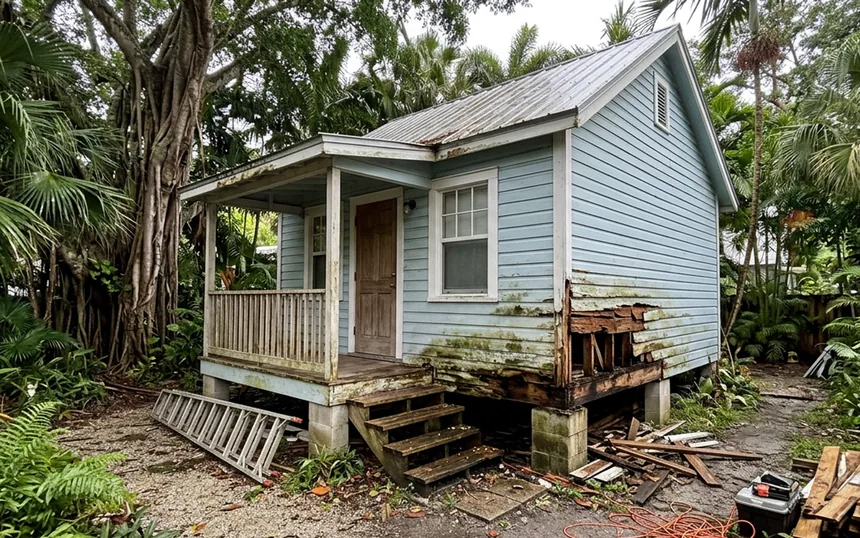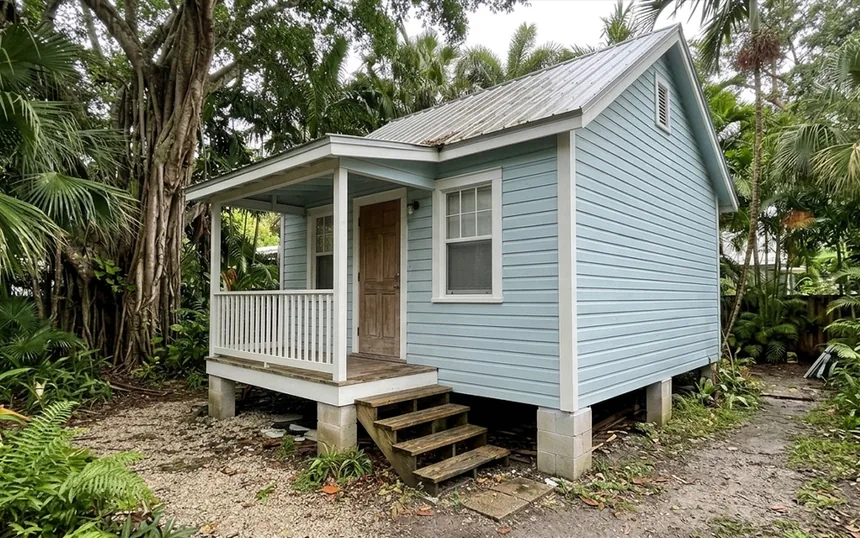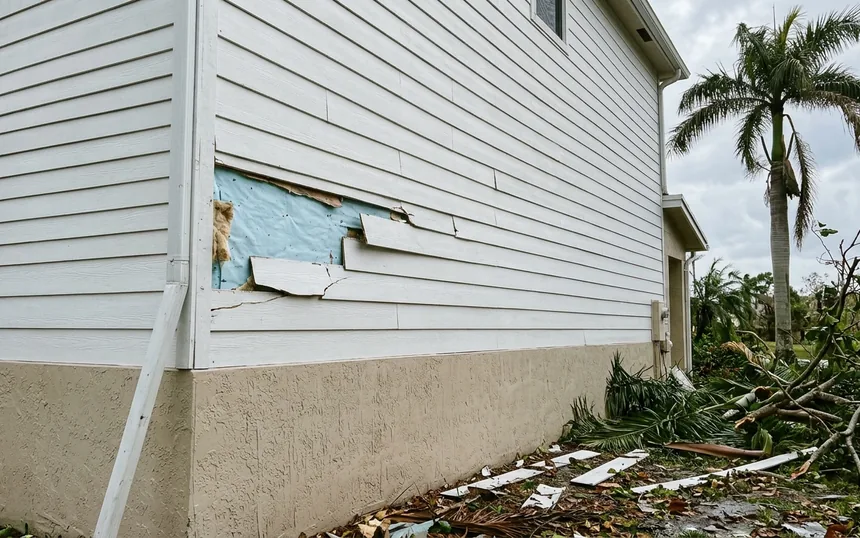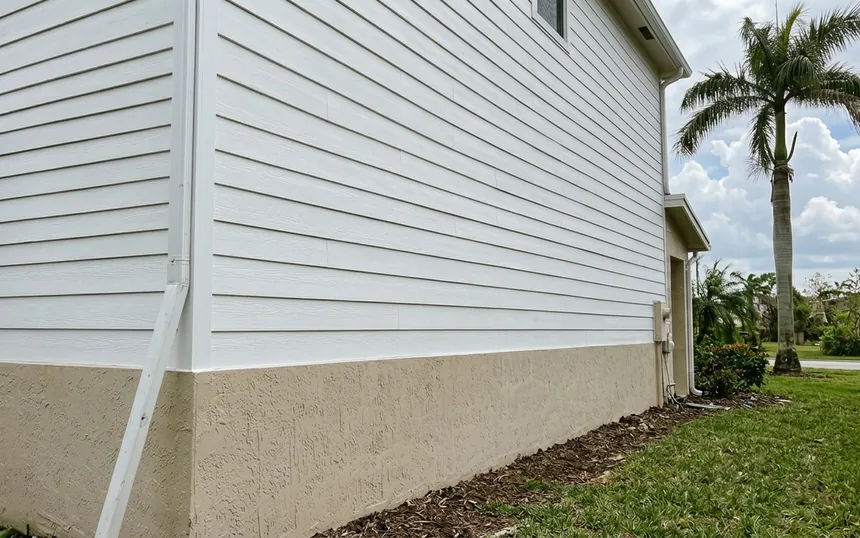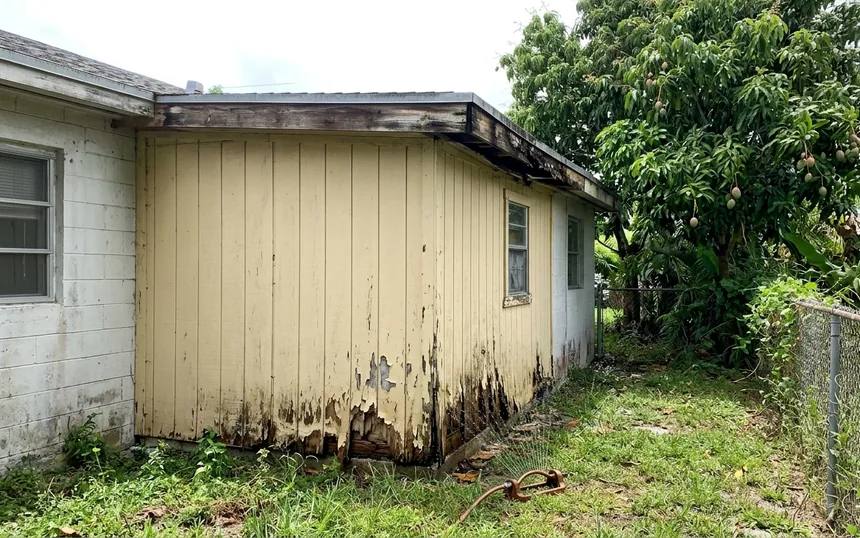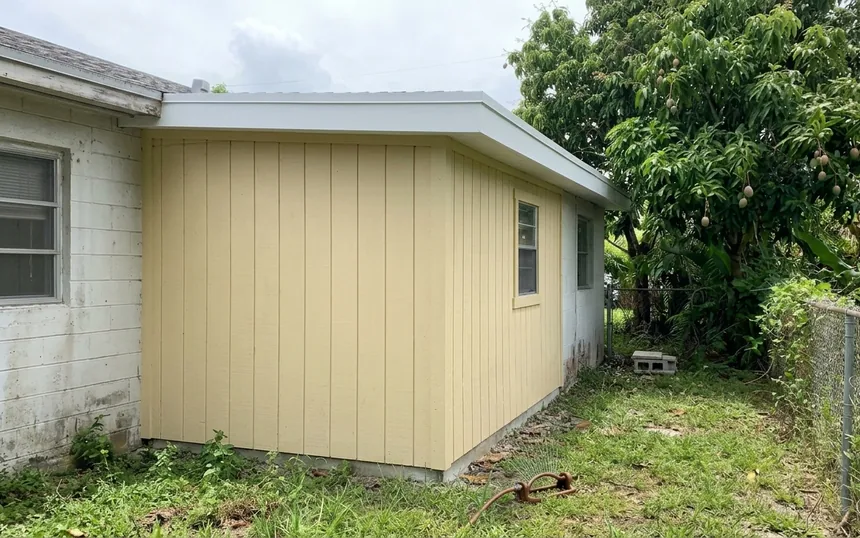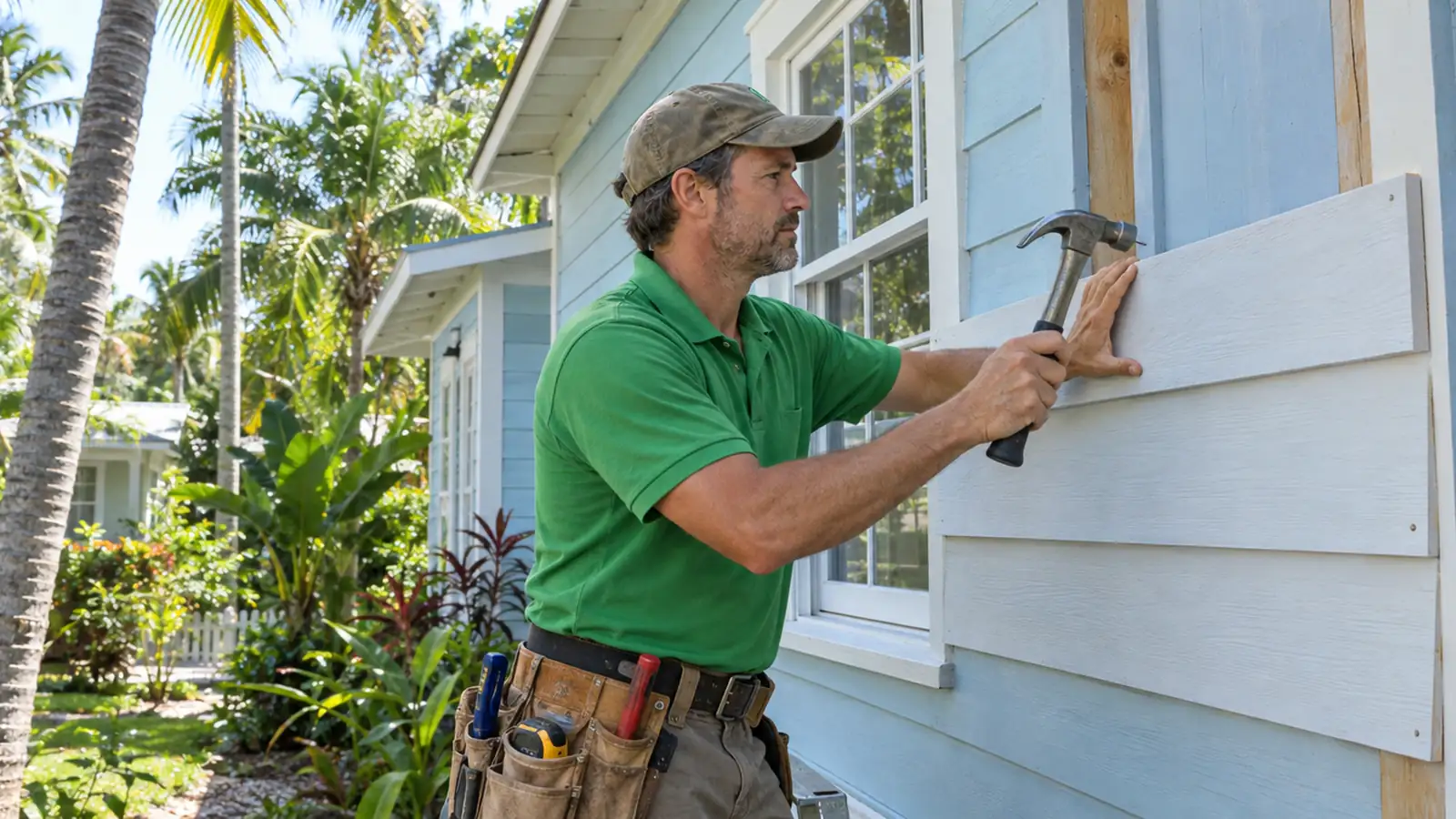
Clapboard rotting at the base of a Coconut Grove cottage, fiber cement torn off a townhouse in a hurricane, a plywood addition gone soft under the sprinkler, drywood termites in the window trim: rebuilt in the same profile, sealed against the salt and painted to the house.
 BBBAccredited Business
Kaminskiy Care and Repair repairs and replaces siding and exterior wood across Miami, Coral Gables, Coconut Grove and Miami-Dade: the clapboard of the old frame cottages in the Grove and the Upper Eastside, the wood and panel siding on additions behind the block houses, the fiber cement on the townhouses and newer homes, and the fascia and soffits on every roof edge. Rain from May to October, salt air near the bay, hurricanes and three kinds of termites go after all of it. We cut out the damaged wood after the pest company treats, rebuild in the same profile, seal the joints and paint to the house. An EPA Lead-Safe Certified firm, priced in writing on the call: 786-527-2055.
 The wood a block-built city still has.
Most of Miami is concrete block and stucco, so the siding here is the wood that was left: the old frame cottages, the additions out back, the fascia and soffits, and the fiber cement on the newer townhouses. It sits in the wettest air in the country half the year. The bottom boards stay damp, algae grows on the shaded walls, and drywood, Formosan and Asian subterranean termites all find it. We rebuild after treatment and seal it for the next wet season.

 AFTERBEFORE
 Frame Cottage Clapboard
 Fiber Cement & Hardie
 Panel Siding & Additions
 Fascia & Soffits
 Termite-Damaged Wood
 Vinyl & Aluminum
 Sealant & Paint for the Salt
 Walk-Through & Warranty
We take these calls across Miami-Dade every week, and the phones fill after every storm. A photo is usually enough to price the repair in writing on the call; when termites may have reached the framing, or a storm opened the wall, we look first and coordinate with your pest company before anything is scheduled.

We name the siding, tell you whether the city, a historic district or a condo board has a say, and price the repair in writing.

If termites are active the pest company treats first; then the damaged wood comes off and you see how far it went.

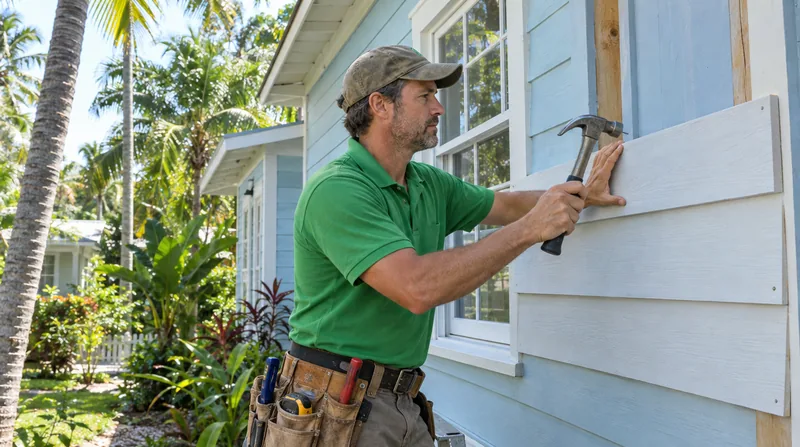
New siding in the same profile, every face primed, joints sealed against the rain, painted to the house.
Every job is backed in writing by our workmanship warranty and done by a Kaminskiy-certified, background checked technician.
On the 1910s to 1940s frame cottages of Coconut Grove, the West Grove and parts of the Upper Eastside, clad in clapboard or drop siding. On rear additions, porches and sheds behind the block houses, often in grooved plywood. On townhouses and newer homes, as fiber cement above a stucco base. And on every roof edge, as wood fascia and wood, vinyl or aluminum soffits. We name yours from a photo.
South Florida has the West Indian drywood termite, which lives inside the wood and pushes pellets out, plus the Formosan and Asian subterranean termites, which come up from the soil in mud tubes. All three are the pest company's: tenting or spot treatment for drywood, soil or bait treatment for subterranean. We replace the damaged siding and trim after, and leave the wood primed and sealed.
Rain from May to October, sprinklers set against the house, and soil or mulch built up over the years keep the lowest course wet. Clapboard and plywood soak it up through the end grain and the paint lifts. A lasting repair keeps the siding clear of the soil, seals every cut end, and points the sprinkler heads away from the wall.
Walk the house in May. Reset loose boards and soffit panels, recaulk the window and door trim, clear the gutters, and repaint bare wood. A loose board is how wind gets under the next one, and an open joint is where the driven rain goes in.
Miami built in block after the 1926 hurricane, but the frame houses from before it are still standing in the Grove and along the bay, and every block house since has wood at the roof edge and often an addition out back. The rain, the salt and the termites work on all of it the same way.
The oldest frame houses in the city, including the Bahamian-built cottages of the West Grove, with clapboard and drop siding raised on piers under a canopy that never lets them dry. The bottom courses rot, the porch skirts go soft and drywood termites take the casings. In the historic areas, a repair that matches the old profile is the simple case. These houses predate 1978, so the paint is tested first and the work is done lead-safe by an EPA Lead-Safe Certified firm.
1920s to 1950s houses near the bay, part of them in historic districts: mostly block and stucco, with wood fascia, soffits, porches and some frame cottages and additions. The salt air takes the paint on the bay side first, then the trim and the fascia behind the gutters. We rebuild in kind and use fasteners that hold up near salt water.
Masonry homes with wood fascia and soffits, and townhouses and newer homes with fiber cement or vinyl above a stucco base. Fiber cement cracks at the corners and tears off in a storm, soffit panels fall, and the trim rots where it meets the stucco. Coral Gables reviews exterior changes closely, so we match material and color and put them in writing.
Usually. Rot and termites concentrate at the bottom courses, around windows and at the roof edge, while the rest of the wall stays sound. We cut back to sound wood, check the framing, and fit new boards in the same profile. When termites reached the framing, the pest company's report and our photos decide the scope together.
Painting is exempt, and the Florida Building Code lets the building official approve ordinary minor repairs without a permit when no wall is cut and no structural member is removed; Miami-Dade puts non-structural repair by a licensed contractor under a set cost in that group. Re-siding a wall is a permit, and in the high-velocity hurricane zone the new siding needs a Miami-Dade or Florida product approval. We tell you which applies before we quote.
We price it in writing from a photo before anything is scheduled. The siding type, how far the termites or the water got, whether the profile is stocked or milled, and how much painting it takes to blend all move the number. No percentage markups.
Florida has no handyman license. The state calls anyone paid to repair or improve a structure a contractor, exempts only casual, minor work under a set small amount, and reserves structural work, roofing and the licensed trades for state-licensed contractors. Kaminskiy Care and Repair is bonded and insured, and we tell you on the call which license a job needs.
We name the siding, read any wood-destroying organism report, check the historic map and the flood zone, and price it in writing.
Where termites are active the pest company treats first; then the damaged siding and trim come off and the framing is checked.
New siding and trim in the same profile, kept off the soil, every face primed, every joint sealed, fasteners chosen for the salt.
Painted to the house, the site cleaned, and the photos and the one-year workmanship warranty sent.
The City of Miami lists painting as exempt from a permit as long as the stucco is untouched, and the Florida Building Code lets the building official approve ordinary minor repairs without one when no wall is cut and no structural member is removed. Re-siding a wall needs a permit, and in Miami-Dade, part of the high-velocity hurricane zone, the siding product must carry a Miami-Dade or Florida approval rated for that zone. We check the approval before anything is ordered.
A Florida sale runs on the wood-destroying organism inspection report, a state form only a licensed pest control company may issue. It lists live termites or beetles, the evidence of them and the damage the inspector could see, and states that it is not a structural damage report. The pest company treats. The damaged siding, casings, fascia and trim it lists are our carpentry; send it with the address and we price from it.
Morningside, Buena Vista East and the designated parts of Coconut Grove are historic districts, and Coral Gables reviews exterior changes citywide; a repair that matches what is there is the simple case. Condo and townhouse associations set the materials and colors. Homes built before 1978 may carry lead paint: Kaminskiy Care and Repair is an EPA Lead-Safe Certified firm, so the paint is tested first and the work is contained and cleaned to that standard.
On Ponce de Leon. Our Miami crew works from Ponce de Leon Boulevard in Coral Gables and covers Miami, Coconut Grove, Coral Gables, Miami Beach, Key Biscayne, Miami Shores and Kendall. Call 786-527-2055, send a photo of the siding, or use the form, and a person answers in under three rings.
Can't find your answer? Call 786-527-2055 and ask us anything.
Call 786-527-2055Most of it can be repaired. In Miami the damage gathers at the lowest boards, around the windows and at the roof edge, where rain, sprinklers and termites concentrate, and the rest of the wall is often sound. We cut out the damaged pieces, check the framing, replace them in the same profile, and seal and paint them. A whole wall is re-sided only when the damage runs across it.
Call a licensed pest control company first. Small hard pellets under tiny holes mean drywood termites living in the wood; mud tubes up the foundation mean subterranean termites coming from the soil. The pest company treats either one and writes the report. Then we open the siding and trim, cut back to sound wood and rebuild. Send us the report and we price from it.
We price it in writing from a photo before anything is scheduled. The siding type, how far the termites or water got, whether the profile is stocked or has to be milled, and how much painting it takes to blend all move the number. A few clapboards at a porch is a small line; a termite-eaten wall with new framing is a larger one. No percentage markups.
For an ordinary minor repair the building official can approve it without a permit, and painting is exempt as long as the stucco is untouched. Re-siding a wall is a permit, and in the high-velocity hurricane zone the siding must carry a Miami-Dade or Florida product approval. We confirm what your job needs before we quote.
Only casual, minor work under a set small amount; past that, Florida treats the work as contracting. Structural work, roofing and the licensed trades always go to state-licensed contractors. Kaminskiy Care and Repair is bonded and insured, and we tell you on the call which license your job needs. Call 786-527-2055.
Match what is there on a historic frame house; a change of material on a designated house needs review, and the old profile is part of its character. On additions, townhouses and newer homes, fiber cement resists rot and termites far better than wood, and an approved product is required when a wall is re-sided. We price both when either is allowed.
Because it rarely dries. Rain falls most days from May to October, humidity stays high the rest of the year, sprinklers hit the walls, salt air near the bay breaks down paint, and three kinds of termites live here. Keeping the siding off the soil, sealing every cut end and repainting before the wood goes bare is what makes a repair last.
Miami, Coconut Grove, Coral Gables, Miami Beach, Key Biscayne, Miami Shores and Kendall, from our office on Ponce de Leon Boulevard. Call 786-527-2055 with the address and we confirm it on the call.
Tell us the address, the siding and whether you have a termite report. We'll call back with a written price and a date. Calling is still the fastest way: 786-527-2055.
Clapboard, fiber cement, fascia and soffits rebuilt after treatment and sealed for the salt, a one-year workmanship warranty.
We answer in under three rings, 24/7.No price games. You get a clear written quote before any work begins, backed by our workmanship warranty.