 BBBAccredited Business

Kaminskiy Care and Repair patches stucco cracks and chips and matches the existing texture so the repair blends in. Hairline cracks are cosmetic; widening or bulging ones deserve a call, and the quote is free either way. We serve Pleasanton and the surrounding California communities.
The south end of our East Bay run. Cracks that open with the clay lead the Pleasanton stucco list.
Pleasanton stucco moves with the ground under it. The clay beneath much of the city swells in the winter rain and shrinks in the summer heat, so the 1960s to 1980s tract homes of Del Prado, Pleasanton Valley and Val Vista open a crack at the window corner in January that closes in July, and the newer stucco of Vintage Hills, Kottinger Ranch and Ruby Hill chips at the foam trim corners. We cut and fill the cracks with a joint that can move, re-lath the hollow sections, recast the pop-out sills, rebuild the trim and match the texture and the color.
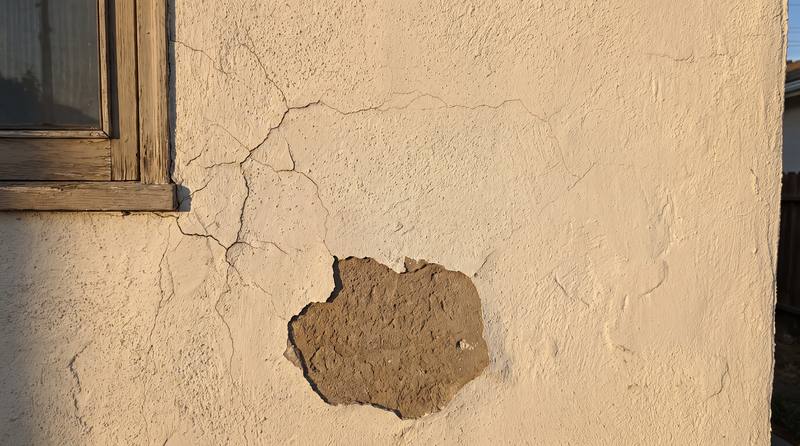
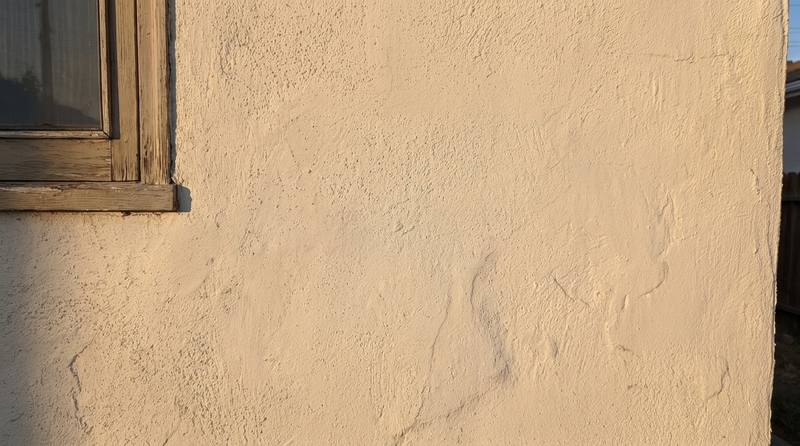 AFTERBEFORE
Tri-Valley heat and winter clay turn a hairline into a wide crack by spring, so call while it is small. A Kaminskiy-certified technician from our Walnut Creek office writes the scope: the patches, the coats, the visits between them and the color to match.

Priced and on the calendar during the first call.

A written quote you approve before anyone drives out.

Three coats, each one cured, warranty in writing.
A one-year workmanship warranty, in writing, on every Pleasanton stucco repair.
Clay and heat. Much of Pleasanton sits on expansive clay that swells when the winter rain soaks it and shrinks in the summer, and a stucco wall is the stiffest thing on the house, so the movement shows there first: a crack off a window corner that opens in January and closes in July, a crack along the garage jamb at the slab, a stair-step line on a wall that has lifted at one end. The Tri-Valley sun then chalks the finish coat and widens the cracks each summer, and the sprinklers along every wall keep the bottom foot wet until the bond lets go. The crack is a symptom; the patch has to allow for the movement or it reopens.
A fine crack that opens and closes a little by the season is the clay working, and it is sealed with a flexible joint and recoated so the rain stays out. A crack as wide as a pencil, a diagonal that keeps running after a patch, a stair-step crack, a hollow stretch of wall, a sill that moves when you press it, or a stain inside below a window is water or movement past what a patch can hold, and the look comes first. A crack that follows the foundation, or a house whose doors are also sticking and whose slab has cracked, goes to an engineer before we patch the wall, and we say so.
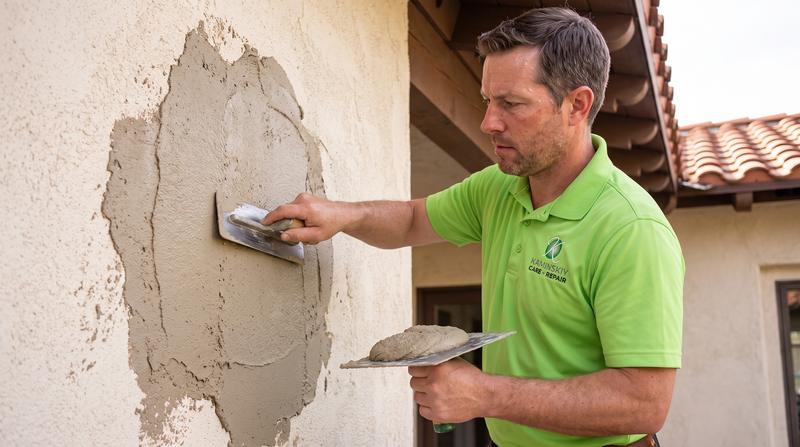
The loose or hollow stucco comes off down to the lath, rusted lath is replaced over new paper, and the patch is built in three coats: a scratch coat keyed into the lath, a brown coat that brings it flush, and a finish coat floated to the texture around it. Each coat cures before the next, and in the Tri-Valley heat a fresh coat is kept damp so it cures instead of baking and cracking. That makes a patch a day of work spread across visits, and the scope says how many. On a moving crack the fill is a flexible sealant tooled under the finish, not a rigid fill that cracks again by the next January.
Turn the sprinklers off the house and swap the heads along the wall for drip, keep the soil moisture around the foundation as even as you can through the year, because the clay cracks the wall when one side dries and the other does not, and pull the lawn and the planters down below the weep screed so the wall drains. Keep an elastomeric or good exterior paint on the stucco so the seasonal hairlines are bridged, caulk where the stucco meets the window frames and the trim bands, and look at the sills and the trim corners every fall. A cracked sill in October is a sill; in March it is a wall.
Victorians, bungalows and cottages from the 1890s through the 1930s, nearly all wood-sided and inside the city's downtown design review, so a stucco call here is a Spanish-style cottage, a stuccoed garage, a chimney chase or a later addition. Those walls are thick, hand-floated and sometimes tinted through the finish, and a repair has to change nothing visible. We patch in three coats, float the texture by hand, match a tinted finish with a color coat and photograph before and after; the wood walls go to our Pleasanton dry rot page.
1960s to 1980s ranch and tract homes with three-coat stucco, pop-out sills, garage jambs on the slab and sprinklers along every wall, on the clay that swells and shrinks by the season. The window-corner cracks open and close with the ground, the sills crack at their corners and go hollow, the bottom foot of the wall loses its bond where the spray hits, and the weep screed is under fifty years of lawn. We fill the moving cracks with a joint that can flex, cut the soft sections back to sound lath, rebuild in three coats, recast the sills and dig the grade down below the screed.
Newer stucco homes with foam trim bands, strict association standards and hillside lots with the weather on one face. The foam trim chips at the corners and lets water in behind it, the weather side stains under the upper windows where a sill or a flashing let go, the newest walls may carry a one-coat system over foam that is matched coat for coat, and every color is in the association's book. We rebuild the trim, patch the field, check the flashing and match the approved color with the paperwork in writing.
Call 925-302-5955 or text pictures of the crack, the sill or the trim and the base of the wall, with a coin or a tape for scale and a note on whether the crack changes with the season. Most Pleasanton stucco repairs get a range on the call and a date for the look.
A technician taps out the hollow spots, measures the cracks and notes which ones move, checks the sills, the trim corners, the flashing and the weep screed, and photographs the texture and the color. The scope lists each patch, the coats and the visits, the price, whether the city's handout calls for a permit, and what the association or downtown review will want to see.
Moving cracks cut and filled with a flexible joint, soft stucco taken back to sound lath and re-papered, foam trim rebuilt and meshed, then the scratch, brown and finish coats, each one cured and kept damp through the heat. The visits between coats are in the scope, not a surprise.
The finish is matched to the wall or painted to the association's scheme, the rubble leaves with us, and the one-year workmanship warranty is on the invoice at the price you approved, with before-and-after photos for the board or the city if they want them.
In California a repair under a small set amount can be done without a license when no permit is needed and nobody is employed to do it; a stucco patch cut to the lath and built in three coats is past that line on most Pleasanton walls. Kaminskiy Care and Repair holds License #1120648, is bonded and insured, and its technicians are Kaminskiy-certified and background checked. Jobs over the written-contract threshold go on paper before the first coat.
Pleasanton's own permit handout says it plainly: application or notice to the building official is not required for ordinary repairs to structures, and painting and similar finish work need no permit at all. It draws the line where the state code does, at cutting away a wall or a structural member and at anything touching plumbing or wiring, and it adds that a planning or zoning permit may still be needed even when a building permit is not. Filling cracks, patching a section, recasting a sill cap and recoating are ordinary repair; re-lathing a large area or re-stuccoing a wall is a Building Division question, and we ask it before we price that job.
On the Downtown Specific Plan streets, exterior changes to a building go through the city's design review and the historic houses around Main Street are held to their original look, so a stucco patch there matches the original texture and color and changes nothing visible, photographed before and after. In the hills, Ruby Hill, Kottinger Ranch and most of the newer streets have associations with a color book; a patch painted to the scheme rarely needs a form, a new color does, and we put the materials in writing for it.
The south end of our East Bay run. Your Pleasanton crew dispatches from our East Bay office on Quail Court in Walnut Creek, half an hour down the 680, so most calls are scheduled within days. Call 925-302-5955, text a photo, or send the form.
Can't find your answer? Call 925-302-5955 and ask us anything.
Call 925-302-5955More than a single day. A patch is cut back to sound lath and built in three coats, scratch, brown and finish, with each coat cured before the next, so the work is spread over visits a few days apart; in the summer heat a fresh coat is kept damp so it cures instead of baking. The written scope says how many visits your wall takes before we start.
Yes, closely enough that you will have to point it out, and a repaint of that face hides it entirely. The finish coat is floated to the texture around it, from the heavy sand finish on a Del Prado ranch to the smoother finish on a Ruby Hill home, and the color is matched in daylight or taken from the association's book. A fresh patch reads a shade off for a few weeks while it cures, and we say so up front.
Not much, if they stay fine. A crack that opens a little in January and closes in July is the clay under the house working, and it gets a flexible sealant under the finish so the rain stays out while the wall keeps moving. Worry when it stops closing, widens past a pencil, runs diagonally off a corner and keeps going, or comes with doors that stick and a cracked slab; that is more than the stucco, and an engineer reads it before we patch.
No. EIFS is a foam-and-mesh system with its own drainage path, and a patch that does not follow the system's specification seals water inside the wall. If your wall is EIFS we say so on the call and point you to the system's certified installer. Conventional stucco over lath is ours, and the foam trim on a Ruby Hill or Vintage Hills wall is stucco trim, not EIFS, so that is ours as well.
It depends on the number and size of the patches, whether the lath comes out, how much foam trim is in it, how high the wall is and what the finish takes to match. Text photos with something for scale and you get a range on the call; after the look you get a written scope with each patch, the coats and the visits priced before anything is cut. The number on the scope is the number on the invoice.
Yes. Each Pleasanton stucco repair carries a one-year workmanship warranty in writing, done by Kaminskiy-certified, background-checked technicians under California contractor License #1120648, bonded and insured.
Not an ordinary one. Pleasanton's own handout says ordinary repairs to a structure need no application and painting needs no permit, so filling cracks, patching a section, recasting a sill and recoating are covered. The same sheet notes a planning or zoning permit may still apply, which is the downtown design review on the Main Street blocks. Re-lathing a large area or re-stuccoing a wall is a Building Division question, and we ask before we price it.
All of Pleasanton, including Downtown, Del Prado, Pleasanton Valley, Val Vista, Stoneridge, Vintage Hills, Kottinger Ranch, Bridle Creek, Ruby Hill and Laguna Oaks, plus Dublin, Livermore, San Ramon and Sunol, from our Walnut Creek office half an hour down the 680. Call 925-302-5955 to confirm your address.
Send a photo of the wall and the address. We call back with a written price and the visits it takes. Calling is still fastest: 925-302-5955.
Priced on the call, blended to match, warranted in writing.
We answer in under three rings, 24/7.No price games. You get a clear written quote before any work begins, backed by our workmanship warranty.
