 BBBAccredited Business

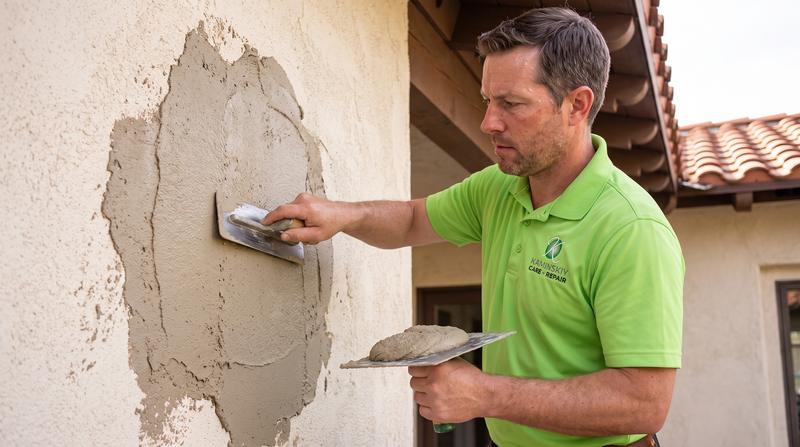
Kaminskiy Care and Repair patches stucco cracks and chips and matches the existing texture so the repair blends in. Hairline cracks are cosmetic; widening or bulging ones deserve a call, and the quote is free either way. We serve Lafayette and the surrounding California communities.
Ten minutes down Highway 24. Shaded, stained stucco and hillside cracks lead the Lafayette list.
Stucco is the minority wall in Lafayette, where most houses wear wood, but the 1950s and 1960s ranches and the newer custom homes in Happy Valley and Reliez Valley carry plenty of it under the oaks. The north and uphill walls never dry, so the finish stains green and chalks, the hairlines at the window corners hold water, and the hillside settling opens a diagonal crack that comes back every winter. We cut the cracks and fill them, re-lath the hollow spots, match the texture and the color, and get the soil off the base of the wall.
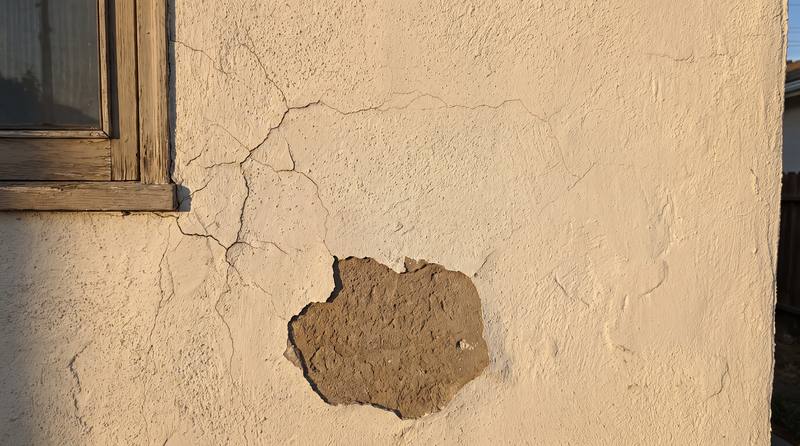
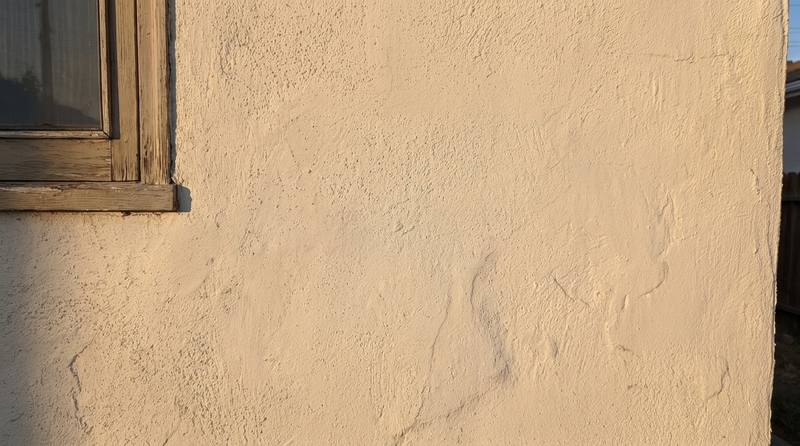 AFTERBEFORE
Shade does not dry a wall on its own. A Kaminskiy-certified technician from our Walnut Creek office, ten minutes down the 24, writes the scope: the patches, the coats, the visits between them and the color to match.

Priced and on the calendar during the first call.

A written quote you approve before anyone drives out.

Three coats, each one cured, warranty in writing.
A one-year workmanship warranty, in writing, on every Lafayette stucco repair.
Shade and slope. Lamorinda's oaks keep the north and uphill walls out of the sun for months, the winter rain drips off the canopy onto the same stretch of wall every storm, and stucco that never dries grows algae, loses its paint and leaches a white crust of salts out of the cement. Hillside lots drain toward the house and settle a little every year, so the framing racks and a diagonal crack opens off a window corner and comes back after every patch that was only filled. Water in the wall is the Lafayette problem; the crack is just where it gets in.
A fine, straight crack at a window corner is the wall moving with the seasons; it is sealed and recoated so the drip off the oaks stays out. A diagonal crack that returns every winter, a crack you can fit a coin into, a stair-step crack on a hillside lot, a stretch of wall that sounds hollow, or a green wall that is also soft under your palm is water or movement and gets a look first. A crack that follows the foundation, or a hillside house whose doors are also binding, goes to an engineer before anyone patches the stucco, and we say so.
The stained or hollow stucco comes off to sound lath, rusted lath goes over new paper, and the patch is built in three coats: scratch, brown and finish, each one cured before the next. In Lafayette's shade a coat cures slowly, so the visits are further apart than on a sunny wall, and we tell you that on the scope rather than rushing a coat onto a damp one, which is how a patch cracks and stains again by spring. The finish coat is floated to the texture of the wall around it and matched in daylight.
Trim the oak branches back off the wall so the drip line moves away from it, and leave the tree alone otherwise; Lafayette protects its native oaks. Pull the leaf litter and the soil on the uphill side down below the weep screed so the wall can drain, keep a coat of good exterior or elastomeric paint on the stucco so the fog and the drip have nothing to soak into, caulk where the stucco meets the windows and the deck flashing, and press a palm to the north wall once a summer. A patch that is cold and damp in August is the one to call about.
Big hillside lots with 1950s and 1960s ranches and newer custom homes, a good share of them stuccoed, under oaks that keep the north and uphill walls out of the sun for months. The finish stains green and chalks, hairline cracks at the window corners hold water, and the uphill wall takes the slope's drainage and the leaf litter against its base until the bottom foot goes hollow. On the newest custom homes the stucco may be a one-coat system over foam, which we match coat for coat. We patch to sound lath, float the texture, match the color and pull the soil off the screed.
Smaller, older lots from the 1940s through the 1960s, mostly wood-sided, shaded by mature trees and kept damp by the creek, so a stucco call here is a garage front, a chimney chase, a Spanish-style cottage or a stucco addition. Those walls stain and chalk in the shade, the paint lifts in sheets, and the base sits in wet ground. We patch and recoat, match an older hand-floated texture, and send the wood walls to our Lafayette dry rot page.
Family streets from the 1960s and 1970s with three-coat stucco, pop-out sills, pool yards, patio covers and sprinklers along every wall. The sills crack at their corners, the patio cover ledger and the deck flashing leave stains running down the stucco, the bottom foot of the pool-yard wall goes hollow where the spray hits it, and the weep screed is under fifty years of lawn. We recast the sills, patch the hollow sections in three coats, check the flashing and dig the grade back down.
Call 925-302-5955 or text pictures of the crack, the stained wall and the base where it meets the ground, with a coin or a tape for scale. Most Lafayette stucco repairs get a range on the call and a date for the look.
A technician taps out the hollow areas, measures the cracks, checks the sills, the flashing at the deck and the patio cover, and the weep screed on the uphill side, and photographs the texture and the color. The scope lists each patch, the coats and the visits, the price, and whether the county desk wants a permit for it.
Cracks cut and filled, soft and stained stucco taken back to sound lath and re-papered, then the scratch coat, the brown coat and the finish coat floated to match, each one cured before the next, with the shade given the time it needs. A coat that is not ready waits another day.
The finish is color matched or the patch is primed and painted to the wall, the rubble and the cut-back brush leave with us, and the one-year workmanship warranty is on the invoice at the price you approved.
Under California law a job below a small set amount may be done without a license, provided it needs no permit and no employees; a stucco patch cut to the lath and built in three coats on a hillside wall is past that line. Kaminskiy Care and Repair is licensed (License #1120648), bonded and insured, with Kaminskiy-certified, background-checked technicians, and anything over the state's written-contract threshold is on paper before the first visit.
Lafayette's building permits are checked and inspected for the city by Contra Costa County's building inspectors under the state residential code, which exempts painting and similar finish work and asks no application for an ordinary repair that cuts no wall or structural member. Filling cracks, patching a section, recasting a sill cap and recoating are that kind of repair; the city's own zoning list likewise leaves a dry rot or termite repair that adds no square footage out of its plan check. Re-lathing a large area or re-stuccoing a wall is a county permit, and on a hillside lot the city's hillside rules can reach it too, so we ask before we price that job.
Much of Lafayette has no association; the hillside rules, the tree ordinance and the fire map do that work. The 2025 map put most of the hills in the high fire zone and a few streets in very high, where new construction meets the wildfire standard; a like-for-like stucco patch is a repair, and cement stucco is a finish the standard is happy with. Native oaks of twelve inches and up are protected, so we trim what touches the wall and leave the tree alone. Where an association does review the outside, a patch painted to match rarely needs a form.
Ten minutes down Highway 24. Your Lafayette crew dispatches from our East Bay office on Quail Court in Walnut Creek, one exit east, so a hillside list is usually on the calendar within days. Call 925-302-5955, text a photo, or send the form.
Can't find your answer? Call 925-302-5955 and ask us anything.
Call 925-302-5955Longer than a single day, and longer in the shade. A patch is cut back to sound lath and built in three coats, scratch, brown and finish, with each coat cured before the next, so the work is spread over visits. Under the oaks a coat cures slowly, so the visits sit further apart than on a sunny wall. The written scope says how many for your wall before we start.
Yes, closely enough that a visitor will not find it, and a repaint of the whole face hides it entirely. We float the finish coat to the texture around it and match the color in daylight; on a shaded wall we match the clean color after the algae is washed off, not the green, and recommend recoating the face so it all weathers together. A fresh patch is a shade off for a few weeks while it cures.
Not about a fine, straight one at a window corner; the framing moves and the stucco shows it, and sealing it keeps the drip off the oaks out. Worry about a diagonal crack that comes back every winter, one you can fit a coin into, a stair-step crack on a hillside lot, a hollow stretch of wall, or a green wall that is also soft. Those get a look, and a crack that follows the foundation on a house whose doors are also binding goes to an engineer first.
No. EIFS is a foam-and-mesh wall system that drains in its own way, and a patch that is not done to the system's specification traps water in the wall, which in Lafayette's shade is the one thing a wall does not need more of. If the photos show EIFS we say so on the call and name the system's certified installer as the right call. Conventional stucco over lath, and the one-coat systems on the newer custom homes, are ours.
It depends on how many patches, how big, whether lath comes out, how steep and high the wall is and what the finish takes to match. A photo with a tape in it gets you a range on the call, and the look turns that into a written scope, patch by patch, coats and visits included, before anything is cut. The scope is the bill.
Yes. The repair comes with a one-year workmanship warranty in writing, done by Kaminskiy-certified, background-checked technicians under California contractor License #1120648, bonded and insured.
It is algae growing on stucco that never dries under the oaks, and the stucco under it is usually fine. We wash it, let it dry, seal the cracks it was hiding, and recoat the face so the surface sheds water again; moving the drip line off the wall by trimming the branches that touch the house keeps it from coming back. Where the wall is green and soft or hollow, water has been inside it and that section is cut back to sound lath and rebuilt in three coats.
All of Lafayette, including Happy Valley, Upper Happy Valley, Reliez Valley, Acalanes Ridge, Burton Valley, Springhill, the Trail neighborhood and the Reservoir streets, plus Orinda, Moraga, Walnut Creek and Pleasant Hill, from our Walnut Creek office. Call 925-302-5955 and we confirm your address.
Send a photo of the wall and the address. We call back with a written price and the visits it takes. Calling is still fastest: 925-302-5955.
Priced on the call, blended to match, warranted in writing.
We answer in under three rings, 24/7.No price games. You get a clear written quote before any work begins, backed by our workmanship warranty.
