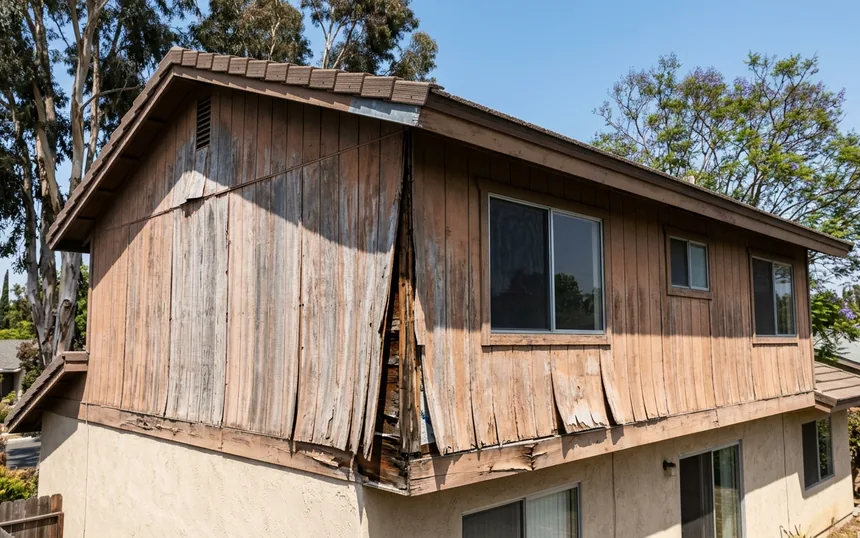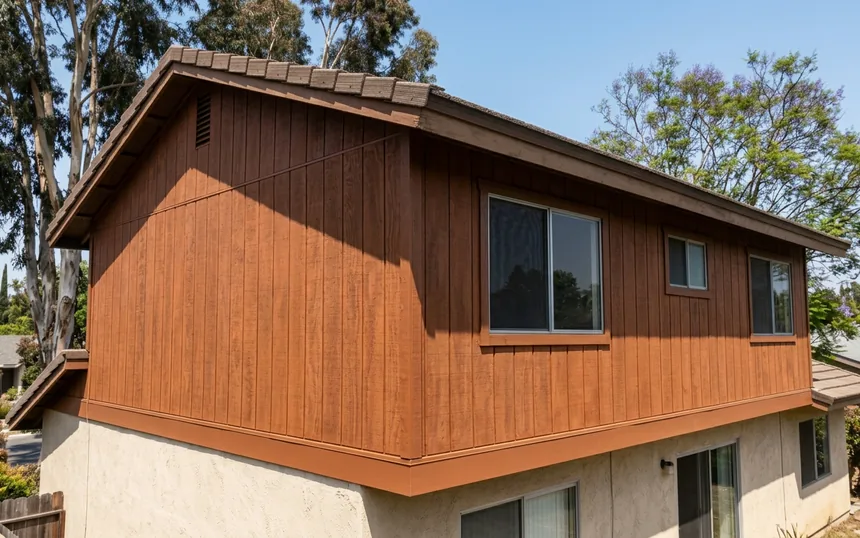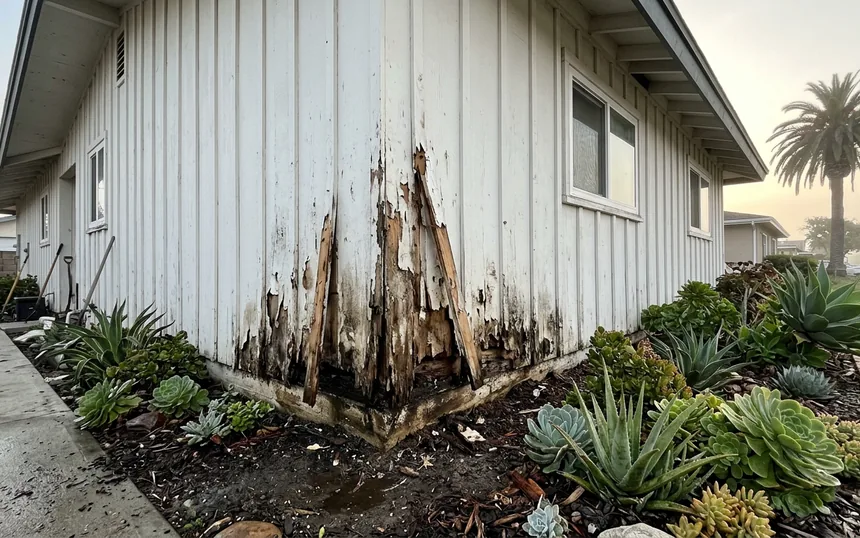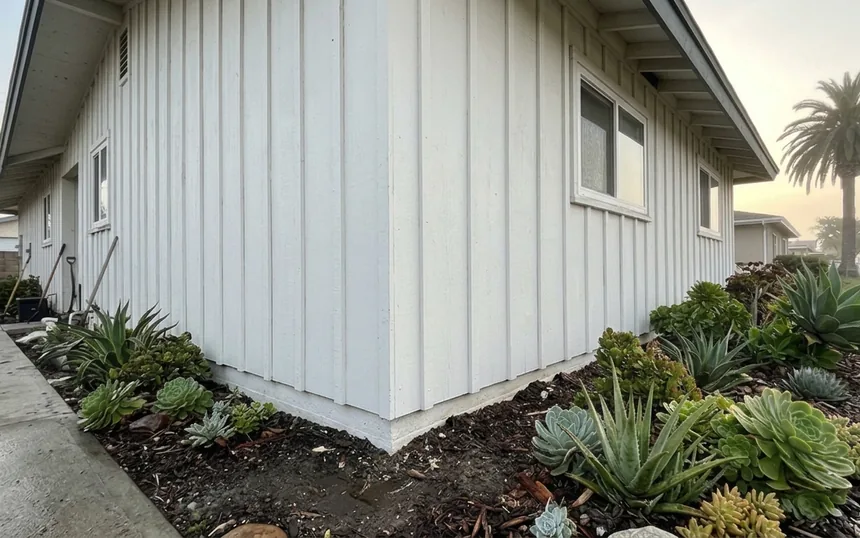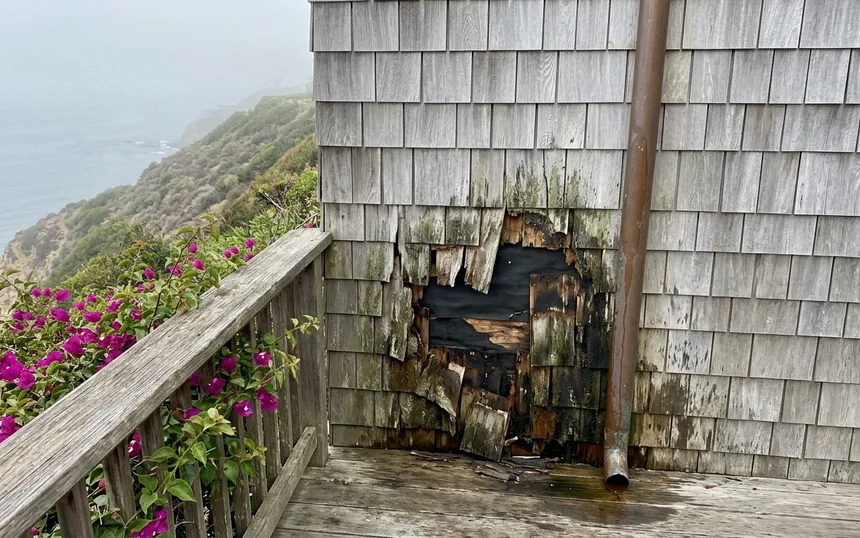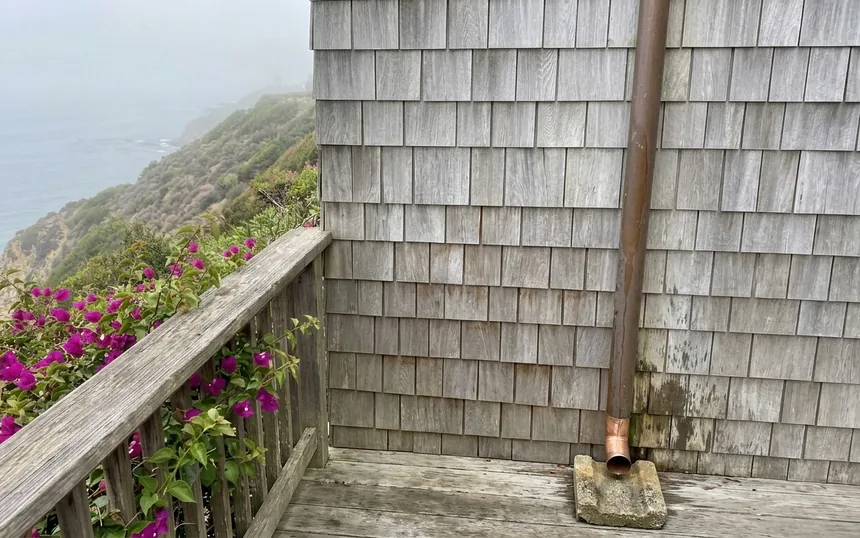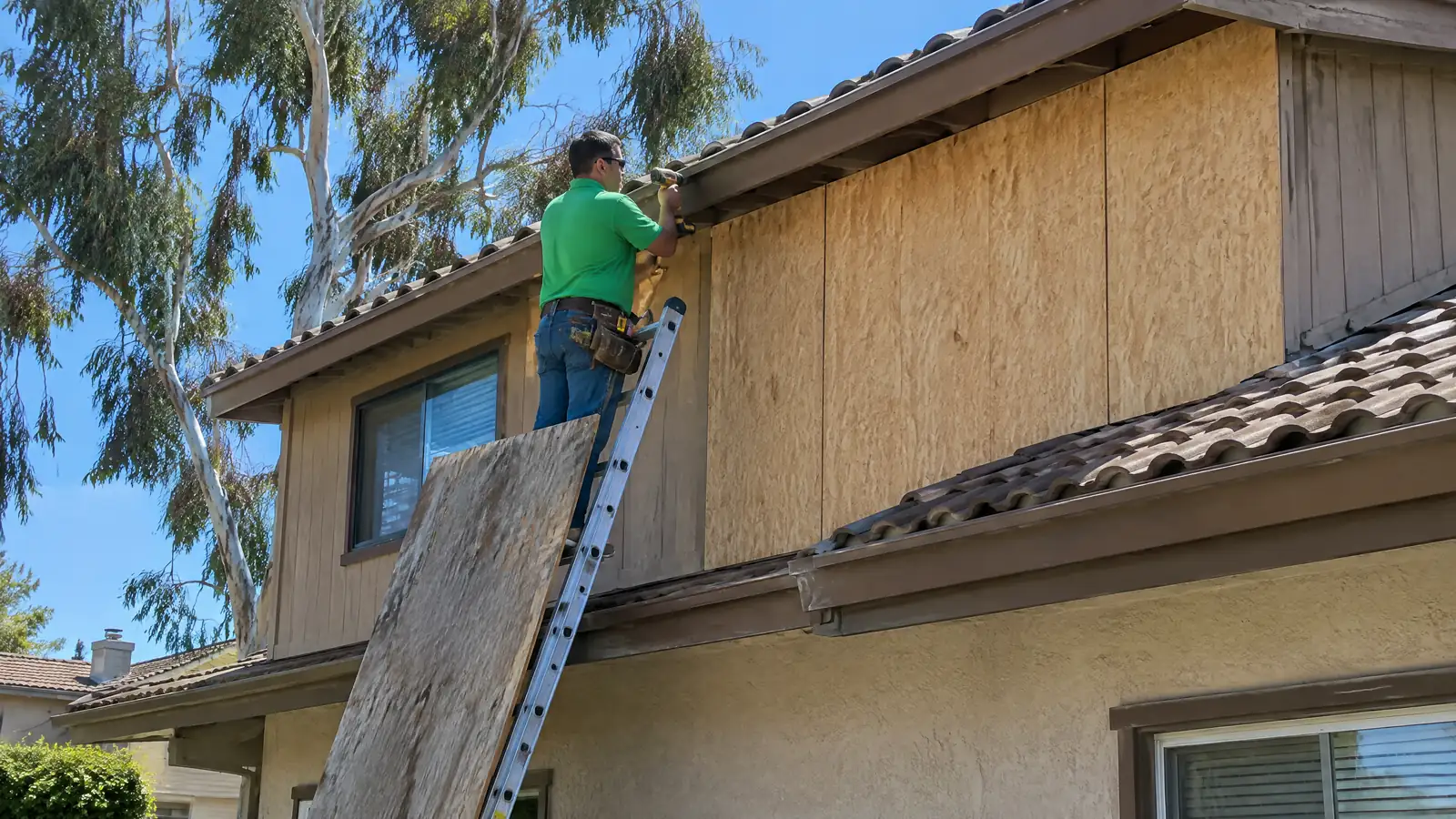
Weathered T1-11 on a 1970s Irvine village home, rotted board-and-batten in Huntington Beach, soft cedar shingles by the water, cracked Hardie on a newer build: replaced in the same profile and finished so the patch disappears.
 BBBAccredited Business
Kaminskiy Care and Repair repairs and replaces siding across Orange County: the T1-11 and cedar on the first Irvine villages, the board-and-batten fronts of the 1960s Huntington Beach and Garden Grove tracts, shingle and lap on the beach cottages, and the fiber cement (Hardie) on the newer villages. Rotted, split or cracked pieces are cut out, the paper and flashing behind them checked, new boards fitted in the same profile with stainless or hot-dipped nails near the coast, primed on every face and finished to match. A licensed siding contractor (CSLB #1106209) and an EPA Lead-Safe Certified firm, working from our office on Michelson Drive in Irvine, with every repair priced in writing on the call: 714-844-1582.
 From the beach cottages to the planned villages.
Orange County siding rarely fails everywhere at once. It goes where water and sun are worst: the south and west faces of the 1970s upper stories, the bottom of a board-and-batten front where the planter bed sits against it, the shingles under a downspout on the coast. We take off only what has failed, read the sheathing behind it, match the groove spacing, batten width or shingle exposure, and carry the finish to a corner or a trim line so the association sees one wall, not a patch.

 AFTERBEFORE
 Cedar Shingle, Lap & Batten
 T1-11 & Hardboard Panels
 Fiber Cement & Hardie
 Corner Boards, Fascia & Trim
 Dry Rot & Termite Damage
 Vinyl Siding Repair
 Paint, Stain & Color Match
 Walk-Through & Warranty
Each of these is a call we take every week from Irvine to Dana Point. Text a photo and most siding repairs are priced on the call, in writing; when a soft spot might reach the sheathing, we look first and put the scope on paper before anything is scheduled.

Tell us the city and what you see. Most repairs are priced in writing from the photo, with the profile and the materials named.

The damaged boards or panels come off, the sheathing and paper behind them are checked, and you see what we found before new material goes on.

New siding in the same profile, primed on every face, flashed and caulked, painted or stained to the scheme. The warranty comes in writing.
Every job is backed in writing by our workmanship warranty and done by a Kaminskiy-certified, background checked technician.
T1-11 is a four-by-eight plywood sheet with vertical grooves, common on the upper stories of 1970s Irvine and Mission Viejo homes. Board-and-batten is wide vertical boards with narrow strips over the joints, the classic front of a 1960s ranch. Cedar shingles overlap in courses and weather to silver by the water. Lap siding runs horizontally in bevel or Dutch lap, and fiber cement lap is heavy, smooth or grained, and cracks rather than rots. Each comes apart differently, and we name yours from a photo.
Most Orange County calls are one wall: the sunny face of an upper story, a front behind a planter, a corner under a downspout. That is a repair. When the panels are delaminating on every elevation or the plywood behind them is soft, the honest answer is to re-side that face, usually in fiber cement on the newer villages or new T1-11 where the association wants the original look, and we price both in writing.
Three things give a patch away: a groove spacing or batten width that does not line up, a fresh color next to a wall the sun has bleached for years, and new wood that was primed on the face only and cups in the first winter. We match the profile, back-prime every board, and when the old wall has faded we finish the whole face to the corner so the eye reads one surface.
Turn the sprinkler heads away from the walls, keep the planter soil and the mulch a few inches below the bottom of the siding, clear the downspouts so they empty onto a splash block, and recaulk the trim joints before the paint over them cracks. On the coast, rinse the salt off the ocean side once a season. A board this year is a wall in five.
Orange County is mostly stucco, but whole decades of it were built with wood on the outside: the board-and-batten fronts of the 1960s tracts, the T1-11 and cedar of the first planned villages, the shingle and lap of the beach towns. Where the house sits and the decade it went up decide what fails first and how the repair has to look.
Cottages with cedar shingle, lap and board-and-batten, and newer homes with fiber cement facing the ocean wind. Salt rusts any nail that was not made for it, the marine layer keeps the north walls damp, and the shingles go first under the downspouts and beside the decks. The repair is new material with stainless or hot-dipped fasteners, the joints flashed, and the finish matched to a weathered wall. Most of Huntington Beach has no fire zone, but the floodplain overlay changes what a bigger job needs.
Single-story ranch homes with a board-and-batten or lap front, stucco on the sides and wood trim everywhere, most of them watered by the same sprinklers for sixty years. The bottoms of the boards rot where the planter beds rose against them, and the trim goes soft at the corners. These homes were built before 1978, so the old paint is tested first and the work is done lead-safe by an EPA Lead-Safe Certified firm.
The first villages of Turtle Rock, University Park, Woodbridge and Mission Viejo used T1-11 and cedar on upper stories and accent walls, now fifty years into the sun. The newest villages use fiber cement and foam trim that crack at the joints instead of rotting. Nearly every street has an association with an approved color scheme, and several hillside neighborhoods sit inside the 2025 fire hazard map, which changes what a re-sided wall is built from.
Almost always repaired. Siding fails from the bottom and from the sunny side, so the first boards to go are a small part of the wall. The exception is water that has reached the plywood or the old sheathing behind the siding: then that face is opened, the sheathing replaced, new paper and flashing lapped in, and sided. We say which from a photo and confirm it the moment the first board comes off.
On three counts. The profile: T1-11 groove spacing, batten width, shingle exposure, lap bevel or Dutch lap, stocked or milled to match. The texture: rough-sawn or smooth, grained or flat fiber cement. The color: matched from a chip or the association's paint code and carried to a corner or trim line. A repair painted to the approved scheme rarely needs a form; a new material or color usually does, and we put it in writing for the committee.
It is priced on the call, in writing, from a photo. Four things move the number: how many boards or panels are gone, how high they sit (a second-story panel needs a ladder or staging), what is behind them, and how much finishing it takes to make the repair disappear. The materials are named on the quote and there are no percentage markups.
An unlicensed handyman may take a job only when labor and materials together come to less than one thousand dollars and no permit is needed (Business and Professions Code 7048, raised by AB 2622 in 2025). A second-story panel, a run of batten or a rotted corner is usually past that line. Kaminskiy Care and Repair holds a B general building license (CSLB #1106209), is bonded and insured, and the number checks on the CSLB site.
We name the siding, tell you whether your city or association has a say, and price the repair in writing. A large soft area gets a look before the quote.
The failed boards or panels come off, the sheathing and paper are read with a moisture meter, and the photos are yours before anything new goes on.
New paper and flashing lapped so water runs out, Z-flashing at the stucco line, boards primed on every face, coastal-grade fasteners, the profile matched.
Painted or stained to the scheme and feathered to a break, the site cleaned, the photos and the one-year workmanship warranty in your inbox.
Every Orange County city builds to the California Residential Code, which asks for no application for an ordinary repair that cuts no wall or structural member: a few boards, one panel, a run of trim, replaced like for like. Re-siding a wall, or stripping the paper and flashing from a whole face, goes to the city first. Irvine says a permit is required for most construction or repair regulated by code; Huntington Beach exempts work only when the waterproofing is not altered and never in its floodplain overlay. We ask the counter before we quote anything larger than a repair.
Irvine adopted the 2025 fire hazard map, which reaches Orchard Hills, Woodbury, Portola Springs, Quail Hill and Turtle Rock; Laguna Niguel's zone runs around the regional park, and parts of Newport Coast and Newport Ridge are in it too. California's ignition-resistant wall rules are written for building in those zones, so a board-for-board repair stays maintenance while a re-sided wall there is checked with the city and built in an ignition-resistant material such as fiber cement, which we recommend on those streets anyway.
From Irvine south nearly every home answers to an association: a repair painted or stained to the approved scheme rarely needs a form, while a new material, profile or color usually does, and we put the specification in writing for the committee. Homes built before 1978 may carry lead paint under the newer coats. Kaminskiy Care and Repair is an EPA Lead-Safe Certified firm: the paint is tested before boards are cut, the work area is contained and the cleanup is checked before we leave.
Close to every village. Our Orange County crew works from Michelson Drive in Irvine, minutes from the 405 and the 5, and covers the county from the beach towns to the canyon villages. Call 714-844-1582, text a photo of the siding, or send the form, and we answer in under three rings. Since 2023 our technicians have completed 565 repair visits on 368 Orange County homes.
Can't find your answer? Call 714-844-1582 and ask us anything.
Call 714-844-1582Repaired, in most Orange County homes. Siding fails a panel or a few boards at a time, from the bottom courses and the sunny side, so most of the wall is sound when the first pieces go. We cut out the rotted, split or cracked pieces, check the sheathing and paper behind them, fit new material of the same profile and finish it to match. A whole face is re-sided only when the plywood behind it is soft or the panels are delaminating everywhere, and we say so on the call.
Yes, and that is most of the work: one T1-11 panel on an upper story, the bottom foot of a board-and-batten front, a dozen cedar shingles under a downspout, two fiber cement boards at a corner. The new pieces match the profile and texture, are primed on every side, fastened with nails suited to the coast and finished so the repair does not show. Call 714-844-1582 or text a photo and we price it in minutes.
It is priced on the call, in writing, from a photo of the wall. The number moves with how many boards or panels are gone, how high they sit, whether rot has reached the sheathing behind them, and how much painting or staining it takes to make the repair disappear. A few boards at ground level is a small line; a second-story panel with a flashed seam and a refinished face is a larger one. Materials are named on the quote, with no percentage markups.
Only a small one. California lets an unlicensed handyman take work when labor and materials together are less than one thousand dollars and no permit is needed (Business and Professions Code 7048, raised to that figure by AB 2622 in 2025). A ladder, a panel or any rot usually puts a siding repair past that line. Kaminskiy Care and Repair is a licensed B general building contractor (CSLB #1106209), bonded and insured, so the size of the job does not matter.
Yes. We match the profile and texture first, then the color from a chip or the association's paint code, and carry the finish to the nearest corner, window or trim line. On a face the sun has faded we refinish the elevation rather than leave a bright square. A repair finished to the approved scheme rarely needs a form; a new material or color usually does, and we write the specification for the committee.
Not for an ordinary repair that replaces a few boards or a panel like for like; the California Residential Code asks for no application for that. Re-siding a wall, or work that removes the waterproofing behind a whole face, goes to the city first: Irvine requires a permit for most repair regulated by code, and Huntington Beach exempts work only when the waterproofing is not altered. In a mapped fire zone a re-sided wall is built in an ignition-resistant material. We tell you which applies and pull the permit when one is needed.
It depends on the decade and the distance from the water. The 1960s and 1970s tracts have board-and-batten or lap fronts that rot at the planter line. The first Irvine and Mission Viejo villages have T1-11 and cedar on the upper stories that delaminate and gray on the south and west faces. The beach towns have shingle and lap that soften under downspouts and rust at the nails, and the newest villages have fiber cement that cracks at nails and corners. We tell you which you have on the call.
The whole county from our office in Irvine, including Huntington Beach, Newport Beach, Costa Mesa, Fountain Valley, Garden Grove, Tustin, Orange, Anaheim, Mission Viejo, Laguna Niguel, Lake Forest, Aliso Viejo, Laguna Beach and Dana Point. Call 714-844-1582 with the address and we confirm it on the call.
Tell us the city, the siding and roughly how much of it. We'll call back with a price and a day. Calling is still the fastest way: 714-844-1582.
Panels, boards and shingles matched and finished, a one-year workmanship warranty, from one licensed Orange County team.
We answer in under three rings, 24/7.No price games. You get a clear written quote before any work begins, backed by our workmanship warranty.