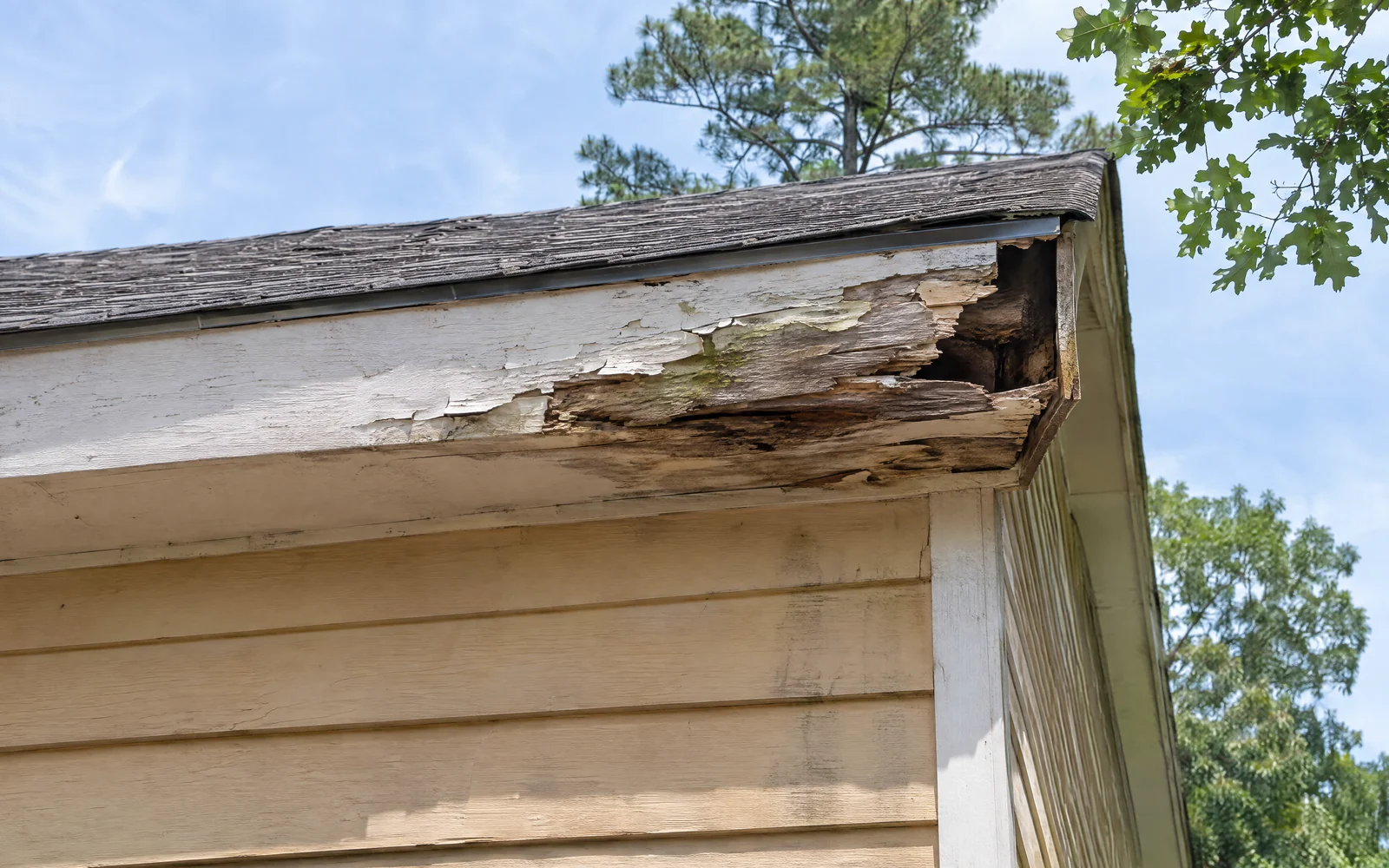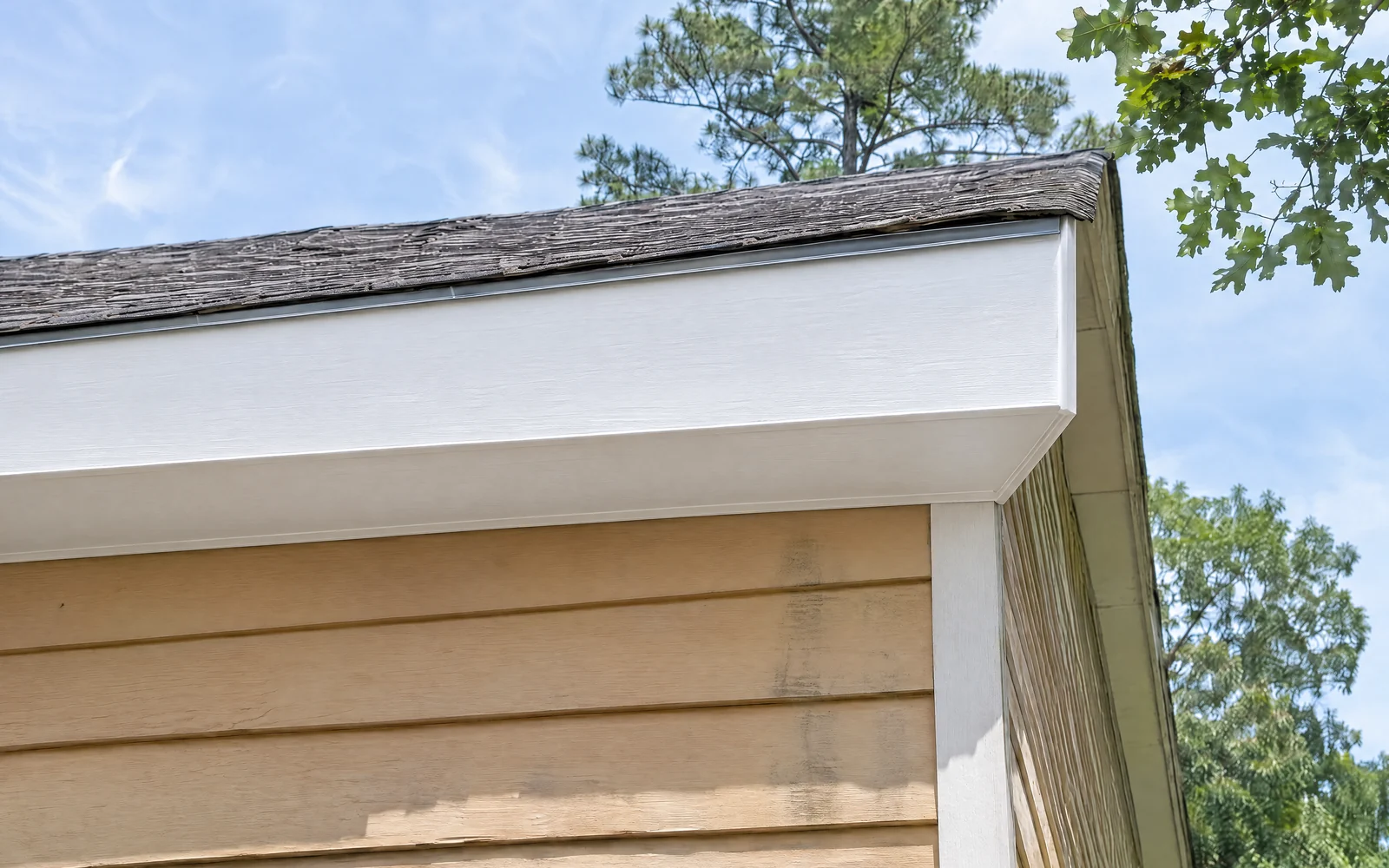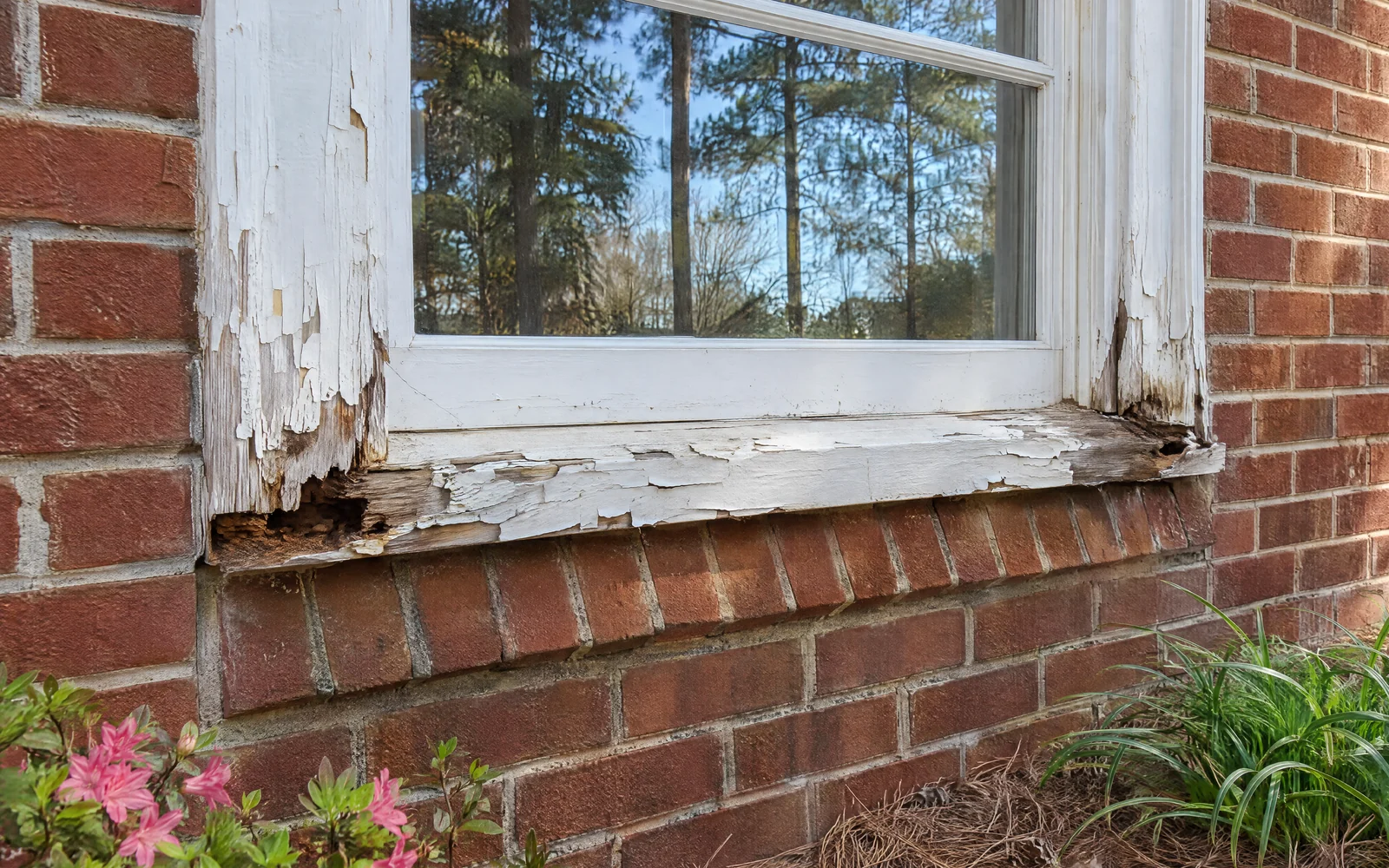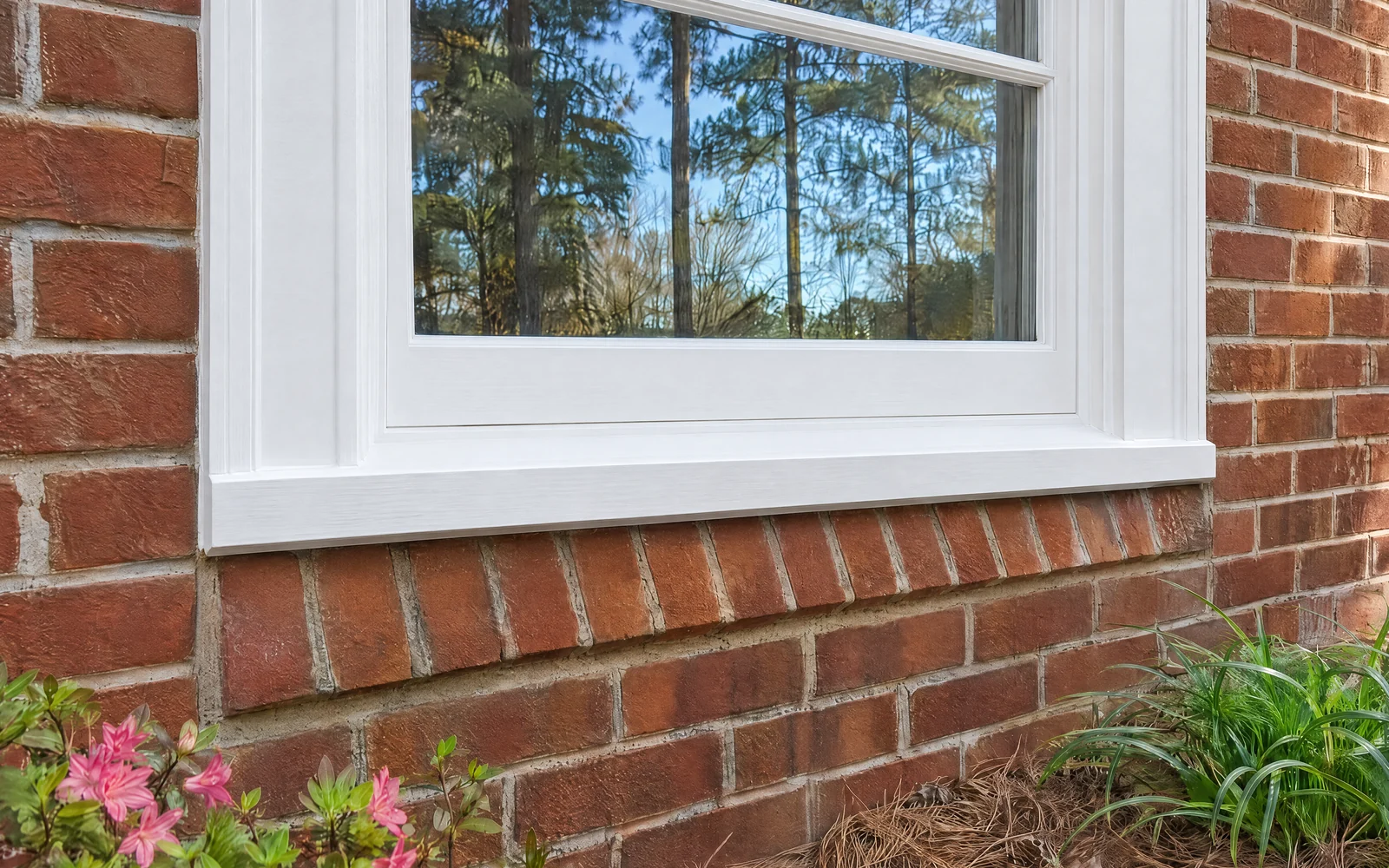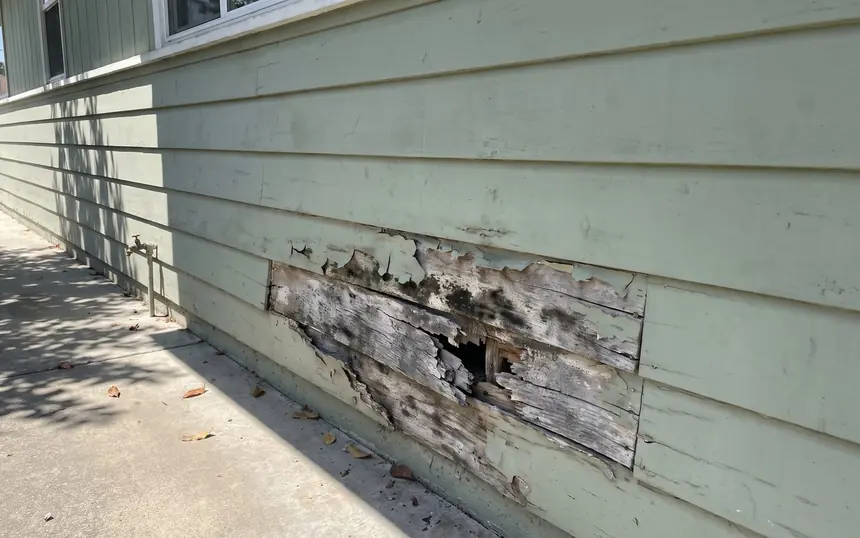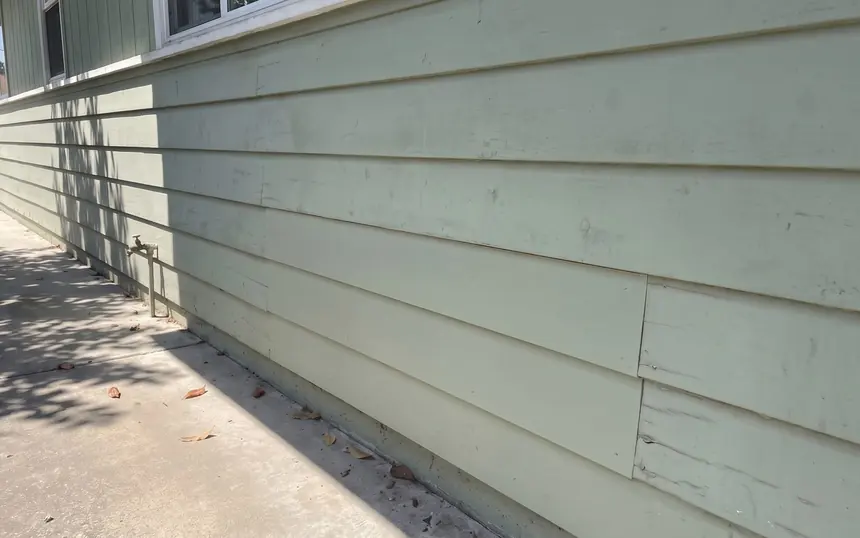
Fascia, window sills, porch columns, siding and termite damage cut back to sound wood and rebuilt, from our office on Centerview Drive. The price is in writing first.
 BBBAccredited Business
Kaminskiy Care and Repair rebuilds rotted and termite-damaged wood on Raleigh homes from our office on Centerview Drive: the fascia behind a gutter full of oak leaves, the sill that holds water after every thunderstorm, the porch column gone soft at its base, the bottom courses of wood siding inside the Beltline and the trim on the brick and fiber cement homes north of it, cut back to sound wood, primed, painted and sealed. When termites are in it, a licensed pest company treats first and we rebuild after. You get the price in writing before anything is scheduled. Since 2025 our technicians have completed 89 repair visits on 80 Raleigh homes.
 Eight repairs, one crew, priced in writing before we start.
More than forty inches of rain a year, July humidity that never breaks, oaks that shade the north wall all summer and subterranean termites under every yard: that is how Raleigh wood goes soft. We open it up, cut back to sound wood, rebuild, prime and paint, and fix the gutter or the grade that started it.

 AFTERBEFORE
 Fascia & Eaves
 Window Sills
 Door Jambs & Casings
 Trim & Siding
 Termite Damage Rebuilds
 Deck Boards & Railings
 Stairs & Posts
 Primed, Painted & Sealed
Raleigh rot does not wait for the next thunderstorm to pass. A Kaminskiy-certified technician prices most fascia, sill and trim repairs on the call, in writing; a porch or a run of siding gets a written scope after a look.

Priced and on the calendar during the first call.

A written quote you approve before anyone drives out.

One crew, truck stocked, warranty in writing.
A one-year workmanship warranty, in writing, on every Raleigh rot and termite damage repair.
Water that never leaves. Raleigh gets more rain than Seattle, most of it in summer downpours that overflow a gutter in minutes, and the humidity afterward keeps the wood from drying. Under the oaks inside the Beltline the north wall stays shaded and damp from May to October. Add a vented crawl space breathing wet air onto the floor framing and a sprinkler on the foundation planting, and the fascia, the sills, the porch columns and the bottom course of siding go first. We rebuild the wood and fix what kept it wet.
In Wake County one termite matters, the eastern subterranean, and NC State Extension finds it in every county. It lives in the soil, needs moisture, and builds mud tubes up the foundation wall, the crawl space piers and the brick behind the shrubs to reach the sill plate and the siding. Swarms come on a warm wet day in late winter. Carpenter bees drill the unpainted fascia and powderpost beetles work the damp joists. A licensed pest company treats whichever it is; we rebuild the wood it ate.
Filler holds in a dry climate. In Raleigh the wood around the patch stays at twenty percent moisture half the year, the fungus keeps growing behind it, and the patch pops the first winter. We cut back to sound wood, splice or replace with the same profile, prime every face, caulk and paint to match, so the repair reads as original from the sidewalk.
Clean the gutters after the oaks drop, not before. Keep the grade sloping away from the house and the mulch below the siding, with untreated wood at least eight inches off the soil. Trim the shrubs back from the north wall so it can dry. Look under the house once a year for standing water and mud tubes, and paint the fascia before it goes gray, because bare wood is what the carpenter bees and the fungus both want.
Houses from the 1900s to the 1940s with wood siding, wood porches, box columns and wood-framed windows under big oaks. The porch columns rot at the base, the bottom courses of siding go soft where the shrubs hold the damp, and the sills on the shaded side never dry. We splice new wood into the old with the same profile, keep the repair to what was there, and in the historic districts match the material so the work needs no review.
Homes from the 1970s through the 2000s, many with the hardboard siding of those decades or fiber cement with wood trim, plus decks on every back wall. The siding swells and crumbles at the bottom edge, the window trim rots where no cap flashing was set, and the deck ledger hides damage behind the band board. We replace the rotted runs, match the association's color, and name a ledger problem before anyone opens the wall.
1950s to 1970s brick ranches with wood fascia, wood window sills and vented crawl spaces on red clay that holds water after a storm. The brick is fine; the wood around it is not. Fascia rots behind the gutters, sills split on the sunny side, and the crawl space keeps the floor framing damp enough for termites and powderpost beetles. We rebuild the trim and tell you what the crawl space needs.
A fascia board, a sill or a trim piece is priced on the call, in writing. A bigger rebuild gets a look first and a written price before anything starts.
We cut back to sound wood and probe how far the rot really goes. If it runs further than the photo showed, you hear it before we go further, with the price.
New wood primed on all sides, caulked, painted to match, and the water path that caused it fixed: the drip edge, the flashing, the gutter end, the sprinkler.
The work area is cleaned before we leave, and every rot repair carries our one-year workmanship warranty.
North Carolina exempts the replacement of windows, doors, exterior siding and the boards, railings and stair treads of porches and decks from a building permit under a set cost, and never exempts a load-bearing structure. Raleigh's own residential permit page lists siding, window and door work as a permit without plans, so a like-for-like rot repair sits on the exempt side of the statute and a rotted joist, header or sill plate does not. We check with Development Services before a bigger job rather than guess.
A Raleigh sale comes with a Wood-Destroying Insect Information Report, the WDIR 100, from a company licensed by the state's Structural Pest Control Division. It reports visible evidence of termites, powderpost beetles and carpenter ants, and it says in plain words that it is not a structural damage report and does not report wood rot. The pest company treats and writes the report; the home inspection finds the rot; we repair both lists and the invoice goes in the file for closing.
Oakwood, Boylan Heights, Glenwood-Brooklyn and Raleigh's other historic overlay districts need a Certificate of Appropriateness for exterior changes, but the ordinance exempts ordinary maintenance and repair that changes no design, material, color or appearance. A siding course or a porch column rebuilt in matching wood is that kind of repair. A changed profile or a different material is a Minor Work application, and we tell you which before we start.
Can't find your answer? Call 919-585-1114 and ask us anything.
Call 919-585-1114We answer in under three rings and our office is on Centerview Drive, so most fascia, sill, trim and jamb repairs are priced on the call and on the schedule within days. A porch, a deck or a run of siding gets a look first and a written scope before anything starts.
Yes, after a licensed pest company has treated. Subterranean termites come up from the soil, so the damage is usually low: sill plates, band boards, the bottom of the siding, porch framing. We cut out what they ate, rebuild what we can reach, and tell you first if a joist or a beam needs more than a splice.
Yes. Fascia, sills, trim, jambs, siding, porch columns and deck boards are carpentry, and Kaminskiy is licensed, bonded and insured, so a splice into a rafter tail or a band board is fine too. If the rot has reached a joist, a header or a sill plate, we say so before anyone opens a wall and tell you who needs to look at it.
How much wood comes out once the paint is off, how high it is, and the finish it has to match. A sill on a ranch in Lake Johnson is a short visit; a box column on an Oakwood porch is not. Text a photo and the price is in writing before anything is scheduled; if the rot runs further than the photo showed, you hear it before we go further.
Not for a like-for-like repair of siding, trim, a sill, a jamb, deck boards or a railing under the state's cost line. Rot that has reached a joist, a header or a sill plate is load-bearing work and needs a permit no matter the cost, and we check with the city before a bigger job.
The pest company treats the termites and writes the WDIR; it does not report rot. The home inspector finds the soft wood. We repair both: the damage the WDIR lists and the rot the inspection flagged, priced from the two reports, with the invoice for the closing file.
Yes. Repair in matching material that changes no design, color or appearance is ordinary maintenance under the city's rule and needs no certificate. We match the siding profile, the reveal and the paint, and if a change of material is the better fix we tell you so you can file the Minor Work application first.
All of Raleigh from our office on Centerview Drive, including Oakwood, Boylan Heights, Five Points, Hayes Barton, North Hills, Stonehenge, Falls River, Wakefield, Brier Creek and Lake Johnson, plus Cary, Garner, Wake Forest, Morrisville, Knightdale and Rolesville. Call 919-585-1114 to confirm your address.
Tell us where the wood has gone soft, or text a photo, and we call back with a written price and a time. Calling is still faster: 919-585-1114.
Priced in writing before we start, rebuilt to last, warranted in writing.
We answer in under three rings, 24/7.No price games. You get a clear written quote before any work begins, backed by our workmanship warranty.