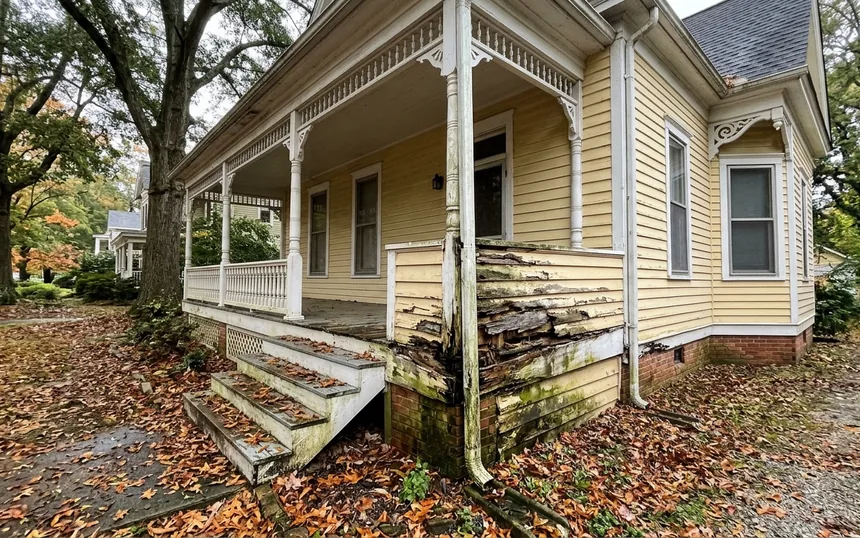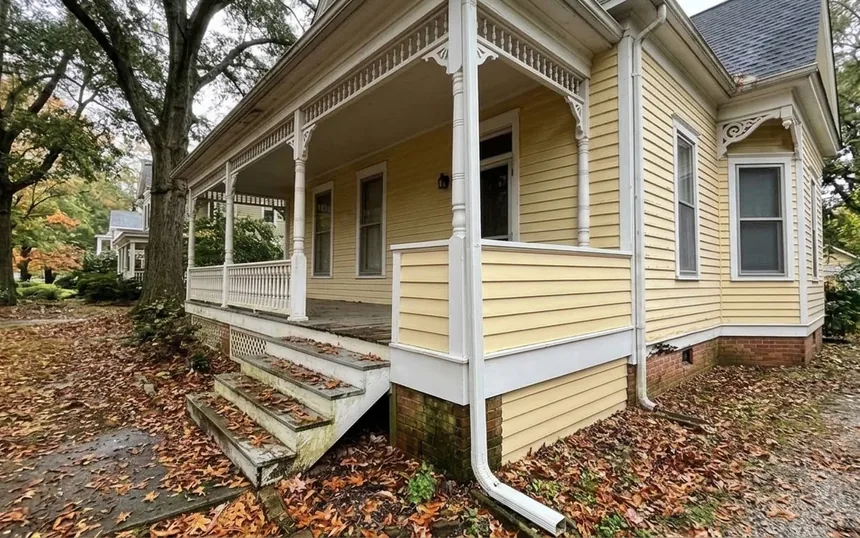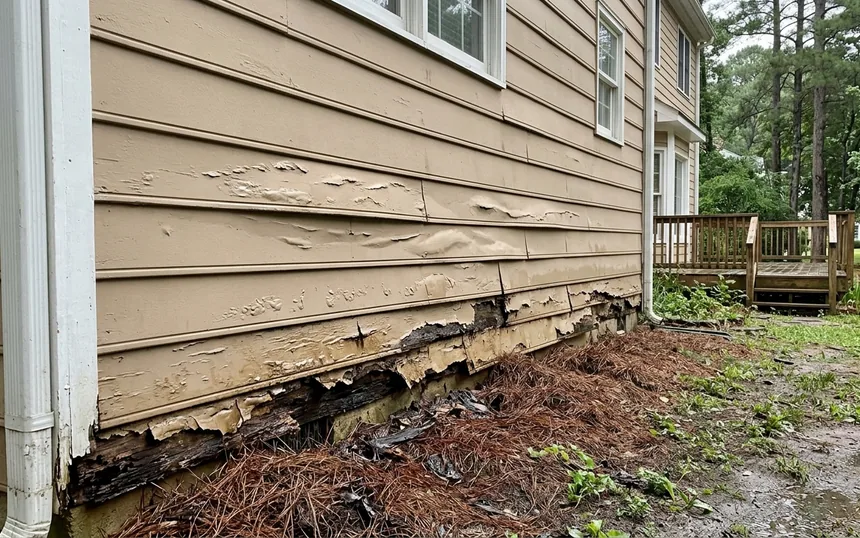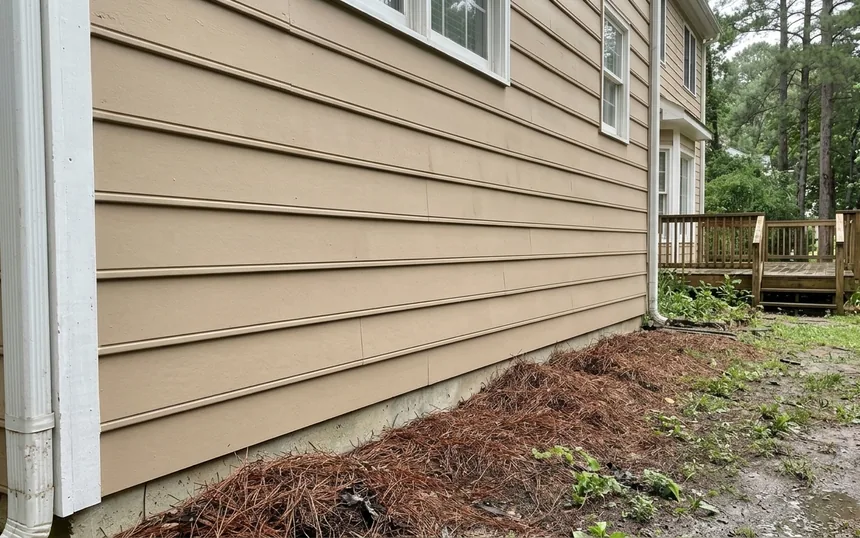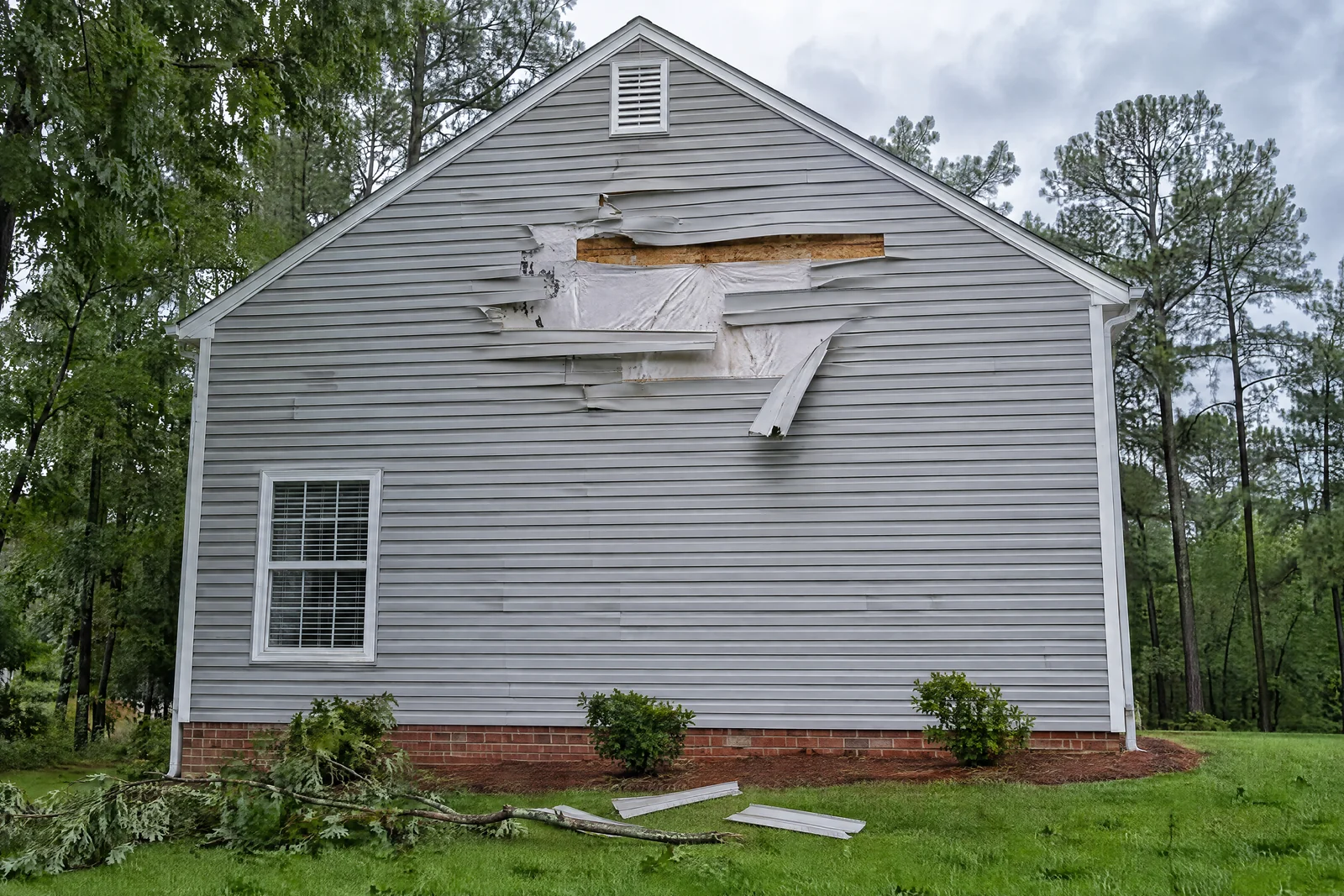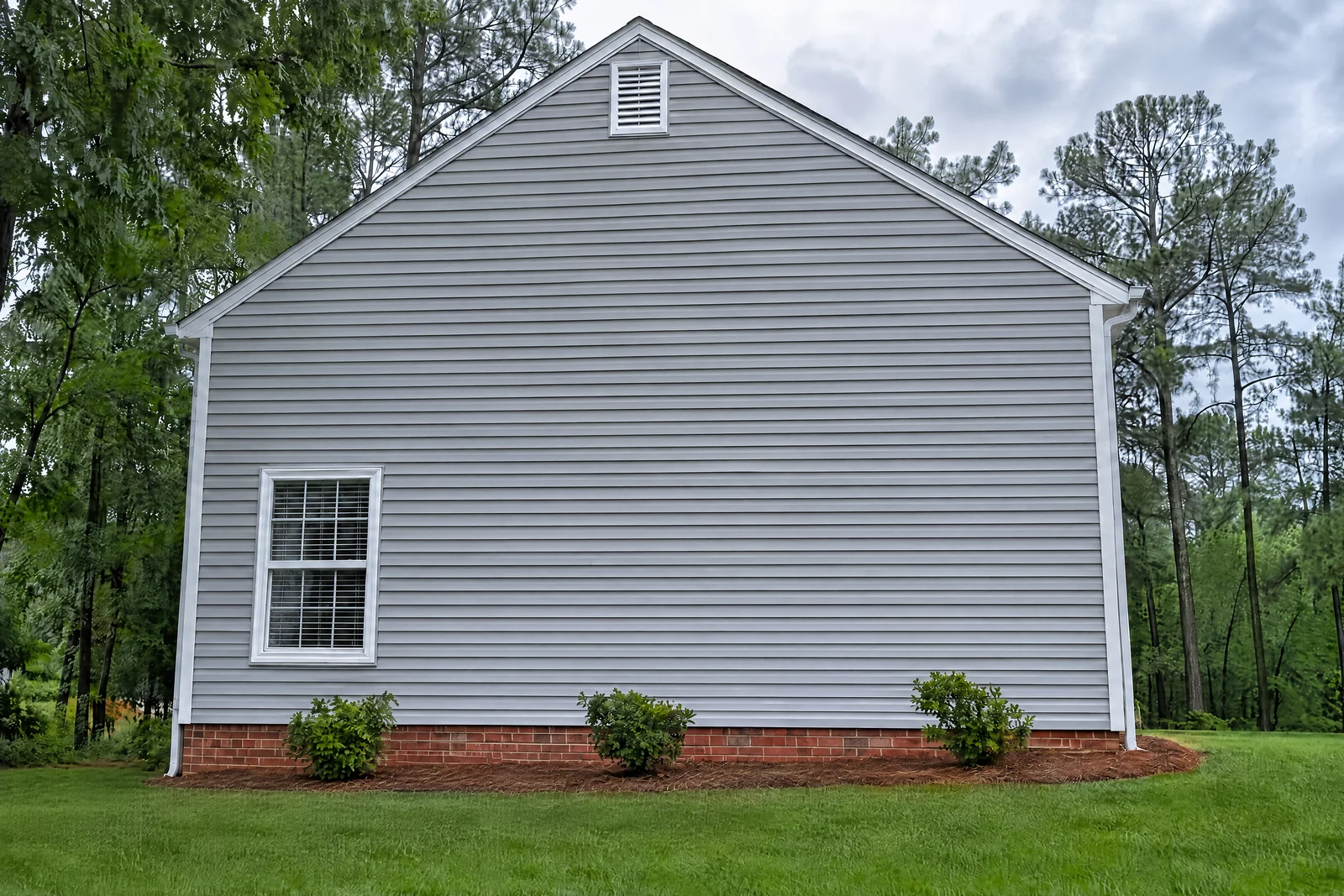
Rotted drop siding on an Oakwood porch corner, hardboard swollen at the bottom edge in North Raleigh, vinyl torn by a thunderstorm limb in Wake Forest: cut out, replaced in the same profile or in fiber cement, flashed, caulked and painted to the house.
 BBBAccredited Business
Kaminskiy Care and Repair repairs and replaces siding across Raleigh, Cary, Apex, Garner, Wake Forest and the rest of Wake County: the wood drop and lap siding of the houses in Oakwood, Boylan Heights and inside the Beltline, the hardboard of the 1980s and 1990s neighborhoods that swells and crumbles at the bottom edge, the vinyl on the subdivisions that cracks and tears in a summer storm, and the fiber cement (Hardie) on the newer homes. We cut out every soft or swollen board, fix the flashing that let the water in, fit new siding in the same profile or in fiber cement, and caulk and paint it to the house. Priced in writing on the call: 919-585-1114.
 Every siding Raleigh built with, repaired.
Raleigh siding fails from the bottom and around the windows. Summer downpours overflow the gutters, the humidity that follows keeps the wall damp for days, and the pine straw and shrubs against the foundation hold the water at the lowest course. Hardboard drinks it in and swells, wood rots behind the paint, and a window without a head flashing feeds both. We replace the damaged boards, flash the openings and keep the new siding clear of the mulch.

 AFTERBEFORE
 Historic Wood Siding
 Hardboard Replacement
 Vinyl Siding Repair
 Fiber Cement & Hardie
 Fascia, Trim & Bee Damage
 Rot & Termite Damage
 Caulk, Primer & Paint
 Walk-Through & Warranty
We take these calls across Wake County every week, and more after every storm that comes through the Triangle. A photo of the wall is usually enough to price the repair in writing on the call; when a whole elevation of hardboard is failing, we look first and give you board-by-board and full-wall numbers side by side.

We name the siding, tell you whether the city or a historic district has a say, and price the repair in writing.

The damaged siding comes off, the sheathing and framing are checked, and we show you what the water did.

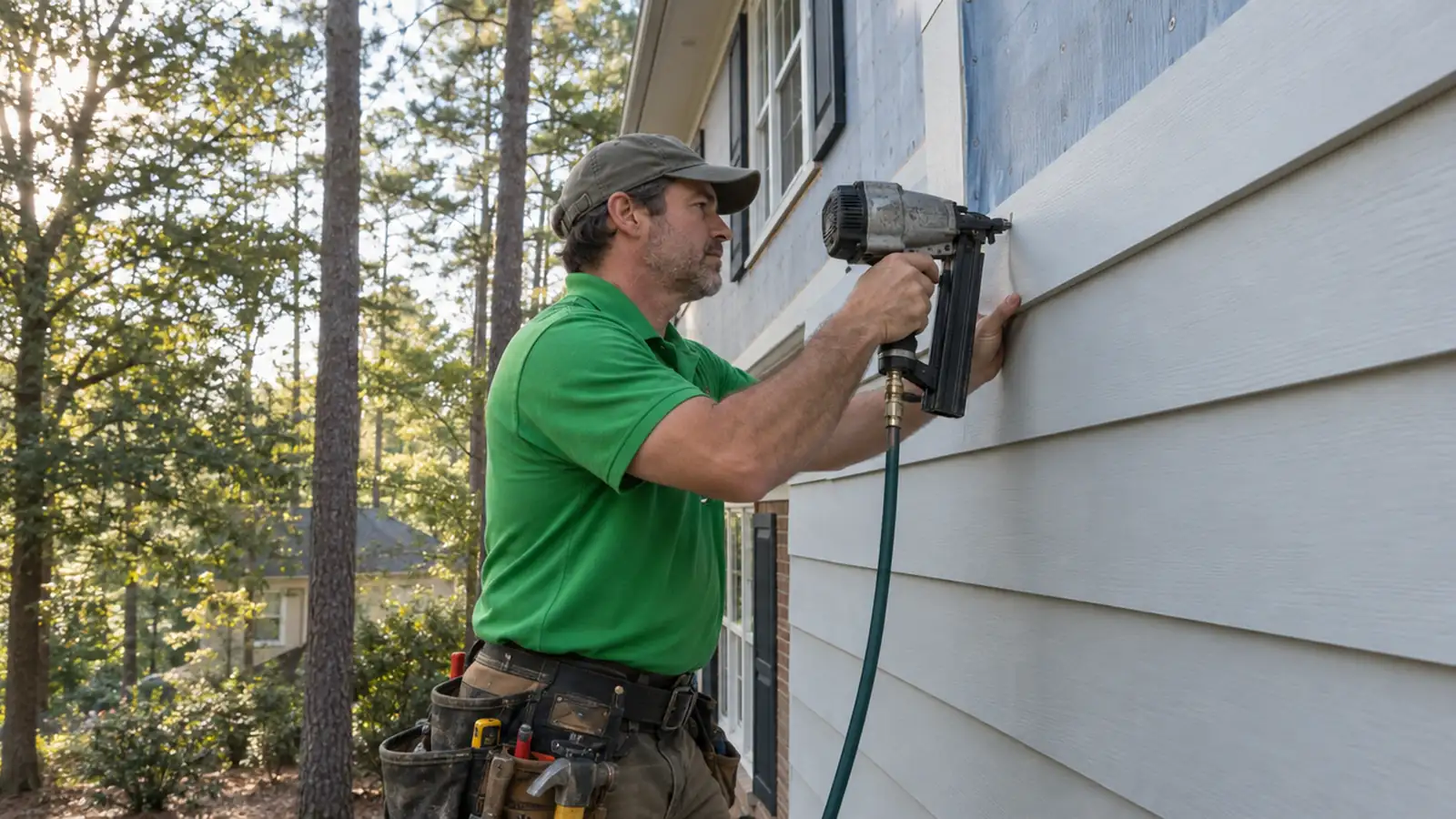
Flashing at the openings, new siding in the same profile or in fiber cement, every joint caulked and painted to the house.
Every job is backed in writing by our workmanship warranty and done by a Kaminskiy-certified, background checked technician.
The houses in Oakwood, Boylan Heights and the older streets inside the Beltline carry wood drop or lap siding. Many homes built from the late 1970s through the 1990s across North Raleigh, Cary and Garner carry hardboard, a pressed wood-fiber board that looks like painted wood. Most subdivisions since carry vinyl, and the newer and rebuilt homes carry fiber cement. We name yours from a photo.
Hardboard holds up only while its paint and caulk are perfect. Once water gets in at a bottom edge, a nail or a butt joint, it swells, softens and comes apart in layers, and it does not shrink back. A few bad boards can be replaced with matching hardboard profiles or fiber cement; when most of a wall is swelling, re-siding that elevation in fiber cement costs less over ten years than chasing boards.
Vinyl is fine in the rain and weak against impact. A limb, hail, a mower stone or a gust under a loose panel cracks or unlocks it. A panel can be unlocked and replaced from the course above without disturbing the wall, and the hard part is the color: sun-faded siding rarely matches new stock, so we take a piece from a hidden wall when we have to.
Pull mulch and pine straw back so the bottom of the siding sits clear, clean the gutters after the oaks drop, point the downspouts away, trim shrubs off the walls so they can dry, recaulk the window trim every few years, and paint before the wood turns gray, because bare wood is what the fungus and the carpenter bees want.
Raleigh's siding tells you when its street was built. Wood drop and lap siding inside the Beltline, hardboard on the neighborhoods of the seventies, eighties and nineties, vinyl on the subdivisions since, and fiber cement on the newest homes and the ones already re-sided. The rain and the humidity are the same on all of them.
Houses from the 1900s to the 1940s in wood drop and lap siding with deep porches under old oaks. The bottom courses rot where the shrubs and the porch hold the damp, and the north walls peel. In Oakwood, Boylan Heights and the other local historic districts, siding replaced in matching wood and profile is ordinary repair. These houses predate 1978, so the paint is tested first and the work follows North Carolina's lead-safe renovation rules.
Homes from the 1970s through the 1990s, many still in their original hardboard, plus the vinyl of the 1990s and 2000s subdivisions. The hardboard swells at the bottom edge and around the windows, the vinyl cracks in storms, and associations want the color matched. We replace the failed boards, often with fiber cement, and put the material and color in writing for the form.
2000s and newer homes in vinyl and fiber cement, often with cultured stone below. Fiber cement cracks at nails and corners, the trim rots where it meets the stone, and the caulked joints open after a few summers. The repair is new board in the same reveal, flashed and caulked, painted to the scheme.
Usually. The damage starts at the bottom courses, under the windows and behind the downspouts, and the rest of the wall is often sound. We replace the failed boards, check the sheathing behind them and fix the flashing. When most of a hardboard wall is swelling, we give you the board-by-board and the full-wall price side by side.
North Carolina exempts replacing exterior siding in a single-family home from a building permit under a set project cost, as long as no load-bearing structure is involved. Raleigh's own permit page lists siding work as a permit without plans, so past a like-for-like repair we check with Development Services and tell you what the city said before we quote.
We price it in writing from a photo before anything is scheduled. The number depends on the siding, how far the water went behind it, whether the profile is stocked, and how much painting it takes to blend. Board-by-board and full-wall options are priced side by side, with no percentage markups.
The state requires a general contractor license once a project reaches a set cost, and a siding repair usually sits well under that line. Electrical, plumbing and HVAC are licensed separately at any price, and we do not touch them. Kaminskiy Care and Repair is bonded and insured, and every job is priced in writing before it starts.
We name the siding, check the historic overlay map, and price the repair in writing before anything is booked.
The damaged boards come off and the sheathing and framing are checked; rotted sheathing is cut out and replaced.
House wrap patched and lapped, flashing set over windows and at butt joints, new siding fitted in the same reveal.
Joints caulked, every face painted to the house, the site cleaned, and the photos and one-year workmanship warranty sent.
North Carolina's statute on building permits exempts work under a set cost in a single-family home and names replacing exterior siding as needing no permit within that cap; load-bearing structure is never exempt. Raleigh lists siding work as a permit without plans on its residential permit page, so for anything past board-for-board repair we check with Development Services before we quote and put the answer in the scope.
Oakwood, Boylan Heights, Capitol Square, Glenwood-Brooklyn, Moore Square, Oberlin Village and Raleigh's other local historic overlay districts need a Certificate of Appropriateness for exterior changes. Ordinary repair that changes no design, material, color or appearance is exempt, so wood siding spliced in the same profile needs nothing; swapping wood for fiber cement or vinyl on a historic house goes to the commission, and we tell you before the first board comes off.
North Carolina runs its own lead-based paint renovation program instead of the federal one, so on a house built before 1978 the paint is tested and the work is set up, contained and cleaned to the state's renovation rules. A Raleigh sale usually comes with a WDIR 100 from a licensed pest company; it is not a structural damage report and does not report rot. We repair both the report's items and the home inspector's.
On Centerview Drive. Our Wake County crew works from Centerview Drive in west Raleigh, near the Beltline and the Cary line, and covers Raleigh, Cary, Apex, Garner, Morrisville, Holly Springs and Wake Forest. Call 919-585-1114, send a photo of the siding, or use the form, and a person answers in under three rings. Since 2025 our technicians have completed 164 repair visits on 151 homes across Wake County.
Can't find your answer? Call 919-585-1114 and ask us anything.
Call 919-585-1114Most Raleigh siding can be repaired. The damage gathers at the lowest courses, under windows and behind downspouts, while the rest of the wall stays sound. We cut out the failed boards, check and replace any rotted sheathing, flash the openings, and fit new siding in the same profile. When most of a hardboard elevation is swelling, we price replacing that wall in fiber cement beside the repair.
Replace the swollen boards before the water reaches the sheathing; hardboard does not shrink back once it swells. A few boards can be matched with hardboard profiles or replaced with fiber cement of the same reveal. If most of a wall is going, re-siding that elevation in fiber cement is usually the better money. We check the sheathing either way and seal every cut end.
We price it in writing from a photo before anything is scheduled. The siding type, how far the water got behind it, whether the profile is in stock, and how much painting it takes to blend all move the number. A few vinyl panels is a small line; a hardboard wall with rotted sheathing is a larger one. No percentage markups.
State law exempts replacing exterior siding in a single-family home from a building permit under a set project cost, unless load-bearing structure is involved. Raleigh lists siding as a permit without plans, so we check with Development Services before anything past a like-for-like repair and tell you what the city said.
Usually, with some care. We match the profile, the exposure and the color family; sun-faded vinyl rarely matches new stock exactly, so on a front wall we can move a panel from a hidden wall to the repair and put the new one where it will not be seen. Panels are hung loose so they can move with the heat.
Water that never leaves. Raleigh gets more rain in a year than Seattle, mostly in summer downpours, and the humidity afterward keeps walls damp for days under the oaks and pines. Hardboard swells, wood rots behind the paint, and vinyl hides water at the windows. Clean gutters, mulch pulled back and flashed windows keep most of it away.
Not without review. Oakwood, Boylan Heights and the other local historic overlay districts treat repair in the same material and profile as ordinary maintenance, but a change of material on a historic house needs a Certificate of Appropriateness. We repair in matching wood, and tell you before we start if your scope would need the commission.
Raleigh, Cary, Apex, Garner, Morrisville, Holly Springs, Wake Forest and Knightdale, from our office on Centerview Drive. Call 919-585-1114 with the address and we confirm it on the call.
Tell us the address, the siding and what you are seeing. We'll call back with a written price and a date. Calling is still the fastest way: 919-585-1114.
Wood, hardboard, vinyl and Hardie repaired, flashed and painted to the house, a one-year workmanship warranty.
We answer in under three rings, 24/7.No price games. You get a clear written quote before any work begins, backed by our workmanship warranty.