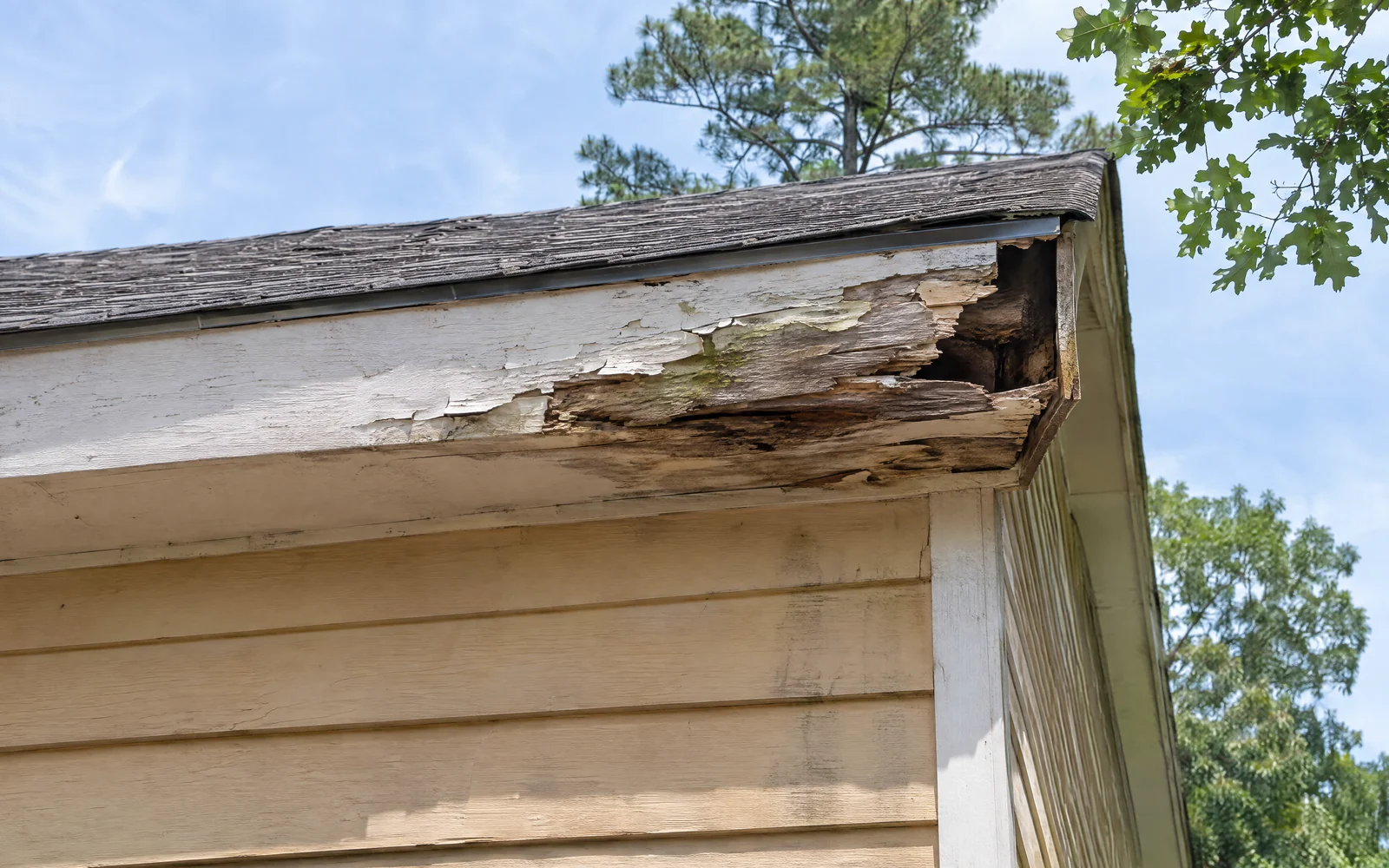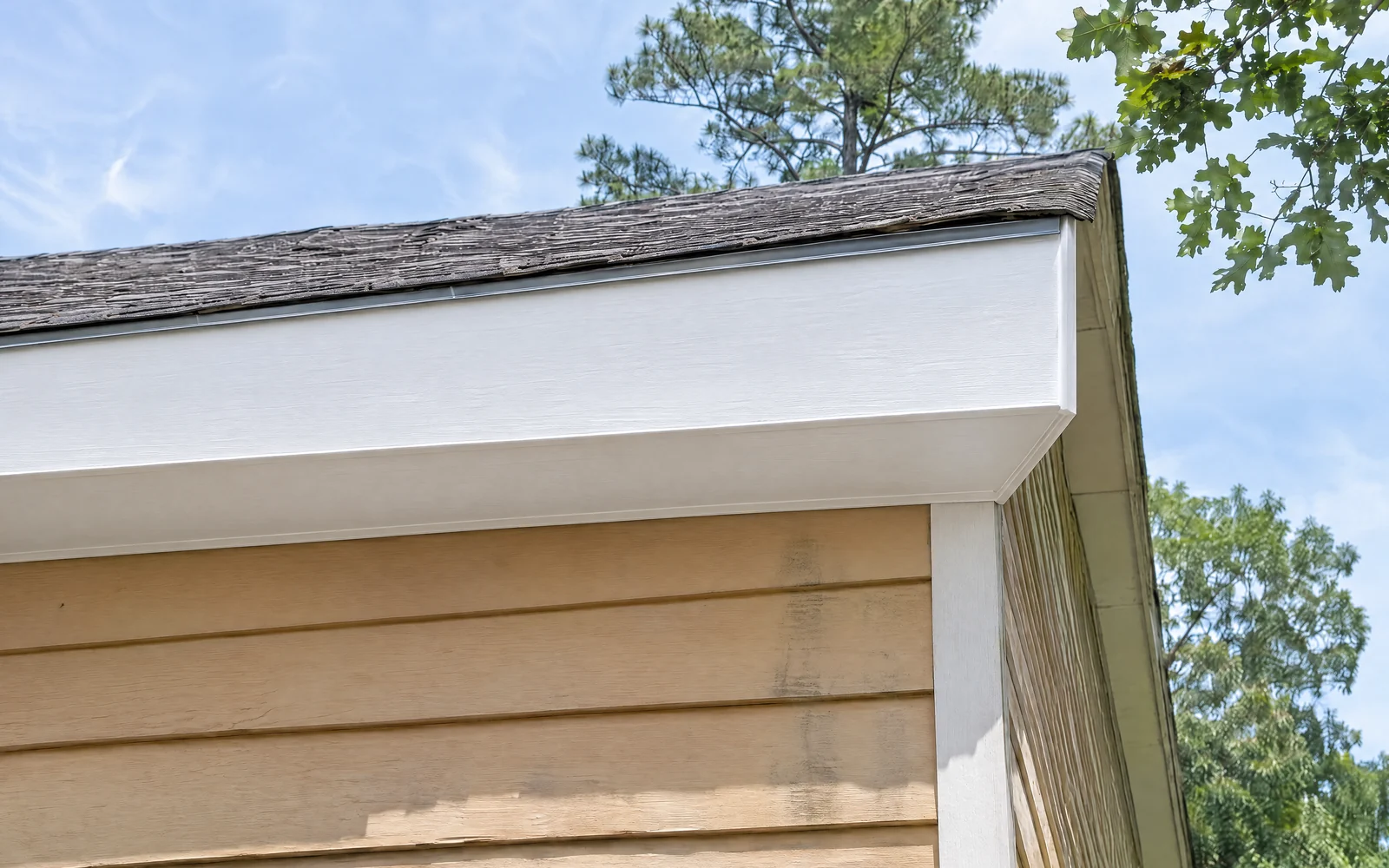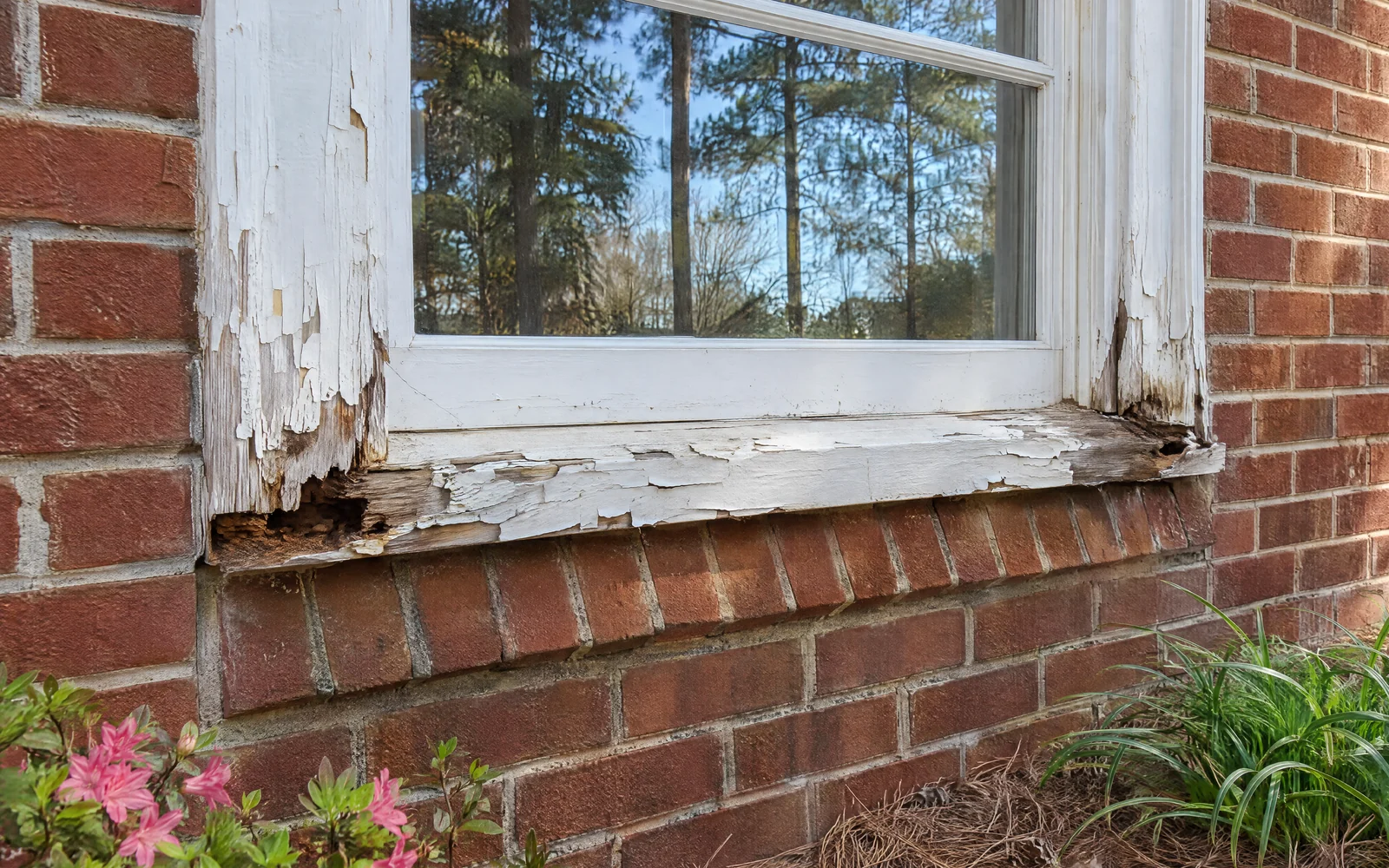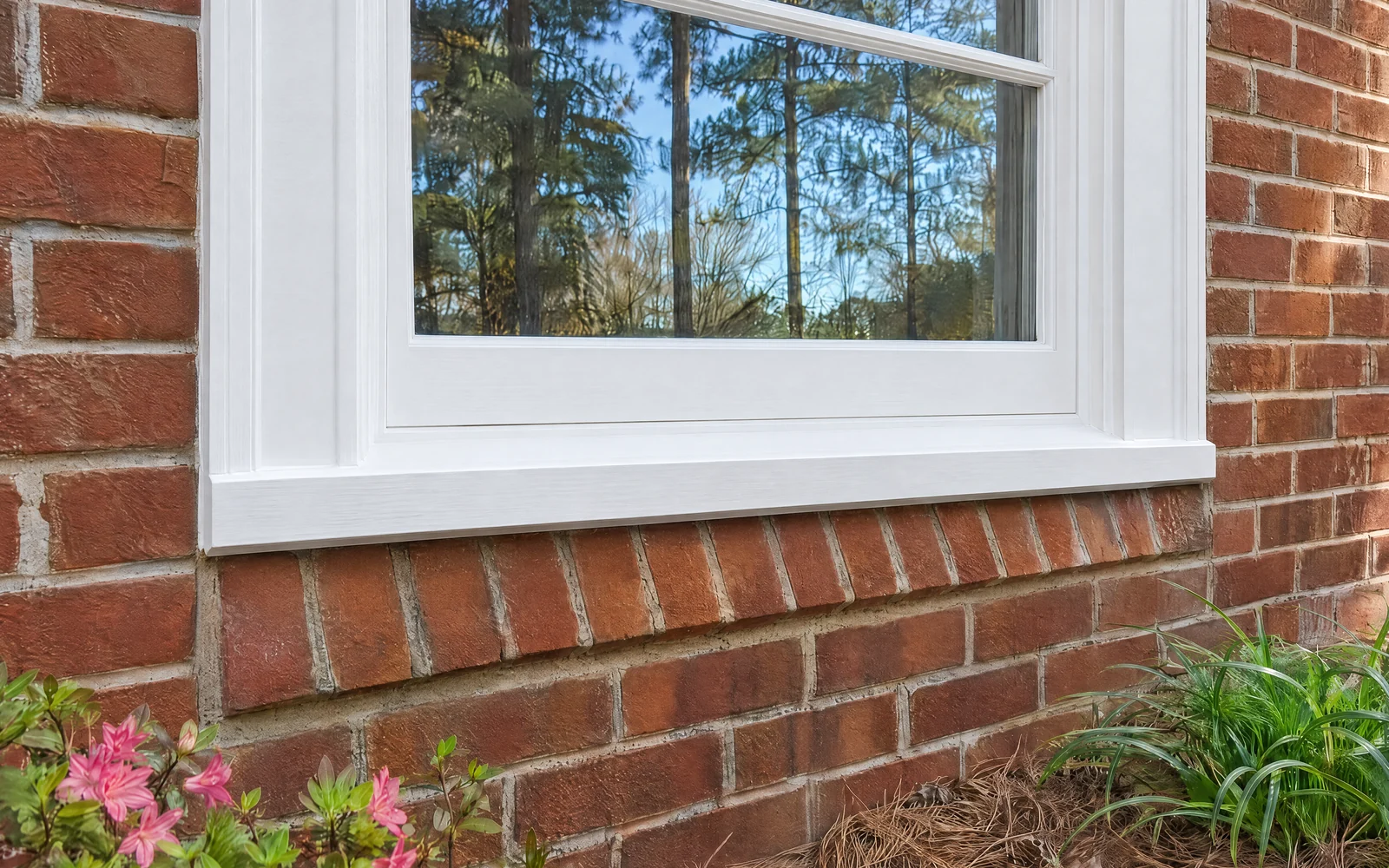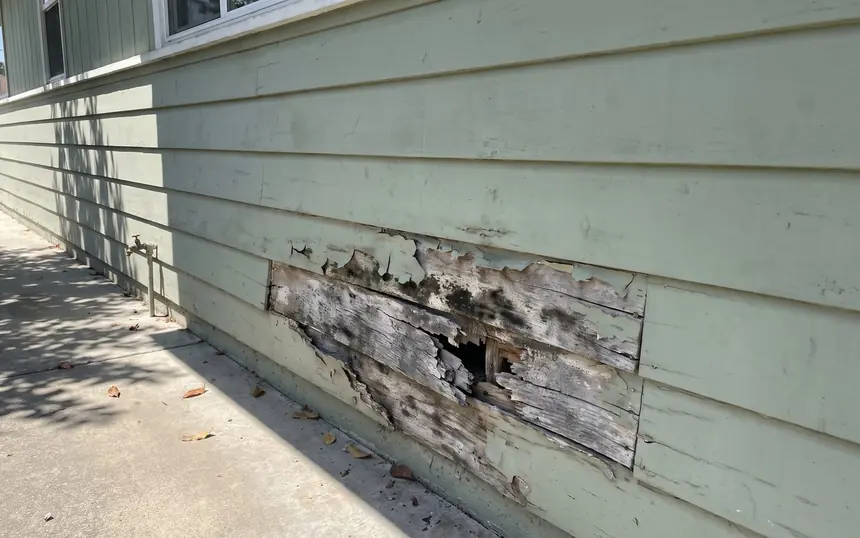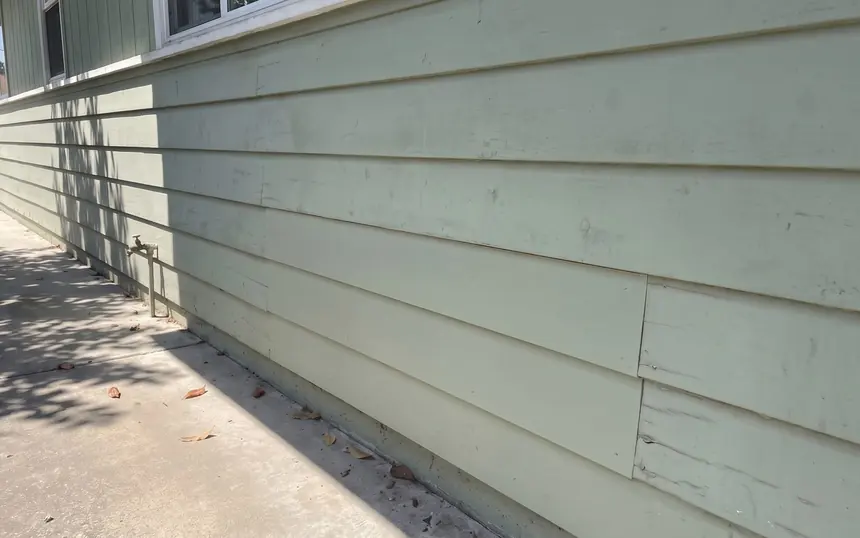
Swollen siding, rotted window trim, soft sills and deck boards cut back to sound wood and rebuilt to the association's color. Priced in writing before we start.
 BBBAccredited Business
Cary is a town of planned neighborhoods built in the 1970s through the 2000s, and Kaminskiy Care and Repair rebuilds the wood those decades left exposed: the hardboard siding that swells and crumbles at its bottom edge, the window and corner trim set with no flashing, the fascia behind the gutters, the deck ledgers and boards on every back wall, each cut back to sound wood, primed, painted and sealed to the HOA scheme. Termites get a licensed pest company first; the carpentry after is ours, priced in writing from our office in Raleigh.
 Eight repairs, one crew, priced in writing before we start.
Thirty years of humidity on the siding and trim of a builder tract, a deck ledger set against the band board, and subterranean termites under the mulch: that is Cary rot. We open it up, cut back to sound wood, rebuild, prime and paint to the HOA color, and fix the flashing or the grade that let the water in.

 AFTERBEFORE
 Fascia & Eaves
 Window Sills
 Door Jambs & Casings
 Trim & Siding
 Termite Damage Rebuilds
 Deck Boards & Railings
 Stairs & Posts
 Primed, Painted & Sealed
In a planned neighborhood every house on the street has the same trim detail, so the house next door is a preview. A Kaminskiy-certified technician prices most Cary siding, trim and sill repairs on the call, in writing; a deck or a whole elevation gets a written scope first.

Priced and on the calendar during the first call.

A written quote you approve before anyone drives out.

One crew, truck stocked, warranty in writing.
A one-year workmanship warranty, in writing, on every Cary rot and termite damage repair.
Builder details meeting Piedmont weather. Most of Cary went up fast between the 1970s and the 2000s, and the exposed wood is the siding, the trim boards, the fascia and the decks. Where a trim board was set without cap flashing or a siding course ends an inch from the mulch, forty inches of rain a year and a humid summer find the end grain, and the wood never dries between storms. The fix is sound wood, sealed on every face, with the flashing or the clearance the builder skipped.
The eastern subterranean termite is in every North Carolina county, and in Cary it travels under the foundation mulch to the bottom of the siding and up the crawl space piers to the floor framing, building mud tubes where it has to cross open ground. Swarms come on the first warm wet days of late winter. A licensed pest company treats the colony and writes the report; we rebuild the band board, the siding and the trim after, scheduled so the wall opens once.
The hardboard siding on many 1980s and 1990s Cary homes fails from the bottom edge up, where it drinks water and swells. We replace the rotted courses, match the profile and the reveal with a stable board, back-prime it, caulk and paint to the association's color, and leave the sound siding alone. A whole-wall re-side is a different job, and we say so on the call.
Pull the mulch back so the siding has clear air below it, aim the sprinklers off the house, and recaulk the trim-to-siding joints before they open. Flash the deck ledger or keep the boards clear of the siding. Clean the gutters when the pines drop, and paint the sunny elevation before the paint chalks, because paint is what keeps this trim alive.
The oldest streets, with 1970s and 1980s homes in wood and hardboard siding, cedar trim and wood-framed windows under mature pines and oaks. The siding fails at the bottom edge, the corner boards go soft at the ground, and the fascia rots behind gutters full of needles. We replace the rotted runs with the same profile and keep everything sound in place.
1990s planned neighborhoods with brick fronts, siding sides, wood trim and decks on the back. The window trim rots where no cap flashing was set, the deck ledger stains the band board, and the garage jambs crumble on the slab. We rebuild the trim, match the association's scheme and name a ledger problem before anyone opens the wall.
The newest homes, mostly fiber cement and vinyl with wood only at the porch columns, the deck framing and the door frames. The rot is small and specific: a column base, a jamb bottom, a railing post. We rebuild the piece, seal the end grain and match the finish, and the repair is the last one.
Cary sits inside the Raleigh market, and the Raleigh dry rot and wood rot repair page explains the North Carolina permit exemption and the WDIR 100 in full.
A fascia board, a sill or a trim piece is priced on the call, in writing. A bigger rebuild gets a look first and a written price before anything starts.
We cut back to sound wood and probe how far the rot really goes. If it runs further than the photo showed, you hear it before we go further, with the price.
New wood primed on all sides, caulked, painted to match, and the water path that caused it fixed: the drip edge, the flashing, the gutter end, the sprinkler.
The work area is cleaned before we leave, and every rot repair carries our one-year workmanship warranty.
Cary's permit FAQ puts the replacement or repair of non-structural building elements, deck boards among them, on its no-permit list, and North Carolina's statute does the same for windows, doors, exterior siding and the boards, railings and stair treads of a deck under a set cost. A new deck or a load-bearing member is the other side of the line: a rotted joist, header or ledger that carries a deck gets a permit no matter the cost, and we check with the town before a bigger job.
When a Cary home sells, the buyer gets a Wood-Destroying Insect Information Report, the WDIR 100, written by a company licensed by the state's Structural Pest Control Division. It covers termites, powderpost beetles and carpenter ants seen on the day, and it is not a damage report and does not cover wood rot. The pest company treats and reports; the home inspection finds the rot; we repair what both found and give you the invoice for the file.
Nearly every Cary neighborhood from Preston to Amberly has an association with an exterior scheme. A rot repair painted to the approved color rarely needs a form; a different siding profile or a changed trim detail sometimes does, and we put the materials and finish in writing for it. If the inspection a buyer or the board ordered flagged soft trim, that is the same call.
Can't find your answer? Call 919-585-1114 and ask us anything.
Call 919-585-1114A run of siding, a trim board or a sill is priced on the call and usually scheduled within days from our Raleigh office. A deck or a whole elevation is sized after a look, with the scope in writing before anything starts.
Yes, once a licensed pest company has treated. We cut out the eaten band board, siding, trim and the framing we can reach and rebuild it. The treatment and the report stay with the pest company; the carpentry is ours.
Yes. Siding, trim, sills, jambs, fascia and deck boards are carpentry, and Kaminskiy is licensed, bonded and insured, so a splice into a band board is fine too. A ledger or a joist that carries a deck is named before anyone opens the wall.
The length of the run and what is behind it. A sill or a short run of siding is priced from a photo; a deck ledger or a full elevation is priced after a look. The number is in writing before anything is scheduled, and it changes only if the rot runs further than the photo showed, which you hear first.
Not for a like-for-like repair of siding, trim, deck boards or a railing: the town's own list and the state statute both leave those out under a set cost. A new deck or rot in a joist, a header or a ledger is a permit, and we check with the town before a bigger job.
Usually. We match the reveal and the profile of the existing boards, replace only the courses that went soft, and paint to the association's approved color. If the original board is no longer made, we show you the closest match before we start.
All of Cary from our Raleigh office, including Downtown, MacGregor Downs, Lochmere, Kildaire Farm, Preston, Carpenter Village, Weston, Amberly, Cary Park and Green Level, plus Apex, Morrisville, Holly Springs and west Raleigh. Call 919-585-1114 to confirm your address.
Tell us where the wood has gone soft, or text a photo, and we call back with a written price and a time. Calling is still faster: 919-585-1114.
Priced in writing before we start, rebuilt to last, warranted in writing.
We answer in under three rings, 24/7.No price games. You get a clear written quote before any work begins, backed by our workmanship warranty.