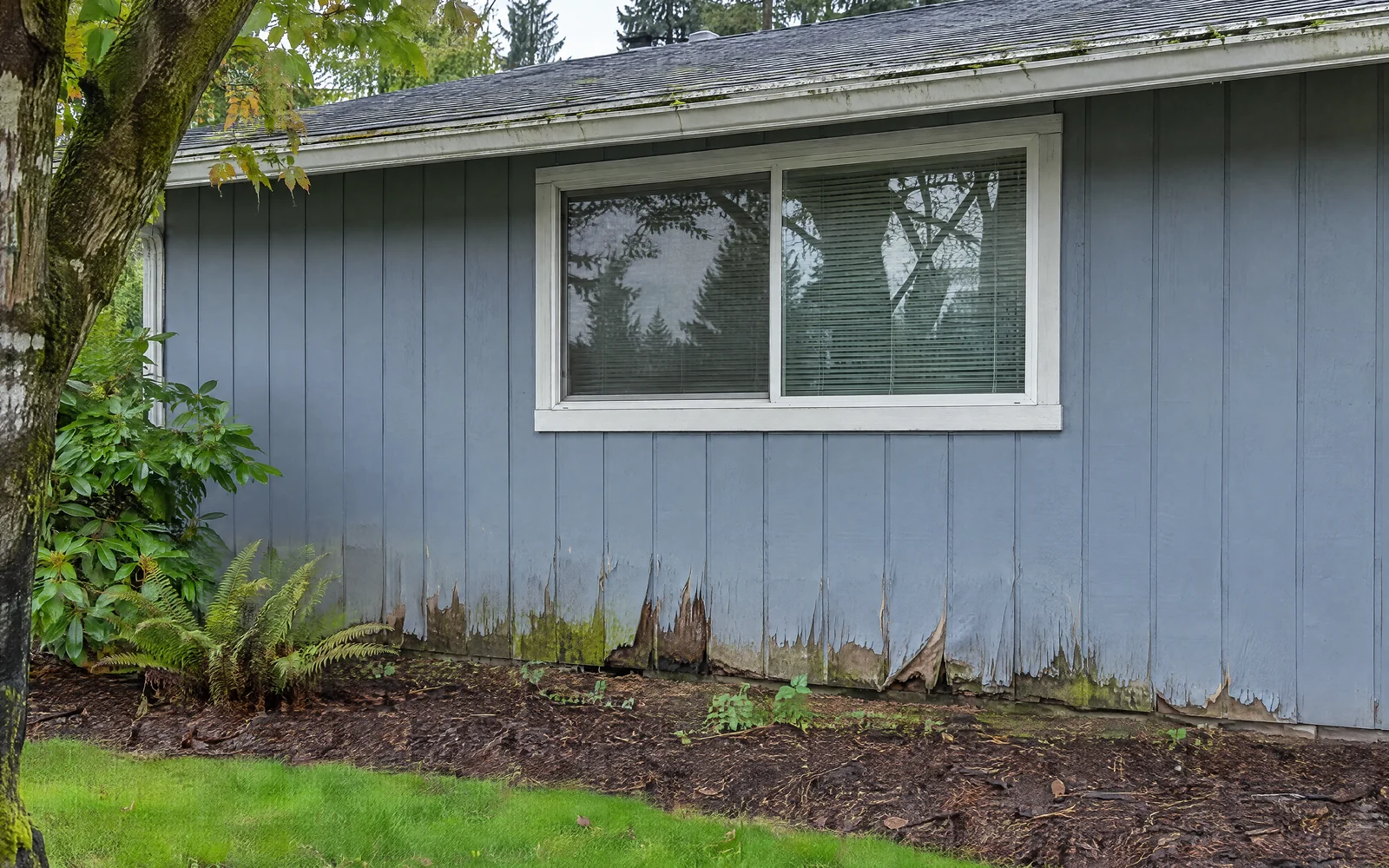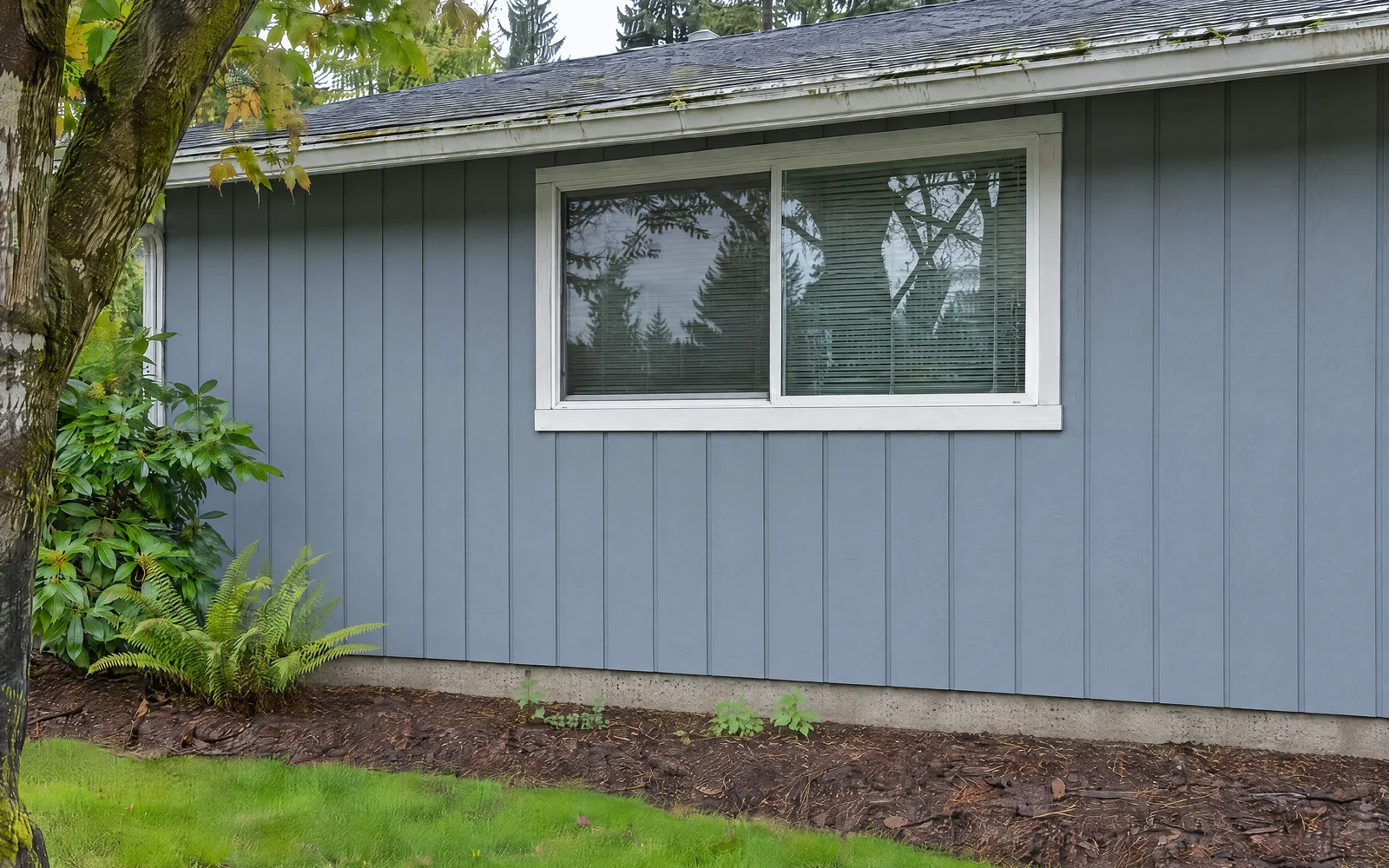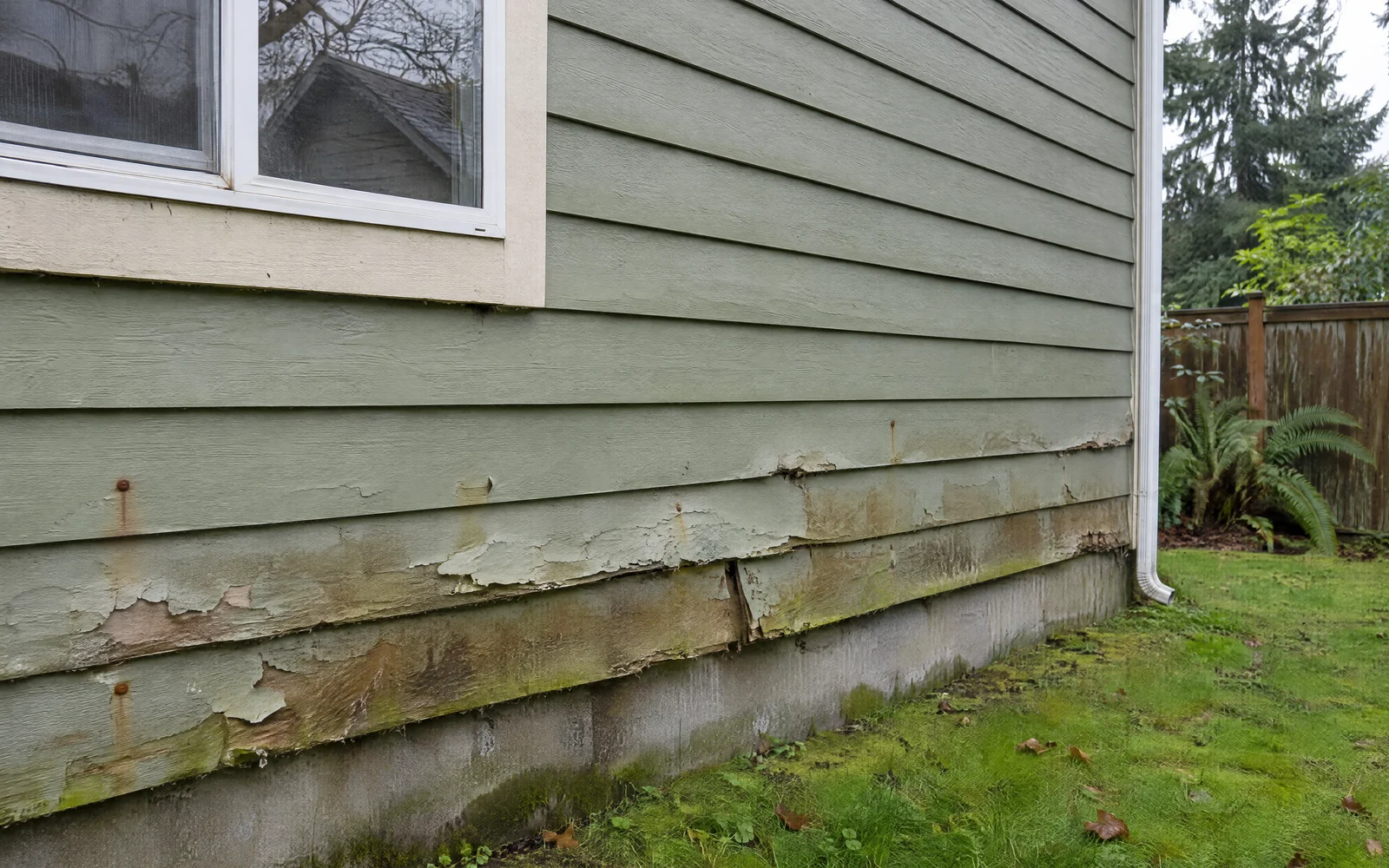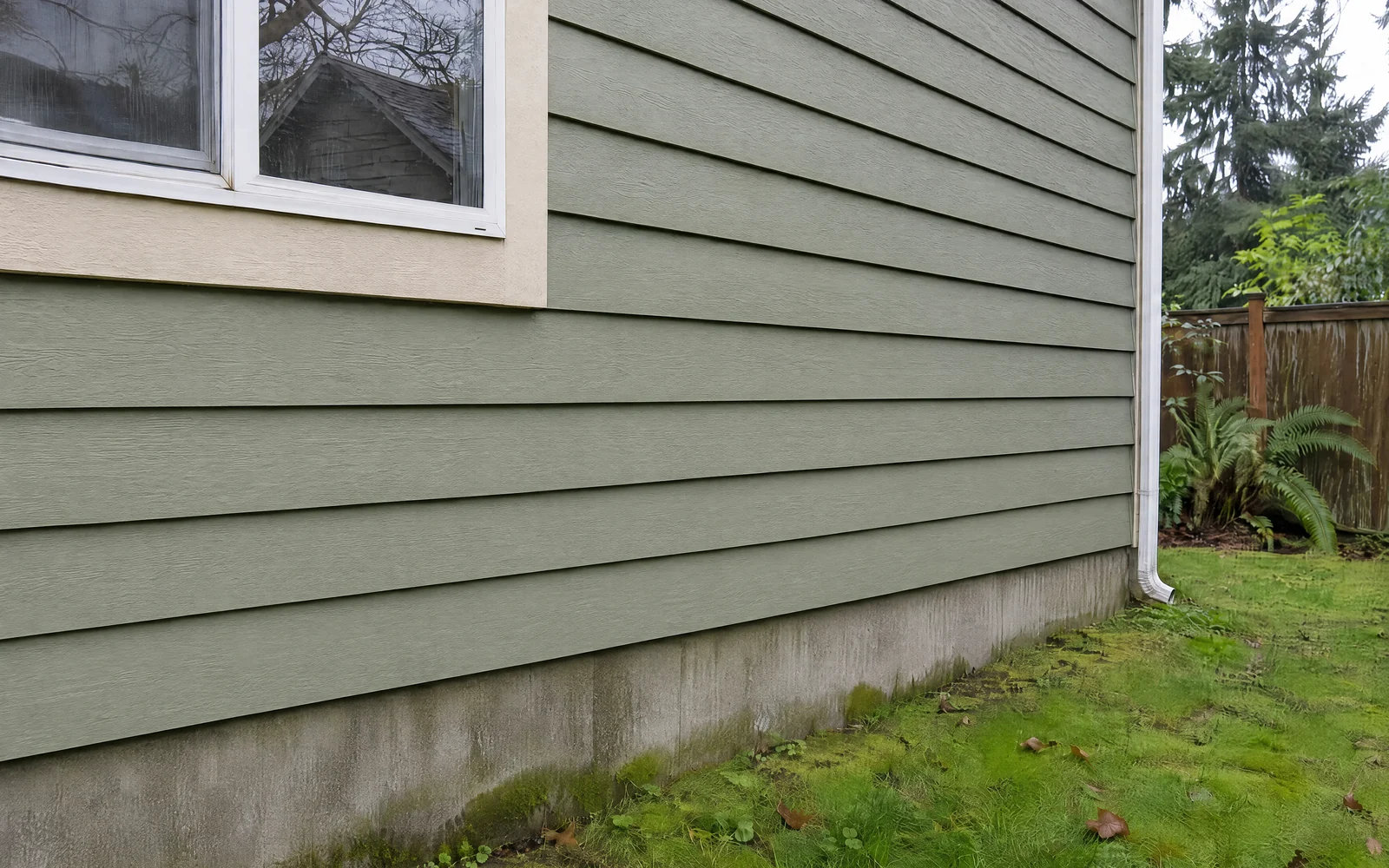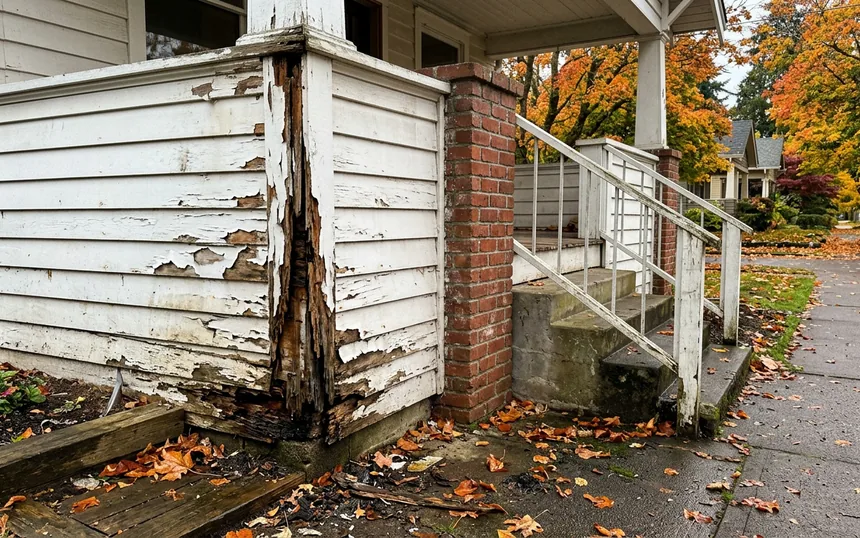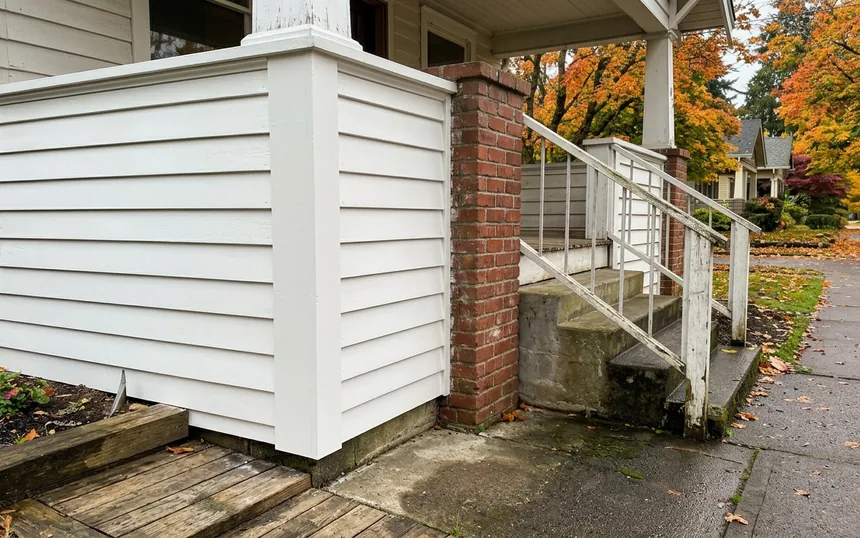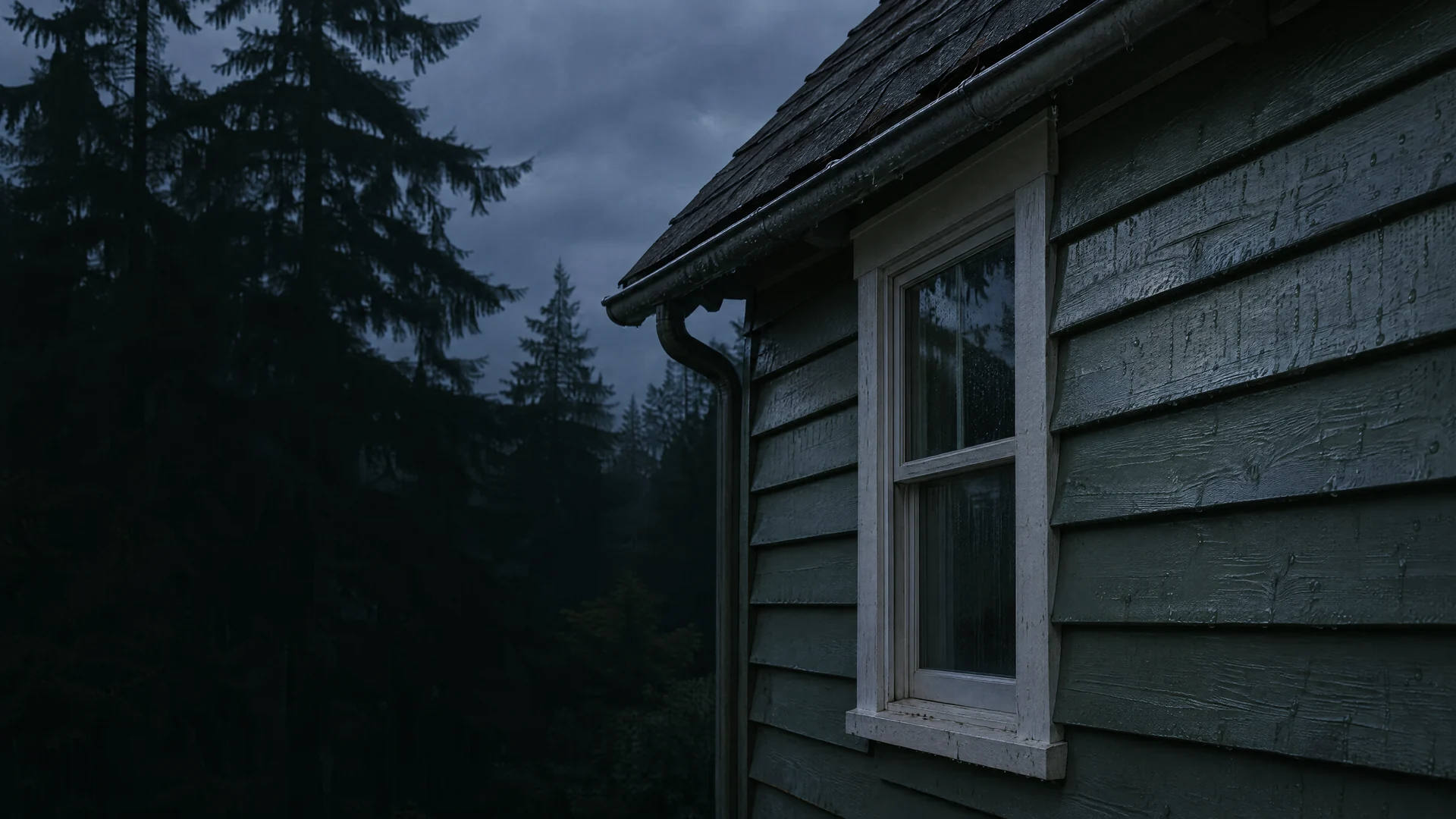
Swollen hardboard on the Cascade Park two-stories, mossy T1-11 on the Hazel Dell ranches, rotted lap on the west-side bungalows, split shakes in a Felida gable: replaced to match or re-sided in fiber cement over a drainage space, so the wind-driven rain runs out.
 BBBAccredited Business
Kaminskiy Care and Repair repairs and replaces siding across Vancouver, Camas, Hazel Dell, Felida, Orchards and Salmon Creek: the cedar lap of the west-side bungalows in Hough, Arnada and Esther Short, the T1-11 and hardboard of the wartime and mid-century houses in the middle of town and Hazel Dell, the hardboard and engineered lap of the 1980s to 2000s east-side tracts, cedar shake gables in Felida, and fiber cement (Hardie) wherever a wall is re-sided. Rotted pieces come out, the paper and flashing behind them are lapped so water drains, and the new siding is fitted to the profile, primed on every face and painted. Registered with Washington Labor and Industries, bonded and insured, every repair priced in writing on the call: 360-347-2002.
 From Hough's bungalows to the Camas hills.
Clark County siding takes its weather sideways. The east wind out of the Gorge drives the winter rain into butt joints, window corners and the bottom edges of the sheet siding, and on the shaded north walls nothing dries until spring. T1-11 and hardboard swell from those edges in. We replace what has swollen or rotted, lap new paper and flashing behind it, prime every face and cut, and where a whole wall has failed we re-side it in fiber cement over a drainage space, the way Washington's code expects a new wall to be built.

 AFTERBEFORE
 Cedar Lap & Bungalow Siding
 T1-11 & Sheet Siding
 Hardboard & Engineered Lap
 Cedar Shake & Gables
 Rot, Ants & Dampwood Termites
 Water-Resistive Barrier & Flashing
 Paint & Color Match
 Walk-Through & Warranty
We take these calls across Clark County every week, most of them between the first east-wind storm and spring. A photo is usually enough to price the repair in writing on the call; when the soft spot may reach the sheathing, we look first and put the scope and the permit question on paper.

We name the siding, tell you whether the city counter, the heritage register or an association has a say, and price it in writing.

The swollen or rotted siding comes off, the sheathing is read with a moisture meter, and you see what the water did before anything new goes on.

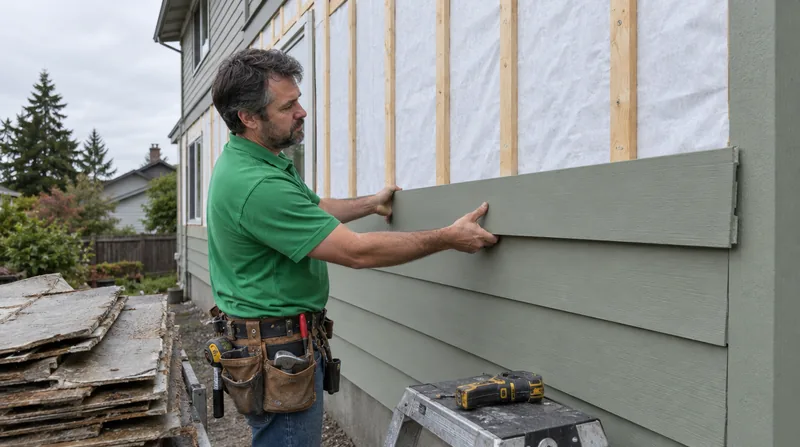
Paper and flashing lapped in, siding fitted to the profile or the wall re-sided over a drainage space, primed and painted.
Every job is backed in writing by our workmanship warranty and done by a Kaminskiy-certified, background checked technician.
West-side bungalows from before 1940 carry cedar lap over fir. Wartime and mid-century houses in the middle of town and Hazel Dell carry hardboard and T1-11. The 1980s to 2000s tracts on the east side and in Camas carry hardboard or engineered lap with wood trim, many Felida homes carry cedar shake in the gables, and new and re-sided walls carry fiber cement. We name yours from a photo.
Repair, when the damage is local: the bottom courses, a corner, the east face of one wall. Re-side when the hardboard has swollen across a wall or the T1-11 has delaminated through, because new pieces beside failing ones will not hold. A full re-side in Washington goes on over a water-resistive barrier with a way to drain, which makes it a permit and a different job, and we price both in writing.
A board not lapped into the paper behind it sends the wind-driven rain into the wall, a cut edge of hardboard left unprimed swells in its first winter, and a repair beside a gutter that still overflows is the next repair. We lap, prime every cut, and fix the water source in the same visit.
Pull the mulch and the soil six inches below the bottom course, clear the gutters after the leaves drop, carry the downspouts away, recaulk the east-facing joints and windows before the winter wind, and scrape the moss off the north walls. A board this year is a wall in five.
Vancouver grew in waves: bungalows on the west side, wartime and mid-century houses through the middle, and tracts to the east and north since the 1980s. Each wave used its own siding, and the east wind out of the Gorge tests all of them the same way.
Craftsman and bungalow houses from the 1900s to the 1930s in cedar lap with fir trim and deep porches, and the paper-mill houses of downtown Camas. The lap rots beside the steps and the corner boards split. A house on the heritage register, or near Officers Row, gets historic review before the outside changes; a matching repair needs none. These houses predate 1978, so the paint is tested and the work follows Washington's renovation rules.
Wartime and mid-century houses with hardboard and T1-11, carports on posts, additions clad in sheet siding, and decades of wet. The T1-11 wicks at its bottom edge, the hardboard swells at the drip, and the bark mulch keeps both wet. These walls are often past repair on one face, and a fiber cement re-side over a drainage space is the lasting answer there.
Tracts and planned streets from the 1980s to the 2010s with hardboard, engineered lap, cedar shake gables and association standards, many facing the Gorge wind. The butt joints and the window corners on the east faces fail first, the shakes curl in the gables, and the trim splits at the joints.
Cedar lap and shake usually can: they fail at the base, beside the porches and in the gables, and the rest is sound. Hardboard and T1-11 depend on how far the swelling has gone. We open the worst spot, read the sheathing, and price a repair next to a fiber cement re-side of that face so you can choose.
The city asks for a residential building permit for construction, alteration and repair, and lists what it leaves out: painting and finish work, a low deck, a short fence. The state residential code adds that an ordinary repair needs no application. A few boards in kind is that; a re-sided wall under Washington's moisture rules is a permit, and we check with the Permit Center and put the answer in the scope.
We price it in writing from a photo before anything is scheduled. The number depends on how much has failed, whether the profile is stocked, what the moisture meter finds behind it, whether the face is repaired or re-sided, and how much painting it takes to blend. Materials are on the quote; no percentage markups.
Washington has no small-job exemption: anyone paid to build, alter or repair a home, handyman work included, must be registered as a contractor with the Department of Labor and Industries, with a bond and liability insurance on file, and it is a crime to advertise or work without it. Kaminskiy Care and Repair is registered, bonded and insured; you can check any contractor on the L&I site.
We name the siding, look up the heritage register and the association, ask the Permit Center when a re-side is likely, and price it in writing.
The failed siding comes off, the sheathing is read with a moisture meter, paint on a pre-1978 house is tested, and you get the photos.
Paper and flashing lapped so water runs out, siding fitted to the profile or fiber cement over a drainage space, every cut primed, east joints sealed.
Painted to the house or the scheme, the permit closed where there was one, the photos and the one-year workmanship warranty sent.
Washington requires every paid contractor, handyman work included, to be registered with Labor and Industries with a bond and insurance on file; there is no small-job exemption. Vancouver asks for a residential permit for construction, alteration and repair, with painting, finish work, low decks and short fences left out, and the state code exempts ordinary repairs. A repaired section is a repair; a re-sided wall is a permit, and we pull it.
A sale or a refinance in Washington needs a complete wood destroying organism inspection by a WSDA-licensed structural pest inspector, with an inspection control number on the report; it lists rot, ants and termites by organism and the conducive conditions, from earth against wood to failed caulk. We repair the siding and the carpentry conditions it lists. Washington's residential code wants new siding over a water-resistive barrier with a way for water to drain, which is why a re-side is built differently from a patch.
Officers Row and the Barracks are a national historic reserve, and a west-side house on the heritage register gets historic review before the outside changes; a matching repair needs nothing. Washington runs its own lead-based paint renovation program through the Department of Commerce, so on a house built before 1978 the paint is tested first and the work follows the state's renovation rules: contained, bagged and cleaned to that standard.
Off Mill Plain. Our Clark County crew works from Park Plaza Drive near Mill Plain and I-205, and covers Vancouver, Camas, Hazel Dell, Felida, Orchards and Salmon Creek. Call 360-347-2002, send a photo of the siding, or use the form. A person picks up Monday to Friday, 8 to 4:30. Since 2024 our technicians have completed 284 repair visits on 116 homes in Vancouver and Camas.
Can't find your answer? Call 360-347-2002 and ask us anything.
Call 360-347-2002Cedar lap and shake can almost always be repaired; they fail at the base, beside porches and in the gables. Hardboard and T1-11 depend on the swelling: a few boards or a panel are replaced, and a wall that has swollen end to end is re-sided, usually in fiber cement over a drainage space. We open the worst spot, show you the sheathing, and price both in writing.
Usually not for a small repair in kind: the state residential code exempts ordinary repairs, and Vancouver leaves painting and finish work out of its permit. A re-sided wall is built under Washington's moisture rules, with a water-resistive barrier and a way to drain, and that is permit work; we check with the Permit Center, pull it and close it.
We price it in writing from a photo before anything is scheduled. How much has failed, whether the profile is stocked, what the moisture meter finds, whether the face is repaired or re-sided, and how much painting it takes to blend all move the number. A few boards beside a porch is a small line; a hardboard wall re-sided in fiber cement is a larger one. No percentage markups.
Only a registered contractor. Washington has no small-job exemption: anyone paid to repair a home must be registered with Labor and Industries, with a bond and insurance on file, and advertising or working without it is a crime. Kaminskiy Care and Repair is registered, bonded and insured. Call 360-347-2002 or send a photo.
If the hardboard has swollen across most of a wall, yes, for that face: hardboard does not shrink back, and fiber cement does not rot or swell. We re-side the face over a water-resistive barrier with a drainage space, match the reveal so it sits beside the remaining walls, and paint the house to tie it together. If only a few boards have failed, we replace those and seal the edges.
A Washington sale or refinance needs a complete wood destroying organism inspection by a WSDA-licensed inspector. It lists rot, ants and termites, and the conducive conditions: earth against wood, failed gutters, failed caulk, vegetation on the wall. Send us the report and we price the siding and carpentry items from it, so the reinspection is clean.
West-side bungalows carry cedar lap that rots beside the porches. Wartime and mid-century houses carry hardboard and T1-11 that swell at the bottom edge. East-side tracts carry hardboard and engineered lap that fail at the east-facing joints, Felida homes carry cedar shake gables that curl and split, and re-sided walls carry fiber cement. We tell you which you have on the call.
Vancouver, Camas, Hazel Dell, Felida, Orchards, Salmon Creek, Fisher's Landing and the rest of Clark County near the city, from our office on Park Plaza Drive. Call 360-347-2002 with the address and we confirm it on the call.
Tell us the address, the siding and which face is worst. We'll call back with a written price and a date. Calling is still the fastest way: 360-347-2002.
T1-11, hardboard and cedar repaired or re-sided in fiber cement over a drainage space, a one-year workmanship warranty.
We answer Monday to Friday, 8 to 4:30.No price games. You get a clear written quote before any work begins, backed by our workmanship warranty.