 BBBAccredited Business

Kaminskiy Care and Repair repairs loose boards, wobbly railings and soft spots so the deck feels solid again, and most repairs take one visit. Elevated balconies get the same checks as a new deck: ledger, posts, railings and the joint to the wall. We serve Plantation and the surrounding Florida communities.
Straight out Broward Boulevard. Shade, canals and the association form shape the Plantation deck list.
Plantation decks live under the oldest canopy in Broward. The oaks and ficus keep a canal-side deck in Plantation Park in shadow all day, so the dew and the afternoon rain never dry off and the boards green over before they split. On the central lakes the deck is a pergola or lanai deck in an association that expects the finish to match, and out in the Acres it is a porch floor or a run of barn steps on an acre lot with more wood than anyone can watch. We replace the soft boards and treads, sister the joists, reset the posts on standoff bases, splice the pergola beam ends, rebolt the rails and seal the wood so it dries between rains.
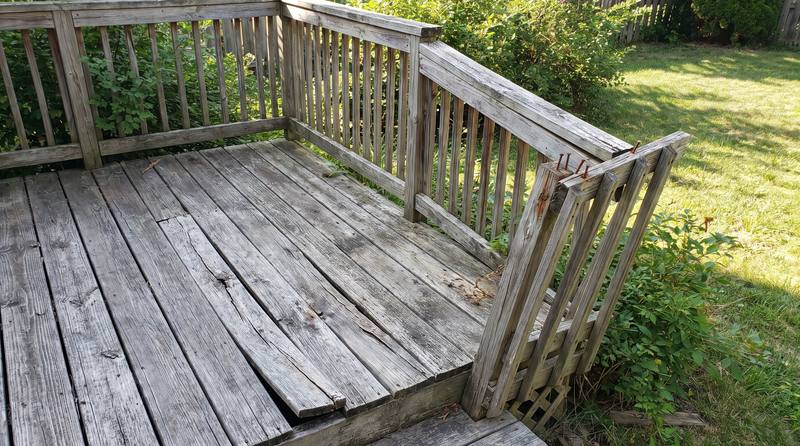
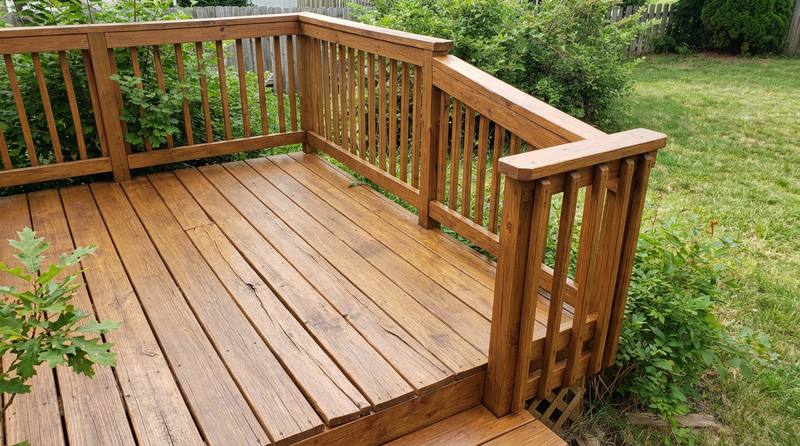 AFTERBEFORE
Each of these is a repair, not a rebuild, for a Kaminskiy-certified technician who drives out Broward Boulevard from South Andrews Avenue. One look, one written scope, one date.

Priced and on the calendar during the first call.

A written quote you approve before anyone drives out.

One crew, the whole list, warranty in writing.
A one-year workmanship warranty, in writing, on every Plantation deck and balcony repair.
Shade and water, more than anywhere else in the county. The mature oaks and ficus keep Plantation decks in shadow, so the morning dew and the afternoon rain sit on the boards instead of drying off; the lakes and canals behind the houses keep the air damp all night; the irrigation hits the same post base every morning. Algae grows on the shaded boards, the wood under it stays wet and goes soft, and the subterranean termites in this part of Broward find any post that touches the ground, while the drywood termites work the dry rail caps above. Caught at the first soft board it is boards and a seal; left for several summers it is posts, joists and steps.
Push against the rail. If it moves, the fix is the connection, not the picket: a post toe-nailed to the rim instead of through-bolted, a lag that rusted through inside the joist, a post gone hollow at the base. We through-bolt the post to the rim with new hardware and blocking, or replace the post whole, and on a second-story lanai deck we check the ledger and the flashing behind the post as well. The rail is rebuilt to hold an adult leaning on it, not just tightened.
Plantation's balconies are mostly second-story lanai decks on the lake houses and the few condo buildings, and a building of three stories or more carries the state milestone inspection, which is an engineer's report and not ours; the rails, trim, boards and coatings it flags are ours, scoped in writing for the association. For a house, Plantation says a permit is needed to erect, alter or repair a structure, and the Broward amendments to the Florida Building Code let general maintenance and repairs under a set cost go ahead without one when the Building Official reads them that way. Boards, treads, rail hardware, a coating and a sealer sit on the maintenance side; a raised deck rebuilt, a ledger, a joist or a post is a permit question we put to the Building Department first, and a balcony that has moved goes to an engineer before anyone touches it.
Standoff bases under every post, the sprinkler heads turned away from the deck, mulch and leaf litter kept off the boards, a limb or two trimmed so the deck sees some sun, and a sealer renewed before the boards gray, which under this canopy is every couple of years. Wash the algae off the shaded boards each spring before it holds water. Walk the deck with a screwdriver and press the post bases and the board ends; one soft board found early is a short visit, and soft posts found late are a project.
Homes from the 1950s and 1960s under the oldest trees in the city, many on canals, where the deck runs toward the water and the shade never lifts. Boards green over and go soft at the water end, the steps to the canal rot at the bottom tread, the ledger lags rust in the rim and the city expects the repair to match what is there. We replace the boards and treads in kind, rebuild the canal steps on treated stringers, swap the rusted hardware and seal the wood so it has a chance to dry.
Association streets from the 1970s to the 1990s on lake and golf-course lots, where the deck is a pergola deck or a lanai deck off the pool and the board wants the color to match. Pergola beam ends check and split, the boards under them stay wet, treads cup, rail posts loosen in rusted hardware and the gray deck draws a letter. We splice the beam ends, replace the boards and treads, through-bolt the rails and put the finish and the stain color in writing for the form.
Acre lots with barns, sheds, paddocks and long runs of wood, where the deck is a porch floor, a barn landing or a run of steps the sprinklers and the horses both reach. Posts rot at the base, bottom boards go soft, treads wear through and termites find the posts that meet the dirt. We reset the posts on standoff bases, replace the boards and treads with treated wood, rebuild the steps and cover more on one visit with a stocked truck than we would in town.
Call 954-787-3186 or text a photo of the worst board, the rail post and the beam end, and the association letter if there is one. Most repairs get a range on the call and a date for the look.
A technician probes the posts, the board ends, the stringers and the ledger, checks every rail connection and the pergola beam ends, and writes the scope: boards, hardware, flashing, coating, stain color, sealer, what needs a permit and what goes to an engineer or the licensed pest company.
If termites are in it, the licensed pest company treats first, then structure, then boards and treads, then rails and hardware, then the stain and sealer once the wood is dry. Composite and rail parts are ordered before we leave, and the finish goes on the form for the association.
Old boards and rusted hardware leave on the truck. The one-year workmanship warranty is on the invoice, with the sealer schedule written beside it and photos of the finished work for the association file.
Florida licenses contractors and has no handyman license. Anyone paid to repair or improve a structure is a contractor under state law, casual minor work under a set small amount that is not part of a bigger job is exempt, structural work is reserved for state-licensed contractors and engineers, and electrical, plumbing, air conditioning and roofing are licensed on their own, with Broward adding its own specialty certificates, so deck lighting and anything over a roof go to the licensed trade. Kaminskiy Care and Repair is bonded and insured with Kaminskiy-certified, background checked technicians, and does the boards, treads, stringers, rails, hardware, flashing, coatings and sealing.
Plantation says a permit is needed to erect, alter or repair a structure, and the Broward amendments to the Florida Building Code let general maintenance and repairs under a set cost go ahead without one when the Building Official reads them that way. Boards, treads, rail hardware, a coating and a sealer sit on the maintenance side of that line; a raised deck rebuilt, a ledger, a joist or a post does not, often needs an engineer, and we check with the Building Department before a bigger job rather than guess. The city's code enforcement page says repairs must match the existing type, pattern and color, so a deck repair here matches what is there. The 2026 state exemption for small single-family jobs is the city's call on request, never for structural work and never on a flood-zone lot, so we do not promise it.
Jacaranda, Lauderdale West and most of the lake communities have an approved scheme: a deck repaired and stained to match needs nothing, a new rail design, a new color or a bigger footprint usually needs the form first, and we give you the dimensions, finish and product approval in writing so it is a five-minute job. Plantation Acres has its own rules for the ranch lots and the drainage easements, which matter for a new structure and not for a rebuilt porch floor, and the oldest east-side streets mostly have no association at all. In the high-velocity hurricane zone a railing system or a pergola replaced whole may need a product approval and a permit, so we check before you order.
Straight out Broward Boulevard. Your Plantation crew dispatches from our Fort Lauderdale office on South Andrews Avenue downtown, twenty minutes east, so most calls are scheduled within days. Call 954-787-3186, text a photo, or send the form.
Can't find your answer? Call 954-787-3186 and ask us anything.
Call 954-787-3186Our office is on South Andrews Avenue in downtown Fort Lauderdale, twenty minutes east on Broward Boulevard. We answer in under three rings, price most repairs on the call from a photo and usually have a technician at the house within days. Boards, a rail post and a beam splice are usually one visit; a stain and sealer waits for dry wood and a dry forecast, which under the canopy can mean a second trip.
Repair first. If the posts, beams and joists are sound, new boards, spliced beam ends, through-bolted rails and a sealer bring a Plantation deck back for years, and a lanai deck with a failed coating is a coating repair, not a new structure. If the frame under the boards is gone, or the ledger or the balcony has moved, we point it out, write it into the scope and tell you whether a state-licensed contractor or an engineer is the next call.
Not for an ordinary repair: boards, treads, rail hardware, a coating or a sealer is general maintenance the Building Official can wave through under the Broward amendments, matched to what is there as the city asks. A raised deck rebuilt, a joist, a post or a ledger is a permit question we put to the Building Department first, and in Jacaranda or the lake communities the association form comes before any of it. We tell you at the look and handle the application when one is needed.
It depends on how much wood is gone and whether the frame, the beams or the steps are involved. Text a photo of the worst board and the rail post and you get a range on the call; after the look you get a written scope with the boards, hardware, flashing, stain and sealer priced before anything is ordered. The price you approve is the price at the house.
Yes. The work carries a one-year workmanship warranty in writing, done by Kaminskiy-certified, background checked technicians, and the stain and sealer carry their maker's schedule, which goes on the invoice.
Usually not for a repair that matches. Jacaranda, Lauderdale West and most of the lake communities only need the form when something changes: a new rail design, a new stain color or a bigger deck. For a repair we match the boards and the color, and if the board wants the form anyway we give you the dimensions, finish and product approval in writing so it is a five-minute job.
Shade. The oaks and ficus over a Plantation deck never let the boards dry, so algae grows on top and holds the water against the wood until it goes soft. We wash the boards, replace the ones that have gone, seal the deck with a finish that sheds water, and suggest a limb or two to trim so the deck sees the sun for part of the day.
From our South Andrews Avenue office we cover all of Plantation: Plantation Isles, Plantation Park and Park East on the east side, Jacaranda and Lauderdale West on the central lakes, and Plantation Acres and Hawks Landing west of Hiatus Road, plus Sunrise, Davie, Lauderhill and Fort Lauderdale. Call 954-787-3186 to confirm your address.
Tell us what the deck or balcony is doing. We'll call you back with a price and a time. Calling is still the fastest way: 954-787-3186.
Priced on the call, rebuilt solid, warranted in writing.
We answer in under three rings, 24/7.No price games. You get a clear written quote before any work begins, backed by our workmanship warranty.
