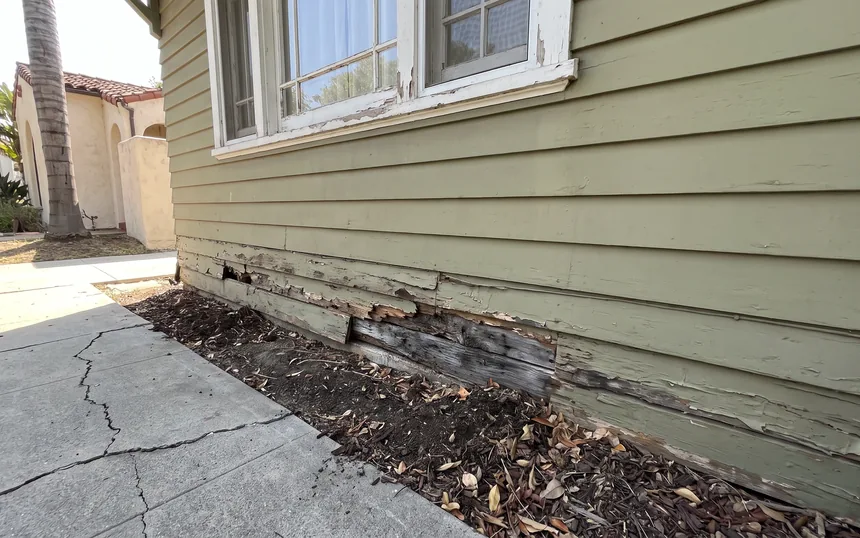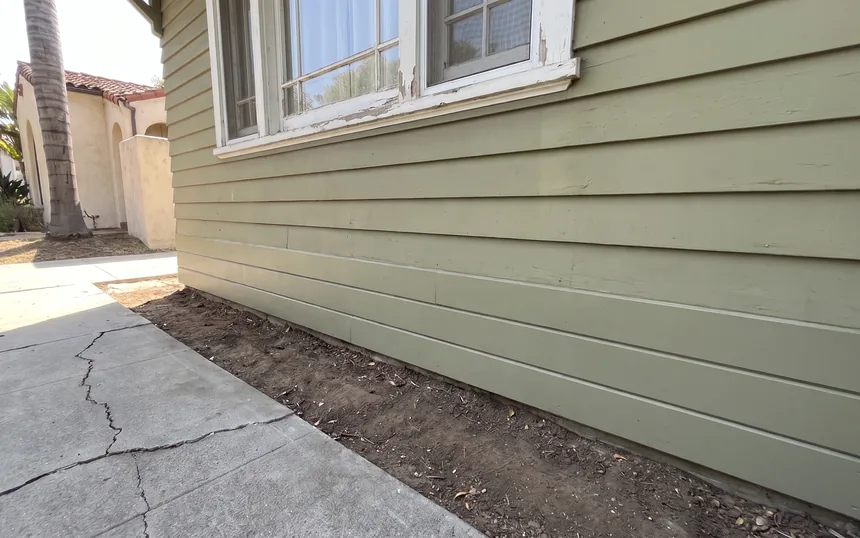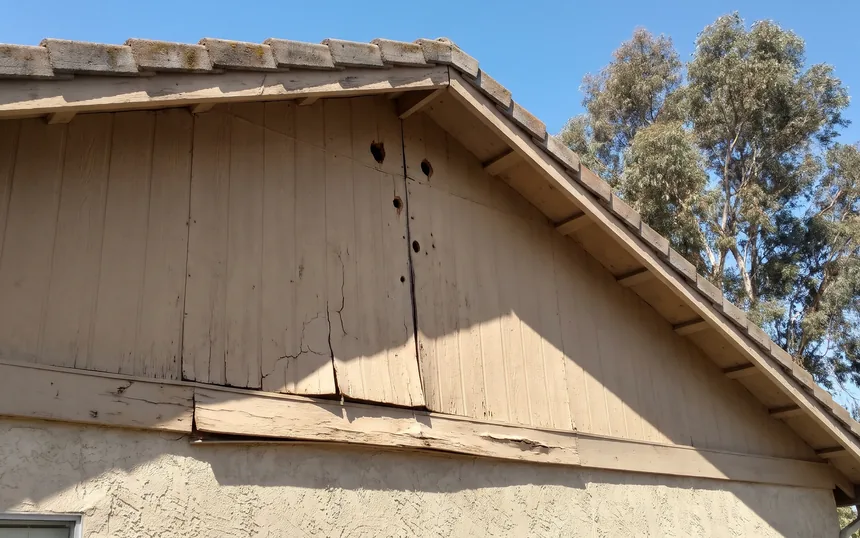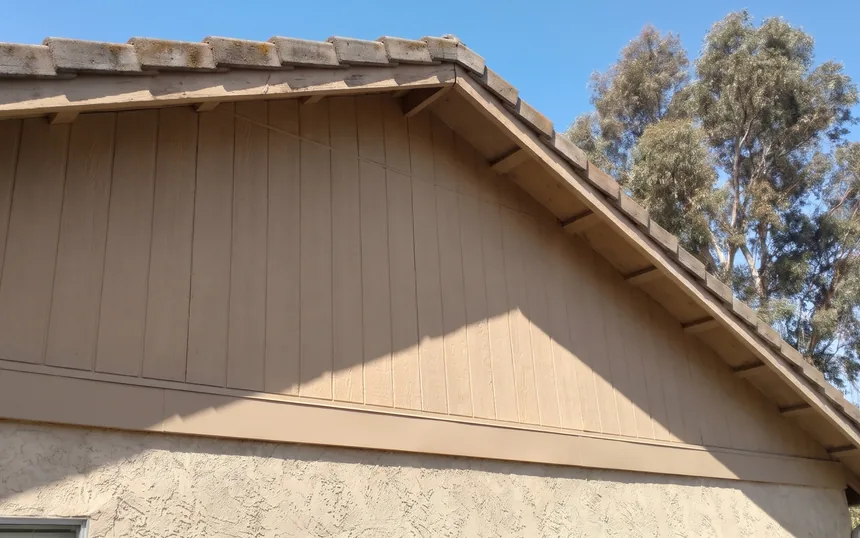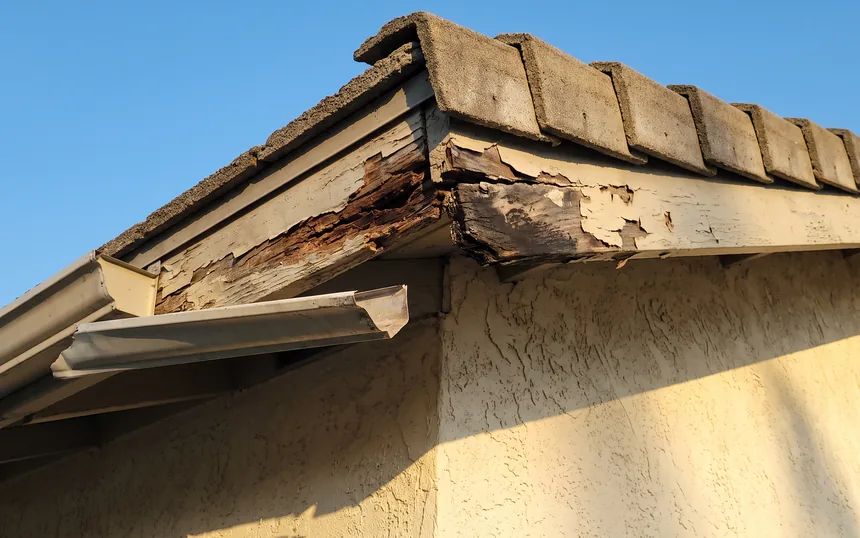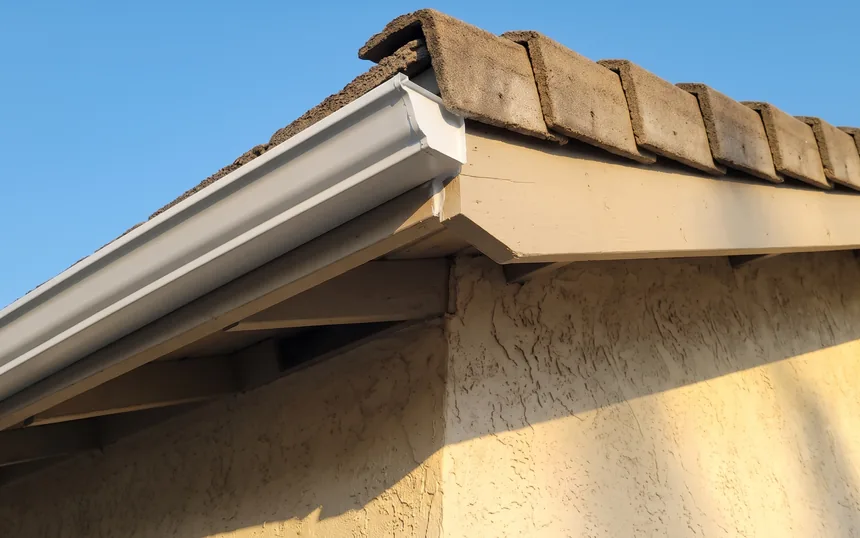
Rotted lap boards, split T1-11 panels, cracked fiber cement, loose vinyl, soft fascia and trim: replaced to match your house and painted so the repair disappears. Licensed general contractor, since 2005.
 BBBAccredited Business
Kaminskiy Care and Repair repairs every kind of siding on San Diego homes: wood lap and shingle, T1-11 and hardboard panels, fiber cement (Hardie and its cousins), vinyl, and the trim, fascia and soffit around them. Damaged boards are cut out and replaced with the same profile, the paper and flashing behind them lapped so water runs out, the new wood primed on every side, then painted to match, so a repair on a 1920s North Park bungalow or a 1980s Mira Mesa two-story reads as original. A licensed siding contractor (CSLB #1106209) and an EPA Lead-Safe Certified firm, with a one-year workmanship warranty, priced in writing on the call: 858-330-5590.
 Lap, panel, shingle, fiber cement, vinyl, trim.
Most siding damage in San Diego is a few boards, not a wall: the bottom courses where sprinklers and soil keep them wet, the gable panels the afternoon sun cooks, the corner where a gutter has been overflowing for years. We pull only what is gone, check the sheathing and paper behind it, fit new boards of the same profile and exposure, prime every face and edge, and feather the paint across the wall so there is no square patch.

 AFTERBEFORE
 Wood Lap & Shingle Siding
 T1-11 & Hardboard Panels
 Fiber Cement & Hardie
 Trim, Fascia & Soffit
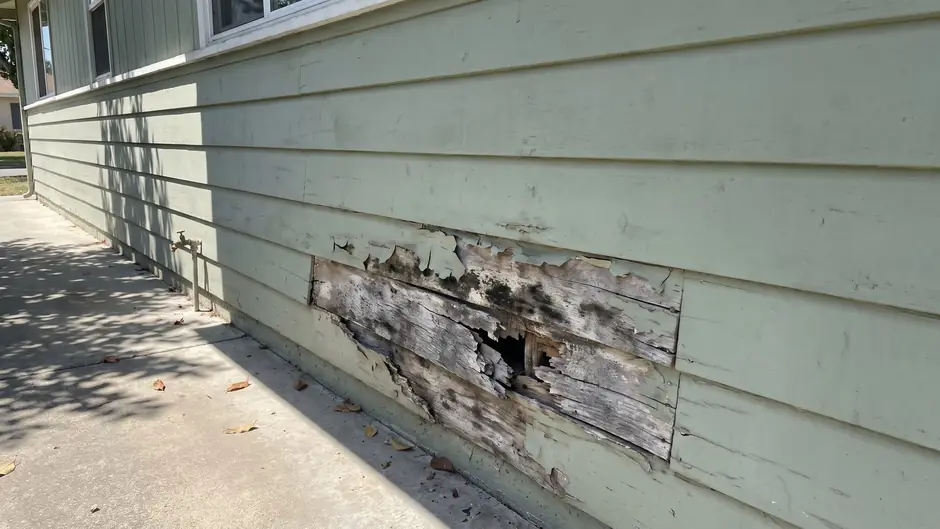 Dry Rot & Termite Damage
 Vinyl Siding Repair
 Caulk, Flashing & Paint Match
 Walk-Through & Warranty
Every one of these is a call we take every week. Send a photo by text and most siding repairs are priced on the call, in writing; a soft spot that turns out to be sheathing or framing gets a look first and a written scope before anything is scheduled.

Tell us what you see and where the house is. Most siding repairs are priced on the call, in writing, with the materials named.

We pull the damaged boards or panel, check the sheathing, paper and framing behind them, and show you what we found before the new material goes on.

New boards of the same profile, primed on every side, flashed and caulked, painted to match and feathered across the wall. Warranty in writing.
Every job is backed in writing by our workmanship warranty and done by a Kaminskiy-certified, background checked technician.
Wood lap shows grain and saw marks on a cut end and has a bevel or a Dutch lap shadow line. T1-11 is a four-by-eight plywood sheet with vertical grooves every four or eight inches. Hardboard is smooth, with no grain, and swells at the bottom edge when it gets wet. Fiber cement is heavy, cement grey on a cut edge, and cracks instead of rotting. Vinyl flexes, sounds hollow and is hung loose on purpose. Each is repaired differently, and we tell you which you have on the call.
A few boards, one gable panel, a corner or a run of trim is a repair, and most San Diego calls are exactly that. Rot across most of one elevation, hardboard swelling on every course, or sheathing that is soft behind the siding means that wall gets re-sided, usually in fiber cement, while the rest of the house keeps its boards. We say which on the first visit and price both in writing.
Siding repairs announce themselves in three ways: the new board is a different profile or exposure, the paint was spot-coated instead of feathered, or the old boards were sun-faded and the new one was painted the original color. We match the profile, carry the paint to a natural break, and on a faded south wall we repaint the elevation so the whole wall reads as one.
Keep sprinkler heads turned off the house, keep soil and mulch six inches below the bottom board, keep gutters flowing, and renew the caulk at butt joints and trim before it cracks open. Walk the sunny sides every spring and press a thumb along the bottom courses. A board this year is a wall in five.
San Diego is a stucco city with wood at every edge, and whole neighborhoods were built in siding: redwood lap on the 1920s bungalows, T1-11 and hardboard on the 1970s and 1980s tracts, fiber cement and cedar shingle on the coast and the newer hills. Where the house sits and when it was built decide what fails first.
Craftsman and bungalow stock from the 1910s to the 1940s with redwood lap and shingle siding under many layers of paint. The bottom courses rot where sixty years of planting beds raised the soil against them, and the north walls hold the marine damp. The repair is new boards spliced in with the same bevel and exposure, soil pulled back below the wood line, and the paint feathered. Built before 1978, so the old paint is tested first and the work is done lead-safe, by an EPA Lead-Safe Certified firm.
Stucco on the first floor, T1-11 plywood or hardboard panels on the gables and second stories. The south and west panels bake, the paint and caulk split, the winter rain gets behind the groove, and the panel delaminates along its bottom edge where it meets the stucco. Woodpeckers and drywood termites find the softened plywood first. The repair is a new panel, a flashed seam at the stucco, and the HOA color matched from the can code where there is one.
Fiber cement lap from the 2000s on, cedar shingle and board-and-batten by the water, and salt air that rusts any nail that was not meant for it. Fiber cement cracks at over-driven nails and chips at corners, the caulk at the butt joints lets go, and the rust streaks tell you which fasteners to replace. The repair is a new board with stainless or hot-dipped nails, the joints flashed, and the finish matched to the factory color or the house paint.
Almost always repaired. Siding fails board by board, from the bottom and from the sunny side, so most of the wall is still sound when the first boards go. The exception is water that has reached the sheathing: if the plywood or the old shiplap behind the siding is soft, that wall is opened, the sheathing replaced, new paper and flashing lapped in, and then sided. We tell you which on the call from a photo, and confirm it the moment the first board comes off.
Yes, on three counts. The profile: bevel, Dutch lap, channel, shingle exposure, groove spacing on a panel, all stocked or milled to match, and a discontinued hardboard profile is matched in primed wood or fiber cement of the same exposure. The surface: smooth or wood-grain fiber cement, rough or smooth redwood. The paint: color-matched from a chip or the HOA code and feathered to the nearest corner, window or trim line, never a square patch.
It is priced on the call, in writing, and the number depends on four things: how many boards or panels, how high they are (a ladder and a second-story gable are different days), what is behind them (sound sheathing or rot that has to be chased), and how much painting it takes to make it disappear (one board or the whole elevation). Materials are named on the quote. No percentage markups, no surprise at the house.
A handyman without a license may take a job only when labor and materials together come to less than one thousand dollars and no permit is needed (Business and Professions Code 7048, raised by AB 2622 in 2025). A gable panel, a run of fascia or a rotted corner is past that line most of the time. Kaminskiy Care and Repair holds a B general building license (CSLB #1106209), is bonded and insured, and can check the number for you on the CSLB site.
A photo of the wall and the address is usually enough to name the siding, price the repair in writing and set the day. A big soft area gets a look first.
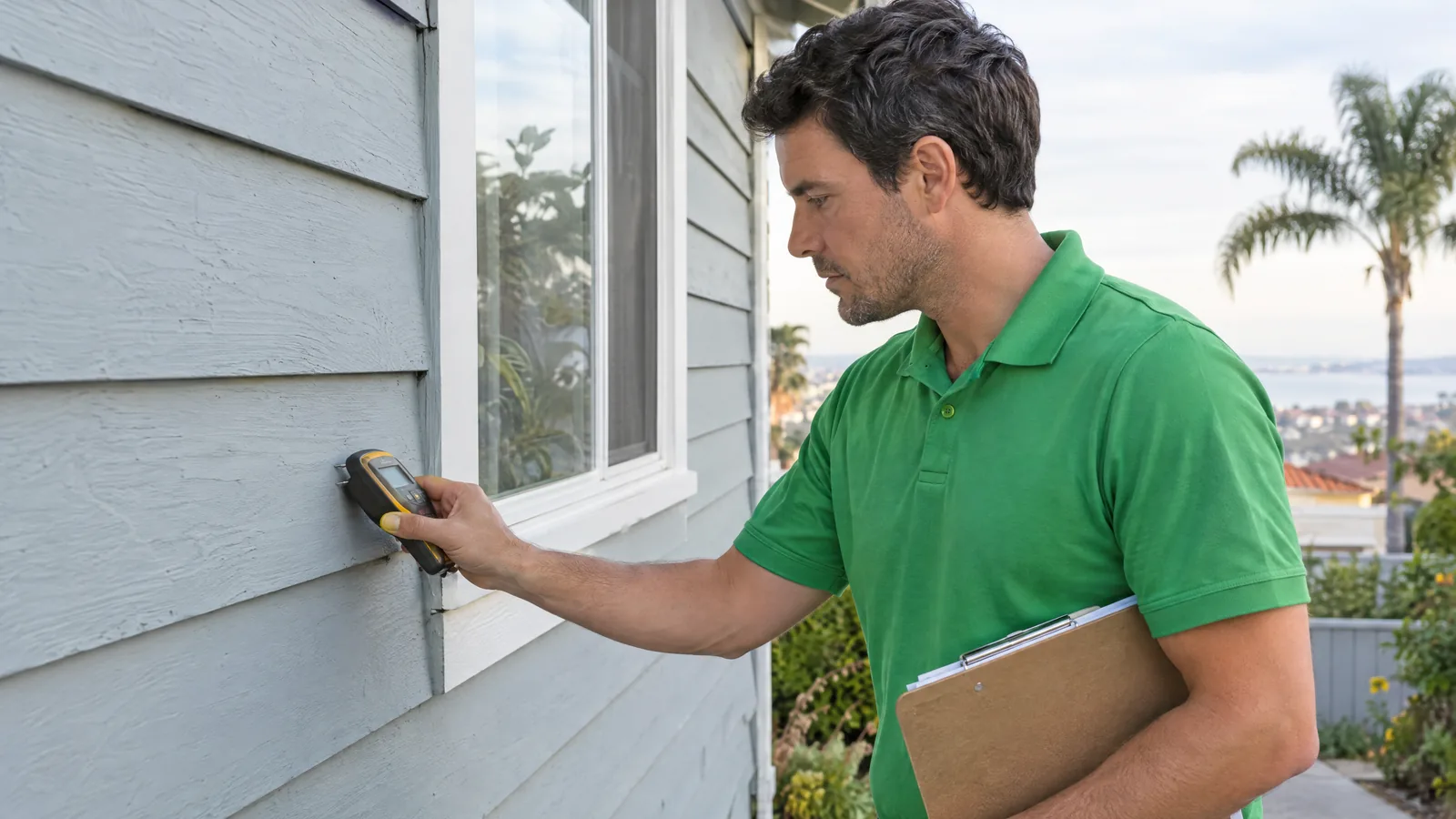
The damaged boards come off, the sheathing and paper behind them are checked with a moisture meter, and you see what we found before any new material goes on.
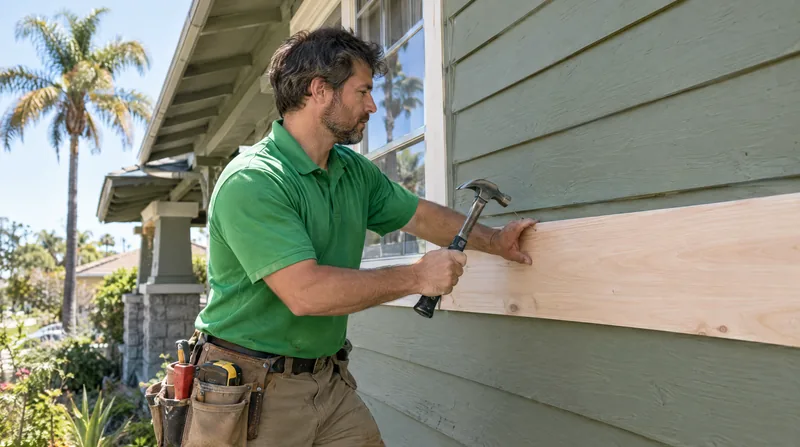
New paper and flashing lapped so water runs out, boards primed on every face and edge, corrosion-resistant nails, joints caulked, the profile and exposure matched to the wall.
Color matched and feathered to a natural break, the site cleaned, photos of what was behind the wall, the one-year workmanship warranty in writing.
The City of San Diego exempts maintenance repairs under a set cost that replace like for like, which covers a few boards, a panel or a run of fascia and trim. Larger in-kind damage repair and siding replacement go on the City's no-plan building permit with a pre-construction inspection (Information Bulletin 203). We tell you which on the call, pull it when it is needed, and the other cities in the county have their own counters.
If any part of your lot is in the City's Very High Fire Hazard Severity Zone (much of Scripps Ranch, Tierrasanta, Del Cerro, Rancho Bernardo and the canyon rims), Chapter 7A of the building code applies to exterior alterations of the features it regulates, and exterior walls are one of them. A like-for-like board repair is maintenance; a re-sided wall there is built in an ignition-resistant material such as fiber cement, which is what we recommend on those streets anyway.
A house built before 1978 may carry lead paint under the newer coats. Kaminskiy Care and Repair is an EPA Lead-Safe Certified firm: the paint is tested before boards are cut, the work area is contained, and the cleanup is checked before we leave. In Rancho Bernardo, Scripps Ranch, Carmel Valley and 4S Ranch a repair painted to the approved scheme rarely needs a form; a new profile or a new color sometimes does, and we put the materials and finish in writing for the architectural committee.
Where Kaminskiy started. Our San Diego crew works out of World Trade Drive in Rancho Bernardo and covers the whole county, from the beach bungalows to the inland tracts. Call 858-330-5590, text a photo of the siding, or send the form, and we answer in under three rings. Since 2018 our technicians have completed 7,691 repair visits on 3,488 San Diego homes and buildings.
Can't find your answer? Call 858-330-5590 and ask us anything.
Call 858-330-5590Repaired, almost always. Siding fails one board or one panel at a time, from the bottom courses and the sunny side, so the rest of the wall is still sound when the first boards go. We cut out the rotted, split or cracked pieces, check the sheathing and paper behind them, fit new material of the same profile and paint it to match. A whole wall is replaced only when the sheathing behind it is soft or the hardboard is swelling on every course, and we say so on the call.
Yes. That is most of what we do in San Diego: the bottom two courses of a bungalow, one T1-11 gable panel, a cracked fiber cement board at a corner, a run of fascia behind a gutter. The new pieces are matched in profile and exposure, primed on every side, nailed with corrosion-resistant fasteners and painted so the patch does not show. Call 858-330-5590 or text a photo and we price it in minutes.
It is priced on the call, in writing, from a photo of the wall. The number moves with four things: how many boards or panels are gone, how high they are, what is behind them (sound sheathing or rot to chase), and how much painting it takes to make the repair disappear. A few lap boards at ground level is a small line; a second-story gable panel with a flashed seam and a repainted elevation is a larger one. Materials are named on the quote, and there are no percentage markups.
Only a very small job. California lets an unlicensed handyman take work when labor and materials together are less than one thousand dollars and no permit is needed (Business and Professions Code 7048, raised to that figure by AB 2622 in 2025). Most siding repairs pass that line once a ladder, a panel or any rot is involved. Kaminskiy Care and Repair is a licensed B general building contractor (CSLB #1106209), bonded and insured, so the size of the job does not matter.
Yes. We match the profile (bevel, Dutch lap, channel, shingle exposure, the groove spacing on a panel), the surface (smooth or wood grain), and the paint, color-matched from a chip or the HOA code and feathered to the nearest corner, window or trim line. Where the old wall is sun-faded we repaint the elevation rather than leave a bright square. A discontinued hardboard profile is matched in primed wood or fiber cement of the same exposure.
Not for a maintenance repair that replaces like for like under the City's cost limit, which covers a few boards, a panel or a run of trim (San Diego Municipal Code 129.0203). A larger in-kind damage repair or a siding replacement goes on the City's no-plan building permit with a pre-construction inspection (Information Bulletin 203), and a re-sided wall in the Very High Fire Hazard Severity Zone is built to Chapter 7A. We tell you which applies and pull the permit when one is needed.
Three kinds, by neighborhood and decade. Redwood lap and shingle on the 1910s to 1940s bungalows of North Park, Kensington and Ocean Beach, which rot at the bottom courses where the soil has risen. T1-11 plywood and hardboard panels on the 1970s and 1980s tracts of Mira Mesa, Rancho Peñasquitos, Tierrasanta and Poway, which delaminate along the bottom edge on the sunny sides. Fiber cement and cedar on the coast and the newer hills, which crack at nails and rust at the fasteners in the salt air. Each is repaired differently, and we tell you which you have on the call.
All of San Diego County from Rancho Bernardo, including North Park, South Park, Kensington, Normal Heights, Clairemont, Serra Mesa, Mira Mesa, Tierrasanta, Rancho Peñasquitos, Poway, La Jolla, Pacific Beach, Point Loma, Carmel Valley, La Mesa and Chula Vista. Call 858-330-5590 with the address and we confirm it on the call.
Tell us what the siding looks like and roughly how much of it. We'll call you back with a price and a day. Calling is still the fastest way: 858-330-5590.
Boards matched, sealed and painted, a one-year workmanship warranty, from one licensed San Diego team.
We answer in under three rings, 24/7.No price games. You get a clear written quote before any work begins, backed by our workmanship warranty.