 BBBAccredited Business

Kaminskiy Care and Repair patches stucco cracks and chips and matches the existing texture so the repair blends in. Hairline cracks are cosmetic; widening or bulging ones deserve a call, and the quote is free either way. We serve Sacramento and the surrounding California communities. Wood, fiber cement, T1-11 and vinyl siding, fascia and trim have their own page: siding repair in Sacramento.
Up the 80 from our Roseville office. Valley heat, tule fog and the Natomas hairline list.
Sacramento stucco is the 1920s Spanish bungalow in Land Park under a street tree that keeps the wall wet all fog season, the 1950s ranch in Tahoe Park with a dash coat baking on the west wall, and the Natomas tract home with a hairline at every window corner and an association color to match. We cut and fill the cracks, patch the chips, rebuild a soft or hollow section to sound lath in three coats, and match the texture and the color. The weep screed and the sills are checked on the same scope.
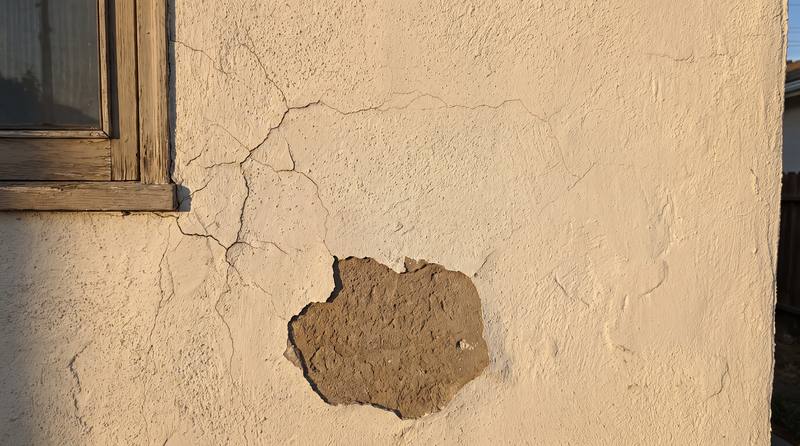
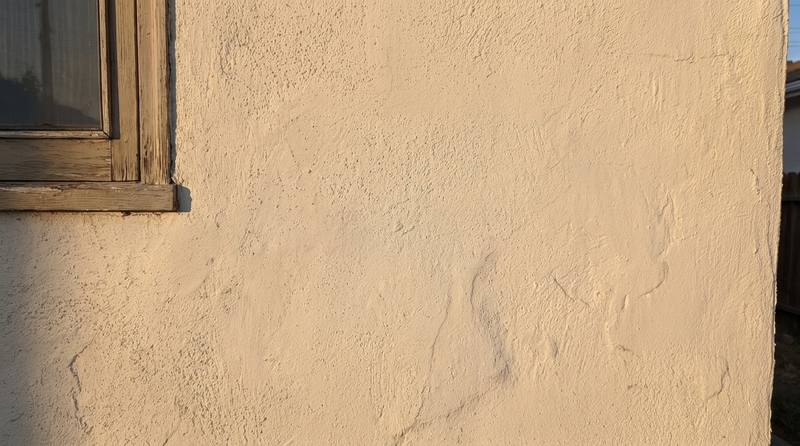 AFTERBEFORE
Any of these is a repair, and the Kaminskiy-certified technician who does it comes down the 80 from our Roseville office. A look, a written scope, then three coats, each one cured before the next.

Priced and on the calendar during the first call.

A written quote you approve before anyone drives out.

Three coats, each one cured, warranty in writing.
A one-year workmanship warranty, in writing, on every Sacramento stucco repair.
Heat, then fog, then clay. Four months of days in the nineties and hundreds expand a west wall every afternoon and shrink it every night, so the hairlines open at the window corners and the finish crazes. Then the tule fog settles on the valley from November to February and keeps a shaded wall wet for weeks without a drop of rain, which softens the base and rusts the beads. Under all of it the clay holds water against the weep screed and the sprinklers add more. Small cracks, year after year, and cheapest when they are new.
A hairline at a window corner that you can cover with a credit card edge is the wall moving with the weather; we cut it, fill it and seal it. Call about a crack that takes a coin, a crack that has grown since the last repaint, a wall that sounds hollow under a knuckle over a wide area, a rust streak down from a corner bead, or a horizontal crack along the base where the stucco meets the slab. If it follows the foundation or comes down from a header that has dropped, an engineer looks before we patch anything.
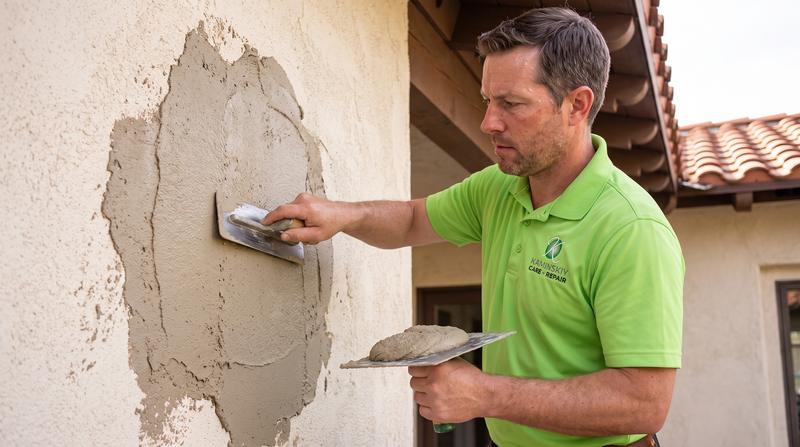
First the failed stucco comes off, back to sound material; torn paper and rusted lath are replaced and the scratch coat goes on to cure. The brown coat comes next, floated even with the wall, and it cures too. Last, the finish coat goes on, worked to the texture around it and tinted or painted to the house. Three coats and three cures make the patch about a day of work spread across visits; in July the coats are kept damp so they cure, and in January the fog does it for us. A patch finished in one afternoon shrinks and cracks.
Pull the lawn and the planter soil back below the weep screed and aim the sprinklers at the grass, not the house; stucco standing in wet clay fails from the bottom up. Keep paint or a fog coat on the west and south walls, caulk the window and door perimeters before the summer, and in March, when the fog has gone, walk the shaded north wall and press the base. A soft spot found in spring is a small patch.
Spanish and Mediterranean bungalows from the 1920s to the 1940s with hand-finished stucco beside the Victorians and Craftsman wood, under big street trees that keep the north walls damp from November to February. The base goes soft at the lawn line, the cracks fan from the arched windows after the summer, the old patches were troweled flat, and on the historic blocks the preservation rules want the repair in kind. We cut back to sound lath, rebuild in three coats and copy the trowel from the wall beside the patch.
Ranch houses from the 1940s to the 1960s with a sand or dash finish, slab-set walls and sprinklers along every bottom course, and the Pocket's 1970s and 1980s homes along the river. The west wall crazes in the heat, the base goes hollow where the clay holds the water, and the hose-bib and dryer-vent holes have been patched with caulk. We cut the soft stucco out, replace the paper and lath, bring it back in three coats and get the water away from the wall before the finish coat.
Stucco homes from the 1990s on, many of the newest with a one-coat system over foam that patches differently, with a hairline at every window corner from the first years of settling, cracked foam trim at the miters and an association palette the patch has to meet. We cut and fill, patch the trim, refinish to the approved color with the product in writing for the form, and tell you at the look whether the wall is three-coat or one-coat.
Call 916-507-2190 or text a close photo of the crack or the soft spot and one of the whole wall. A range on the call, then a date for the look, down the 80 from our Roseville office.
At the look the technician taps for hollows, measures the cracks, checks the weep screed, the sills and the caps and where the water sits, notes whether the house is on a preservation block or in an association, and writes the scope: which cracks get cut and filled, which areas get new lath, how the finish and color will be matched, and how many visits the coats take. The price is on the scope before any stucco comes off.
Out comes the soft stucco, down to sound lath; new paper and lath go in and the scratch coat is applied. Once it has cured we return for the brown coat, floated even with the wall, and leave that to cure too.
The finish coat is worked to the texture of the wall beside it and tinted or painted to the house or the association color. The debris leaves in our truck and the invoice reads the approved price, with the one-year workmanship warranty on it.
California lets anyone take a repair job under a set small amount without a license, as long as it needs no permit and nobody is employed to do it; above that line the state wants a licensed contractor, and a stucco patch with new lath and three visits is above it. Kaminskiy Care and Repair holds a California contractor license (License #1106209), is bonded and insured, sends Kaminskiy-certified, background checked technicians, and puts every job over the state's written-contract threshold on paper before it starts.
Sacramento's own list is specific: siding, window replacements, decks, patio covers and re-roofs need a permit, and painting, tiling, cabinets, counter tops and similar finish work do not. Stucco patching sits with the state residential code the city builds to, which asks no application for an ordinary repair to a structure and never for the cutting of a structural member: crack repair, patching, matching the finish, resetting a cap and replacing a small area of lath are that kind of repair. Stripping and re-lathing a large area is a question for the counter, and inside a preservation district the exemptions do not apply, so we check before we price work there.
Boulevard Park, Newton Booth, Alkali Flat and the other central-city districts are under the city's preservation rules: an alteration to a building fifty years old or older is routed to the Preservation Director, historic features are repaired before they are replaced and replaced in kind when they must be, and the usual permit exemptions do not apply inside a district. A stucco patch that puts back the same texture and color is exactly that in-kind repair, and we photograph before and after for the file. Outside the districts most of Sacramento has no association; Natomas and the Pocket's newer streets often do, and a patch finished in the approved color rarely needs a form.
Up the 80 from our Roseville office. Our Sacramento crew works out of the office on Highland Pointe Drive in Roseville and covers the whole city and the suburbs around it, from the central-city districts to Natomas, Elk Grove and the foothills. Call 916-507-2190, text a photo, or send the form, and we answer in under three rings.
Can't find your answer? Call 916-507-2190 and ask us anything.
Call 916-507-2190It is spread out on purpose. Visit one cuts out the failed stucco, replaces the paper and lath and applies the scratch coat. Visit two, after the scratch coat has cured, is the brown coat. Visit three, after that has cured, is the finish coat with the texture and the color. About a day of work in all, down the 80 from Roseville, and the written scope says how many visits before we start.
That is the finish coat's job. We copy the trowel, the dash or the sand float from the wall beside the patch and tint or paint to the house or the association color. A west wall that has faded through twenty Sacramento summers can show a fresh patch a shade brighter until it weathers in; we say so at the look, and a fog coat or a repaint of the elevation is the answer when it matters.
Hairlines at the window corners are normal on a stucco wall in a valley with this much heat, and on a Natomas tract home they are the first years of settling. They still want filling and sealing so water stays out of the paper and lath through fog season. Call about a crack that takes a coin, that has grown since the last paint, that runs along the base at the slab, or that comes down from a header that has dropped; if it tracks the structure an engineer comes first.
No. EIFS puts a thin base and finish coat over foam board, and a repair that does not follow the manufacturer's method fails and voids the warranty, so the system's certified installer handles it. We tell you at the look whether your wall is three-coat stucco, a one-coat system over foam, which some of the newest Natomas homes have, or EIFS.
It depends on how much is cracks and how much is soft stucco that needs new lath, and on how hard the texture is to match. Photos get you a range on the call. The written scope after the look sets the price for the cutting, the lath, the coats and the match before any stucco comes off, and the invoice matches the scope you signed off on.
Yes. Each stucco repair is warranted for a year on workmanship, in writing, by Kaminskiy-certified, background checked technicians working under California contractor License #1106209, bonded and insured.
No. The city's list puts new siding on the permit side, and that is our siding page's business, not this one. A stucco patch is an ordinary repair under the state residential code the city builds to, which asks no application for it, and matching the finish is finish work the city exempts. A large area stripped to the studs and re-lathed is a question we take to the counter, and inside a preservation district the exemptions do not apply, so we check first there.
The whole city from our Roseville office: Midtown, Downtown, Boulevard Park, Land Park, Curtis Park, East Sacramento, McKinley Park, River Park, Tahoe Park, the Pocket and Natomas, plus West Sacramento, Carmichael, Citrus Heights and Elk Grove. Call 916-507-2190 to confirm your address.
Send a photo of the wall and the address. We call back with a written price and the visits it takes. Calling is still fastest: 916-507-2190.
Priced on the call, blended to match, warranted in writing.
We answer in under three rings, 24/7.No price games. You get a clear written quote before any work begins, backed by our workmanship warranty.
