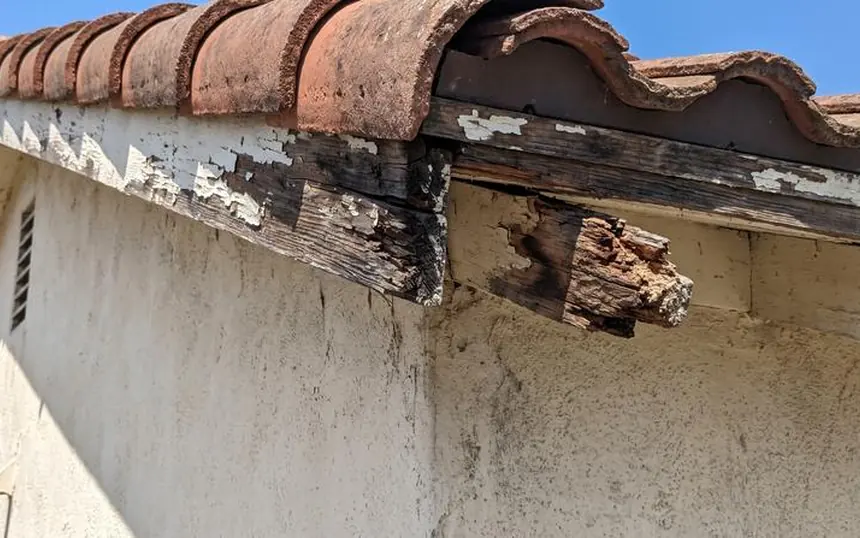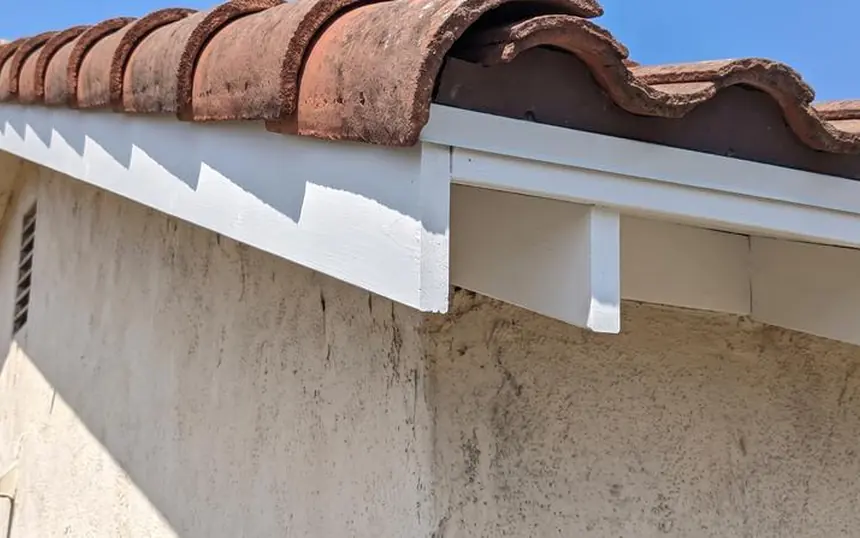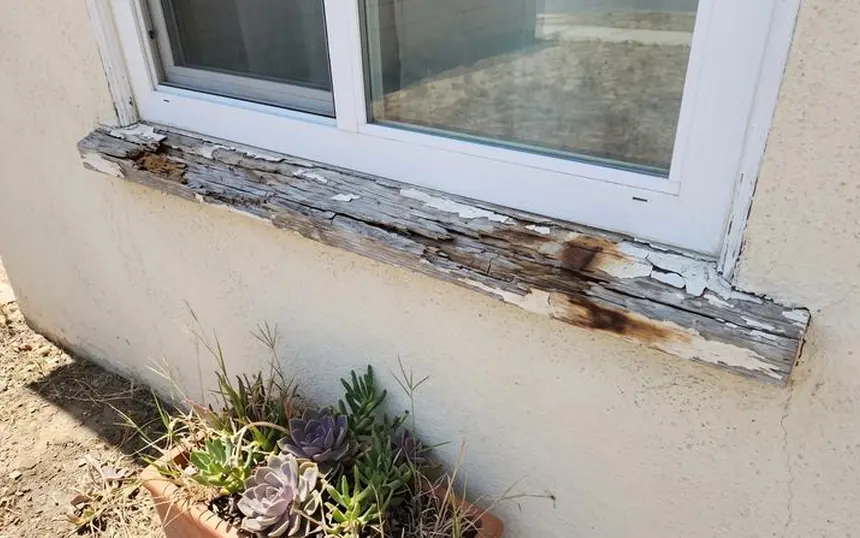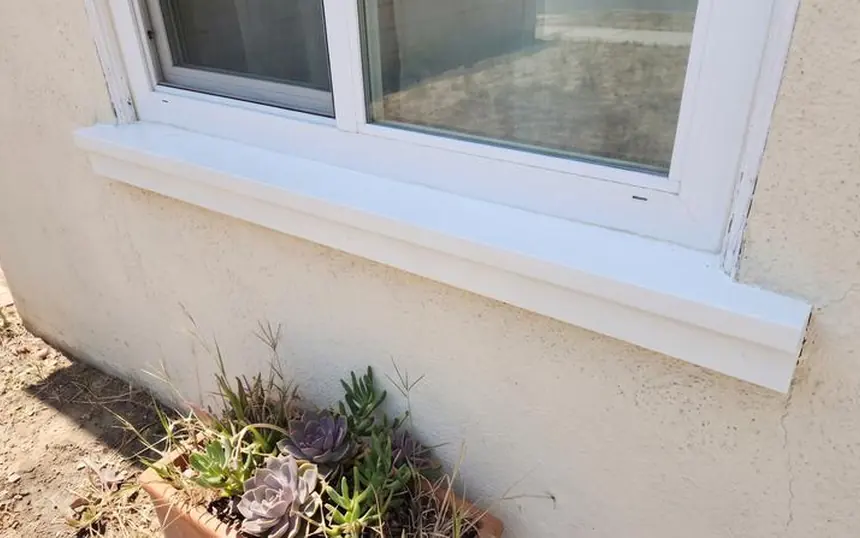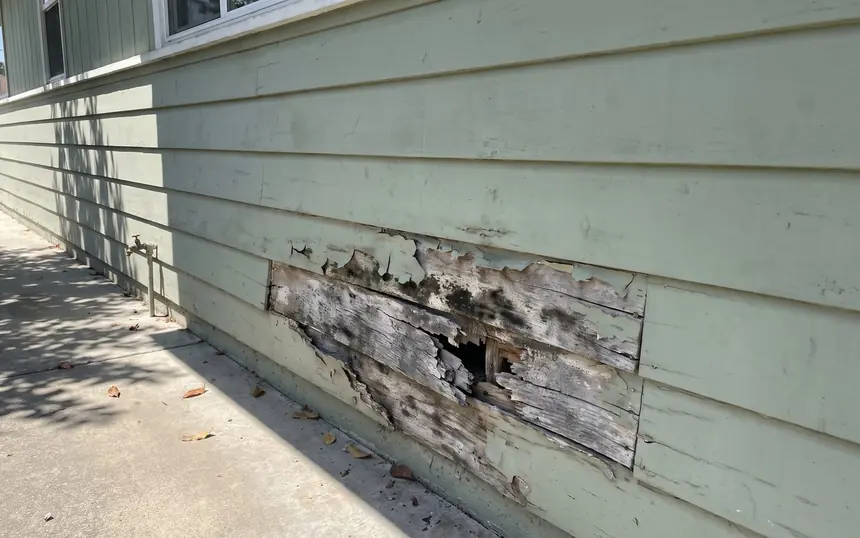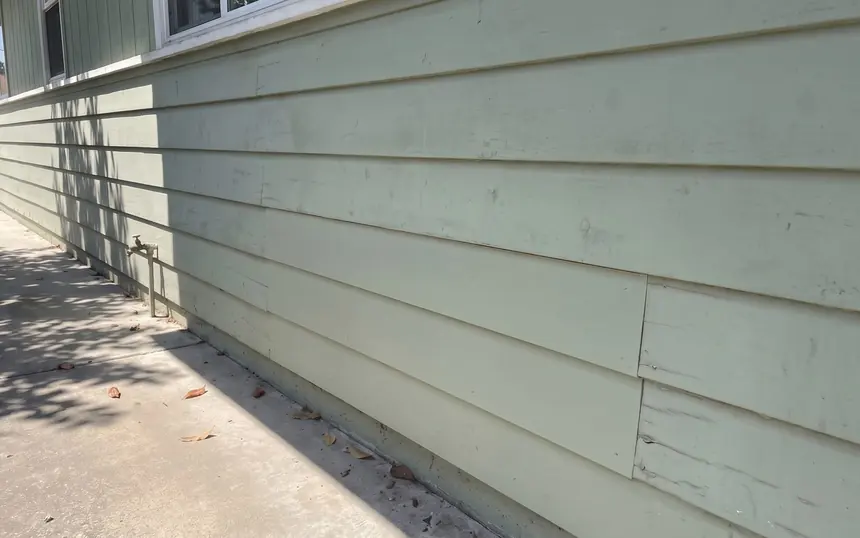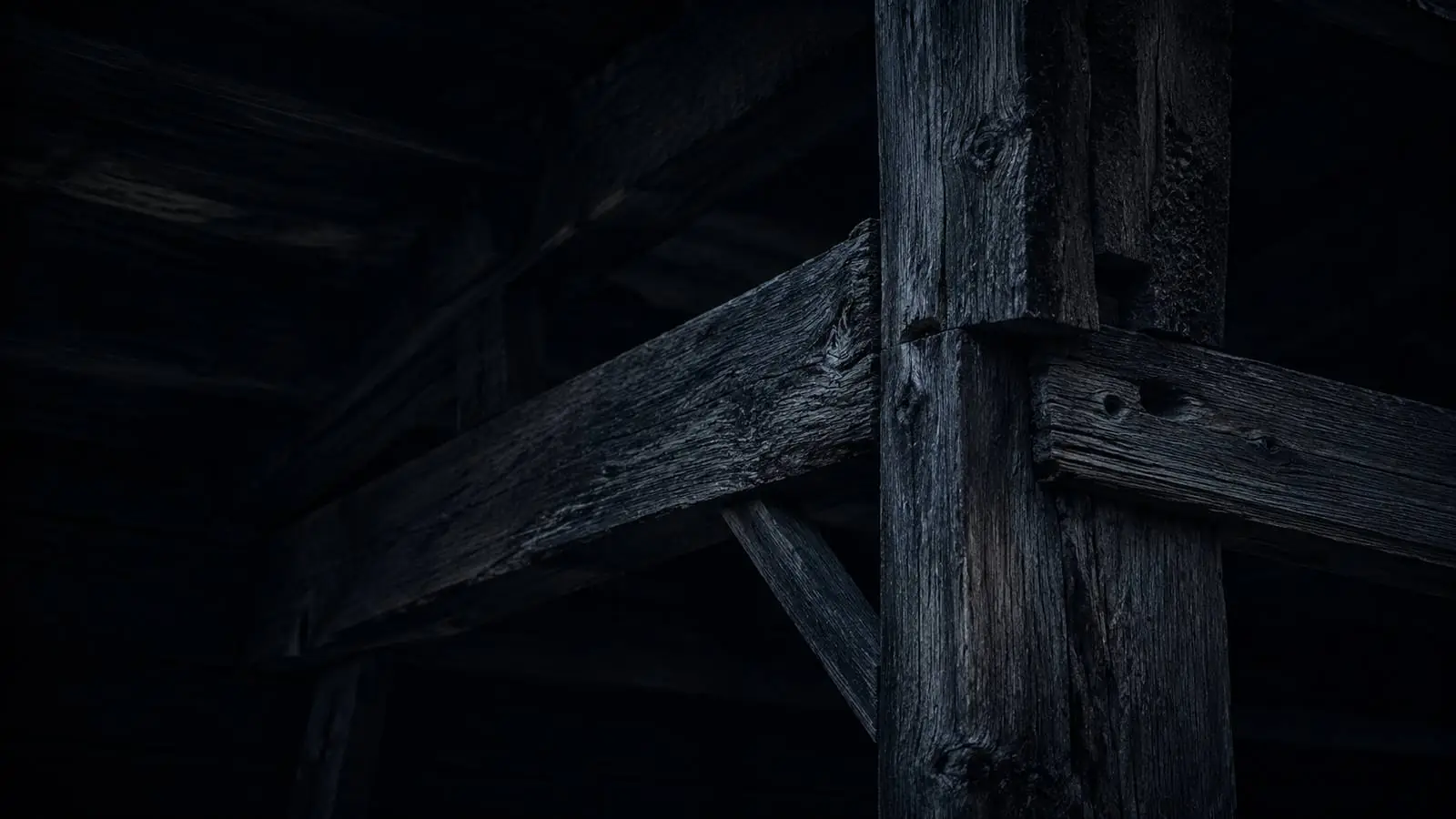
Fascia, eave trim, patio cover posts and sills split by the sun or eaten by termites, cut out and rebuilt with sound wood. Priced in writing before we start.
 BBBAccredited Business
In Phoenix the sun does what rain does elsewhere. Kaminskiy Care and Repair rebuilds the fascia and eave trim that a hundred and fifteen degrees checks open, the patio cover beams and posts the monsoon and the sprinklers soak, the wood-clad sills and door jambs at the stucco line, and the wood that the desert subterranean and drywood termites eat, after a licensed pest company has treated. Each piece is cut back to sound wood, primed on every face, painted to match and sealed, and the water path is fixed. Our office is on Central Avenue downtown, and the price is in writing before anything starts.
 Eight repairs, one crew, priced in writing before we start.
Phoenix wood fails in two ways: the sun cooks the paint off the fascia and the patio cover until the grain opens, and the monsoon or a sprinkler finds it; or the desert subterranean termite comes up through the slab and the stem wall and eats it from inside. We cut back to sound wood, rebuild, prime and paint, and close the gap.
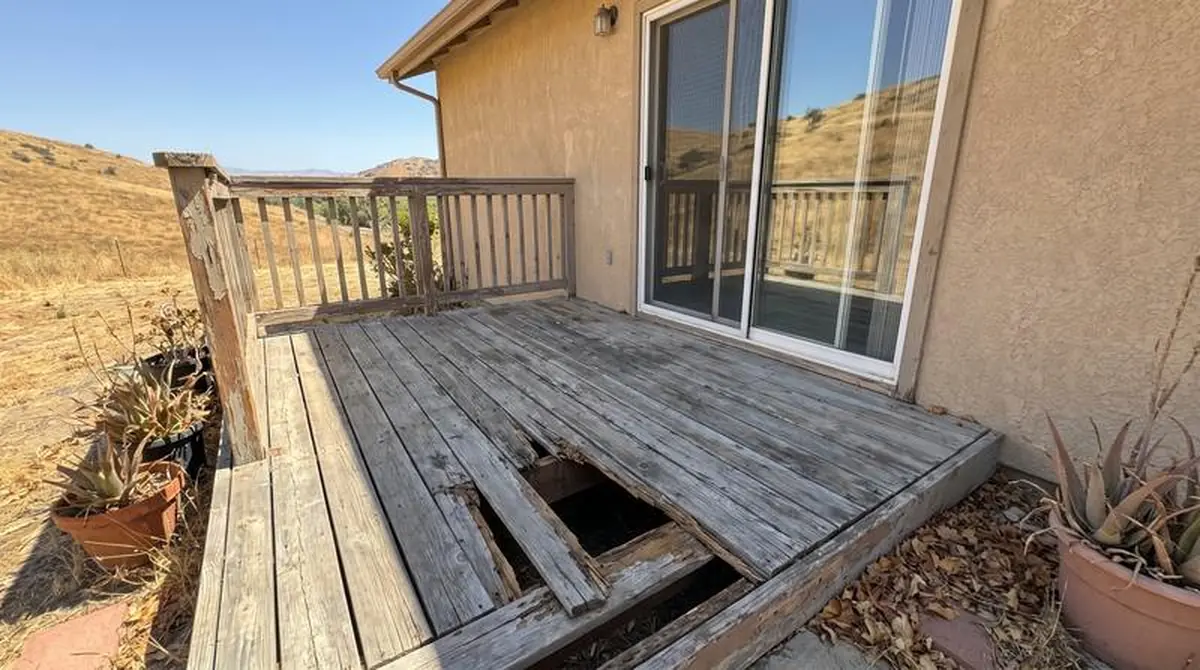
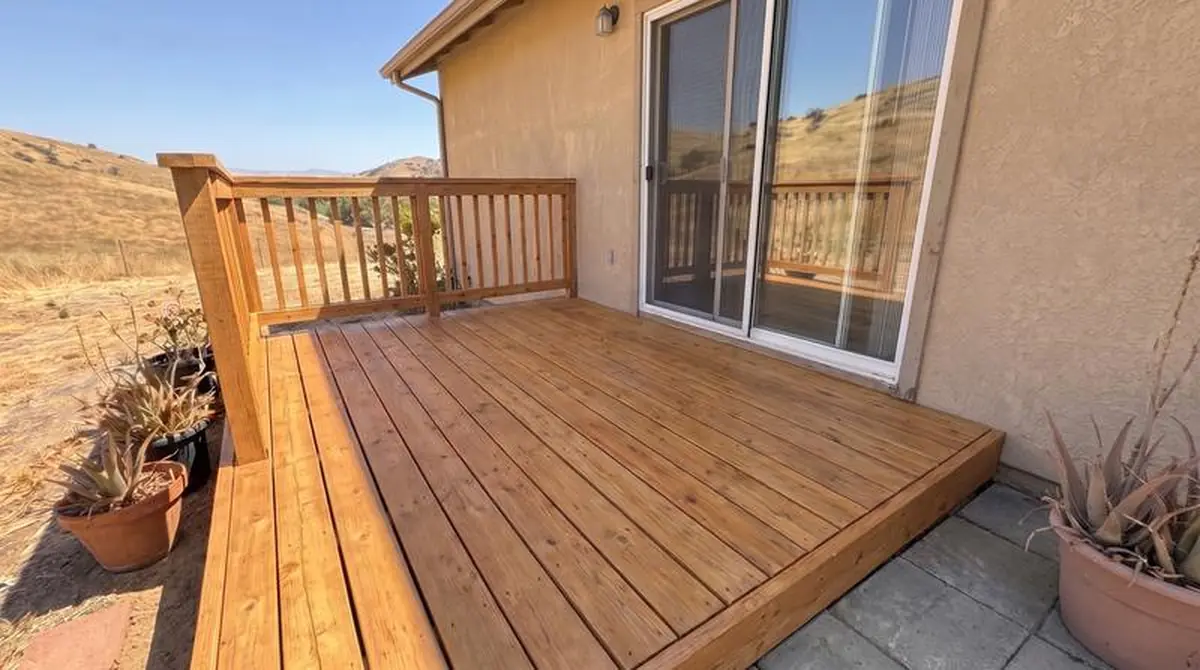 AFTERBEFORE
 Fascia & Eaves
 Window Sills
 Door Jambs & Casings
 Trim & Siding
 Termite Damage Rebuilds
 Deck Boards & Railings
 Stairs & Posts
 Primed, Painted & Sealed
Nothing on that list gets better through another summer. A Kaminskiy-certified technician from the Central Avenue office prices most Phoenix fascia, trim and patio post repairs on the call, in writing; a patio cover rebuild gets a written scope after a look.

Priced and on the calendar during the first call.

A written quote you approve before anyone drives out.

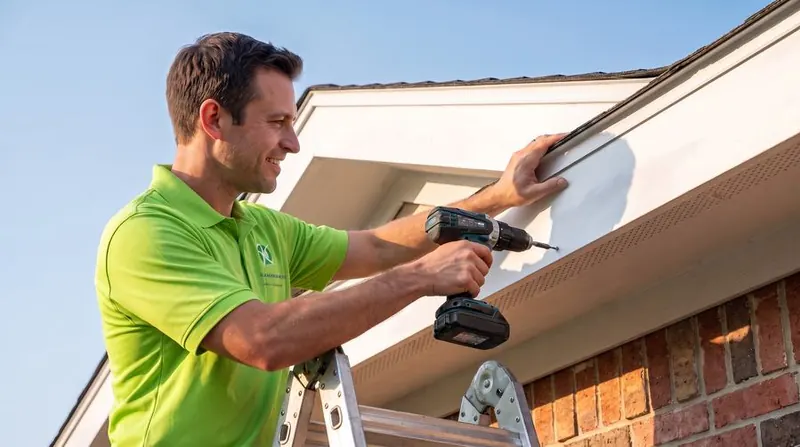
One crew, truck stocked, warranty in writing.
A one-year workmanship warranty, in writing, on every Phoenix rot and termite damage repair.
The sun first. A Phoenix summer takes the paint off fascia, eave trim and patio cover beams until the grain checks open, and then the monsoon drives water into the open grain and the sprinklers keep the post bases wet all year. Wood that touches soil or sits in a planter never dries. Rot here is a west wall, a patio cover and a sprinkler problem, and we look there first.
The University of Arizona calls the desert subterranean termite, Heterotermes aureus, the number one urban pest in the state, and it is the common one in the Valley below 4,000 feet. It builds mud tubes over stem walls and drop tubes down from ceilings and patio covers. Drywood termites are here too, the light western drywood from Phoenix to Tucson and the dark western drywood, living inside fascia, soffits and door frames and pushing pellets out of kick holes. A licensed pest company treats; we rebuild what they ate.
Paint over sun-checked, rotted wood peels within a season here. We cut the board back to sound wood, replace it with the same profile, back-prime it, caulk the joint and paint it to match the stucco scheme, so the repair sheds water and takes the sun.
Get the sprinkler and drip heads off the posts and the stucco, keep the planters and the gravel below the weep screed, clear the scuppers and gutters before monsoon season, and repaint the west and south walls on a schedule, before the paint fails. In the desert, the paint film is the only thing between the sun and the wood.
1920s to 1940s bungalows, Tudors and ranches with wood-framed windows, wood trim, porches and exposed rafter tails, inside the city's historic districts. Sills and rafter tails split open in the sun, porch posts rot at the base, and drywood termites live in the old fascia. We splice new wood into old, match the profile and keep the street face as the district expects.
Block and stucco ranches from the 1950s through the 1970s with wood fascia, eave trim, open-beam patio covers and wood-clad windows under flood-irrigated or sprinklered lawns. Patio cover beam ends check and go soft, fascia splits behind the gutter, and the desert subterranean termite comes up where the slab meets the stem wall. We rebuild the beams and boards, match the color and fix the water.
Stucco homes with foam trim and little exposed wood, so the rot hides where wood is still used: wood-clad sills, door jambs at the stucco line, patio posts and deck or balcony details. Association design standards are strict here, so we photograph the profile and the color and match both.
A fascia board, a sill or a trim piece is priced on the call, in writing. A bigger rebuild gets a look first and a written price before anything starts.
We cut back to sound wood and probe how far the rot really goes. If it runs further than the photo showed, you hear it before we go further, with the price.
New wood primed on all sides, caulked, painted to match, and the water path that caused it fixed: the drip edge, the flashing, the gutter end, the sprinkler.
The work area is cleaned before we leave, and every rot repair carries our one-year workmanship warranty.
Phoenix publishes its work-exempt list under section 105.2 of its building construction code, and rot repair sits squarely on it: minor repair or replacement in kind of non-structural components, named as glass, sash, doors and hardware, patching walls or ceilings, and replacing pieces of siding, soffits or fascia. Painting and similar finish work is exempt too, and so is stucco over an existing weatherproof covering. Rot that has reached rafters, a patio cover beam that carries the roof, or wall framing is past that list and gets a permit, and we tell you on the call.
An Arizona sale usually comes with a Wood Destroying Insect Inspection Report, which state law says may be completed only by an applicator certified in wood-destroying organism management. It records the insects and the conducive conditions that were visible and accessible that day, goes on file at the company within seven days, and is not a guarantee of what comes after. The pest company treats and clears; we rebuild the fascia, trim, posts and framing on the list, and they reinspect. Send the report with the address and we price from it.
Ahwatukee, Desert Ridge and most of the newer communities are association neighborhoods: a repair painted to the scheme rarely needs a form, and we put the materials and finish in writing when it does. Willo, Coronado, Encanto-Palmcroft and the other historic districts review exterior changes visible from the street; a repair that puts back the same wood in the same profile is maintenance, and we check with the city before a bigger job.
Can't find your answer? Call 480-637-5830 and ask us anything.
Call 480-637-5830Our office is downtown on Central Avenue and we answer in under three rings. Most fascia, trim, sill and patio post repairs are priced on the call and scheduled within days; a patio cover or a balcony is sized after a look, with the scope in writing first.
Yes. After a licensed pest company has treated the colony, desert subterranean or drywood, we cut out what the termites ate in the fascia, trim, door frames and the framing we can reach, and rebuild it. Treatment and the WDIIR are theirs; the rebuild is ours.
Yes. Beam ends, posts, fascia and trim are carpentry, and Kaminskiy is licensed, bonded and insured, so a splice into a beam end is fine too. If the rot has reached the part of the beam that carries the roof, we say so first and tell you who needs to look at it.
How much of the board has to come out, how high it is, and the finish it has to match. A post base and a run of fascia on a two-story west wall are not the same visit. Text a photo and the price is in writing before anything is scheduled.
Not for replacing pieces of siding, soffits or fascia, patching, or painting, which the city's own exempt-work list covers. Rot in rafters, a load-bearing patio beam or wall framing takes a permit, and we tell you which on the call.
Often it is on the way. The paint fails first on the west and south walls, and once it does the monsoon and the sprinklers reach the end grain. Press a screwdriver into the wood where the paint lifted: if it sinks in, call before the next storm season.
All of Phoenix from Central Avenue, including Arcadia, Willo, Coronado, Moon Valley, Ahwatukee and Desert Ridge, plus Scottsdale, Paradise Valley, Tempe, Chandler, Mesa, Glendale and Peoria. Call 480-637-5830 to confirm your address.
Tell us where the wood has gone soft, or text a photo, and we call back with a written price and a time. Calling is still faster: 480-637-5830.
Priced in writing before we start, rebuilt to last, warranted in writing.
We answer in under three rings, 24/7.No price games. You get a clear written quote before any work begins, backed by our workmanship warranty.