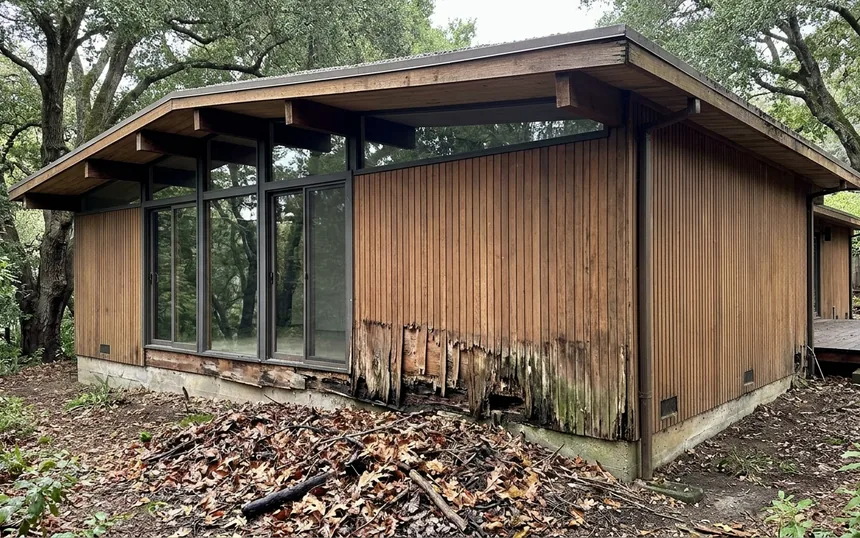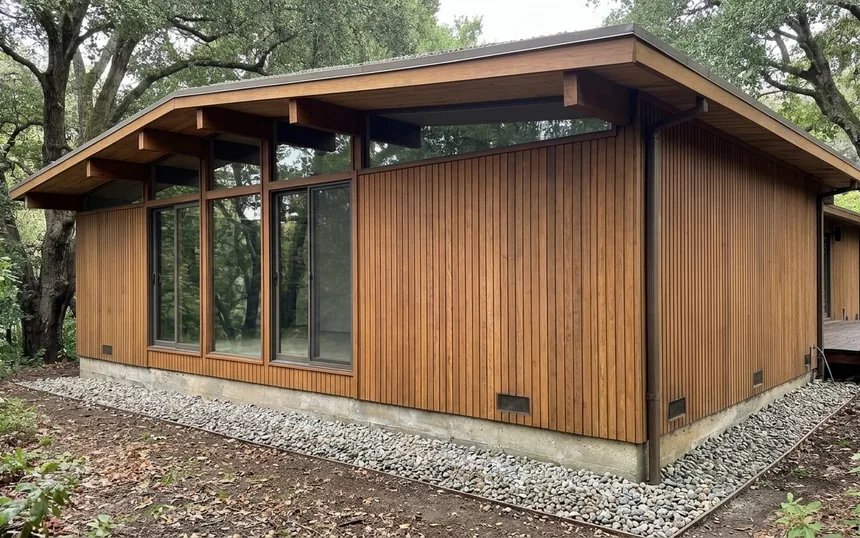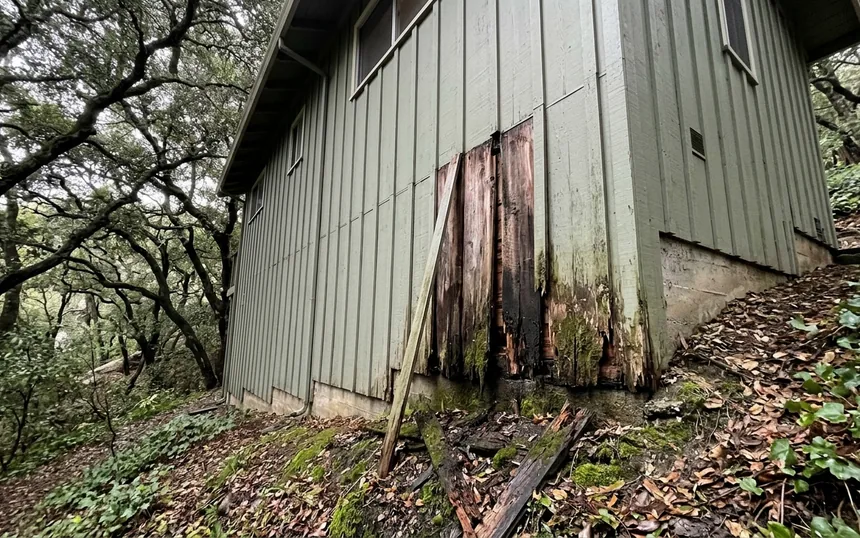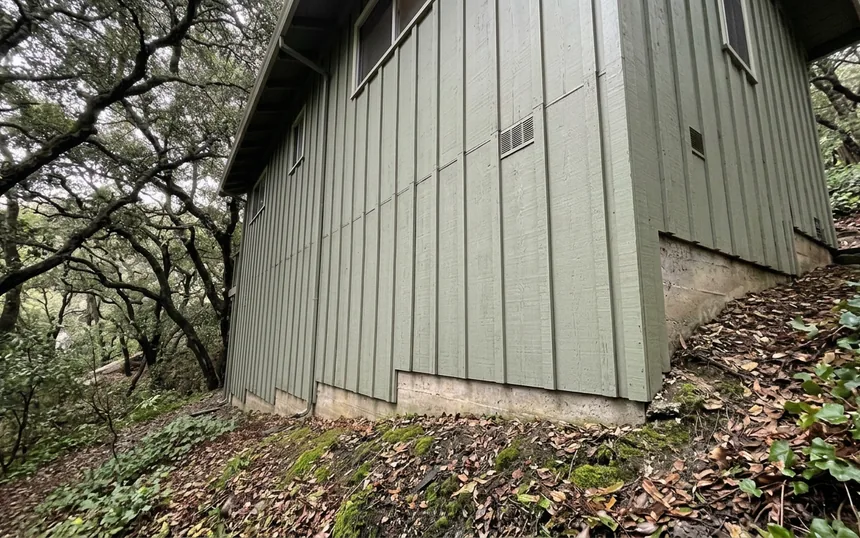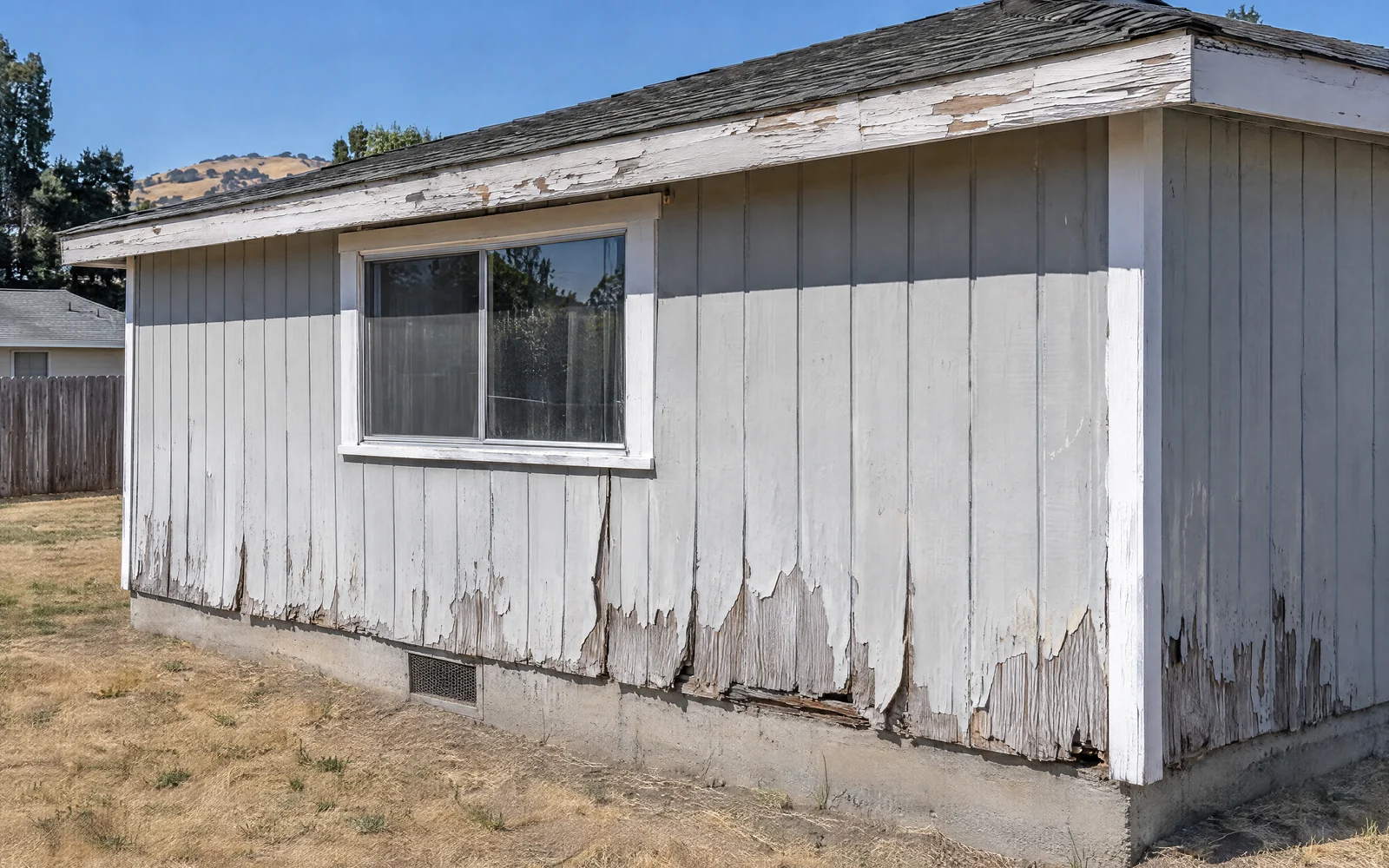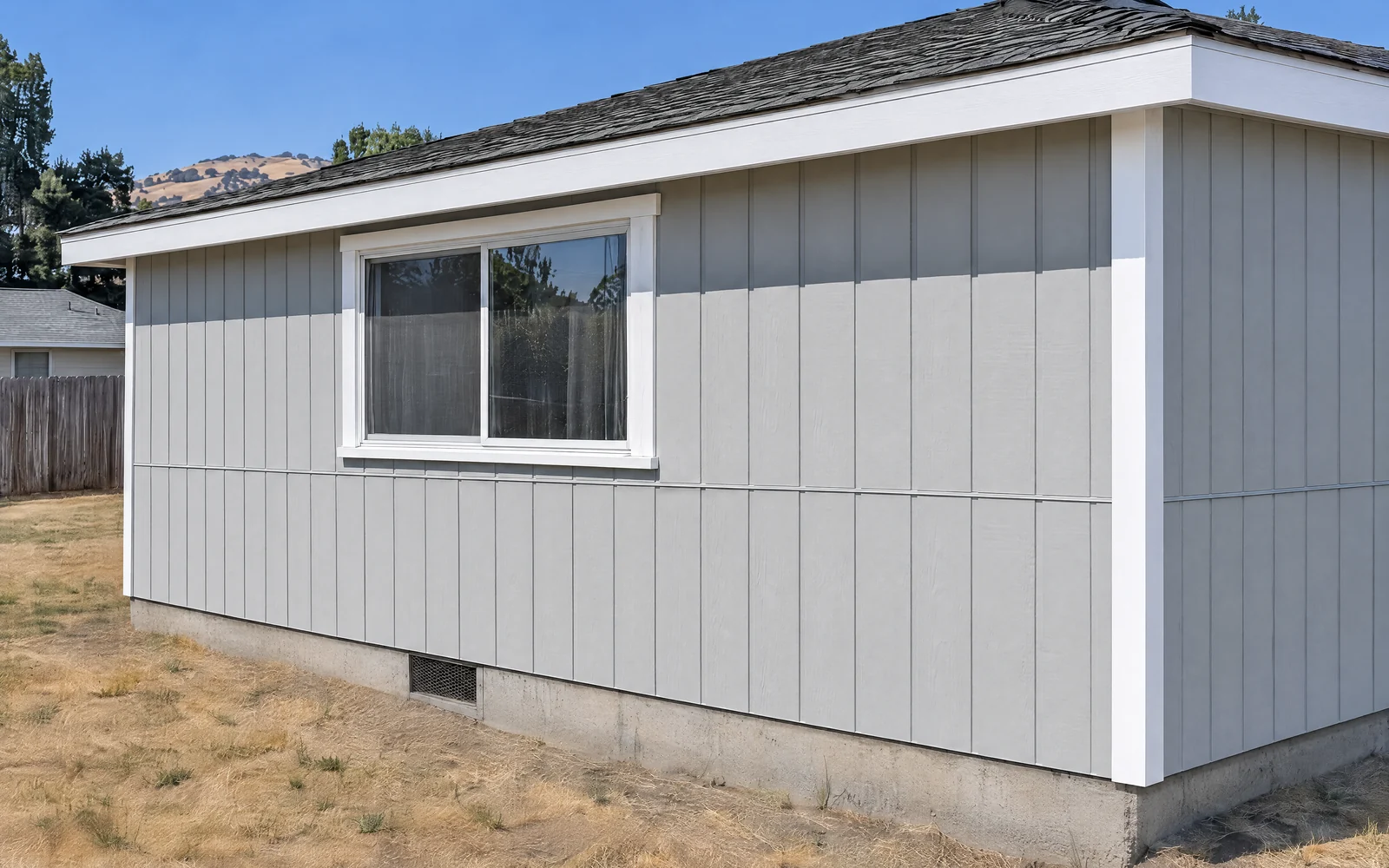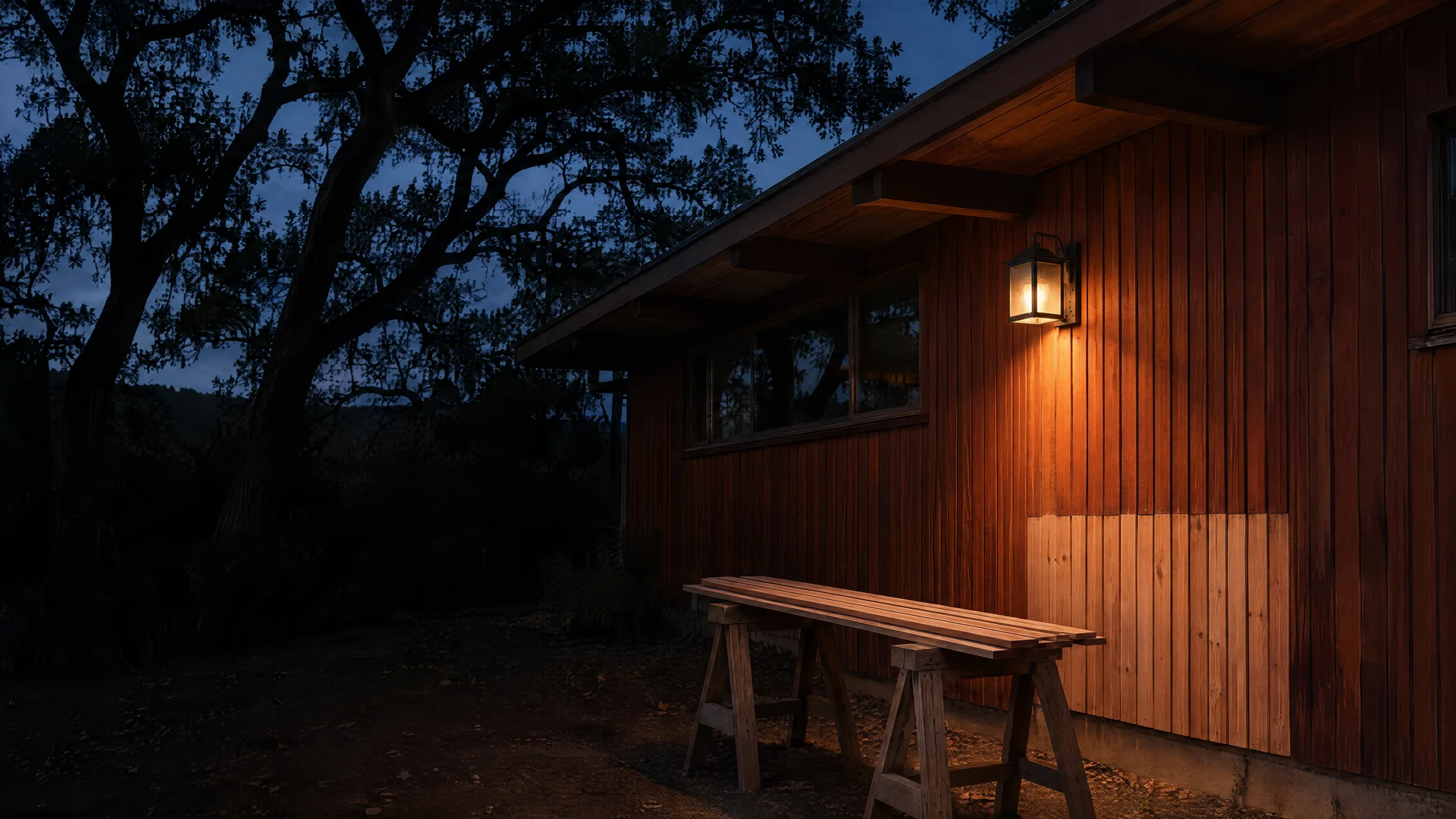
Eichler redwood gone soft on the shaded north wall, board-and-batten under the Lafayette oaks, sun-split T1-11 in Concord, old drop siding in Danville: replaced in the same profile, lapped into new paper and flashing, and finished so the wall reads as one.
 BBBAccredited Business
Kaminskiy Care and Repair repairs and replaces siding across the East Bay from our office in Walnut Creek: the vertical grooved redwood of the Rancho San Miguel Eichlers, the board-and-batten and redwood lap of the 1950s and 1960s ranch houses in Lafayette, Orinda and Walnut Creek, the T1-11 of the Concord and Pleasant Hill tracts, the drop and lap siding of Old Town Danville and downtown Pleasanton, and the fiber cement (Hardie) on the newer homes. Rotted, split or delaminated pieces are cut out, the paper and flashing behind them lapped so the wall drains through the wet winters, and new siding fitted in the same profile, primed or pre-stained on every face and finished to match. Licensed California contractor (CSLB #1120648) and an EPA Lead-Safe Certified firm, every repair priced in writing on the call: 925-302-5955.
 From Lamorinda's oaks to the Tri-Valley.
East Bay siding fails two ways at once. Under the oaks and on the north faces the winter rain soaks the bottom of the wall and nothing dries it until May, so the wood goes soft under paint that still looks fine. On the open Diablo Valley lots the west sun splits T1-11 and fascia every summer. We open what has failed, read the sheathing with a moisture meter, lap new paper and flashing in behind the repair so water drains out, and match the grooves, the batten spacing or the lap so the wall reads as one.

 AFTERBEFORE
 Eichler & Redwood Siding
 T1-11 & Plywood Panels
 Fiber Cement & Hardie
 Fascia, Eaves & Trim
 Dry Rot & Termite Damage
 Paper, Flashing & Drainage
 Paint, Stain & Color Match
 Walk-Through & Warranty
We take these calls every week from Lafayette to Livermore, most of them in the wet months. Text a photo and most siding repairs are priced on the call, in writing; when the soft spot may reach the sheathing or the sill plate, we look first and put the scope on paper.

Tell us what you see and where. Most repairs are priced in writing from the photo, with the profile and the permit question answered.

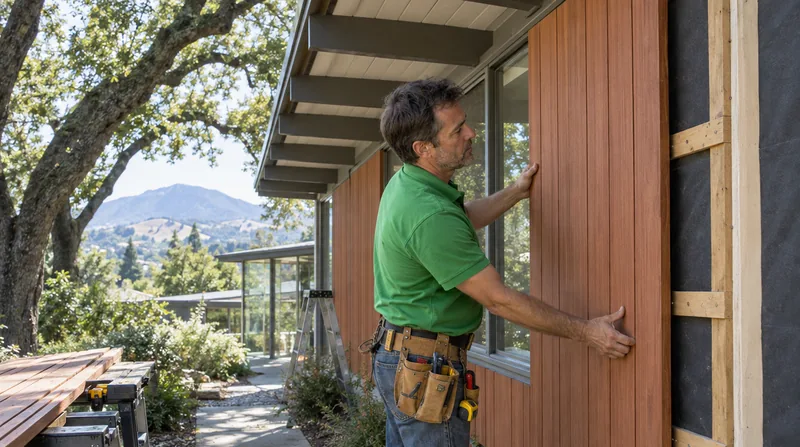
The failed boards come off, the sheathing and the sill are read with a moisture meter, and you see the photos before new material goes on.

New paper and flashing lapped so water runs out, siding in the same profile primed or stained on every face, finished to the house.
Every job is backed in writing by our workmanship warranty and done by a Kaminskiy-certified, background checked technician.
Eichlers use vertical grooved siding, redwood or plywood, beside walls of glass. The 1950s and 1960s ranch houses use redwood lap, board-and-batten or shiplap. The valley tracts of the 1960s and 1970s use T1-11, a grooved plywood sheet that also braces the wall. Old Town Danville and downtown Pleasanton have drop and lap siding from before 1930, and the newer Tri-Valley homes use fiber cement. We name yours from a photo.
Repair, most of the time: the rain soaks the bottom courses and the north walls, the sun works the west faces, and the rest is sound. T1-11 is the one to watch, because it is often the wall's bracing as well as its skin. When it has delaminated through on a whole face, that face is re-sided with new sheathing behind it, and we price both in writing.
A board that is not lapped into the paper behind it sends the next winter's rain straight into the wall, new redwood left raw beside fifty-year-old stain stands out for years, and a patch on an Eichler that misses the groove spacing is visible from the street. We lap the paper and flashing, pre-stain or back-prime every piece and match the grooves.
Rake the leaves and the soil back from the base of the walls before the rains, clean the gutters after the oaks drop, keep the sprinklers off the siding, and restain redwood before it goes gray. Trim the branches back from the walls so they can dry. A board this year is a wall in five.
The East Bay was built in wood longer than the south: Eichlers and redwood ranch houses in the fifties and sixties, plywood tracts in the valley, century-old cottages in the old downtowns. The oaks keep half the walls wet through the winter and the Diablo Valley sun bakes the other half, and the clay underneath moves both.
Hillside lots under oak canopy with 1950s and 1960s ranch houses in redwood lap and board-and-batten. The shade keeps the north and uphill walls wet into May, so the siding goes soft under paint that looks intact. Much of this area is on the 2025 high and very high fire map, so a re-sided wall goes on in an ignition-resistant material, and protected oaks mean branches come off the house with care.
The Eichlers of Rancho San Miguel and the 1950s to 1970s tracts with T1-11, plywood and redwood siding, in the hottest summers of the Bay Area on clay that swells and shrinks. T1-11 splits along the grooves on the west faces, fascia checks, and the sprinklers soak the bottom edges. These homes were built before 1978, so the paint is tested first and the work is done lead-safe by an EPA Lead-Safe Certified firm.
Century-old drop and lap siding in Old Town Danville and downtown Pleasanton, where design review keeps the original look, and newer stucco homes with fiber cement lap and shingle accents in associations from Blackhawk to Ruby Hill. The old siding rots at the porch floors and the corners; the fiber cement cracks at nails and corners and needs its joints flashed.
Repaired, nearly always. East Bay siding fails at the bottom courses, on the north and uphill walls and on the west faces, while the rest of the wall stays sound. The exception is water that has reached the sheathing or the sill plate: that section is opened, the framing and sheathing repaired, new paper and flashing lapped in, and re-sided to the original profile.
Yes. On an Eichler we match the groove spacing and the panel width and restain to blend; on a ranch house the batten width or the lap reveal; on an Old Town cottage we mill the drop profile when it is not stocked. The color comes from a chip or the association code and is carried to a corner. On Pleasanton's downtown streets and in Old Town Danville a matched repair is what design review expects.
It is priced on the call, in writing, from a photo. Four things move the number: how much has failed, whether the profile is stocked or has to be milled, what is behind it (sound sheathing or a wet sill), and how much staining or painting it takes to blend. The materials are named on the quote, with no percentage markups.
An unlicensed handyman may take a job only when labor and materials together come to less than one thousand dollars and no permit is needed (Business and Professions Code 7048, raised by AB 2622 in 2025). A wall of T1-11 or a run of redwood is past that line. Kaminskiy Care and Repair holds California contractor license #1120648 for the East Bay, is bonded and insured, and the number checks on the CSLB site.
We name the siding, tell you how your city's desk reads the permit question and whether the fire map or design review applies, and price it in writing.
Failed boards come off to sound wood, the sheathing and the sill are read with a moisture meter, old paint is tested, and you get the photos.
Paper and flashing lapped so water runs out, siding milled or stocked to the profile, primed or stained on every face, set clear of the soil.
Stain or paint blended to the house and carried to a break, the site cleaned, the photos and the one-year workmanship warranty sent.
Every East Bay city builds to the California Residential Code, whose ordinary-repairs clause asks no application for a like-for-like repair that cuts no structural member, but each desk reads it its own way. Walnut Creek's bulletin lists no line for a repaired board and Danville says a permit is required for most repair work, so we ask them first; Concord's permit list covers decks, re-roofs and windows, not a few boards; Lafayette exempts termite and dry rot repair that adds no floor area from its zoning check; Pleasanton prints the ordinary-repair exemption on its own handout.
The 2025 state map put parts of Lafayette, Danville and Concord in the high and very high fire hazard zones. A board-for-board repair is not new construction; a re-sided wall there is checked with the fire district and goes on in an ignition-resistant material such as fiber cement. On Pleasanton's downtown streets exterior changes go through design review and the historic houses are held to their original look, and Old Town Danville's wood houses are repaired the same way: in kind.
Most of the Eichlers, the ranch houses and the valley tracts were built before 1978 and may carry lead paint under the newer coats. Kaminskiy Care and Repair is an EPA Lead-Safe Certified firm: the paint is tested before boards are cut, the work area is contained and the cleanup checked. The planned streets from Rossmoor to Ruby Hill answer to an association; a repair painted to the scheme rarely needs a form, and a new material goes in writing to the committee.
In the middle of the valley. Our East Bay crew works from Quail Court in Walnut Creek, off the 680, and covers Lamorinda, the Diablo Valley and the Tri-Valley. Call 925-302-5955, text a photo of the siding, or send the form, and we answer in under three rings. Since 2023 our technicians have completed 1,485 repair visits on 574 East Bay homes.
Can't find your answer? Call 925-302-5955 and ask us anything.
Call 925-302-5955Repaired, on most East Bay homes. The winter rain soaks the bottom courses and the north walls under the oaks, the summer sun splits the west faces, and the rest of the wall stays sound. We cut out the failed pieces, read the sheathing and the sill, lap new paper and flashing behind the repair and fit siding in the same profile. A face is re-sided only when the sheathing or a T1-11 bracing panel has failed through.
Yes. Eichler siding is vertical and grooved, and the repair only works if the groove spacing, the panel width and the stain match. We cut back to sound material, fit new grooved panels to the spacing, lap the paper behind them and restain to blend with the wall, so the house keeps its lines. Call 925-302-5955 or text a photo and we price it in minutes.
It is priced on the call, in writing, from a photo of the wall. The number moves with how much has failed, whether the profile is stocked or milled, whether the water has reached the sheathing or the sill, and how much staining or painting it takes to blend. A few boards at ground level is a small line; a wall of T1-11 with new sheathing is a larger one. Materials are named on the quote, with no percentage markups.
It depends on the city and the size. The state's ordinary-repair rule covers a like-for-like repair that cuts no structural member, but Walnut Creek's bulletin lists no line for a repaired board and Danville requires a permit for most repair work, so we ask those desks first; Concord's permit list is about decks, roofs and windows; Lafayette exempts rot repair from its zoning check; Pleasanton prints the exemption. A re-sided wall is a permit, and we pull it.
Only a small job. California lets an unlicensed handyman take work when labor and materials together are less than one thousand dollars and no permit is needed (Business and Professions Code 7048, as raised by AB 2622 in 2025). A wall of T1-11 or a run of redwood passes that line. Kaminskiy Care and Repair holds California contractor license #1120648, bonded and insured.
Because the water gets in from behind and below, not through the paint. Under the oaks and on north walls the winter rain soaks the bottom of the siding and the soil and leaves against it keep it wet into May, so the wood softens behind an intact coat. A thumb test along the bottom course in spring finds it early; we open it, dry the cause, and lap the repair so it drains.
Eichlers carry vertical grooved redwood that delaminates at the base of shaded walls. Ranch houses in Lafayette and Walnut Creek carry redwood lap and board-and-batten that rot under the oaks. Valley tracts in Concord and Pleasant Hill carry T1-11 that splits on the west faces, Old Town Danville and downtown Pleasanton carry drop siding that rots at the porches and corners, and the newer homes carry fiber cement that cracks at nails. We tell you which you have on the call.
Walnut Creek, Lafayette, Orinda, Moraga, Alamo, Danville, San Ramon, Concord, Pleasant Hill, Clayton, Martinez, Dublin, Pleasanton and Livermore, from our office on Quail Court. Call 925-302-5955 with the address and we confirm it on the call.
Tell us the city, the siding and roughly how much has failed. We'll call back with a price and a day. Calling is still the fastest way: 925-302-5955.
Redwood, battens, T1-11 and Hardie matched and lapped to drain, a one-year workmanship warranty, from one licensed East Bay team.
We answer in under three rings, 24/7.No price games. You get a clear written quote before any work begins, backed by our workmanship warranty.