 BBBAccredited Business

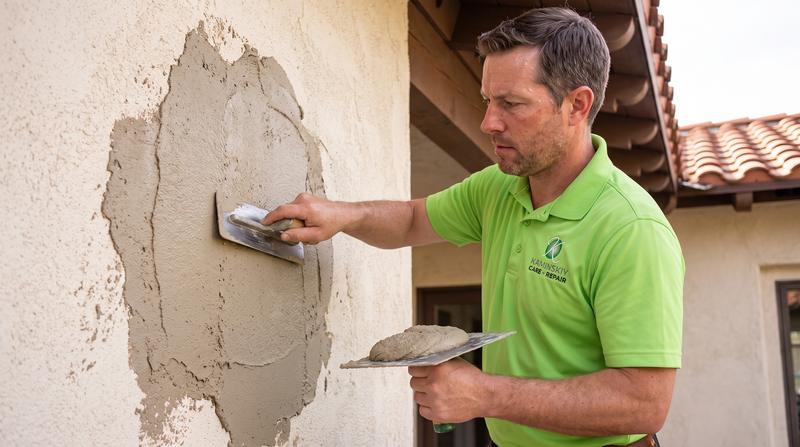
Kaminskiy Care and Repair patches stucco cracks and chips and matches the existing texture so the repair blends in. Hairline cracks are cosmetic; widening or bulging ones deserve a call, and the quote is free either way. We serve Phoenix and the surrounding Arizona communities. Wood, fiber cement, T1-11 and vinyl siding, fascia and trim have their own page: siding repair in Phoenix.
Downtown office, Valley-wide list. Sun-chalked walls and monsoon water at the parapets lead it.
Phoenix stucco is the 1950s block ranch in Arcadia with a crack at every control joint, the 1990s Ahwatukee home with foam trim and a hairline at each window corner, and the flat-roofed house whose parapet lets the monsoon in every August. We cut and fill the cracks, patch the hollow spots, rebuild a failed section to the block or the lath in three coats, and match the texture and color to the approved scheme. Parapet caps, sills and the weep screed are checked on the same scope.
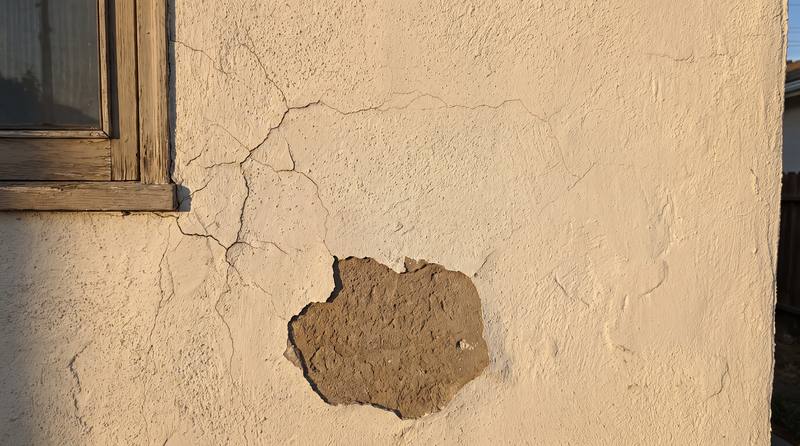
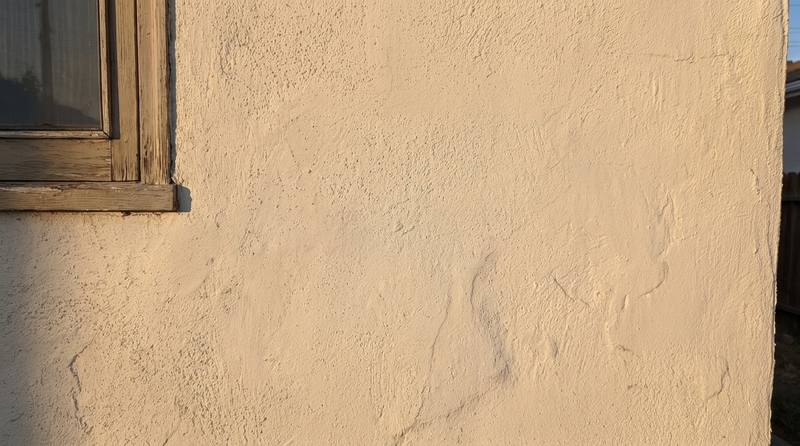 AFTERBEFORE
A Kaminskiy-certified technician out of our office on Central Avenue handles each of these as a repair. One look and a written scope, then three coats, each one cured before the next, which in this heat means keeping them damp.

Priced and on the calendar during the first call.

A written quote you approve before anyone drives out.

Three coats, each one cured, warranty in writing.
A one-year workmanship warranty, in writing, on every Phoenix stucco repair.
Nothing here fails quietly in the rain; it bakes, then it floods. A west wall at a hundred and ten expands every afternoon and shrinks every night for four months, so the hairlines at the window corners and along the control joints open a little more each year and the finish chalks under the sun. Then the monsoon comes from mid-June through September and drives water into whatever opened, over the parapet cap and down inside the wall. The irrigation keeps the base wet all year. Caught early, each of these is a small cut and fill.
A hairline at a window corner, or a straight crack along a control joint where the caulk has gone, is the wall doing what the joint was put there for; it gets cut, filled, the joint resealed, and refinished. Call about a crack that takes a coin, a crack that has widened since last fall, a stair-step crack following the block joints, a wall that sounds hollow over a wide area, or a stain under the parapet that comes back every storm. If a crack follows the slab or a header that has moved, an engineer looks before we patch.
A patch is cut back to sound stucco, to the block or to new paper and lath on a frame wall, and built up in three coats: a scratch coat, a brown coat floated flat with the wall, and a finish coat worked to the texture and tinted or painted to the scheme. Each coat has to cure before the next, and in Phoenix heat that means keeping it damp and shaded so it cures instead of drying out and cracking. About a day of work spread over visits; a patch rushed in one afternoon in July will not last the summer.
Keep the irrigation off the wall and the soil below the weep screed, reseal the control joints and the foam-trim miters before the monsoon, and have the parapet caps checked every spring. An elastomeric coat or a fog coat on the west and south walls slows the chalking and seals the hairlines; keep it maintained to the association color. After a big storm, walk the house and look at the parapets and the window heads; a stain found in August is a cap repair, not a wall.
Bungalows, Tudors and early ranches from the 1920s to the 1940s, many of them stucco over brick or early block with a hand-finished wall and a street face the district expects to stay as it is. The frames settled, the sills and corners check open in the sun, and the old patches are the wrong texture. We cut back to sound material, rebuild in three coats and copy the finish from the wall beside the patch, because a repair in the same material and profile is maintenance and a changed finish is a review.
Block-and-stucco ranch homes from the 1950s through the 1970s with flood-irrigated lawns, a slab that moves a little every summer and a parapet on the flat-roofed ones. The cracks follow the block joints and the control joints, the parapet cap lets the monsoon in and stains the wall below it, and the base goes soft where the irrigation water stands. We cut and fill the joint cracks, re-stucco the failed sections to the block, rebuild the caps and fix the water path.
Stucco homes from the 1980s on, nearly all in associations with a palette and a form. The hairlines at the window corners widen each season, the foam trim cracks at the miters, the west wall chalks and fades, and a few of the newest have a one-coat system over foam that patches differently. We cut, fill, patch and refinish to the approved color with the materials in writing for the association, and tell you at the look if the wall is a one-coat system.
Call 480-637-5830 or text a close photo of the crack, the stain or the hollow spot and one of the whole wall. The range comes on the call with a date for the look, and the office on Central Avenue is open every day from eight to eight.
The technician knocks the wall for hollow areas, gauges the cracks, checks the parapet caps, the control joints, the sills and the weep screed, looks at where the irrigation and the roof drainage land, and writes the scope: what gets cut and filled, what gets rebuilt to the block or re-lathed, how the texture and color will be matched to the scheme, and how many visits the coats need. You have the price in hand before anything comes off the wall.
The failed stucco comes off to sound material, new paper and lath go in on a frame wall, and the scratch coat is applied and kept damp while it cures. The brown coat is floated level with the wall on the next visit and cured the same way.
The finish coat is worked to the texture of the wall beside it and tinted or painted to the approved color, with the product in writing for the association if it asks. We take the debris, and the one-year workmanship warranty is written on the invoice at the approved price.
Arizona lets a person without a contractor license take a job only when it is casual or minor, the whole price including materials stays under a set small amount, and no building permit is needed; anyone advertising without a license has to say so. A three-coat stucco patch with new lath and three visits is past that line. Kaminskiy Care and Repair is bonded and insured, every technician is Kaminskiy-certified and background checked, and when a job needs a permit or a specialty trade it goes to the right license, which we arrange or name on the call.
Phoenix publishes its own exempt-work list, and stucco repair is on it: painting and similar finish work, patching walls, and a new stucco finish over existing stucco need no permit, while a synthetic system over the wall does. Cutting and filling cracks, patching, rebuilding a failed section to the block and matching the finish are exempt work. Re-lathing a large area of a frame wall, or anything that touches a structural member or the parapet framing, is where we call Planning and Development before we quote and tell you what it said.
Ahwatukee, Desert Ridge, Laveen and most of the newer communities are association neighborhoods: a patch finished in the approved color rarely needs a form, a new finish or a color change usually does, and we put the product and the color in writing for it. Willo, Coronado, Encanto-Palmcroft, F.Q. Story and the other historic districts review changes visible from the street; a patch in the same material and texture is maintenance, and we check with the Historic Preservation Office before anything bigger.
Downtown, open every day. Our Phoenix crew works out of the office at 2 North Central Avenue and covers the whole Valley, from the historic districts to Ahwatukee, Scottsdale, the East Valley and the West Valley. Call 480-637-5830, text a photo, or send the form, and we answer in under three rings.
Can't find your answer? Call 480-637-5830 and ask us anything.
Call 480-637-5830Three coats, a cure after each: the first visit cuts out the failed stucco, replaces the lath if it is a frame wall and applies the scratch coat; the brown coat follows after it has cured; the finish coat carries the texture and color and comes last. In Phoenix heat each coat is kept damp so it cures instead of drying out, so the patch is about a day of work spread over several visits, and the written scope says how many.
We match the texture from the wall beside the patch, a sand float, a dash, a skip trowel or the smooth finish on the newer homes, and tint or paint to the house or the association color. A west wall that has chalked for ten summers reads lighter than the paint chip, so a fresh patch can show until it weathers; we tell you that at the look, and an elastomeric or fog coat across the elevation is the fix when it matters.
Hairlines at the window corners and straight cracks along the control joints are normal on a Phoenix stucco wall; the joints are there to take that movement. They still want filling and sealing before the monsoon so water stays out of the wall. Call about a crack that takes a coin, that has widened since last year, that stair-steps along the block joints, or that runs from a header that has dropped; if it follows the slab or the structure an engineer looks first.
No. EIFS is a foam-board system with a thin base and finish coat, repaired only by the manufacturer's method, so the system's certified installer takes it; the city also permits a synthetic system separately from a stucco patch. We tell you at the look whether your wall is three-coat stucco, a one-coat system over foam, or EIFS.
It depends on how much is cracks and joints, how much is failed stucco that has to be rebuilt to the block or re-lathed, and whether a parapet cap is in it. Text photos and you get a range on the call; after the look the written scope lists the cutting, the lath, the three coats and the matching, priced before anything is cut, and the invoice reads like the scope you approved.
Yes. Every stucco repair carries a one-year workmanship warranty in writing and is done by Kaminskiy-certified, background checked technicians. Kaminskiy Care and Repair is bonded and insured, and a job that needs a permit or a specialty license goes to the right license.
Yes. Water comes over or through a split parapet cap, runs inside the wall and shows as a stain and a hollow section below. We rebuild the cap, cut the stained and hollow stucco back to sound material, re-stucco in three coats and match the finish. If the roof membrane or the scuppers are letting the water in, that part is a licensed roofer's, and we tell you before we patch so the stain does not come back.
The whole Valley from our office on Central Avenue: the historic districts, Arcadia, the Biltmore area, North Central, Moon Valley, Sunnyslope, Maryvale, Ahwatukee, Desert Ridge, Laveen and Deer Valley, plus Paradise Valley, Scottsdale and Tempe. Call 480-637-5830 to confirm your address.
Send a photo of the wall and the address. We call back with a written price and the visits it takes. Calling is still fastest: 480-637-5830.
Priced on the call, blended to match, warranted in writing.
We answer in under three rings, 24/7.No price games. You get a clear written quote before any work begins, backed by our workmanship warranty.
