 BBBAccredited Business

Kaminskiy Care and Repair repairs water damage and mold damage on drywall, ceilings, trim and cabinets: the leak confirmed stopped, wet material removed, the area dried and treated, then rebuilt and painted to match. Large scale remediation and air testing are referred to a licensed specialist, and we handle the rebuild after. We serve Hollywood Hills and the surrounding California communities.
Twenty minutes from the canyons. Deck doors, roof-to-wall joints and hillside seep lead the list.
Hollywood Hills water damage comes from outside more than from the pipes: a deck over a living room with a failed membrane, a slider threshold with no pan, a flat roof that ponds, a roof-to-wall joint where an addition met the old house, a retaining wall weeping into a lower level. The ceiling below the deck door stains first. We trace it, get the licensed roofing contractor or the membrane specialist on the source, cut out the wet drywall, dry the cavity, treat the framing and rebuild and paint to match, carried up the stairs ourselves.
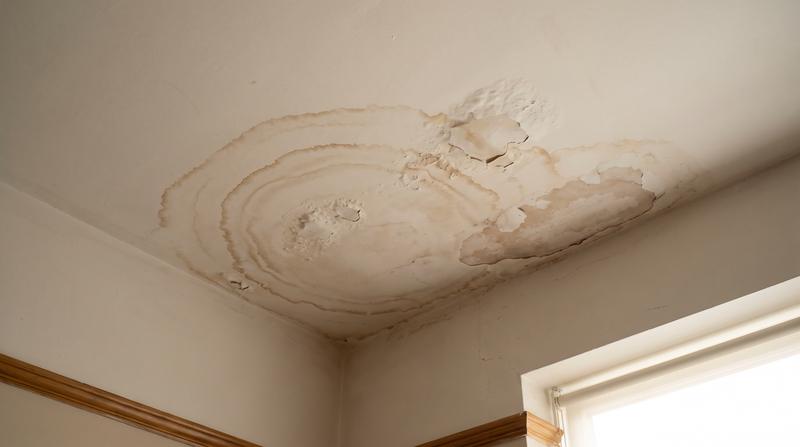
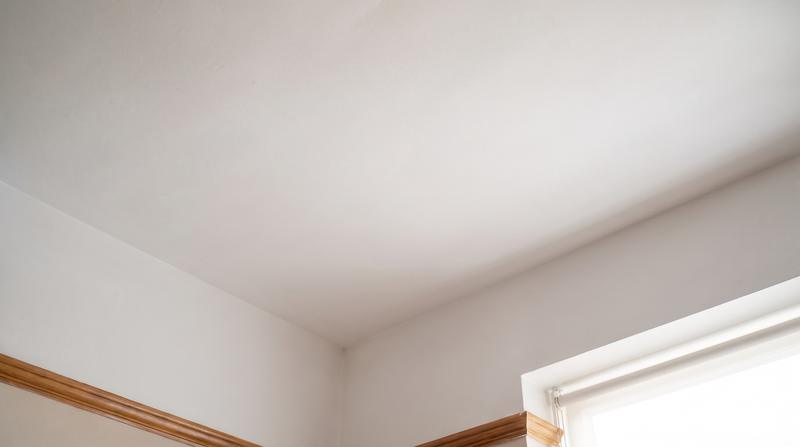 AFTERBEFORE
Every one of these is a dry-out and a rebuild for a Kaminskiy-certified technician who plans the visit around the stairs, once the right licensed trade has stopped the water. One look, one written scope.

Priced and on the calendar during the first call.

A written quote you approve before anyone drives out.

One crew, the whole list, warranty in writing.
A one-year workmanship warranty, in writing, on every Hollywood Hills water damage repair.
On a hillside the water usually comes from outside, so a stain that was painted over comes back with the next storm because the deck, the roof joint or the threshold was never fixed, only the ceiling. The other reason is a cavity closed up damp: a beam or a stud that is still wet bleeds through primer in a month. We find the entry first, fix it with the right licensed trade, dry to a meter reading, prime with a stain blocker, then paint.
Drywall that got wet once and dried fast can sometimes stay; drywall that sagged, swelled or grew a bloom comes out, with the wet insulation and the base. Plaster in a Beachwood house is cut back to sound material and patched to the finish. Wood ceiling plank in a post-and-beam house is dried and refinished where it is sound and replaced where it is not. Framing that is damp is dried and treated; a rotted joist or beam end is an engineer's call before it is ours.
California has no mold license, so the line is the size of the problem: a small surface patch on a hard surface we clean and prime; anything larger, anything inside the wall or behind the plaster, or a musty lower level and a family that feels it goes to a remediation company that works to the industry standard, and to an independent testing firm if you want numbers. We are not that company. We stop, say so, and come back to rebuild after they have cleared the space.
Scuppers and drains cleared before the first storm, the deck membrane and the deck-door threshold looked at every fall, the parapet caps and the roof-to-wall joints resealed on a schedule by the licensed roofing contractor, the hillside drains and the weep holes behind the retaining wall kept open, and the lower level given air. Most of the water damage we rebuild in the hills announced itself the winter before as a small stain under the deck door.
Post-and-beam houses from the 1950s to the 1970s with decks over living space, flat or low roofs and a lower level cut into the hill. The deck membrane, the deck-door threshold and the wall against the slope are where the water comes in, and it runs along a beam before it drips. We find the entry, get the licensed roofing contractor or the membrane specialist on it, cut out the wet drywall and plank finish, dry the cavity and rebuild to match, with a ledger problem named before anyone closes a wall.
1920s Spanish and storybook homes with clay tile roofs on old underlayment, plaster walls, original galvanized supply lines and bathrooms on wood floors. A tile roof that looks fine leaks at the underlayment, and a tub on a wood floor soaks the ceiling below. We cut back the plaster to sound material, dry the lath and framing, have the old materials tested before the cut, rebuild to the plaster finish, and the licensed plumber replaces the old line before the wall closes. Whitley Heights review is about the outside; an inside rebuild is not its concern.
Modern houses with walls of glass doors, flat roofs with scuppers and decks over the city, and mid-century homes with long beam ends and flat fascias. Scuppers clog with leaves, the parapet cap opens in the sun, the sill pans under big sliders fail, and the wind drives rain against glass walls. We trace it, get the licensed roofing contractor on the roof and the door specialist on the pans, and rebuild the ceilings and walls below to match.
Call 310-928-6211 or text a photo of the stain, the wall under it and the deck or roof above it, plus one of the stairs. We say on the call which licensed trade goes first and plan the visit around your parking.
A technician traces the entry, meters the drywall, the plank and the framing, photographs it all for your claim and writes the scope: what comes out, how it dries, what goes back, the price, with access counted in.
Wet drywall, insulation, base and finish come out, air movers run until the meter says dry, the framing is treated, and new drywall, texture or plaster patch, trim and paint go in to match, all of it carried up from the street by us.
The stairs and the floors are protected on the way out as on the way in, the photo file goes to you, and the one-year workmanship warranty is on the invoice. The licensed trades carry their own on the source.
California lets a small job under a set amount be done without a license when no permit is needed and nobody is employed; a water damage rebuild on a hillside crosses that line before the drywall is off the truck. Kaminskiy Care and Repair holds License #1106209, is bonded and insured, and its technicians are Kaminskiy-certified and background checked. The leak is a licensed plumber's, the roof and the deck membrane are a licensed roofing contractor's, and California has no mold license, so a mold job past a small patch goes to a remediation company by its size, not its paperwork. Anything over the state's written-contract threshold is on paper before the first trip up the stairs.
The Hollywood Hills are in the City of Los Angeles, where LADBS needs no permit for painting and similar finish work or for regulated work under a small set value that does not affect structural stability, and asks for a permit to alter or repair a structure beyond that. A patch and a run of replaced drywall or base is usually the first kind; a whole room of drywall or a subfloor is a permit we pull over the counter; a joist, a beam, a ledger or anything that holds the deck is plan check and an engineer, and a hillside lot adds rules for anything new. We tell you which before the cut.
We photograph, meter and itemize the damage and write a scope your adjuster can read; we do not adjust the claim. Most policies pay for sudden damage and not for a deck that leaked for years, ground water or a slope that moved, and a hillside claim often turns on that line, so the file we build matters. Hollywoodland, Outpost Estates and the few hillside associations do not need to see an inside rebuild; Whitley Heights review is about the outside of the house. The stacked condos along the canyon mouths have CC&Rs that say whose wall it is and whose policy pays.
Twenty minutes from the canyons. Your Hollywood Hills crew dispatches from our Beverly Hills office at 8383 Wilshire, up La Cienega or Laurel Canyon, and plans the visit around your stairs and your parking. Call 310-928-6211, text a photo of the stain and the steps, or send the form.
Can't find your answer? Call 310-928-6211 and ask us anything.
Call 310-928-6211No, that is a remediation company's work; California does not license one, so the line is size. A small surface patch on a hard surface we clean and prime. Anything larger, or anything inside the wall or the lower level, stops the job while you call the remediation company, and we come back to rebuild once they have cleared the space.
Usually. A stain under the deck door is the membrane or the threshold, a stain that grows after rain on a flat-roofed house is the roof or a scupper, a damp lower-level wall is the hill, a stain under a bath is a pan or a line. We trace it with a moisture meter and a look inside the wall, and we name the licensed trade that fixes it before anything is rebuilt.
Yes. Drywall is matched for thickness, texture and sheen and painted corner to corner; a Beachwood plaster wall is cut back to sound material and patched to the same finish; a post-and-beam ceiling plank is refinished or replaced to match the run. The seam is gone after primer and two coats.
It depends on how far the water went and how far the drywall has to be carried. Text a photo of the stain, the wall and the stairs and you get a range on the call; after the look you get a written scope with the tear-out, the drying, the rebuild, the licensed trades and the access priced before anything starts. If the wall opens onto more than the photo showed, you hear it first.
Usually for a sudden event, a burst line or an overflow, and usually not for a deck or a roof that leaked for seasons, for ground water or for a slope that moved, which is where a hillside claim gets argued. We document everything with photos, meter readings and an itemized scope so the adjuster has what the claim needs; we do not adjust claims.
Possibly. Plaster, joint compound and paint in a house built before 1980 can carry asbestos or lead, so before a cut we have the material tested, and a licensed abatement company handles anything that comes back positive. The lab turnaround is short and it is in the scope.
All of the Hollywood Hills from our Beverly Hills office, including Laurel Canyon, Nichols Canyon, Lookout Mountain, the Bird Streets, Sunset Plaza, Beachwood Canyon, Hollywoodland, Hollywood Dell, Whitley Heights, Outpost Estates and the Mulholland streets, plus West Hollywood, Los Feliz and Studio City. Call 310-928-6211 to confirm your address.
Tell us where the stain or soft spot is. We'll call you back with a price and a time. Calling is still the fastest way: 310-928-6211.
Dried out, rebuilt and painted to match, warranted in writing.
We answer in under three rings, 24/7.No price games. You get a clear written quote before any work begins, backed by our workmanship warranty.
