 BBBAccredited Business

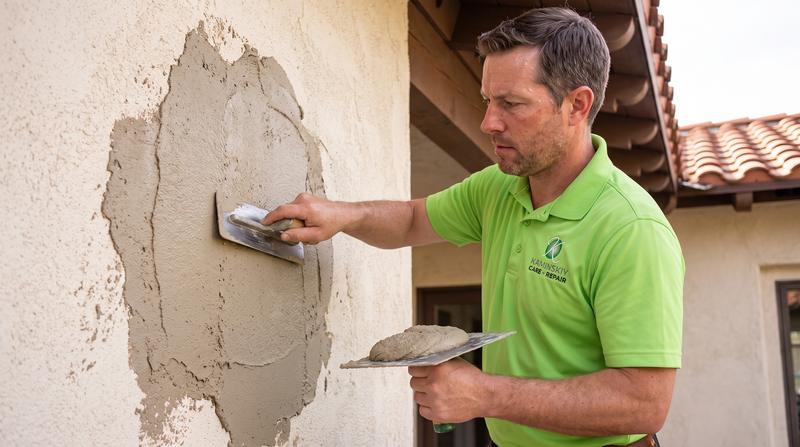
Kaminskiy Care and Repair patches stucco cracks and chips and matches the existing texture so the repair blends in. Hairline cracks are cosmetic; widening or bulging ones deserve a call, and the quote is free either way. We serve Carmel Valley and the surrounding California communities.
Built in a few decades with the same stucco. The same cracks show up on schedule.
Everything in Carmel Valley went up between the early 1980s and the 2010s, nearly all of it stucco over wood frame, nearly all of it in an association with a palette. The west side has forty years of hairlines at the window corners and a marine layer that keeps the stains wet; the east side has younger walls, some of them one-coat systems, with sprinkler damage at the base. We fill the cracks, patch the chips, cut hollow sections back to sound lath and rebuild them in three coats, then match the texture and the approved color and hand you the product name for the form.
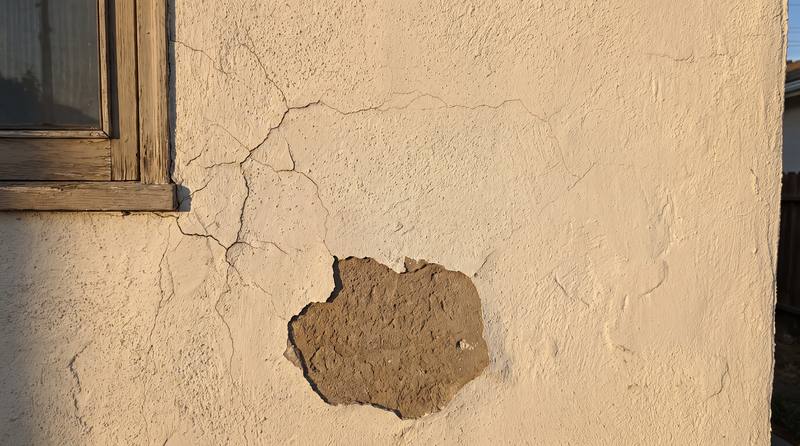
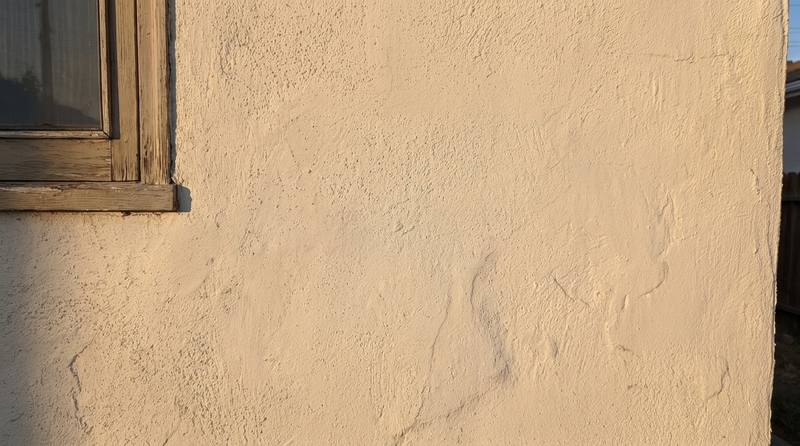 AFTERBEFORE
Each of these is a short scope for a technician who matches the association palette as a matter of habit. Three coats with cure time between them, then the texture and color blended.

Priced and on the calendar during the first call.

A written quote you approve before anyone drives out.

Three coats, each one cured, warranty in writing.
A one-year workmanship warranty, in writing, on every Carmel Valley stucco repair.
The whole community was built in a few decades with the same method, cement plaster on wire lath over building paper on a wood frame, so the same cracks show up at the same age. The frame moves with small earth movement and with the lumber drying, and the plaster opens at the corners of windows and doors where the wall is weakest. The west side adds a marine layer that keeps stains wet; the side yards add a drip line against the base. The wall is doing what stucco does; the crack marks where the house moved.
A crack narrower than a credit card edge at a window or door corner is normal and gets cut, filled and painted. Call about a crack you can slide a coin into, a stair-step crack, a long diagonal, a section that sounds hollow or bulges when you press it, a crumbling base, or a crack that follows a sagging header or the line of the slab. Those are a framing or foundation question, and an engineer looks before we fill anything, because a filled crack hides the movement.
We cut the loose stucco back to sound material, replace the torn paper and the lath, cut out rusted bead and set new. Then a scratch coat, which cures. A brown coat, which cures. A finish coat worked by hand to the texture of the wall around it, colored in the mix or painted to the palette once it has cured. Cement plaster cures by chemistry, not by drying, so each coat keeps its time. A patch is a day of work spread over visits, and the written scope says how many.
Move the drip emitter off the wall and keep the planter soil below the weep screed so the base can drain. Recaulk the joint where the stucco meets a window frame or a door jamb; that line, not the field of the wall, is where most water gets in. Seal the sill caps. Repaint the sun faces before the film chalks through, and walk the house after the first rain to look for new stains. A hairline found in spring is a small patch; a hollow wall found after the winter is a bigger one.
The first neighborhoods, built from 1983 on, three-coat stucco over paper and lath that has had forty years of small earth movement. Hairlines run from the window and door corners, the marine layer off Del Mar keeps the north and west walls damp, and the corner bead and screed have started to rust under the paint. We fill the cracks, cut out the rusted bead, rebuild the corners in three coats and match the finish.
1990s family homes with side yards full of drip lines and planters against the wall. The regular calls are a soft, flaking base where the irrigation reaches, a chipped corner at the trash-can path, a hollow spot under a window and a stained sill. We free the weep screed, rebuild the base to sound lath, cap and seal the sill and blend the patch to the wall.
The newest homes, where the stucco may be a one-coat system over foam-backed lath and the color is often in the finish rather than a paint. It patches differently from the old three coats and the association palettes are exact, so we identify the system first, repair it to match and keep the approved color.
Call 858-330-5590 or text a photo of the crack or the stained base and a wider shot that shows the texture and the color. Most Carmel Valley stucco repairs get a range on the call and a date for the look.
A technician taps for hollow spots, checks the weep screed, the sills and the flashing where the wall meets the roof, and tells you whether the wall is three-coat or a one-coat system. The scope lists what gets cut out, what gets re-lathed, the coats, the match and the price, and names anything an engineer should see first.
Loose stucco out, paper and lath replaced, bead renewed, then scratch, brown and finish coats with cure time between them, the texture worked by hand to match. The visits are set when you approve the scope.
The finish is colored in the mix or painted to the approved color once it has cured, the debris leaves with us, and the one-year workmanship warranty is on the invoice at the price you approved.
California lets a small repair under a set amount be done without a license when it needs no permit and nobody is employed to do it. A stucco patch with new lath, three coats and a color match is past that line and wants a licensed contractor. Kaminskiy Care and Repair holds License #1106209, is bonded and insured, with Kaminskiy-certified, background-checked technicians, and puts every job over the state's written-contract threshold on paper before the wall is opened.
Carmel Valley is inside the City of San Diego, which leaves alone like-for-like maintenance repairs under its cost limit and the cosmetic work, painting included. Filling cracks, patching chips, re-lathing a small section and matching the color are maintenance. A larger in-kind damage repair, which is what replacing the lath and paper over a big stretch of wall amounts to, is the city's no-plan permit with an inspection before the work, and we ask Development Services before a job like that and tell you what it said.
Almost every Carmel Valley neighborhood has an approved palette, and the townhome and condo buildings have a management company that inspects. A patch blended to the existing texture and color needs nothing. Painting a whole wall a new color usually needs the form first, and we give you the product and the color in writing so the form is a short job. The license number goes on the paperwork for an association that asks.
Up the 56 from our office. Your Carmel Valley crew dispatches from our San Diego office on World Trade Drive, twenty minutes east, so most calls are scheduled within days. Call 858-330-5590, text a photo, or send the form.
Can't find your answer? Call 858-330-5590 and ask us anything.
Call 858-330-5590A patch is three coats, scratch, brown and finish, and each one cures before the next goes on, so the job runs over several visits. Cement plaster cures by chemistry and the next coat goes on when the one under it is ready, not before. The written scope tells you how many visits, and the paint or color coat follows once the finish has cured.
Matching is what the finish coat is for. We read the texture on the wall, in Carmel Valley usually a lace or a fine sand finish, work the new coat to it by hand, and color it in the mix or paint it to the approved color. A fresh patch on a wall that has chalked for years can read slightly new until the wall is repainted, and we say so at the look.
Hairlines at the window and door corners are how a 1980s or 1990s three-coat wall on a wood frame ages, and in Carmel Valley they are the regular call; they get cut, filled and painted. Call sooner about a crack you can slide a coin into, a stair-step or long diagonal crack, a hollow or bulging section, a crumbling base, or a crack that follows the slab or a sagging header. Those go to an engineer before we fill them.
No. EIFS and the other synthetic systems are foam board with a thin base coat and mesh, and a repair outside the system's own specification traps water in the wall, so that work goes to the system's certified installer. Some of the newer Pacific Highlands Ranch and Torrey Hills homes carry a one-coat cement system instead, which we do repair; we tell you which is on your wall at the look.
It depends on how much is loose, whether the paper and lath behind it have to be replaced, and how much texture and color work the match takes. Text photos and you get a range on the call; after the look you get a written scope with the coats, the visits and the price before anything is ordered. What you approve is what the invoice says.
Yes. Every Carmel Valley stucco repair carries a one-year workmanship warranty in writing and is done by Kaminskiy-certified, background-checked technicians under California contractor License #1106209, bonded and insured.
Not a patch blended to the existing texture and color; that is maintenance under every palette we have worked with here. Painting the whole wall a new color usually needs the form, and we give you the product and the color in writing so it is a short job to file. The management company can have the license number for its file.
All of Carmel Valley, including Del Mar Highlands, Carmel Del Mar, Torrey Ridge, Carmel Creek, Ocean Air, Pacific Highlands Ranch and Torrey Hills, plus Del Mar, Solana Beach, Rancho Peñasquitos and Sorrento Valley. Call 858-330-5590 to confirm your address.
Send a photo of the wall and the address. We call back with a written price and the visits it takes. Calling is still fastest: 858-330-5590.
Priced on the call, blended to match, warranted in writing.
We answer in under three rings, 24/7.No price games. You get a clear written quote before any work begins, backed by our workmanship warranty.
