 BBBAccredited Business

Kaminskiy Care and Repair patches stucco cracks and chips and matches the existing texture so the repair blends in. Hairline cracks are cosmetic; widening or bulging ones deserve a call, and the quote is free either way. We serve Rancho Bernardo and the surrounding California communities.
Our office is here. Sixty-year-old stucco and the 2008 rebuilds both come up on the Rancho Bernardo list.
Rancho Bernardo has been standing since 1962, and our office on World Trade Drive is inside it. The first stucco in Seven Oaks and Bernardo Greens has had sixty summers of inland sun, so it cracks at the window corners, chips at the garage returns and goes hollow at the base where the sprinklers hit. The homes rebuilt after the 2007 fire are a different wall, often a one-coat system. We know both, and we patch each one in the coats it was built with, texture and color matched.
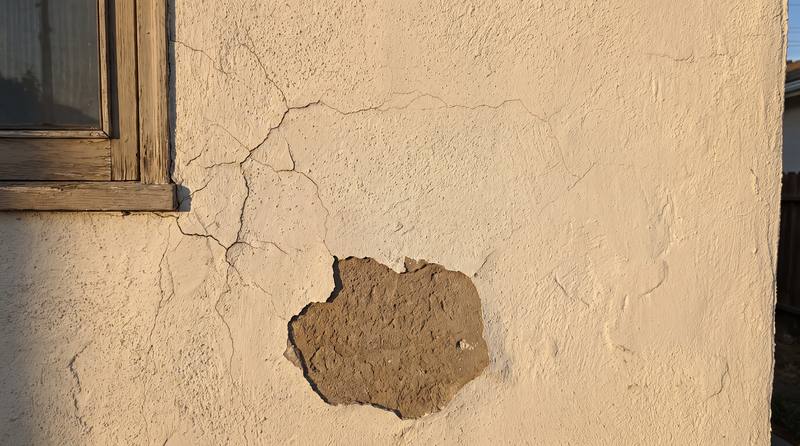
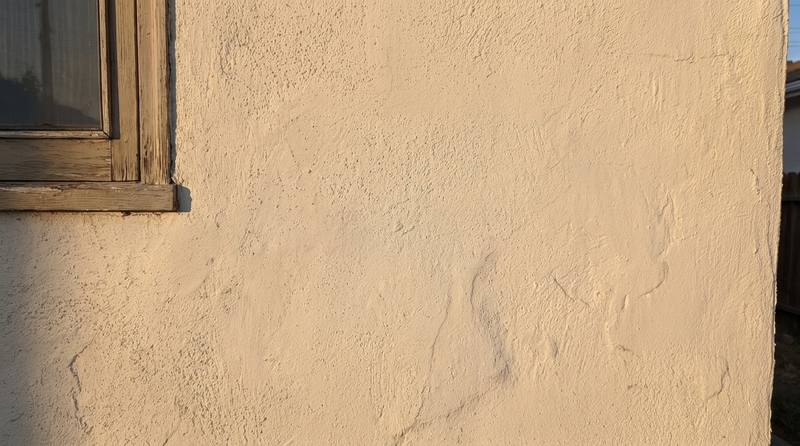 AFTERBEFORE
Every one of these is a repair for a Kaminskiy-certified technician who starts the day minutes away on World Trade Drive. One look, a written scope, and the coats the wall was built with, each cured before the next.

Priced and on the calendar during the first call.

A written quote you approve before anyone drives out.

Three coats, each one cured, warranty in writing.
A one-year workmanship warranty, in writing, on every Rancho Bernardo stucco repair.
Age and heat, on walls that have never had a break. The first stucco here went on in the 1960s and has expanded and shrunk through sixty summers of inland sun, and cement that cycles that long crazes into a fine web and opens at the corners of every window. The sprinklers do the rest, soaking the bottom of the wall every morning until the bond to the lath fails and the patch goes hollow. The post-fire rebuilds have their own pattern: thin coats over foam that crack along the seams.
The fine web across an original Seven Oaks wall is cosmetic, and so is a thin line off a window corner. Seal them before the rain. A crack that takes a coin, a stepped crack running diagonally, a bulge or a section that drums when you tap it is a call. A crack that lines up with the foundation or runs from the corner of a garage header that has sagged is an engineer's look first, and we say so rather than fill it.
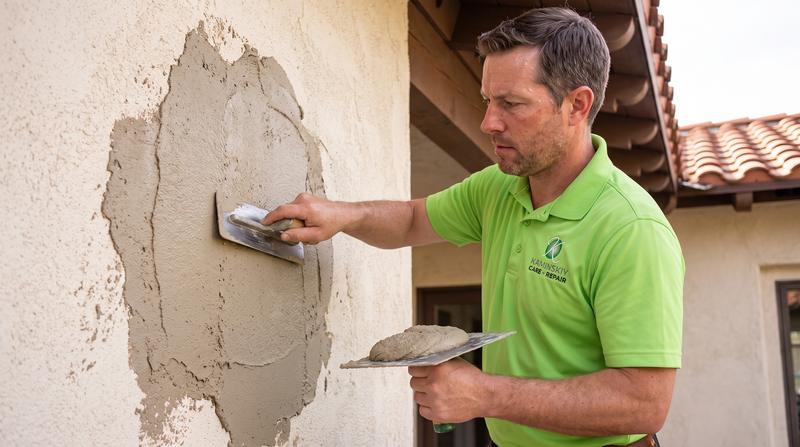
The hollow stucco is cut back to a sound edge and to the lath, torn paper and rusted lath come out and new goes in, and the scratch coat goes on. It cures. The brown coat brings the patch level and cures. The finish coat is troweled to match the texture around it, and the color is blended or the elevation is painted. Each coat has to set before the next, so a patch is a day of labor spread over separate visits. A one-coat wall gets its own base and finish system, with the same honest timeline.
Turn the sprinkler heads away from the house or move to drip along the foundation. Keep the planter soil below the weep screed. Recaulk the window and door joints every few years, and repaint the stucco in the association's color with a breathable masonry paint when the finish starts to chalk. A sixty-year-old wall that is kept sealed and painted will outlast the house; one that is left to drink at the base will not.
The original 1960s and 1970s streets, including the 55-plus communities, with the thickest and oldest stucco in the city. Sixty summers have crazed the finish into a fine web, cracked the sills, and chipped the corners, and the patios and planters built up over the years have buried the base of the wall. We fill the cracks that have moved, re-lath the hollow sections, rebuild the sills and match the old heavy lace texture, and we keep the work quiet and clean for the neighbors.
1980s and 1990s three-coat stucco over paper and lath, now at the age where the sprinklers have found the base, the corner bead has started to rust through, and the hairlines at the window corners have opened enough to take water. We cut the rusted bead out, replace the lath, patch in three coats and match the texture and the association's color.
Younger homes with association styles, and on the canyon rims the houses rebuilt after the 2007 fire, many of them with one-coat stucco over foam. A one-coat wall cracks along the board seams and at the window corners and is patched with its own system, not a three-coat mix. The design rules are exact here, so we match the texture and the approved color, and on the canyon edges we check the fire-zone rules before a large section is rebuilt.
Call 858-330-5590 or text a photo of the crack, the chipped corner and the base of the wall with your hand in the shot for scale. Most Rancho Bernardo stucco repairs get a range on the call and a date for the look, often the same week.
A technician from the office down the street taps the wall for hollow spots, checks the sills, the weep screed and the flashing, and reads the texture. The written scope says what is cut, what is re-lathed, whether it is a three-coat or a one-coat wall, how many visits, and the price.
The loose stucco comes off to sound edges, paper and lath are replaced where they are torn or rusted, the scratch coat goes on, and the brown coat follows once it has cured.
The finish coat is matched to the wall's texture, the color is blended or the elevation painted in the scheme color, the cut-offs and dust leave with us, and the one-year workmanship warranty is on the invoice.
California allows a small repair below a set amount without a license when no permit is needed and no one is employed; a stucco patch with new lath and three coats is above that line and wants a licensed contractor. Kaminskiy Care and Repair is one (License #1106209), bonded and insured, with Kaminskiy-certified, background checked technicians, and jobs over the state's written-contract threshold go on paper before the wall is cut.
Rancho Bernardo is in the City of San Diego, which exempts like-for-like maintenance repairs under a set cost and treats painting as cosmetic, so a sealed crack, a patch, a rebuilt sill or a short run of weep screed needs no permit. A large section of wall cut to the frame and re-lathed is an in-kind damage repair on the city's no-plan permit with an inspection. The very high fire hazard zone was remapped in 2025 and reaches the canyon rims, where a rebuilt wall section can carry its own rule, so we check your address before the scope is written.
Nearly every Rancho Bernardo home is in an association, and most do not need to approve a patch finished in the existing color. A new color, a changed texture or a painted elevation that differs from the scheme sometimes needs the form, and we give you the product, the texture and the color in writing for it. In the 55-plus communities we schedule around the neighbors and keep the dust down.
Our office is in Rancho Bernardo. The San Diego office on World Trade Drive is where the crew starts the day, which is why a Rancho Bernardo call is usually on the calendar within days. Call 858-330-5590, text a photo, or send the form.
Can't find your answer? Call 858-330-5590 and ask us anything.
Call 858-330-5590More than one trip, by design. A three-coat patch is a scratch coat, a brown coat and a finish coat, and each has to cure before the next goes on, so the labor is about a day spread over separate visits with the color last. On a post-fire rebuild with one-coat stucco the system is different but the cure times still apply. Your written scope lists the visits.
Yes. We match the texture first, whether it is the heavy lace on a 1960s Seven Oaks wall, the lighter finish on the 1980s streets or the fine sand on a 4S Ranch home, then blend the color or paint the elevation in the association's scheme. On a wall that has chalked for decades the new patch reads a shade brighter until the wall is painted, and we tell you that at the look.
The fine web across an original Rancho Bernardo wall is sixty years of sun and is cosmetic. Worry about water instead: an open hairline at a window corner lets rain reach the paper behind the stucco, so seal them before the rainy season. A crack wide enough for a coin, a stepped crack or a section that drums when you tap it is a call, and a crack that follows the foundation is an engineer's look first.
No. EIFS is foam board under a thin synthetic coat and only the system's certified installer can repair it without voiding its warranty. Some of the newer and rebuilt homes here are one-coat stucco over foam, which is a cement system we do patch; if your wall dents under a thumb and sounds hollow everywhere, it is likely EIFS, and we say so at the look.
It depends on how much is loose, whether the lath is rusted, and whether the color can be blended or the elevation needs paint. Text photos and you get a range on the call; after the look you get a written scope with the coats, the visits and the price before anything is cut. What you approve is what the invoice says.
Yes. Every Rancho Bernardo stucco repair carries a one-year workmanship warranty in writing and is done by Kaminskiy-certified, background checked technicians under California contractor License #1106209, bonded and insured.
Often, yes. Many of the homes rebuilt on the canyon rims after 2007 have a one-coat stucco system over foam, which is thinner than the three-coat walls on the older streets and cracks along the board seams and at the window corners. It is patched with its own base and finish products, not a three-coat mix, and we check which wall you have at the look and write the scope for that system.
All of Rancho Bernardo, including Seven Oaks, Oaks North, Bernardo Hills, Bernardo Greens, Westwood, Bernardo Heights, High Country and The Trails, plus 4S Ranch, Carmel Mountain Ranch, Sabre Springs, Poway, Rancho Peñasquitos and Escondido. Call 858-330-5590 to confirm your address.
Send a photo of the wall and the address. We call back with a written price and the visits it takes. Calling is still fastest: 858-330-5590.
Priced on the call, blended to match, warranted in writing.
We answer in under three rings, 24/7.No price games. You get a clear written quote before any work begins, backed by our workmanship warranty.
