 BBBAccredited Business

Kaminskiy Care and Repair repairs loose boards, wobbly railings and soft spots so the deck feels solid again, and most repairs take one visit. In North Carolina every deck needs a building permit, whatever its size. We build every repair to pass that inspection. We serve Wake Forest and the surrounding North Carolina communities.
Up Capital Boulevard from our Raleigh office. Porch floors downtown, golf-course decks in Heritage.
Wake Forest has two kinds of deck. Downtown and in Glen Royall the porch is the deck: a century-old pine floor on brick piers, soft at the steps and the column bases. In Heritage, Hasentree and Traditions the decks hang off 2000s houses over golf-course lots, twenty years into full sun. We rebuild the porch floor board for board to the old width, replace split boards and treads on the newer decks, rebolt the rails, reflash the ledger, and stain and seal what stays.
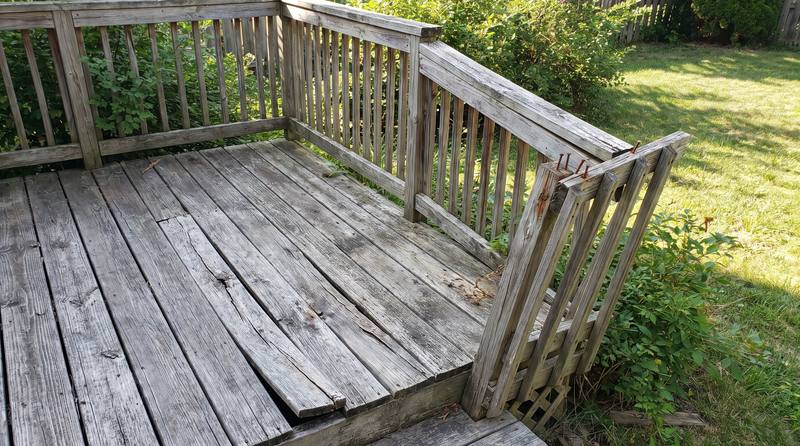
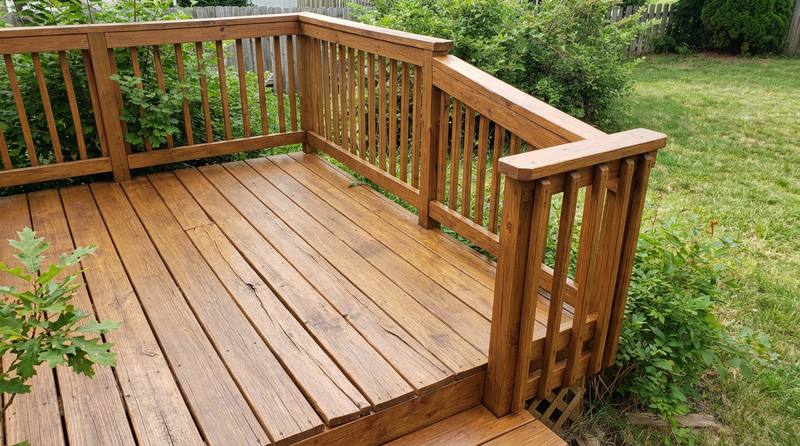 AFTERBEFORE
All of it is routine for a Kaminskiy-certified technician who comes up Capital Boulevard from our Raleigh office. One look, one written scope, one schedule.

Priced and on the calendar during the first call.

A written quote you approve before anyone drives out.

One crew, the whole list, warranty in writing.
A one-year workmanship warranty, in writing, on every Wake Forest deck and balcony repair.
Humidity and age. The Piedmont rain comes in every season, the summer air never lets a board dry, and the oaks downtown keep the porch floors shaded and damp into May. A pine board checks in the sun, the check fills with rain, and the wood under the paint or the stain softens from the top down while it still looks fine. Porch floors fail at the steps and the column bases; decks fail at the stairs, the rail posts and the ledger. Caught early it is boards and hardware; caught late it is framing and a permit.
Lean on the rail. If it moves, the connection is the problem, not the screws. On a new deck that is a post through-bolted to the rim with blocking behind it and rusted lags replaced with hot-dipped or stainless bolts; on an old porch it is a post base that has rotted away from the floor and a cap that no longer ties the posts together. We rebuild the connection to hold a grown adult, and on a porch we turn the new piece to match.
North Carolina exempts the decking, pickets, railings and stair treads of a deck, porch or balcony from a permit in a single-family home under the state's cost cap, and the state fire marshal's guidance adds that the exemption never covers the structure. Joists, girders, the ledger, posts, piers and footings need a permit from Wake Forest Inspections no matter the cost, and a porch beam or a balcony that has moved is an engineer's call first. In the historic district the exterior work needs a Certificate of Appropriateness, and an in-kind repair is the minor work staff can approve.
Keep the gutters clean over a porch, sweep the gaps on a deck, keep mulch and sprinklers off the post bases, and reseal before the wood goes gray, every two or three years in full sun. Each spring push a screwdriver into the step ends, the post bases and the boards at the house wall. A soft board in April is a short visit; a soft girder in August is a permit and a project.
The porches of the college-town houses near Main Street and the mill houses of Glen Royall are the oldest decks in town: pine floors laid tight on brick piers, turned or box posts, a railing cap that faces the weather, all a century old under the oaks. Floors go soft at the steps, posts rot at the base, the cap splits. We splice new wood into old, rebuild the floor in matching widths and the post to the same turning, and in the historic district write the scope as an in-kind repair so staff can sign it.
Planned communities from the 2000s with decks over golf-course lots, screened porches and association schemes. The decks are tall, in full sun and wind, and twenty years old: boards split, treads soften, the stair stringer pulls off the rim, the rail post loosens where the bolt rusted, and the ledger holds water where the flashing stopped short. We fix the structure first, replace the boards and treads, rebolt the rails and put the stain color in writing for the form.
Family streets from the 1990s on, with pine decks built with the house, pool yards and a railing post standing in the sprinkler's reach. The boards nearest the house and the bottom step go first, the post base rots in the wet, the gate stops latching. We replace the soft boards and treads, reset the post on a standoff base, rehang the gate and seal the end grain.
Call 919-585-1114 or text a photo of the porch floor at the step, the rail post and the stairs. Most repairs get a range on the call and a date for the look.
A technician probes the floor, the post bases, the treads and the ledger, checks every rail connection, and writes the scope: what is replaced, what is spliced, the hardware, the flashing, the stain, and whether a permit or the historic district is involved.
Structure first, then the floor or the boards and treads, then posts and rails, then the clean, sand, stain or paint when the new wood is dry enough to take it. Matching-width porch boards and rail parts are ordered before we leave.
The old boards leave with us. The one-year workmanship warranty is on the invoice, with the stain schedule written beside it.
North Carolina wants a general contractor license above a project-cost threshold, and a Wake Forest deck or porch repair, a floor rebuilt, boards and treads swapped, rails rebolted, a joist sistered, stays under it, so a handyman company may be paid for the work. A whole new deck can cross the line, and we say so and name a licensed general contractor. Lighting on the porch or deck is a licensed electrician's job at any price. Kaminskiy Care and Repair is bonded and insured, with Kaminskiy-certified, background-checked technicians.
Under the state statute, replacing the decking, pickets, railings and stair treads of a porch or exterior deck in a single-family home needs no permit under the state's cost cap, and the state fire marshal reads that as boards, guards and treads only, never the frame. The Town of Wake Forest Inspections Department enforces that code and links a deck and porch guide rather than its own exempt list, so a joist, girder, ledger, post or footing is where we ask the department first and pull the permit when it says so.
Any exterior work on a property in the local historic district or on a local landmark needs a Certificate of Appropriateness, and a porch floor or post replaced in kind with matching material is a minor work that staff can approve; a changed rail design or a composite floor on an old porch is the commission's call, and we tell you before we start. In Heritage, Hasentree and Traditions the association scheme applies: boards and the same stain color need no form, a new rail style or color usually does, and we put the product and color in writing.
Up Capital Boulevard from our office. Your Wake Forest crew dispatches from our Raleigh office on Centerview Drive, so a call from Glen Royall or Hasentree is usually on the calendar within days. Call 919-585-1114, text a photo, or send the form.
Can't find your answer? Call 919-585-1114 and ask us anything.
Call 919-585-1114We answer in under three rings, price most repairs on the call from a photo and usually have a technician from our Raleigh office at the house within days, up Capital Boulevard or US-1. Boards, a tread and a rail post are usually one visit; a porch floor in matching widths is scoped first, and stain waits for dry wood.
Repair, especially on an old porch, where the original pine is better than anything at the store. If the piers, beams and joists are sound, a spliced floor, a rebuilt post and a new cap bring a Glen Royall porch back for decades, and new boards, stairs and rails do the same for a Heritage deck. When the frame or the ledger is gone we show you, say so in writing, and name a licensed general contractor if a replacement crosses the state's cost line.
Not for boards, pickets, railings or stair treads in a single-family home under the state's cost cap; the statute exempts them by name. Joists, girders, the ledger, posts, piers and footings need a permit from Wake Forest Inspections no matter the cost, and in the historic district any exterior work needs a Certificate of Appropriateness, which for an in-kind repair is a staff sign-off. We tell you at the look and handle the paperwork.
It depends on how much wood comes out and the match it has to make. A tread and a rail post in Heritage is a short visit; a mill-house porch floor in matching-width boards is not. Text a photo and you get a range on the call; after the look you get a written scope with the wood, hardware, flashing and finish priced before anything is ordered.
Yes. Our work carries a one-year workmanship warranty in writing, done by Kaminskiy-certified, background checked technicians, and the stain or paint carries its maker's schedule, which we write on the invoice.
Yes, as an in-kind repair: the same pine, the same width, the same post turning, which the town treats as a minor work staff can approve rather than a commission hearing. If the right fix changes the material or the rail design, we tell you first so the commission sees it before we start.
Yes. The floor at the screen line takes blown rain every storm and goes dark first. We replace the dark boards, reseal the end grain, reset the bottom rail of the screen frame off the floor so water drains, and patch or rescreen the panels while we are there.
All of Wake Forest from our Raleigh office: downtown, the historic district and Glen Royall, Heritage, Hasentree and Traditions to the north and east, Wakefield Plantation and Holding Village on the south side, plus Rolesville, Youngsville and north Raleigh. Call 919-585-1114 to confirm your address.
Tell us what the deck or balcony is doing. We'll call you back with a price and a time. Calling is still the fastest way: 919-585-1114.
Priced on the call, rebuilt solid, warranted in writing.
We answer in under three rings, 24/7.No price games. You get a clear written quote before any work begins, backed by our workmanship warranty.
