 BBBAccredited Business

Kaminskiy Care and Repair provides commercial exterior repair for commercial and multi-unit properties: siding, fascia, trim and soffits, cement stucco, commercial roof repair on pitched roofs, gutter cleaning on a schedule with downspout repair, and the wood rot that leaks cause, from beam ends to decks, balconies and elevated walkways. One crew and one contact cover the building from the roof edge to the ground. Re-roofing, flat membrane roofs, EIFS, pest treatment and engineering go to their licensed specialists. Exterior work is one branch of our commercial handyman and repair services.
Cladding is the wall's raincoat. On commercial sites it also takes carts, bumpers and sprinklers. We replace damaged boards and panels through siding, fascia, trim and soffit repair, rebuild broken corners and hollow sections through commercial stucco repair, and close the eaves on the same visit, with soffit vents and trim matched and painted so the wall reads as one surface.
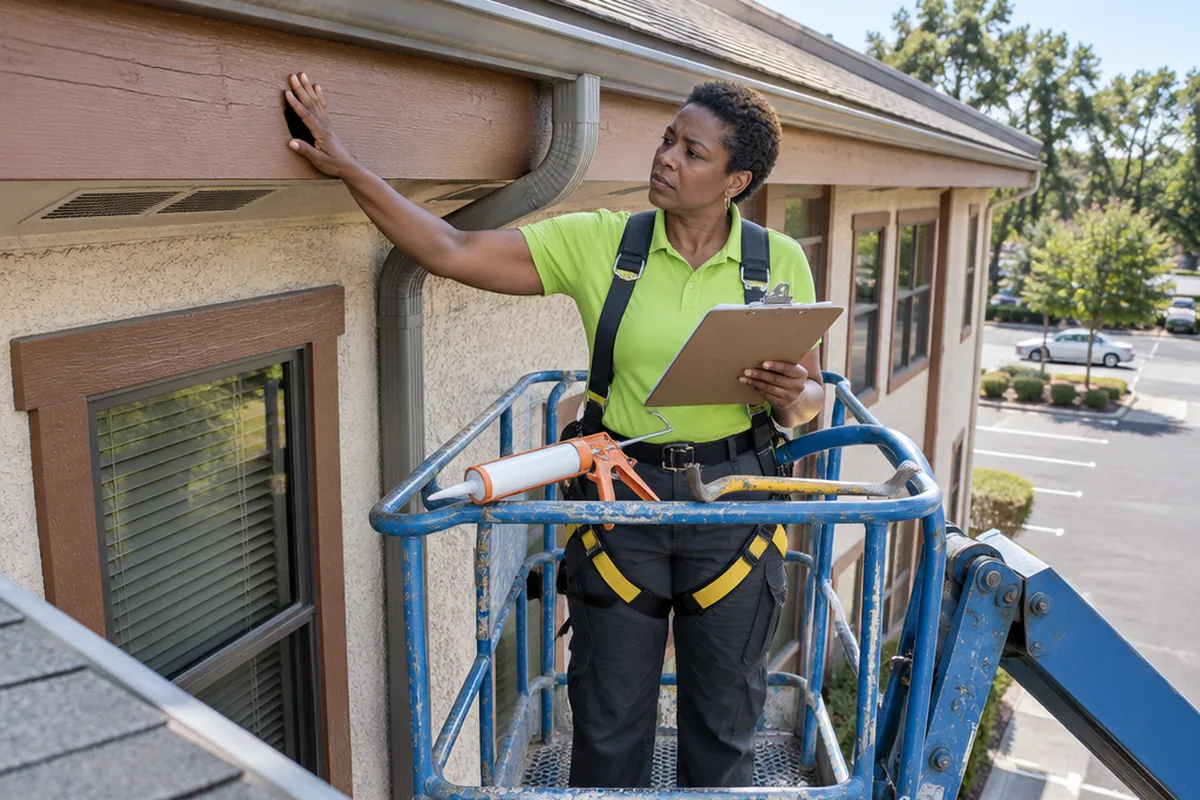
The eave is where roof, wall and gutter meet, and where small failures stack up. Commercial roof repair here means shingles, tiles and flashing on pitched roofs. Multi-building properties do best with gutter cleaning on a set schedule, and crushed or leaking parts are fixed as downspout repair on that same page. Dry fascia and dry foundations are the result.
Decay begins where water lands and stays: beam ends, post feet, deck-to-wall joints and the ledgers of open corridors. A technician probes and meters the wood, cuts back to sound material and rebuilds. Framing members are dry rot and termite damage repair, decks, balconies and wood corridors are deck, balcony and elevated walkway repair, and California owners holding an inspection report start at SB 721 balcony inspection and repair.
Send your exterior punch list, a pest or inspection report, or photos from a property walk. Items do not need to be sorted by trade. We do that.
A technician walks each side of each building with you, from the roof edge down, and adds what the list missed. Heights, access and tenant hours are noted for each item.
The written scope groups items by building and puts them in sequence: leaks and drainage first, then decayed wood, cladding and trim, then prep for paint. Specialty-trade items are flagged.
Crews work elevation by elevation with entrances kept open. At the end you have before and after photos by building, ready for the owner, the board or the painter's bid walk.
The International Property Maintenance Code, adopted by many cities as their standard for existing buildings, says exterior walls shall be free from holes, breaks and loose or rotting materials, and kept weatherproof and properly surface coated where needed to prevent deterioration (section 304.6). Most notices a property receives about its exterior trace back to wording like this. Your local official enforces the adopted version.
Section 304.2 of that code requires exterior wood, other than decay-resistant species, to be protected from the elements by paint or another covering, peeling and flaking paint to be corrected, and siding and masonry joints to be kept weather resistant and watertight. Failed paint on a beam end is a maintenance item this year and a framing repair a few seasons later.
California Civil Code section 1941.1 lists effective waterproofing and weather protection of roof and exterior walls among the conditions a rental dwelling needs to be tenantable. For apartment owners that turns a leaking wall or roof edge from a maintenance preference into a legal duty. Other states have their own versions. We hold California License #1106209.
Sources for the rules on this page: 2021 International Property Maintenance Code, sections 304.2 and 304.6; California Civil Code section 1941.1(a)(1); Florida Statutes section 489.105(3)(e); USDA Forest Products Laboratory, Decay of Wood and Wood-Based Products Above Ground in Buildings (Carll and Highley, 1999).
Seven pages, each with its own scope: four for surfaces, roof edge and drainage, three for decayed wood. Go straight to the one your list needs.
Before a repaint, the building needs sound surfaces. We walk every elevation and repair what paint cannot fix: split siding and trim, soft fascia and beam ends, cracked or hollow stucco, open joints, loose soffits and leaking gutter seams. Each repair is primed and ready, so the painter's bid covers coating, not carpentry and patching.
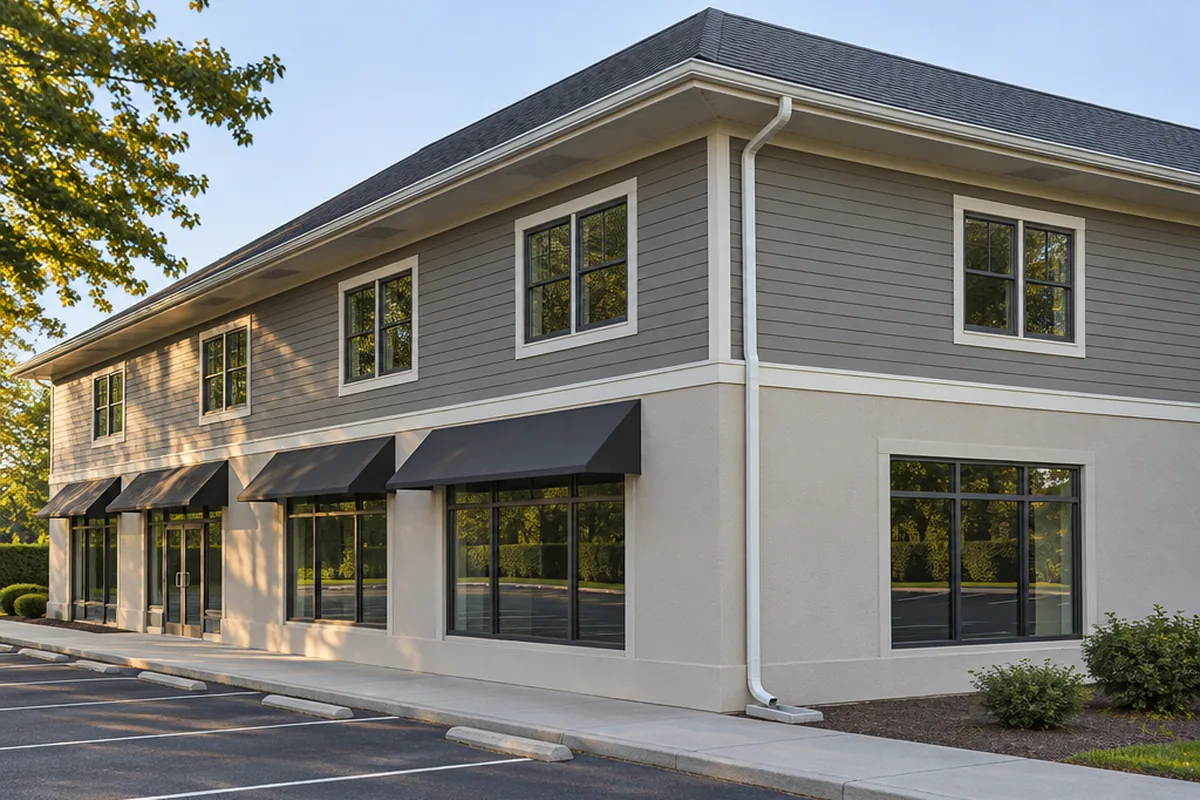
Each sign points to one of the pages in this category. Take a photo, note the building and side, and send the set. We sort the list, tell you what is ours and price it in order. Where the paint itself is the problem, see commercial building exterior painting.

Send your exterior list or walk photos, with building count and stories.

We walk the elevations and return a sequenced written scope and price by building.

Repairs are completed in order and documented with photos before and after.
The work is backed in writing by our workmanship warranty and done by a Kaminskiy-certified, background checked technician.
Water runs downhill, so repairs should too. Fix the roof edge and flashing before the soffit below it, the gutter before the fascia it stained, the wall before the trim that covers its joints. A list done in the order items were reported often means repairing the same spot twice.
Every decayed board has a leak above it or beside it. Fascia rots behind an overflowing gutter, sheathing behind cracked siding or a buried stucco screed, rafter tails under a leaking roof edge. Ask any vendor to name the water source for each rot repair and say how it will be closed. Replacing the wood alone only resets the timer.
Siding, fascia, trim and soffit repair covers boards, panels, edges and the underside of eaves. Stucco covers cement plaster walls. Roof repair covers small fixes on pitched roofs, not flat membranes. The gutter page covers scheduled cleaning and downspout repair. Dry rot covers framing members and is the starting page for wood rot. The deck, balcony and walkway page covers the wood structures people walk on, and the SB 721 page covers California balcony reports.
Exterior damage repeats. The south and west sides weather fastest, loading sides take impact and the same roof detail leaks on every building of a design. We scope the first buildings in detail, show you the pattern and help you phase the rest by priority across budget years, keeping one format for every report.
Can't find your answer? Call 855-695-1195 and ask us anything.
Call 855-695-1195Most of it. We repair siding, fascia, trim, soffits, cement stucco, pitched-roof details, gutters, downspouts, decks, balconies and decayed wood with our own technicians. Items that belong to a roofer, a glazier, an EIFS installer, a pest control company or an engineer are flagged in the scope so you can assign them.
Before. Repairs change the surface, and new wood and stucco need primer and cure time. We plan the repair round to finish ahead of the painter and hand over a photo list of what was replaced, which helps the painter price accurately.
In practice, none. Both mean wood decayed by a fungus that grew while the wood was wet. Dry rot is the common name for the brown, crumbly result once it dries out. The repair is the same either way: remove the decayed wood, replace it and stop the water.
We repair the wood termites damaged. Inspection and treatment are done by a licensed pest control company, and treatment comes before our rebuild. We can work directly from the pest company's report and return photos of each repaired item.
Only on pitched roofs. Our roof work is small repairs to shingles, tiles and flashing. Flat membrane systems and re-roofing belong to a roofing contractor, and in Florida all roof repair is done by a licensed roofing contractor.
By building and by item, in writing, after walking the property. You can approve the whole scope or phase it. Height, access equipment, matching materials, hidden decay and the number of return visits for stucco cure are the main things that move the price.
Yes. Exterior work is planned by elevation with tenant hours in mind. Entrances stay open, areas under ladders and lifts are coned off, and noisy cutting is kept to agreed hours. Residents and tenants get notice of dates through you.
Before and after photos of each repair labeled by building and elevation, plus notes on anything referred to another trade. Managers use them for owner reports, board packets, insurance questions and the following year's budget.
Yes. Wood-framed decks, balconies and elevated walkways are repaired from the framing up, in phases that keep residents' doors reachable. In California, balconies covered by an SB 721 or SB 326 inspection report are repaired from that report, and the inspection itself comes from a separate qualified inspector.
Photos, a punch list, a pest report or an inspection notice all work. Add the number of buildings and stories. We reply with a plan to walk the property. Or call 855-695-1195.
One walk, one sequenced scope, one crew from the roof edge to the ground.
We answer in under three rings, 24/7.No price games. You get a clear written quote before any work begins, backed by our workmanship warranty.
