
 BBBAccredited Business

Kaminskiy Care and Repair is the repair crew for commercial fence and gates on commercial and multi-unit property. One written scope covers fence repair and replacement, commercial gate repair from hinges to drive gate hardware, pool gate corrections, trash enclosures, railings, stairs and decks. Work is set around tenants and haulers and closed with photos. Gate operators and their sensors belong to a licensed gate operator contractor, block walls to a mason, and boundary questions to a surveyor. Start with fence repair and replacement. Fence and gate work is one trade inside our commercial handyman services.
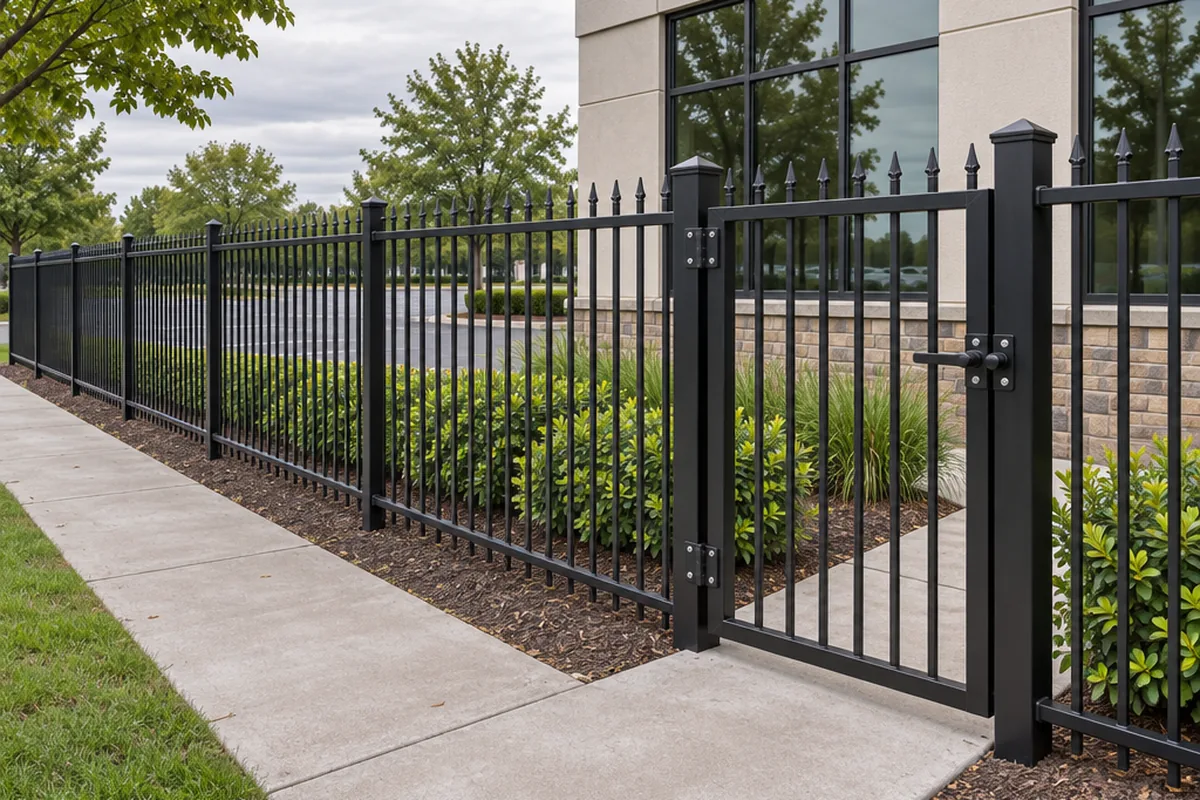
A struck chain link bay, a wood run with snapped rails or a vinyl panel blown out by wind is ordinary repair: we fix what stands and match the material. A run that has reached its end beside a neighbor is replaced in kind, with notice and height rules of its own. Slats, windscreen and lattice go onto fence you already have. All three sit on the fence repair and replacement page.
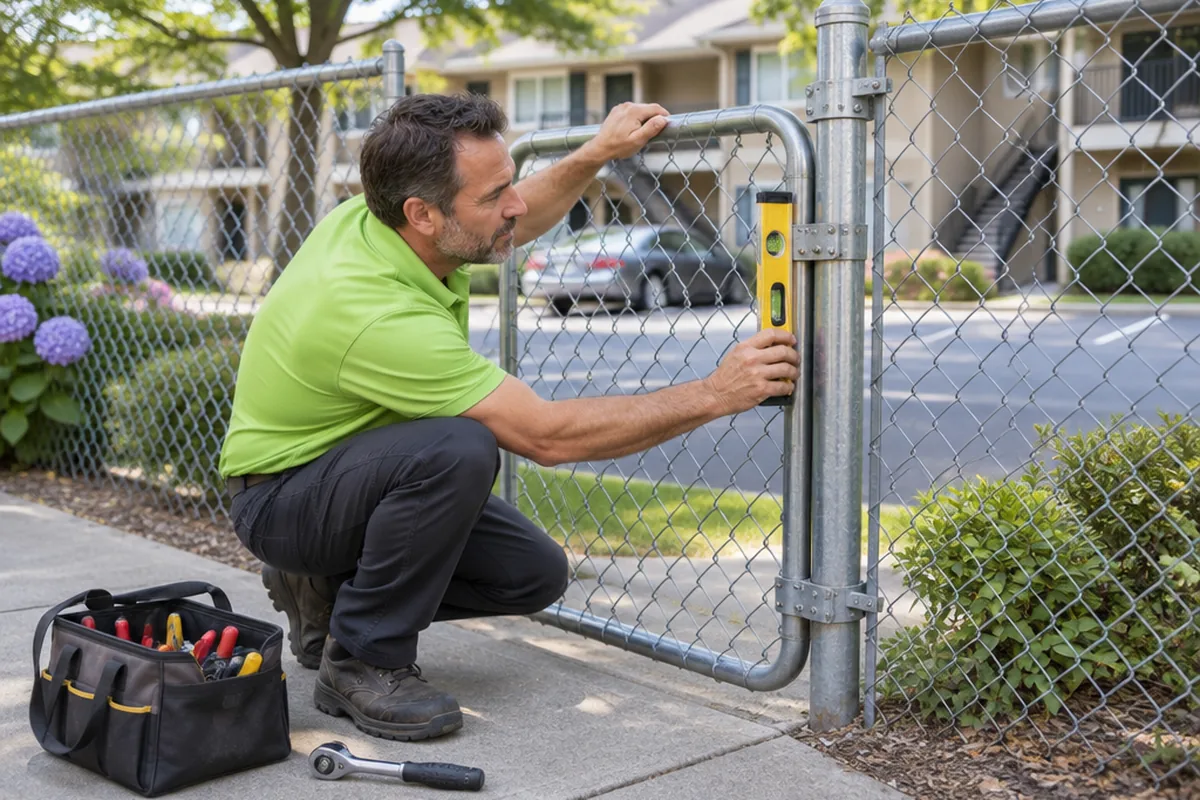
A walk gate that sags, a sliding gate that grinds and a latch that locks people in are all commercial gate repair, motors excepted: a licensed gate operator contractor services the opener and its sensors. A pool gate has a barrier code behind it, so it gets the pool gate page. The wide gates on a trash yard take a hauler's abuse and have a dumpster enclosure page to themselves.
Loose guardrails and handrails anywhere on the property, and the stairs they serve, indoors or out, are railing and stair repair. Wood decks, balconies and elevated walkways, clubhouse and pool decks among them, sit with the exterior pages as deck, balcony and elevated walkway repair, because framing and waterproofing decide that repair. California apartment owners also have SB 721 balcony inspection and repair to plan for.
Send the list you already keep, or ask for a perimeter walk. We sort every item by type, fence, gate, enclosure, railing, stair or deck, and flag the ones that belong to a licensed trade.
The written scope carries a price beside each line. Approve the full sheet or only the lines that cannot wait until the next budget.
Entrances stay usable for residents, the trash yard is clear on pickup day, and loud post setting stays inside the hours the property allows.
Every line gets a before photo, an after photo and a note of what was replaced. The set goes to your contact for the work order file.
The International Swimming Pool and Spa Code, Section 305, is the model code many jurisdictions adopt for pool barriers. It asks for a barrier at least 48 inches high and for pedestrian gates that open away from the water, close by themselves and latch by themselves. Your health or building department decides what your pool needs. We correct what an inspection wrote up and never promise a result.
The International Building Code, also a model code, puts required guards at not less than 42 inches (Section 1015.3) and handrails between 34 and 38 inches above the stair nosings (Section 1014.2). How those numbers apply to an older railing is the local official's decision. We repair what is there and tell you when a rail measures short.
Section 3110 of the same building code sends automated vehicle gates to ASTM F2200 for the gate itself and to UL 325 for the opener. That is the reason the powered side belongs to a licensed gate operator contractor. Our part is the mechanical hardware that lets the gate roll or swing without binding.
Sources for the rules on this page: 2021 International Swimming Pool and Spa Code, Sections 305.2.1 and 305.3; 2021 International Building Code, Sections 1015.3 and 1014.2; 2021 International Building Code, Section 3110; 2021 International Building Code, Section 105.2, Building item 2.
Pick the page that matches the problem. Each says what we fix, what goes to a licensed trade and what you get for the file.
Most managers call about one gate and have six more items they have stopped seeing. On a perimeter walk a technician swings and latches every gate, pushes on posts and rails, looks over the enclosure hinges and the stair treads, notes where privacy slats or windscreen would close off a view, and writes it all up by location. You choose what gets done now and what waits.
Each line belongs to one of the pages above. Send the whole list at once: we sort it, price it by item and mark the lines that need a licensed trade instead of us.

Send the list or ask for a perimeter walk, and tell us the quiet hours and pickup days.

Approve the written scope line by line, with licensed-trade items marked so nothing gets skipped.

We work around tenants and haulers, then send before and after photos for every item.
The work is backed in writing by our workmanship warranty and done by a Kaminskiy-certified, background checked technician.
Three questions sort most perimeter items. Is the material still sound, so a post, rail or hinge repair will hold? Has the whole run or gate reached its end, so replacement in kind is the honest answer? Or is the part powered, masonry or structural, which makes it another trade's work? A vendor who answers all three in writing saves you a second site visit from someone else.
A fence stands still. A gate moves every time someone uses it, and its whole weight hangs from one post. Hinges wear, the latch side drops, the latch stops meeting its catch, and people begin propping the gate open. Most gate calls trace back to the hinge post or to a frame gone out of square, not to the latch everyone blames.
After a vehicle strike, a pool inspection or a resident's fall, the first request is always the record. Dated photos of the condition found, a description of what was replaced and photos of the finished repair answer the insurer, the inspector and the board. We produce that set on every job in this category, because outdoor repairs are the ones people ask about later.
Perimeter work touches several licenses. Powered gate equipment goes to a licensed gate operator contractor, since the opener and its sensors are safety devices. Masonry walls and pilasters are a mason's. A fence line in dispute needs a land surveyor, and a deck or stair with doubtful framing needs an engineer. Naming the trade in the scope lets you book it before our crew arrives.
A new fence line across a large site, engineered security fence and automated gate systems are projects for a fence contractor and a licensed gate operator contractor. Most of what a manager's list holds is smaller and more scattered: a struck bay, a run past saving, a gate that will not latch, a loose rail, a cracked tread. That is repair work, and it reads cleaner when one crew scopes the whole perimeter and names the specialist for whatever falls outside it.
Each page owns one subject and carries its neighbors as sections. Fence repair carries run replacement and privacy screening. Gate repair carries drive gate hardware, latches and exit hardware. Railing repair carries exterior and interior stairs. Pool gates and dumpster enclosures stand alone, because a barrier code or a hauler shapes the job. Decks and elevated walkways live with the exterior pages. Choose by the thing that is broken, not by the name of a trade.
Can't find your answer? Call 855-695-1195 and ask us anything.
Call 855-695-1195Repair and in-kind replacement of wood, chain link, vinyl and ornamental fence, privacy slats and screens, commercial gate repair for walk, swing and drive gates, latches and exit hardware on gates, pool gate corrections, trash enclosure gates, railings and stairs. Decks and elevated walkways are handled with our exterior services. Powered gate equipment, masonry and surveys go to licensed specialists.
It depends on the job. A long new fence line, engineered security fence or an automated gate system is a project for a fence contractor or a licensed gate operator contractor. Repairs, a failed run replaced in kind, gate hardware, pool gate corrections, enclosures, railings and stairs are repair work, which is what we do, on a single written scope.
No. The opener, loops, photo eyes and safety edges belong to a licensed gate operator contractor. We service the mechanical parts of the same gate, such as rollers, wheels, track, hinges and catch posts, and we coordinate with that contractor when a gate needs both.
Yes. Send one list per property or one combined sheet. We scope each site separately, keep a single point of contact across all of them and return photos sorted by property and item, which makes it simple to bill back or report to each owner.
We do not make that promise, because the health or building department decides. We correct the items an inspection wrote up, such as a gate that does not close or latch by itself, and document the result with photos and measurements for the inspector to review.
Material, access and count. A steel post in concrete takes more to reset than a wood rail takes to replace, a gate in a busy drive needs traffic control and off-hours work, and a long list done in one mobilization prices lower per item than single calls. Each line is priced in writing before work is scheduled.
Often not for a repair in kind, but the answer is local. The International Building Code, the model many places adopt, exempts fences not over 7 feet high from a building permit, while cities add their own zoning height limits and pool barrier rules. We say when a scope looks like permit work, and the local official decides.
Give us the pickup days, the gate hours and any quiet hours in the lease or the community rules. Enclosure work is set between pickups, gate work keeps one leaf or one entrance usable, and post setting is kept to the hours the property allows.
Send the property address, your list or a few photos, and the days the hauler and the landscapers are on site. We answer with a written scope by line item. To go over the perimeter list by phone, call 855-695-1195.
One written scope. Work set around tenants and haulers. Photos for every item.
We answer in under three rings, 24/7.No price games. You get a clear written quote before any work begins, backed by our workmanship warranty.
