 BBBAccredited Business

Kaminskiy Care and Repair patches stucco cracks and chips and matches the existing texture so the repair blends in. Hairline cracks are cosmetic; widening or bulging ones deserve a call, and the quote is free either way. We serve Glendale and the surrounding California communities. Wood, fiber cement, T1-11 and vinyl siding, fascia and trim have their own page: siding repair in Glendale.
The office is on Brand Boulevard. Spanish stucco, heat cracks and Santa Ana dust fill the Glendale list.
Glendale stucco is the 1920s Spanish house in Rossmoyne or Adams Hill with a hand-troweled finish nobody has matched in fifty years, the 1950s ranch in Sparr Heights with a dash coat baking on the south wall, and the association home in Oakmont with a hairline at every window corner. We cut and fill the cracks, patch the chips, rebuild a hollow section to sound lath in three coats, and pull the texture and the color from the wall beside it. Parapet caps, sills and the weep screed are on the same scope.
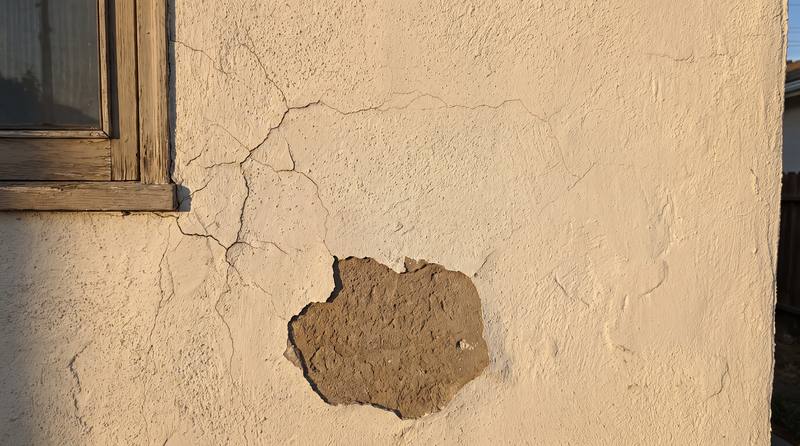
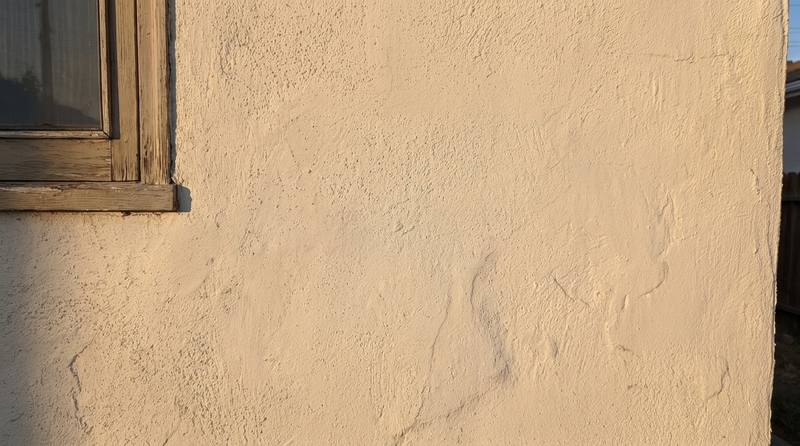 AFTERBEFORE
Every one of these is a repair for a Kaminskiy-certified technician who starts the day on Brand Boulevard. The look is quick and the scope is written; the patch is three coats, each one cured before the next.

Priced and on the calendar during the first call.

A written quote you approve before anyone drives out.

Three coats, each one cured, warranty in writing.
A one-year workmanship warranty, in writing, on every Glendale stucco repair.
Heat, wind and age. Valley summers run about ten degrees hotter than the coast, so a south or west wall expands and shrinks every day from June to October and the hairlines at the window corners are the wall working. The Santa Anas come through in the fall, drive dust into every open crack and dry the finish further. Half the housing is seventy to a hundred years old, so the paper and lath behind the stucco have had decades for water to find them at a split cap or a sprinklered base. Small cracks, steady, cheapest the year they show.
A hairline at a window corner or along a control line is the stucco moving with the weather and gets cut, filled and sealed. Call about a crack wide enough to take a coin, a crack that has grown since the last repaint, a wall that sounds hollow under a knuckle over a wide area, a rust streak from a corner bead, or a stair-step crack along a garden wall. If the crack comes down from a header that has dropped or follows the foundation, an engineer looks before we patch anything.
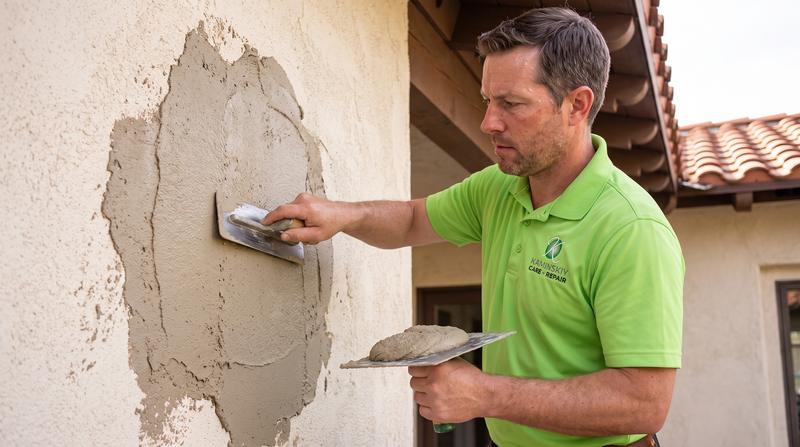
Cut the failed stucco back to sound material, replace the torn paper and the rusted lath, and apply the scratch coat. Let it cure. Float the brown coat flat with the wall around it. Let it cure. Then the finish coat, troweled, dashed or floated to the texture of the wall and tinted or painted to the house. Three coats and three cures mean about a day of work spread across visits; a patch that is finished in one afternoon shrinks, cracks and shows by the next summer.
Aim the sprinklers at the lawn, keep the planter soil below the weep screed, and keep paint or a fog coat on the south and west walls. Caulk the window and door perimeters before summer, have the parapet caps checked every few years, and after the Santa Anas walk the house and look at the corners. In a historic district, keeping the original finish in good repair is also what keeps the street face as the district expects.
Spanish, Tudor and Craftsman homes from the 1920s to the 1950s, many in historic districts, with hand-troweled or heavy-textured stucco, arched openings and parapet caps. The cracks fan from the window corners, the caps let water into the wall, and the old patches sit flat against a textured surface. We cut back to sound lath, rebuild in three coats and copy the trowel pattern from the wall beside the patch, because a matching repair in a historic district needs no review and a changed finish might.
Slope lots in the very high fire hazard zone with 1950s to 1970s homes whose frames move a little each year. The crack over the French doors or at the corner of the big window returns through every coat of paint, canyon shade keeps the north wall and the base damp, and the hillside drains past the house. We cut and fill the frame cracks with a repair that can move, re-lath the damp base, and measure anything that keeps growing so an engineer can look before we patch it.
Newer and larger homes up north with association color schemes and a hairline at every window corner from the first few years of settling, and condominium buildings downtown with stucco on the balcony walls and walkways. The work is cut, fill and refinish to the approved color with the materials in writing for the form, and on the condo buildings the stucco items a balcony report flags, scoped in writing for the board.
Call 747-298-8227 or text a close photo of the crack or the hollow spot and one of the whole wall. You get a range on the call and a date for the look; the crew starts the day on Brand Boulevard.
The technician knocks along the wall for hollow spots, gauges the cracks, checks the caps, the sills, the weep screed and where the water goes, and writes the scope: what gets cut and filled, what gets re-lathed, how the texture and color will be matched, and how many visits the coats need. Nothing is cut until the price is on that scope.
The bad stucco comes off to sound lath, new paper and lath go in, and the scratch coat goes on and cures. The brown coat is floated level with the wall on the next visit and cures in its turn.
The finish coat is worked to the texture of the wall beside it and tinted or painted to the house. We haul the debris, and the invoice shows the price you approved with the one-year workmanship warranty on it.
California lets anyone take a repair under a set small amount without a license, as long as it needs no permit and nobody is employed to do it; a stucco patch with new lath and three visits is past that line and wants a licensed contractor. Kaminskiy Care and Repair holds a California contractor license (License #1106209), carries the insurance, sends Kaminskiy-certified, background checked technicians, and puts every job over the state's written-contract threshold on paper before it starts.
Glendale keeps its own Building and Safety Code, which adopts the California codes with the city's amendments and keeps the state's list of work that needs no permit: an ordinary repair to a structure needs no application, and painting and similar finish work is exempt. Cutting and filling cracks, patching, matching texture and color, resetting a cap and replacing a small area of lath are that kind of work. Stripping and re-lathing a large area of wall, or any repair that reaches a structural member, is where we check at the counter on Broadway before we quote.
In a historic district a change to the street face gets design review; a patch that copies the existing texture and color does not, which is why we match rather than refinish. The very high fire hazard zone grew by about four fifths on the 2025 maps; stucco is a noncombustible finish and a patch changes nothing about that, but a vent or door we touch on the same wall has a standard to meet. Downtown, the condominium associations carry California's balcony inspection law, and the stucco items the report flags on balcony walls are ours to scope in writing for the board. Oakmont and a few hillside associations rarely need to see a matching patch.
Our office is on Brand Boulevard. The Glendale crew starts the day at 201 North Brand, which is why a Glendale call is usually on the calendar within days and a technician can look this week. Call 747-298-8227, text a photo, or send the form, and we answer in under three rings.
Can't find your answer? Call 747-298-8227 and ask us anything.
Call 747-298-8227Three coats, each cured before the next: visit one removes the failed stucco, replaces the paper and lath and applies the scratch coat; the brown coat follows after it cures; the finish coat with the texture and color is last. About a day of work spread across visits from Brand Boulevard, and the written scope says how many before we start.
Matching is the third coat's whole job. On a hand-troweled 1920s wall we copy the stroke and the depth from the stucco beside the patch; on a dash or sand finish we match the aggregate and the float; then we tint or paint to the house. An old wall that has faded for decades can show a new patch as a touch brighter until it weathers, and we say so at the look; a fog coat over the elevation is the fix when it matters.
Hairlines at window and door corners are normal on a stucco wall in a valley this hot, and most of them are the wall moving with the weather. They still want filling and sealing so water stays out of the paper and lath. Call about a crack that takes a coin, that has grown since the last paint job, that stair-steps along a block wall, or that comes down from a header that has dropped; if it follows the structure, an engineer looks before we do.
No. EIFS and similar synthetic systems are foam board under a thin base and finish coat, and a repair has to follow the manufacturer's method to hold up and keep its warranty, so we refer those to the system's certified installer. At the look we tell you which kind of wall you have; nearly every older Glendale home is traditional three-coat stucco.
It depends on how much is cracks and how much is hollow stucco that needs new lath, and on how hard the texture is to match. Photos by text get a range on the call; after the look the written scope lists the cutting, the lath, the three coats and the matching, priced before anything is cut. The invoice reads like the scope you approved.
Yes. The one-year workmanship warranty is written on the invoice, the technicians are Kaminskiy-certified and background checked, and the work is done under California contractor License #1106209, bonded and insured.
Yes. Design review in Glendale's historic districts is for changes to what shows from the street; a repair that puts back the same texture and the same color is maintenance. That is exactly how we patch: cut back, rebuild in three coats, copy the finish from the wall beside it. We photograph before and after for your file, and if you want the whole elevation refinished we check with Planning first.
All of Glendale from our office on Brand Boulevard: Rossmoyne, Adams Hill, Glenwood, Chevy Chase Canyon, Sparr Heights, Montecito Park, Oakmont and Glenoaks Canyon, plus Burbank, Pasadena, La Cañada Flintridge, Eagle Rock, Atwater Village and La Crescenta. Call 747-298-8227 to confirm your address.
Send a photo of the wall and the address. We call back with a written price and the visits it takes. Calling is still fastest: 747-298-8227.
Priced on the call, blended to match, warranted in writing.
We answer in under three rings, 24/7.No price games. You get a clear written quote before any work begins, backed by our workmanship warranty.
