 BBBAccredited Business

Kaminskiy Care and Repair patches stucco cracks and chips and matches the existing texture so the repair blends in. Hairline cracks are cosmetic; widening or bulging ones deserve a call, and the quote is free either way. We serve Pasadena and the surrounding California communities.
Fifteen minutes over the 134. Spanish Revival walls and landmark districts lead the Pasadena list.
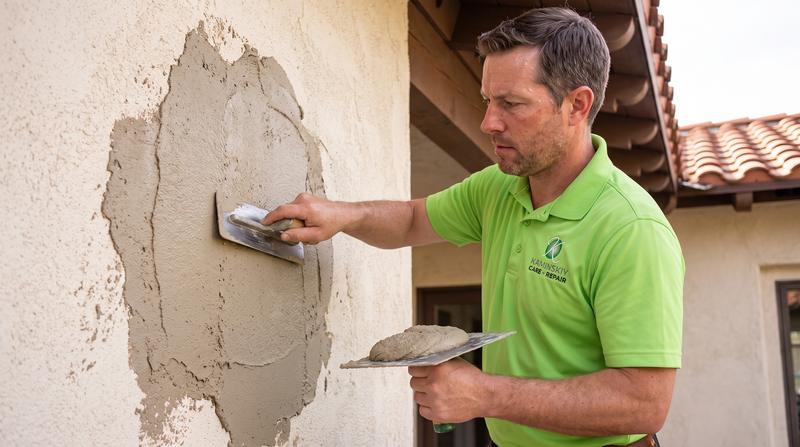
Pasadena stucco is the 1920s Spanish Colonial Revival house in Madison Heights or on the Arroyo with a hand-finished wall and tile caps, the stucco chimney on a Bungalow Heaven Craftsman, and the 1950s ranch in Hastings Ranch with a dash coat facing the foothill sun. We cut and fill the cracks, patch the chips, rebuild a hollow section to sound lath in three coats, and copy the texture and color from the wall beside it; in a landmark district a matching repair is maintenance. Caps and the weep screed are on the same scope.
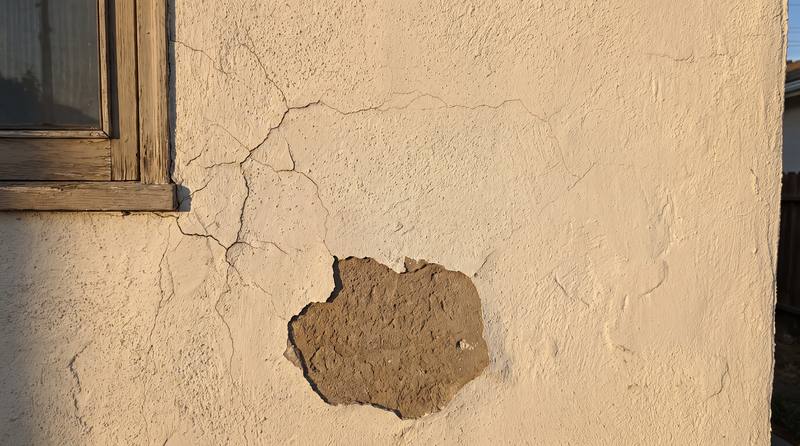
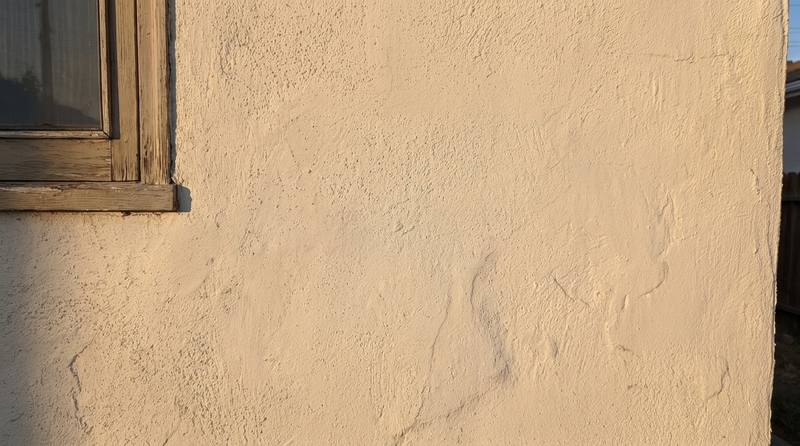 AFTERBEFORE
These are repairs, not a re-stucco, and a Kaminskiy-certified technician comes over the 134 from our Glendale office for them. A quick look, a written scope, then three coats with a cure between each.

Priced and on the calendar during the first call.

A written quote you approve before anyone drives out.

Three coats, each one cured, warranty in writing.
A one-year workmanship warranty, in writing, on every Pasadena stucco repair.
Age by design, and the sun. The Spanish Revival builders put three coats of cement over paper and wood lath, and a century of frames settling has opened a hairline at the corner of every window; the Craftsman builders used stucco on the chimney and the skirt, where the heat and the ground meet it. Under the Arroyo trees the shade keeps the base damp and rusts the beads; on the east side the sun chalks the finish by August and the windstorms put debris into the walls. Steady, small, cheapest the year they appear.
A hairline at a window corner or along a chimney joint is the wall moving with the weather and gets cut, filled and sealed. Call about a crack that takes a coin, a crack that has grown since the last repaint, a stucco chimney that has a crack wide enough to see from the street, a wall that sounds hollow over a wide area, or a crack down from a header that has dropped. If a crack follows the foundation or the header, or the chimney has moved, an engineer looks before we patch anything.
The failed stucco is cut back to sound material, the torn paper and rusted lath are replaced, and the scratch coat goes on and cures. Then the brown coat, floated flat with the wall, cures. Then the finish coat, troweled, dashed or sanded to match the wall and tinted or painted to the house. Three coats, three cures: about a day of work spread over visits, and on a landmark-district wall the last visit is the one that matters, because the match is what makes the repair maintenance.
Spray the lawn and not the house, keep the planter soil below the weep screed, keep paint or a fog coat on the walls, and caulk the window and door perimeters before summer. Have the tile caps and the chimney cap checked every few years; a cap that leaks ruins the wall below it. In a landmark district, keeping the original finish sound is also what keeps the street face the district expects, and we photograph before and after for your file.
Craftsman homes from the 1900s to the 1920s, many in landmark districts, with stucco chimneys, foundation skirts and porch piers beside the shingle, and 1920s Spanish Colonial Revival neighbors with hand-finished walls and tile caps. The chimney and the skirt crack at the corners, the caps leak into the wall, and an off-texture patch is visible from the sidewalk. We cut back to sound lath, rebuild in three coats and copy the finish from the wall beside the patch, so the repair is maintenance and needs no certificate.
Larger homes on slopes under big trees, much of it 1920s Spanish and Mediterranean stucco with deep trowel finishes, garden walls and tile sills. The frame moves with the slope and opens a crack over the French doors; the canopy keeps the north walls and the base damp; the caps stain the wall under them. We fill the frame cracks with a repair that can move, re-lath the damp base, reset the caps, and measure anything that keeps growing so an engineer can look first.
Ranch homes from the 1950s with a sand or dash finish facing the foothill sun and the windstorms off the San Gabriels. The finish chalks, the hairlines at the window corners widen every summer, the base goes soft behind the sprinklers, and the hose-bib holes have been patched with caulk. On the streets near the north edge that came through January 2025, a standing home may have heat-crazed or smoke-stained stucco; those are ours to scope, and a rebuild is a general contractor's.
Call 747-298-8227 or text a close photo of the crack, the chip or the chimney and one of the whole wall. The call gets you a range and a date for the look, over the 134 from our Glendale office.
Your technician sounds the wall, measures the cracks, checks the caps, the sills, the weep screed and the water path, notes whether the house is in a landmark district, and writes the scope: what gets cut and filled, what gets re-lathed, how the finish and color will be matched, and how many visits the coats need. The price is written on it before we cut anything.
We cut the failed stucco back to sound lath, set new paper and lath, and apply the scratch coat, which cures before we return. The brown coat goes on the next visit, floated flush with the wall, and gets its own cure.
The finish coat is worked to the texture of the wall beside it and tinted or painted to the house, with before-and-after photos for a landmark-district file. The rubble goes with us; the invoice carries the price you approved and the one-year workmanship warranty.
California allows a repair under a small set amount without a license when it needs no permit and no one is employed to do it; a stucco patch with new lath and three visits on the calendar crosses that line and wants a licensed contractor. Kaminskiy Care and Repair is one (License #1106209), bonded and insured, with Kaminskiy-certified, background checked technicians, and every job over the state's written-contract threshold is on paper before it starts.
Pasadena adopts the California codes with its own amendments and keeps the state's list of work exempt from a building permit, adding one line: a zoning permit may still be needed for some exempt items. An ordinary repair needs no application and painting and similar finish work is exempt, which covers crack repair, patching, matching the finish, resetting a cap and replacing a small area of lath. Stripping and re-lathing a large area, anything that reaches a structural member, or a street-visible change in a landmark district is where we check at the Permit Center on Garfield first.
Bungalow Heaven, Madison Heights and the other landmark districts have design review instead of an association: a street-visible exterior change needs a Certificate of Appropriateness before a building permit, while routine maintenance, paint colors and work not visible from the street are exempt. A stucco patch that matches the texture and the color is maintenance, and we photograph before and after for the file. On the foothill lots the 2025 fire maps grew the very high zone to several thousand properties; a stucco patch puts back a noncombustible finish and triggers nothing, though a vent or door we replace on the same wall has a standard to meet.
Fifteen minutes over the 134. Your Pasadena crew dispatches from our Glendale office on Brand Boulevard, across the 134 from Old Pasadena, so most calls are scheduled within days. Call 747-298-8227, text a photo, or send the form, and we answer in under three rings.
Can't find your answer? Call 747-298-8227 and ask us anything.
Call 747-298-8227Three coats, and the cure between them sets the pace. The failed stucco comes out on the first visit with new paper and lath and the scratch coat; the brown coat waits until that has cured; the finish coat, the texture and the color are the last visit. About a day of work spread over visits from our Glendale office, and the written scope says how many before we begin.
Yes; in Pasadena the match is what makes the repair maintenance in a landmark district, so we treat it that way everywhere. We copy the trowel, the dash or the sand finish from the wall beside the patch and tint or paint to the house. A wall that has faded for a century can show a new patch a shade brighter until it weathers, and we tell you that at the look; a fog coat over the elevation is the answer when it matters.
Hairlines at the window corners of a 1920s Pasadena house are the frame settling and the wall moving with the heat, and they are normal. Fill and seal them anyway, so water stays out of the paper and lath behind them. Call about a crack that takes a coin, that has grown since the last paint, that opens a stucco chimney wide enough to see from the street, or that comes down from a header that has dropped; if it follows the structure an engineer looks first.
No. EIFS is not stucco; it is foam board with a thin base and finish coat over it, and its repairs follow the manufacturer's method, so the system's certified installer does them. At the look we say which kind of wall you have; almost every pre-war Pasadena house is traditional stucco.
It depends on how much is cracks, how much is hollow stucco that needs new lath, and how hard the finish is to match; a hand-troweled Spanish wall and a sand-finish ranch are different visits. Text a few photos for a range on the call; the written scope after the look prices the cutting, the lath, the coats and the match before a trowel touches the wall. What the scope says is what the invoice says.
Yes. We warrant the workmanship for a year in writing, send Kaminskiy-certified, background checked technicians, and work under California contractor License #1106209, bonded and insured.
Not if it matches. The landmark districts need a Certificate of Appropriateness for a street-visible exterior change, and they exempt routine maintenance and paint colors. A patch cut back to sound lath, rebuilt in three coats and finished in the same texture and color is maintenance; a new finish over the whole street face is a change, and we check with Design and Historic Preservation before quoting that. We photograph before and after for your file either way.
All of Pasadena from our Glendale office: Bungalow Heaven, Madison Heights, the Historic Highlands, Linda Vista, San Rafael, East Pasadena and Hastings Ranch, plus Altadena, South Pasadena, San Marino, La Cañada Flintridge, Sierra Madre and Arcadia. Call 747-298-8227 to confirm your address.
Send a photo of the wall and the address. We call back with a written price and the visits it takes. Calling is still fastest: 747-298-8227.
Priced on the call, blended to match, warranted in writing.
We answer in under three rings, 24/7.No price games. You get a clear written quote before any work begins, backed by our workmanship warranty.
