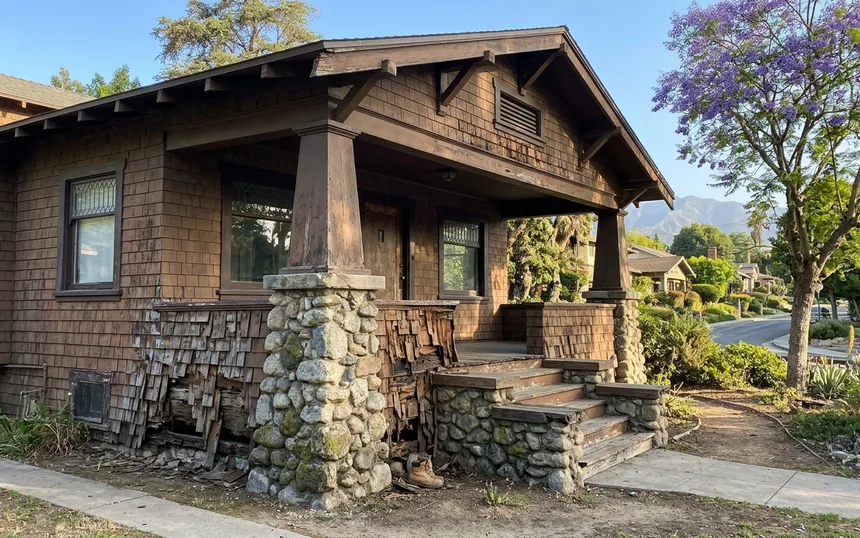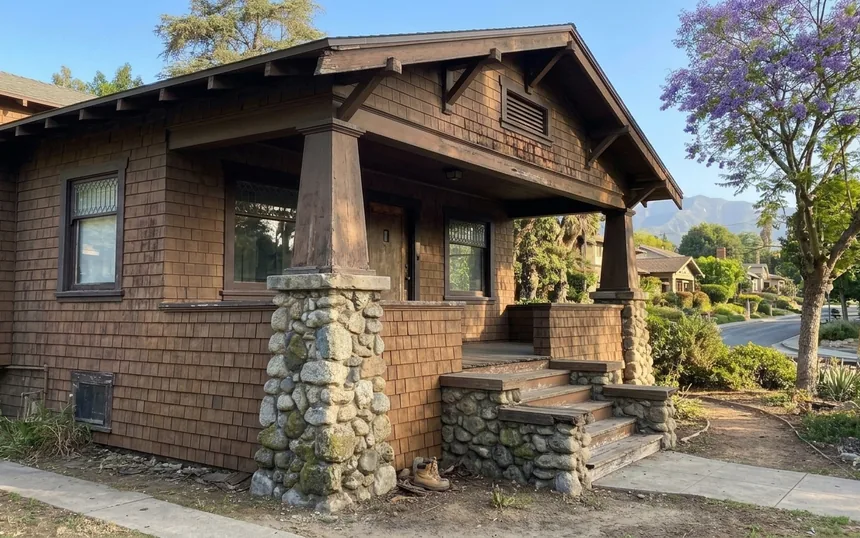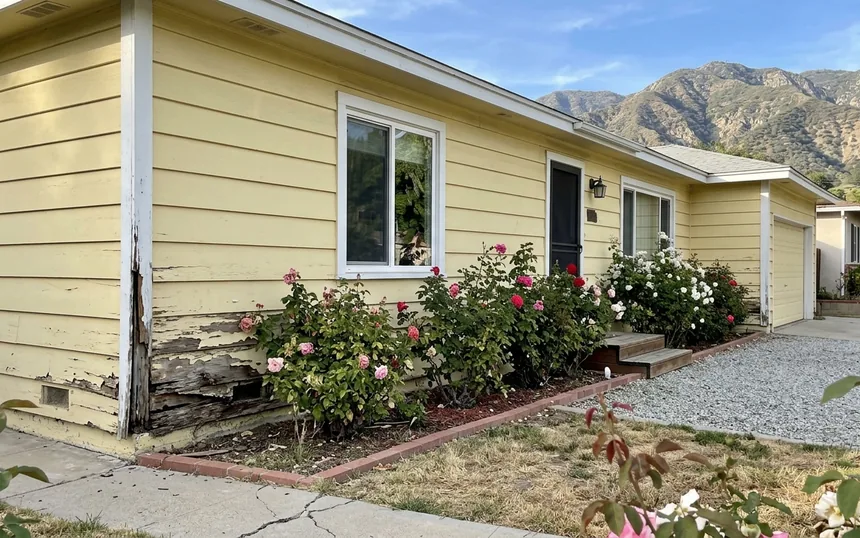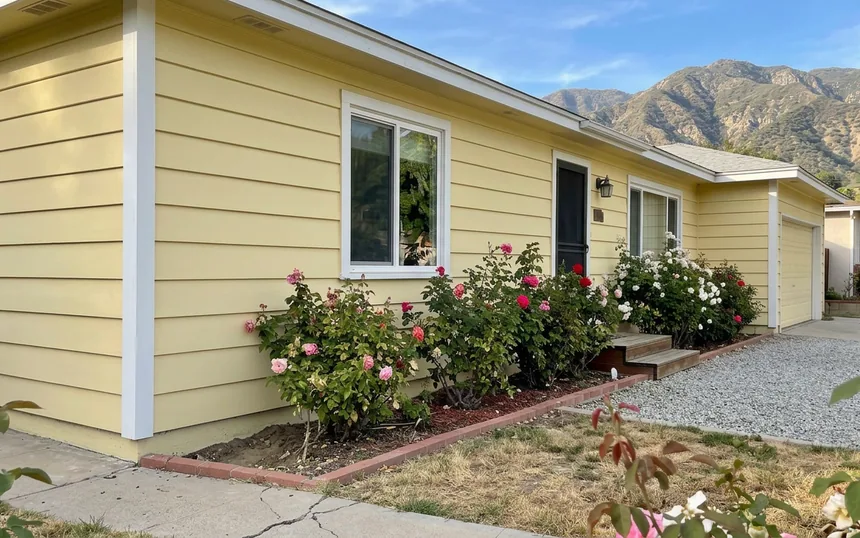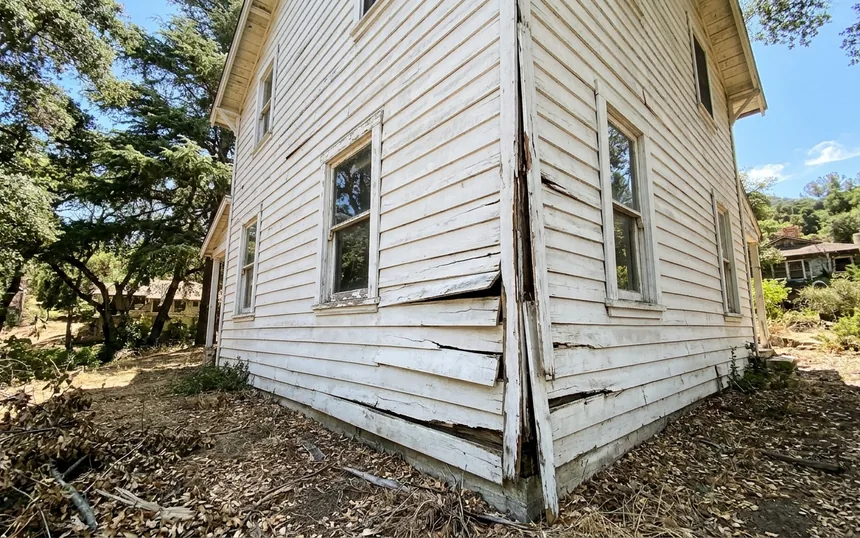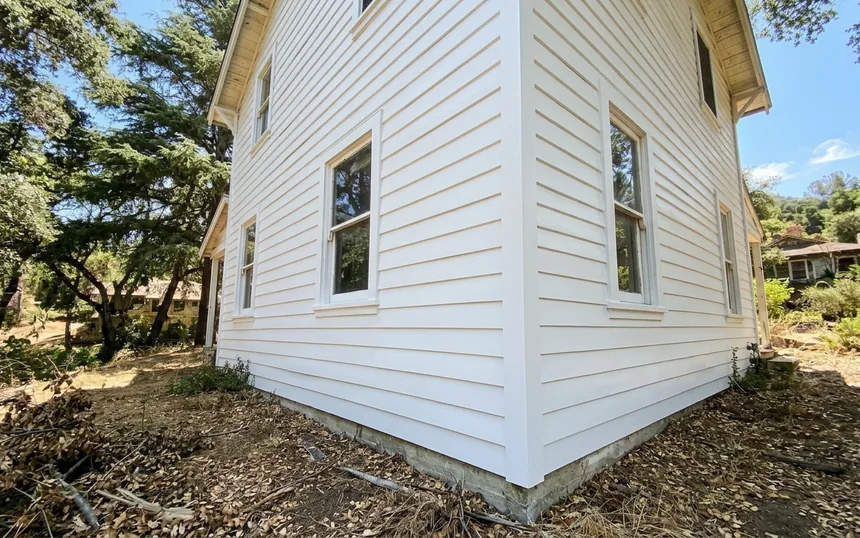
Cedar shingle on the Pasadena Craftsman, lap siding on the Burbank ranch, clapboard under the Altadena oaks, swollen hardboard in north Glendale: replaced in the same profile, flashed so it drains, and finished to the house.
 BBBAccredited Business
Kaminskiy Care and Repair repairs and replaces siding across Glendale, Pasadena, Burbank, Altadena and La Cañada Flintridge: cedar shingle on the Craftsman bungalows, clapboard and lap on the 1920s to 1950s homes, the hardboard and T1-11 of the 1970s hillside builds, and fiber cement (Hardie) on the rebuilds and newer homes. Failed pieces are cut back to sound wood, the paper and flashing lapped so the wall drains, and new siding fitted in the same exposure and profile, primed or pre-stained on every face and finished to match. A licensed siding contractor (CSLB #1106209) and an EPA Lead-Safe Certified firm, from our office on Brand Boulevard, every repair priced in writing on the call: 747-298-8227.
 From Bungalow Heaven to the Verdugo foothills.
On a Craftsman the shingles go first by the porch steps and under the eaves that drip; on a 1950s ranch the lap rots where the planter sits; on the foothills the wind lifts boards that the paint stopped protecting years ago. We pull only what has failed, read the sheathing behind it, match the exposure to the course lines already on the wall, and stain or paint to the house so the repair follows the courses instead of interrupting them.

 AFTERBEFORE
 Craftsman Cedar Shingle
 Lap, Clapboard & Hardboard
 Fiber Cement & Hardie
 Barge Boards, Fascia & Trim
 Dry Rot & Termite Damage
 Vinyl Siding Repair
 Joints, Caulk & Paint
 Walk-Through & Warranty
Each of these is a call we take every week from Burbank to Altadena. Text a photo and most siding repairs are priced on the call, in writing; when the soft spot may reach the sheathing, we look first and put the scope on paper before anything is scheduled.

We name the siding, check whether the house is in a landmark district or a fire zone, and price the repair in writing.

Failed shingles or boards come off, the sheathing and paper are checked with a moisture meter, and the photos are yours first.

New siding in the same exposure, primed or pre-stained on every face, flashed so it drains, then stained or painted to the house.
Every job is backed in writing by our workmanship warranty and done by a Kaminskiy-certified, background checked technician.
Cedar shingles overlap in courses and are the skin of most Craftsman bungalows. Clapboard is a tapered board, thick at the bottom edge, on many 1920s homes. Lap siding on the postwar ranch houses is often a simpler bevel or drop profile. Hardboard, common in the 1970s, is smooth and grainless and swells at the bottom edge when water gets in. Fiber cement is heavy, cement gray where it is cut, and cracks rather than rots. We name yours from a photo.
On a Craftsman or a 1920s house the answer is repair in kind: the old cedar and fir are worth keeping, and in a landmark district it is what the commission expects. Hardboard is the exception. Once it swells on every course, patching only buys a winter, and re-siding that face in primed wood or fiber cement of the same reveal is the honest answer, priced in writing next to the repair.
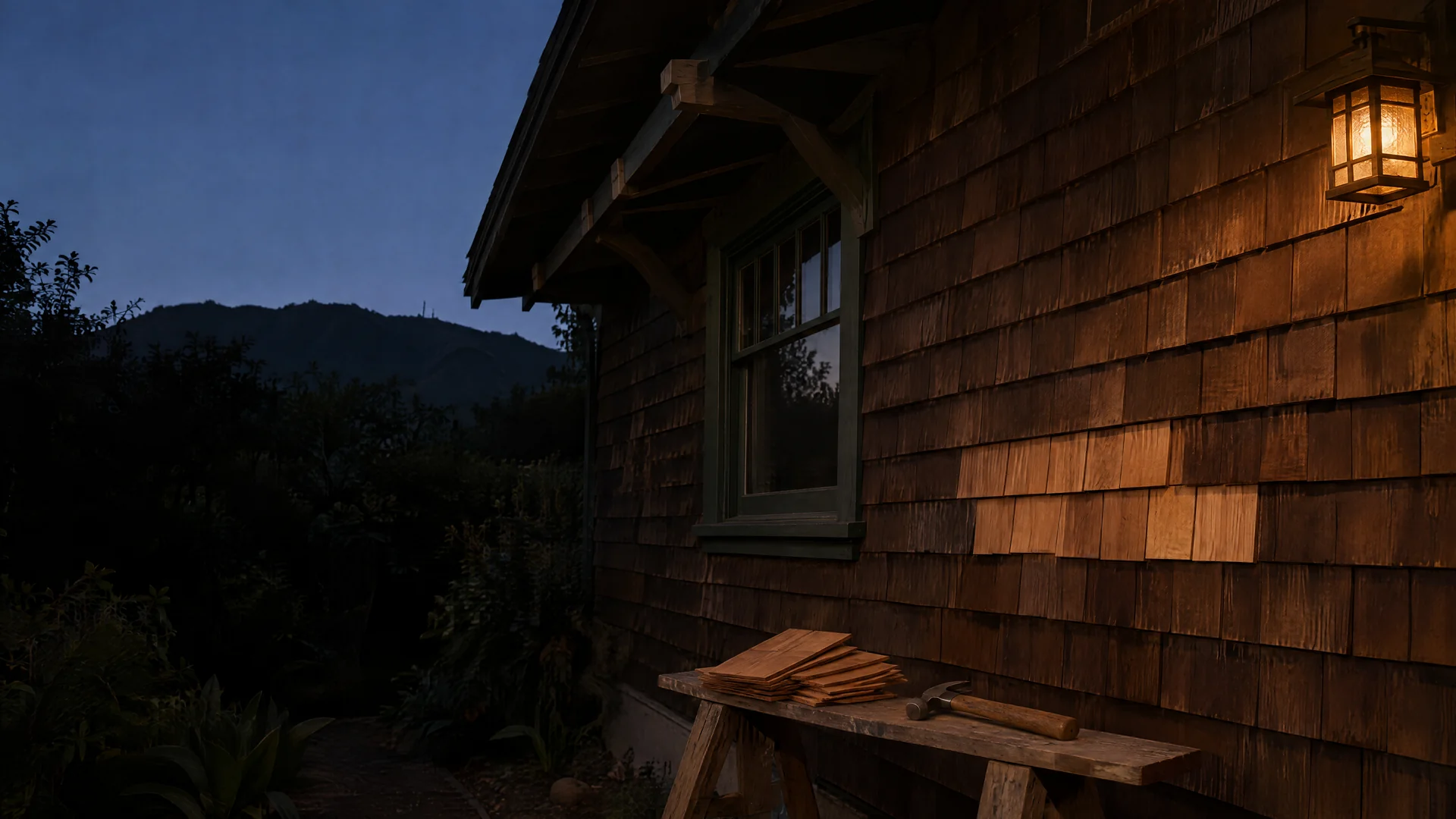
A shingle patch shows when its exposure is off by half an inch, when new cedar is left raw beside shingles stained a century ago, or when the course line jogs. Lap repairs show when the reveal changes or the paint stops in a square. We set new shingles to the existing course lines, pre-stain or back-prime every piece, and finish to a corner.
Keep the planter soil a few inches below the bottom course and the sprinklers off the wall, clear the gutters before the winter rain, and check the windward side after a windstorm for a lifted board. Restain shingles before they go gray and soft. A course this year is a wall in five.
From Burbank to Altadena the foothill towns were built in wood before stucco took over: Craftsman bungalows in shingle, 1920s homes in clapboard, postwar ranch houses in lap, and hillside homes of the seventies in hardboard and T1-11. The mountains decide the weather, and the decade decides what fails first.
Craftsman homes from the 1900s to the 1920s in cedar shingle and clapboard, with deep porches, exposed rafter tails and barge boards. The shingles fail by the steps and under the drip line, the porch skirt rots at the ground, and every one of these homes is older than 1978, so the paint and stain are tested and the work is done lead-safe. In Pasadena's landmark districts and Glendale's historic districts, a matching repair is maintenance and a new material goes to review.
Single-story homes from the 1940s and 1950s in horizontal lap, a planter bed against the front and a sprinkler line beside every walk. The bottom courses rot behind the planters, the corner boards split, and the sun on the south faces checks the paint until the rain gets behind it. The repair is new lap in the same reveal, the soil pulled back and the paint carried to the corner.
Older homes under oaks and deodars, and 1960s and 1970s hillside homes in hardboard and T1-11, first in line for the windstorms off the San Gabriels. Boards lift at the ends, hardboard swells at the bottom edge, and the canyon shade keeps the lower walls damp. Most of these streets are mapped very high fire hazard, so a repaired board is maintenance and a re-sided wall goes on in an ignition-resistant material.
Repaired, on nearly every Craftsman and postwar house: shingles and lap fail at the bottom, by the steps and under the drips, and the rest of the wall is sound. Hardboard is the one we are honest about. When it has swollen on most courses, the face is re-sided in primed wood or fiber cement of the same reveal, the paper and flashing replaced behind it.
Yes. New shingles are set to the existing course lines and exposure, lap boards match the reveal and the profile, and the finish is matched from a chip or blended into old stain. In a landmark district we photograph before and after so the file shows the repair kept the material, the profile and the exposure.
It is priced on the call, in writing, from a photo. The number moves with how much has failed, whether the shingle or the profile is stocked or has to be cut, how high it is (a Craftsman gable is a ladder day), and how much staining or painting it takes to blend. The materials are named on the quote, with no percentage markups.
An unlicensed handyman may take a job only when labor and materials together come to less than one thousand dollars and no permit is needed (Business and Professions Code 7048, raised by AB 2622 in 2025). A gable of shingles or a run of lap is usually past that line. Kaminskiy Care and Repair holds a B general building license (CSLB #1106209), is bonded and insured, and the number checks on the CSLB site.
We name the siding, check the landmark and fire maps for the address, and price the repair in writing. A big soft area gets a look first.
Shingles or boards come off to sound wood, the sheathing and paper are read with a moisture meter, old paint is tested, and you get the photos.
Paper and flashing lapped so water runs out, new siding set to the existing exposure, primed or pre-stained on every face, fastened to hold in the wind.
Stain or paint blended to the house and carried to a break, the site cleaned, the photos and the one-year workmanship warranty sent.
Glendale keeps the state's list of work that needs no permit, so an ordinary repair needs no application. Pasadena keeps the same list but notes that a zoning permit may still apply to exempt work. Burbank keeps its own exempt section and a handout of common projects. Altadena is unincorporated, so the counter is Los Angeles County Building and Safety, and La Cañada Flintridge builds to the county code. A few boards or shingles in kind is a repair everywhere; a re-sided face is checked with the counter first.
Bungalow Heaven, Madison Heights and Pasadena's other landmark districts review street-visible exterior changes with a Certificate of Appropriateness, while routine maintenance and paint color are exempt. Glendale's historic districts review a new window or door seen from the street; a matching repair is not reviewed. A repair that keeps the material, the profile and the exposure is maintenance, and we photograph it for the file.
The 2025 maps grew Glendale's very high fire hazard zone by about four fifths and Pasadena's foothill zone to several thousand properties, and most of Altadena is mapped very high; Los Angeles County's code keeps Chapter 7A in force even for work that needs no permit. A board-for-board repair is maintenance, and re-sided walls in those zones go on in an ignition-resistant material such as fiber cement. On pre-1978 homes the paint is tested first: Kaminskiy Care and Repair is an EPA Lead-Safe Certified firm, the work area is contained and the cleanup checked.
On Brand Boulevard. Our crew works from Brand Boulevard in downtown Glendale and covers the foothill towns from Burbank to Altadena and La Cañada Flintridge. Call 747-298-8227, text a photo of the siding, or send the form, and we answer in under three rings. Since 2023 our technicians have completed 136 repair visits on 92 homes in Glendale, Pasadena, Burbank, Altadena and La Cañada Flintridge.
Can't find your answer? Call 747-298-8227 and ask us anything.
Call 747-298-8227Repaired, on most homes here. Shingles and lap fail by the porch steps, behind planters and under drips while the rest of the wall stays sound, so we cut back to sound wood, check the paper and sheathing, fit new pieces in the same exposure and finish to match. Hardboard that has swollen on most courses is the exception, and that face is re-sided in primed wood or fiber cement.
Yes. That is the most common job we do on a bungalow: a few courses by the steps, a patch under a dripping eave, the skirt at the porch. The new shingles are set to the existing course line and exposure and stained to blend with the old, so the repair follows the wall. Call 747-298-8227 or text a photo and we price it in minutes.
It is priced on the call, in writing, from a photo. The number moves with how much siding has failed, whether the profile or shingle is stocked or has to be cut, how high the work is, and how much staining or painting it takes to blend the repair. The materials are named on the quote, with no percentage markups.
For an ordinary repair in kind, usually neither. Glendale and Pasadena keep the state's exempt list, Burbank keeps its own, and Altadena and La Cañada Flintridge follow the county code. In Pasadena's landmark districts routine maintenance is exempt from review; a new material or a changed profile is not. Re-siding a face, or work in a very high fire hazard zone, is checked with the counter first, and we pull the permit when one is needed.
Only a small job. California lets an unlicensed handyman take work when labor and materials together are less than one thousand dollars and no permit is needed (Business and Professions Code 7048, as raised by AB 2622 in 2025). A gable of shingles or a wall of lap passes that line. Kaminskiy Care and Repair is a licensed B general building contractor (CSLB #1106209), bonded and insured.
Hardboard swells when water gets into its bottom edge or a nail hole, and it does not shrink back. A few boards can be replaced in matching lap; when most of a face has swollen, re-siding that face in primed wood or fiber cement of the same reveal is the lasting answer. We show you both prices in writing and the photos of what was behind the boards.
Craftsman bungalows in Pasadena and Glendale carry cedar shingle that fails by the steps and under the eaves. 1920s homes carry clapboard that lifts at the ends in the foothill wind. Postwar ranch houses in Burbank carry lap that rots behind the planters, 1970s hillside homes carry hardboard and T1-11 that swell and delaminate, and the rebuilds carry fiber cement. We tell you which you have on the call.
Glendale, Pasadena, Burbank, Altadena, La Cañada Flintridge, La Crescenta, Montrose, Sunland-Tujunga and Eagle Rock, from our office on Brand Boulevard. Call 747-298-8227 with the address and we confirm it on the call.
Tell us the town, the siding and roughly how much has failed. We'll call back with a price and a day. Calling is still the fastest way: 747-298-8227.
Shingle, clapboard and lap matched and finished, a one-year workmanship warranty, from one licensed team on Brand Boulevard.
We answer in under three rings, 24/7.No price games. You get a clear written quote before any work begins, backed by our workmanship warranty.