 BBBAccredited Business

Kaminskiy Care and Repair patches stucco cracks and chips and matches the existing texture so the repair blends in. Hairline cracks are cosmetic; widening or bulging ones deserve a call, and the quote is free either way. We serve Mountain View and the surrounding California communities.
One exit from our office. Clay-season cracks and sprinkler damage lead the Mountain View stucco list.
Most Mountain View stucco is on the south-side ranch tracts, 1950s to 1970s three-coat work over wood frame, paper and lath, and the valley clay under it moves every year. The wall swells in the winter rain and shrinks by August, so the hairline runs off the window corner and the crack over the garage opens a little more each season. We cut the crack back, fill it, float the texture to match the old sand finish and blend the color, one exit down from our office in Sunnyvale.
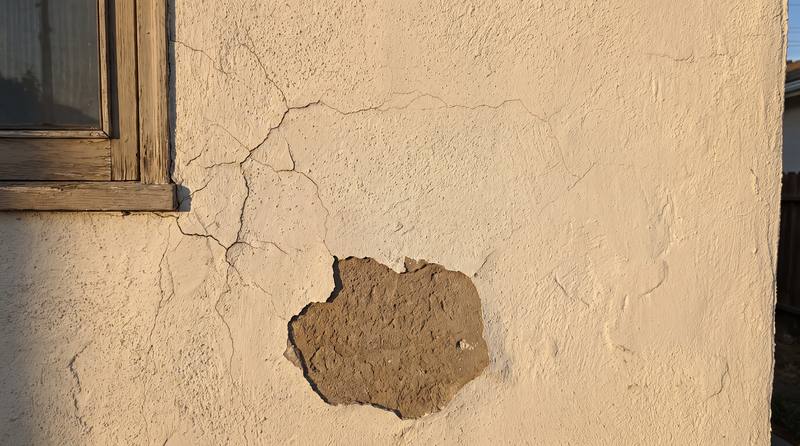
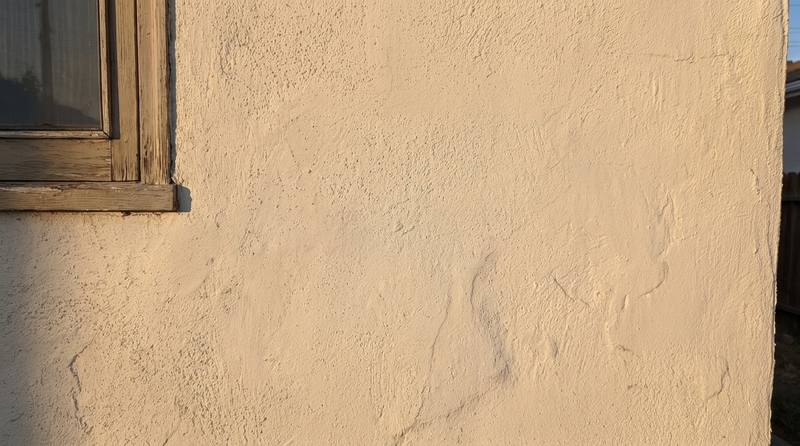 AFTERBEFORE
Every one of these is a repair, not a re-stucco, for a Kaminskiy-certified technician who starts the day one exit away in Sunnyvale. One look, a written scope, then the coats go on with the cure time each one needs.

Priced and on the calendar during the first call.

A written quote you approve before anyone drives out.

Three coats, each one cured, warranty in writing.
A one-year workmanship warranty, in writing, on every Mountain View stucco repair.
The ground moves and the water finds the bottom. Valley clay swells in the wet winter and shrinks in the dry summer, and a stucco wall is a rigid skin on a wood frame that flexes with it, so the stress shows as a diagonal hairline off the window and door corners and a step crack over the garage header. At the base, lawn sprinklers and planter beds keep the bottom course wet and bury the weep screed, which is the metal edge that is supposed to let the wall drain. Wet paper and lath behind the stucco is where a hollow spot starts.
A hairline you cannot fit a dime into, running off a window corner, is the house moving with the seasons: seal it and watch it. Call about a crack wider than that, a crack that steps along the block pattern of the sheathing, a stretch that sounds hollow when you knock, a stain that keeps coming back after the rain, or a soft base course you can push a screwdriver into. A crack that follows a settling foundation or a header that has dropped is not a stucco job yet; an engineer looks first, and we do the finish after.
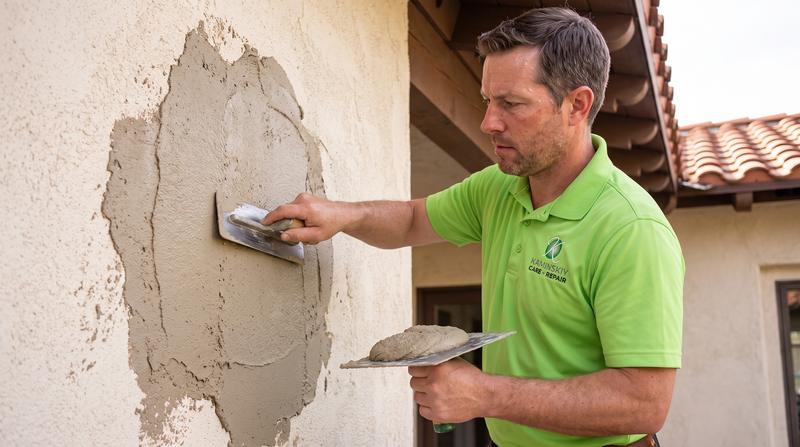
A real patch is three coats. We cut the loose stucco back to sound lath, replace torn paper and rusted lath, then put on a scratch coat and let it cure, a brown coat and let it cure, and last the finish coat floated or dashed to match the wall around it. Each coat has to set up before the next one goes on, so a patch is a day of work spread across visits, not one afternoon. Anyone who offers to patch and paint a hole in one stop is skipping a coat, and the patch will show it within a year.
Move the sprinkler head that hits the wall and pull the planter soil down until you can see the weep screed. Seal the hairlines before the November rain, and paint with an elastomeric or a good acrylic every eight to ten years so the water sheds instead of soaking in. Keep the sill caps and the flashing above the windows tight. A wall that stays dry behind the paper does not go hollow, and a hairline caught in September is a crack repair, not a re-lath.
Bungalows and cottages from the 1900s to the 1940s, mostly wood siding and plaster, with stucco on the later additions, the garages and the porch skirts. The old stucco here is lime-rich and soft, and a modern hard patch cracks around its own edge, so we match the mix as well as the texture. Some homes are on the city's register of historic resources; a matching repair needs no review, and we check before the front changes.
The city's stucco neighborhoods: 1950s to 1970s ranch homes with three-coat stucco over wood frame, redwood siding on the gables, pop-out window sills and a weep screed that sixty years of lawn and planter beds have buried. The work is the diagonal crack at the window corner, the hollow patch under the eave, the soft base course where the sprinkler reaches, and the sill cap that lets water in behind the wall.
Monta Loma's Eichlers are glass and wood, so the stucco work on the north side is the compact tract homes and the newer townhome and condo communities near the campuses, many built since 2008 with one-coat systems and foam trim under association color schemes. Cracks at the foam trim joints, a chipped corner at the garage, a patch after a plumber opened the wall, matched to the approved color with the scope in writing for the board.
Call 408-916-4022 or text a picture of the crack, the patch or the stained base with something for scale. Most Mountain View stucco repairs get a range on the call and a date for the look.
A technician sounds the wall for hollow spots, checks the weep screed and the sill caps, looks at what is behind any soft section and writes the scope: the repair, the coats, the texture and color plan, and whether anything needs an engineer. The price is on it.
Cracks cut and filled, loose stucco cut back to sound lath, paper and lath replaced, then scratch coat, brown coat and finish coat, each one cured before the next, so the repair comes in visits a few days apart.
The finish coat is floated to match and the color blended or the wall painted out to a corner, the cut-offs leave with us, and the one-year workmanship warranty is on the invoice at the price you approved.
California lets a repair under a small set amount be done without a contractor license when no permit is involved and nobody is hired to help, which covers a tube of sealant and not a cut-back patch with new lath. Kaminskiy Care and Repair holds a California contractor license (License #1106209), is bonded and insured, sends Kaminskiy-certified, background-checked technicians, and puts every job over the state's written-contract threshold on paper before the first coat.
Mountain View's own page of projects that need no permit lists painting and similar finish work, and the planning side exempts ordinary repairs and maintenance when the exterior repair uses the same materials and design as the original; exterior paint on a single-family home or duplex needs no planning approval. The state residential code adds that an ordinary repair needs no application. Patching stucco, filling cracks and matching texture are that kind of maintenance. Replacing the paper and lath over a large section of wall, or anything that cuts a structural member, is where we call the Building Division first and tell you what it said.
Homes on the city's register of historic resources get a review before the front changes; a stucco patch that matches what is there needs none. The townhome and condo communities toward North Bayshore have associations that approve exterior colors, so a patch is blended to the approved scheme and the scope goes in writing for the board. Many Mountain View homes are rented, and a stucco repair between tenants is scheduled with the manager's key and photographed when done.
One exit from our office. Your Mountain View crew dispatches from our South Bay office on Murphy Avenue in downtown Sunnyvale, one exit up the 85 or the 237, so a move-in list or a weekend list is usually on the calendar within days. Call 408-916-4022, text a photo, or send the form.
Can't find your answer? Call 408-916-4022 and ask us anything.
Call 408-916-4022Three coats with cure time between them. The scratch coat goes on after the loose stucco is cut back and the lath is repaired, the brown coat follows once it has set, and the finish coat goes on last and is floated to match the wall. Each coat needs days, not hours, before the next, so a Mountain View patch is a day of work spread across visits. We put the visits on the written scope before we start.
The texture will, because we float or dash the finish coat to the sand finish or the lace already on the house and take the patch to a natural break where we can. Color is harder on a wall the South Bay sun has faded for twenty years, so we either blend the color into the patch or paint the wall out to a corner, and we tell you which before the finish coat goes on.
Not about a hairline off a window corner that opens in August and closes in January; that is the valley clay moving the house, and sealing it before the rain is enough. Worry about a crack wide enough to take a dime, a crack that steps along the sheathing joints, a hollow sound when you knock, or a crack that lines up with a sinking corner of the slab. Those we look at, and the last one gets an engineer first.
No. EIFS and the other synthetic systems are foam board with a thin base coat and mesh, and a repair has to be done with that system's materials by its certified installer or the warranty and the drainage plane are gone. If your townhome has it, we will tell you on the call and point you to the right installer. Traditional three-coat and one-coat cement stucco is ours.
It depends on how much is loose, whether the paper and lath behind it need replacing, and how the color will be handled. Text a photo with something for scale and you get a range on the call; after the look you get a written scope with the coats, the texture and the color plan priced before any stucco is cut. What you approve is what the invoice says.
Yes. Every stucco repair carries a one-year workmanship warranty in writing and is done by Kaminskiy-certified, background-checked technicians under California contractor License #1106209, bonded and insured.
Almost always water from below. A sprinkler head hits the wall twice a day, or a planter bed has buried the weep screed, the metal edge at the bottom of the wall that is supposed to let it drain. The paper behind the stucco stays wet, the lath rusts and the stucco lets go. We cut the soft section back to sound lath, fix the drainage detail, and patch it in three coats; moving the sprinkler head is the cheapest part of the job.
All of Mountain View from our Sunnyvale office: Old Mountain View, Shoreline West, Cuesta Park, Waverly Park, Blossom Valley, Martens-Carmelita, Monta Loma, Rex Manor, Whisman and Sylvan Park, plus Los Altos, Sunnyvale and Palo Alto. Call 408-916-4022 to confirm your address.
Send a photo of the wall and the address. We call back with a written price and the visits it takes. Calling is still fastest: 408-916-4022.
Priced on the call, blended to match, warranted in writing.
We answer in under three rings, 24/7.No price games. You get a clear written quote before any work begins, backed by our workmanship warranty.
