 BBBAccredited Business

Kaminskiy Care and Repair patches stucco cracks and chips and matches the existing texture so the repair blends in. Hairline cracks are cosmetic; widening or bulging ones deserve a call, and the quote is free either way. We serve Bel Air and the surrounding California communities.
Estates on moving hillsides. Long walls, hairlines at every opening and damp canyon bases lead the list.
A Bel Air stucco wall is long, tall and watched by a gardener, on a hillside that moves. The gate-street estates carry the original three-coat finish with hairlines at the window heads and sills; the crest houses crack at the control joints and the parapet caps; the canyon lots stay damp and the bottom foot goes hollow. We cut and fill, patch, re-lath the soft sections, recoat in three cured coats and match the texture and color so a long wall still reads as one.
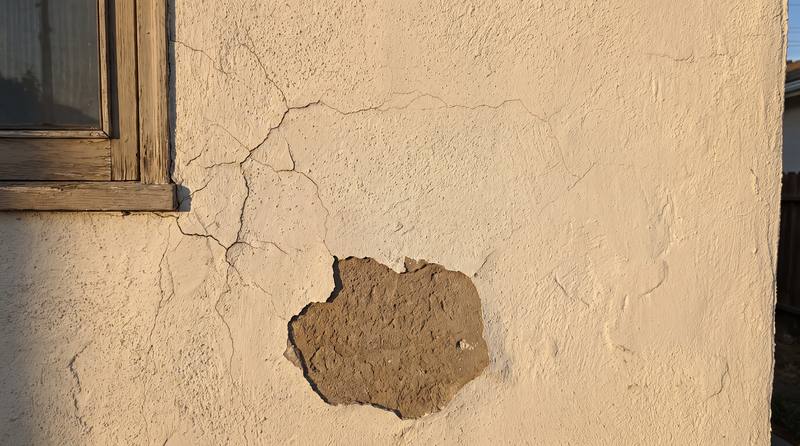
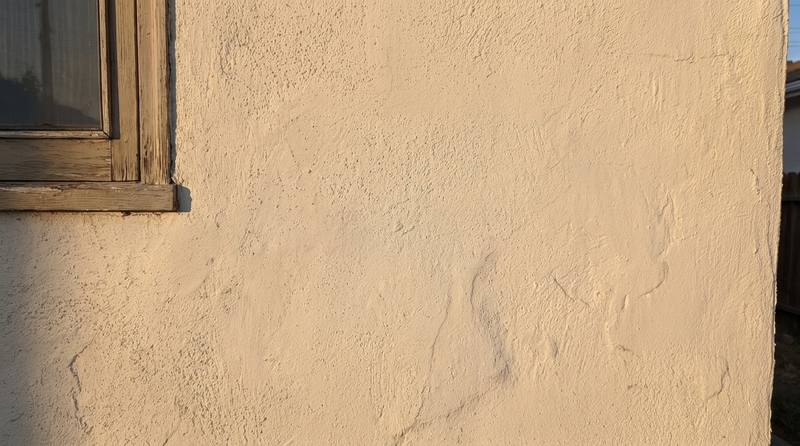 AFTERBEFORE
On an estate the wall list is usually longer than the first photo, so we walk it with you or the house manager. Each patch is three coats on three visits, priced in writing before the first cut.

Priced and on the calendar during the first call.

A written quote you approve before anyone drives out.

Three coats, each one cured, warranty in writing.
A one-year workmanship warranty, in writing, on every Bel Air stucco repair.
Movement, water and scale. The hillside creeps when it rains, and every wet winter opens hairlines at the openings where the lath was cut. The gardens are irrigated daily and the hedges hold that water against the lowest foot of wall until the bond fails and the stucco goes hollow. And there is simply more wall here than almost anywhere we work: a slow drip has sixty feet of facade to stain. Caught early each of these is a patch; left a few seasons it is a section.
A hairline off a window corner that you can cover with a credit card edge is the house moving and can wait for a dry week. Call about a crack that widens along its length, one that steps up the wall in a diagonal, a bulge, a hollow sound, white efflorescence, rust from a corner bead, or a crack that lines up with one in the foundation or runs from a header that has dropped. The first group is water behind the paper; the last goes to an engineer before we mix anything.
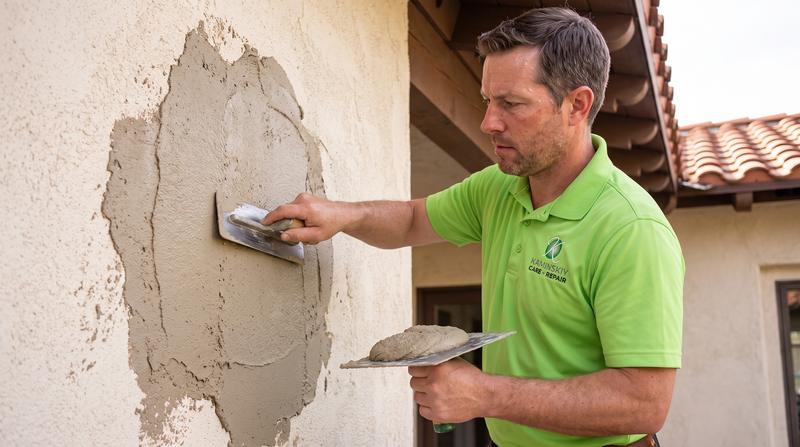
A patch is three coats and three visits. First we cut the loose stucco back to sound lath, replace torn building paper and rusted lath, and float on the scratch coat. It cures. The brown coat goes on and is floated flush. It cures. Then the finish coat, matched by sample to the texture and the color you approved. The waits are the work: a patch hurried through in a single afternoon cracks around its own edge by the next winter, and on an estate wall that edge is what everyone sees.
Ask the gardener to redirect the heads that wet the wall and keep the hedge a hand's width off the stucco. Keep soil, mulch and planters below the weep screed. Recoat or repaint before the finish chalks, and reseal the parapet caps on the crest every few years. Once a year walk the whole perimeter and tap the bottom foot; a hollow spot found in spring is a patch, not a project.
Older estates with the original three-coat stucco over wood lath, long runs of wall, tall windows and gardens watered every day. The hairlines run from the window heads and the sill corners, the hedge side never dries and the bottom of the wall loses its bond. We cut the soft stucco back to sound lath, recoat in three coats, match a hand-troweled finish by sample and tint to the weathered color, then feather the edge so the patch has none.
View homes on cut-and-fill lots that settle a little every wet winter, with long flat walls, control joints and parapet caps facing the sun and the wind. The caps split and stain the face, the control joints open, the finish chalks. We reseal and recoat the caps, fill the joints so they stay closed and refinish a whole panel where a spot patch would show against the light.
Shade until noon and irrigation all year keep the canyon floors damp, so the stucco fails from the bottom up: the weep screed buried in mulch, the lowest foot dark and soft, efflorescence blooming above the grade line. We cut back to sound lath, clear the screed, get the soil and mulch below it, recoat in three coats and seal, and point out the sprinkler that started it.
Call 310-928-6211 or text pictures of the crack, the stained cap or the soft base with something in frame for scale. A single patch gets a range on the call; an estate's wall list gets a date for the walk.
A technician taps the walls, checks the weep screed and the flashing where the wall meets the ground or a roof, and writes the scope item by item: what is cut out, what is filled, how the texture is matched and the three visits each patch takes. You or the house manager approve it before anything is cut.
Loose stucco comes off to sound lath, the paper and lath are repaired and the scratch coat goes on. After it has cured we come back for the brown coat and float it flush with the old wall.
The finish coat goes on in the matched texture and the approved color, feathered into the wall. The dust and cut-offs leave with us and the one-year workmanship warranty is on the invoice.
California allows a repair under a small set amount without a license when it needs no permit and nobody is employed; an estate's stucco list crosses that line at the first patch. Kaminskiy Care and Repair holds License #1106209, is bonded and insured, its technicians are Kaminskiy-certified and background checked, and every job over the state's written-contract threshold is on paper before the first cut, which on a house this size is all of them.
Bel Air is in the City of Los Angeles, where LADBS needs no permit for painting and similar finish work or for regulated work under a small set value that does not affect structural stability; beyond that the Building Code asks for a permit to alter or repair a structure. Filling cracks, patching, matching texture and recoating a cap is maintenance of the first kind. Replacing paper and lath across a large area, or opening into the framing, is the second, and on a hillside lot anything new has grading rules of its own, so we ask LADBS before we quote a job like that.
The Bel Air Association and the hillside committees rarely need to see a patch that matches the existing texture and color; a new finish or a color change on the street face sometimes needs a review, and we put the sample in writing for it. Bel Air has no historic overlay zone. The whole community has been in the very high fire hazard zone since 1999, so a vent we uncover in a repair goes back in to the wildfire standard.
Minutes down Sunset from our office. Your Bel Air crew dispatches from our Beverly Hills office at 8383 Wilshire, a short run up Beverly Glen or Stone Canyon, so an estate list is usually walked within days. Call 310-928-6211, text photos, or send the form.
Can't find your answer? Call 310-928-6211 and ask us anything.
Call 310-928-6211Three visits for the three coats. Visit one cuts the loose stucco back to sound lath, repairs the paper and lath and applies the scratch coat. Visit two, after it has cured, applies the brown coat. Visit three applies the finish coat in the matched texture and approved color. The working time is short; the cure between coats is what keeps the patch from cracking at its edge, and several patches on an estate run on the same schedule.
Yes, by sample. We match the texture first on a board, hand-troweled, sand float or dash, hold it against the wall in daylight, then tint the finish to the color the wall has weathered to. On a long estate wall we feather the finish well past the patch so there is no edge for the light to catch. You or your house manager approve the sample before the finish coat goes on.
A true hairline at a window or door corner is the hillside moving and the lath joint showing, and we fill it on a dry day. Worry about a crack that widens along its run, a stair-step crack, a bulge, a hollow sound, white efflorescence or rust streaks from a corner. Those mean water behind the paper or a frame that shifted, and a crack that tracks the foundation goes to an engineer before we patch over it.
No. Some newer Bel Air houses carry EIFS or a synthetic one-coat system, which has its own base coat, mesh and drainage detail, and a repair outside the manufacturer's method voids the warranty that is left. We tell you on the walk if a wall is synthetic and refer it to the system's certified installer. Cement three-coat stucco, which is most of Bel Air, is ours.
Height, access and the texture set most of it, then how much is loose. A single patch gets a range from a photo; an estate's wall list is priced after the walk, item by item, in writing, with the three visits per patch in the one number. Nothing is cut until you or the house manager approve the scope.
Yes. The repair carries a one-year workmanship warranty in writing, done by Kaminskiy-certified, background checked technicians under California contractor License #1106209, bonded and insured.
Not yet, usually. Daily spray at the base of a wall is the most common cause of hollow stucco in Bel Air, and the fix is the patch plus the sprinkler head moved and the soil brought below the weep screed. If the paper behind the stucco has failed over a long run, that section is re-lathed and recoated, and we tell you how far it goes before we start.
All of Bel Air from our Beverly Hills office, including East Gate, West Gate, Bel Air Crest, Roscomare, Linda Flora, Stone Canyon and Beverly Glen, plus Holmby Hills, Brentwood, Westwood, Beverly Hills and the Hollywood Hills. Siding for this market has its own page, our Los Angeles siding repair page. Call 310-928-6211 to confirm your address.
Send a photo of the wall and the address. We call back with a written price and the visits it takes. Calling is still fastest: 310-928-6211.
Priced on the call, blended to match, warranted in writing.
We answer in under three rings, 24/7.No price games. You get a clear written quote before any work begins, backed by our workmanship warranty.
