 BBBAccredited Business

Kaminskiy Care and Repair patches stucco cracks and chips and matches the existing texture so the repair blends in. Hairline cracks are cosmetic; widening or bulging ones deserve a call, and the quote is free either way. We serve Bay Area and the surrounding California communities.
One Peninsula crew out of Redwood Shores. Fog-side staining and settlement cracks lead the stucco list.
Peninsula stucco fails two ways. On the fog side, in San Mateo Park, Baywood and the older Redwood City streets, the north and west walls stay damp into May, so hairline cracks drink water, the finish coat chalks and green staining climbs the shaded corners. On the bayside fill of Foster City and Redwood Shores the ground settles unevenly and diagonal cracks open off the window and door corners. We cut the cracks, patch to sound lath, match the texture and the color, and check the weep screed where the wall meets the dirt.
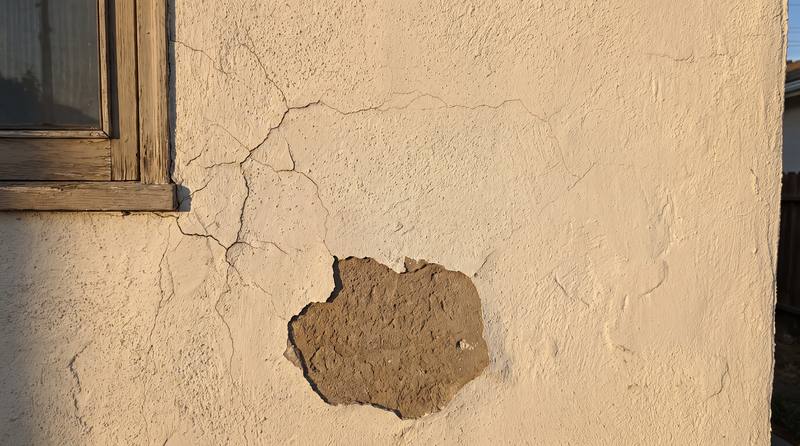
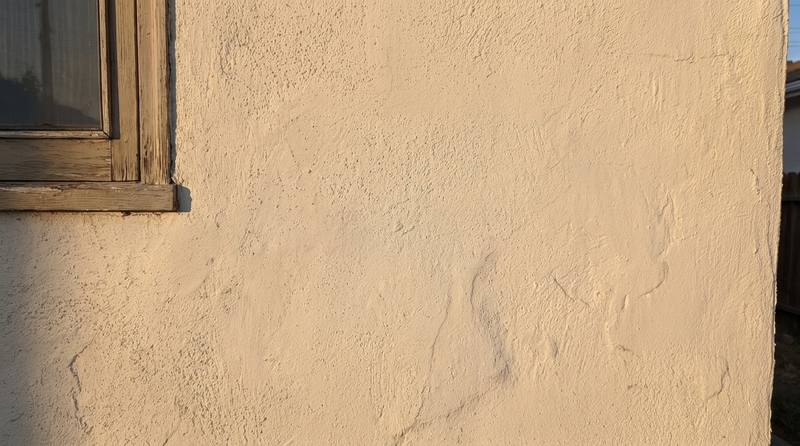 AFTERBEFORE
Every one of these is a repair a Kaminskiy-certified technician from our Redwood Shores office scopes in writing: the coats it takes, the visits between them, and the color it has to match.

Priced and on the calendar during the first call.

A written quote you approve before anyone drives out.

Three coats, each one cured, warranty in writing.
A one-year workmanship warranty, in writing, on every Bay Area stucco repair.
Three things. Wood framing moves with the seasons, and the fog side swells it in winter while the rain-shadow side in Palo Alto dries it out, so hairline cracks open at the corners of every opening. On the bayside fill the ground settles unevenly under the slab, and the wall cracks on a diagonal. And the sprinklers and planters along the bottom keep the lowest foot wet, where the bond fails and the wall goes hollow. Caught early, each of those is a patch.
A hairline crack narrower than a credit card edge is the stucco moving, and it is sealed and recoated. A crack you can fit a dime in, one that runs diagonally off a corner and keeps growing, a stair-step crack on a fill lot or a wall that sounds hollow across a wide stretch is water or movement, and the look comes first. Call about a crack that is wider at one end than the other, a section that moves when you push it, or a stain inside the house below the crack.
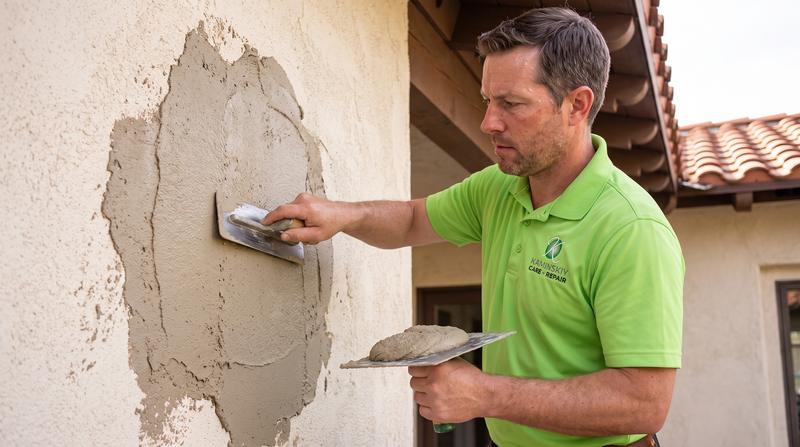
A real stucco patch is cut back to sound lath, then built in three coats: a scratch coat keyed into the lath, a brown coat that brings the thickness level, and a finish coat floated to match. Each coat has to cure before the next one goes on, so the patch is a day of work spread across visits, and we tell you how many on the written scope. A patch done in one pass over a damp wall shrinks, cracks and shows by spring. The finish coat is matched in daylight to the wall around it.
Move the sprinkler heads off the wall and pull the planter soil and mulch down below the weep screed, which is where the wall is meant to drain. Keep paint or a color coat on the stucco so the fog has nothing to soak into, caulk the joint where the stucco meets a window or a door frame, and walk the north wall once a year with your palm on it. A cold, damp patch in July is the one to call about.
Houses from the 1900s to the 1940s, most of them wood-sided or lath and plaster, with stucco on the Mediterranean and Spanish revivals among them. That stucco is thick, hand-floated and often tinted through the finish coat rather than painted. The fog keeps the north and west walls damp for months, so the cracks hold water, the surface chalks and the shaded corners stain green. We open each crack, patch in three coats, float the texture by hand and match a tinted finish with a color coat rather than paint, and in Professorville the repair keeps the original look.
Foster City was built on engineered fill from 1964 and Redwood Shores on the same kind of ground, and the 1960s to 1980s ranches, townhomes and condos on it settle unevenly. The stucco tells you: diagonal cracks off the window and door corners, a crack along the slab edge where the trim pulled away, and a weep screed that disappeared under the lawn. We cut and fill the cracks, re-lath a section that has let go, and set the grade back below the screed. A crack that keeps widening by the season is one for an engineer to read first, and on the association buildings we scope the patch in writing for the board.
The 1950s and 1960s ranch tracts of San Carlos and the hills, and Sharon Heights from the 1960s, carry a lot of plain three-coat stucco over wood frame with sand or dash finishes. Fifty years of sprinklers along the base, planters built up against the wall and a hillside draining toward the house leave soft spots at the bottom, rust bleeding from the corner bead and hairline cracks at every window. The Eichlers of south Palo Alto are wood and glass, not stucco, and belong on our siding page. We patch, match the finish and move the dirt off the wall.
Call 855-695-1195 or text a photo of the crack, the hollow spot and the base of the wall, with something in the frame for scale. Most Peninsula stucco repairs get a range on the call and a date for the look.
A technician taps the wall for hollow spots, measures the cracks, checks the weep screed, the sill caps and the flashing, and notes the texture and the color. The scope lists the patches, the coats, the visits and the price, and whether the city wants a permit for it.
Cracks are cut and filled, loose stucco comes off to sound lath, the scratch coat goes on and cures, then the brown coat, then the finish coat floated to match. The days between coats are part of the job, not a delay.
The finish coat is color matched or the patch is primed and painted to the wall, the cut-off stucco leaves with us, and the one-year workmanship warranty is on the invoice at the price you approved.
California lets an unlicensed person take a job only when the whole price is under a small set amount, no permit is needed and nobody is hired to help. A stucco patch built in three coats passes that line as soon as the lath comes into it, and the Peninsula cities that permit the work push it past the line on their own. Kaminskiy Care and Repair holds License #1120648, is bonded and insured, sends Kaminskiy-certified, background-checked technicians, and writes up every job over the state's written-contract threshold before the first cut.
The six Peninsula cities do not read a stucco repair the same way. San Mateo issues an over-the-counter permit for the repair of existing stucco or siding and lists painting and similar finish work as exempt. Palo Alto, Foster City and San Carlos exempt finish work and permit a re-siding of a whole building, and Menlo Park and Redwood City follow the state residential code, which asks no application for an ordinary repair that cuts no wall or structural member. Filling cracks, patching a section and recoating are maintenance in five of the six; re-lathing a large area is a permit anywhere; and we ask the city's counter before we quote rather than guess.
Most Peninsula single-family streets have no association, but Foster City and Redwood Shores are largely townhome and condo communities, and the board owns the color scheme and often the wall itself, so a patch there is scoped in writing for the manager. Professorville is a national historic district and Old Palo Alto keeps its look, so a repair there matches the original texture and color rather than modernizing it, and we tell you when a change in finish would need the city's historic review.
Our Peninsula office is in Redwood Shores. Your Peninsula crew works out of 303 Twin Dolphin Drive in Redwood Shores, off Highway 101 between San Mateo and Palo Alto, which is why a Peninsula call can usually be scheduled within days. Call 855-695-1195, text a photo, or send the form.
Can't find your answer? Call 855-695-1195 and ask us anything.
Call 855-695-1195Longer than a single morning. A patch is cut back to sound lath and built in three coats, scratch, brown and finish, and each coat cures before the next goes on, so the work is spread over visits a few days apart. The written scope says how many visits for your wall. A crack filled and recoated is quicker, but even that gets a return trip to check the color once it dries.
Close enough that you will have to point it out, and on a painted wall a repaint of the whole face makes it disappear. We float the finish coat to the texture around it, sand, dash or smooth, and match the color in daylight. A tinted finish on a 1920s San Mateo Park wall gets a color coat, not paint. The one honest caveat: a fresh patch is always a shade off the weathered wall for a few weeks while it cures.
Not about the fine ones at the window corners; wood framing moves and the stucco shows it. Seal them so the fog stops soaking in. Worry about a crack that is widening, one that runs diagonally off an opening on a Foster City or Redwood Shores lot, a stair-step crack, or a wall that sounds hollow across a wide area. Those get a look, and a crack that follows the foundation goes to an engineer first.
No. EIFS is a foam-and-mesh system with its own drainage details, and a patch that is not done to the system's spec traps water inside the wall. We tell you on the call if your wall is EIFS, which is common on commercial buildings and some newer homes, and send you to the system's certified installer. Traditional three-coat stucco over lath is ours.
It depends on the number and size of the patches, whether the lath has to be replaced, how high the work is and what the finish takes to match. Text photos with something for scale and you get a range on the call; after the look you get a written scope with each patch, the coats and the visits priced before anything starts. The invoice matches the scope you signed.
Yes. Every stucco repair carries a one-year workmanship warranty in writing and is done by Kaminskiy-certified, background-checked technicians under California contractor License #1120648, bonded and insured.
In San Mateo a repair of existing stucco is an over-the-counter permit, and we pull it. In Palo Alto, Foster City, San Carlos, Menlo Park and Redwood City, filling cracks, patching a section and recoating are finish work or ordinary repair and need nothing; re-lathing a large area or re-stuccoing a wall is a permit everywhere. We ask the city before we quote and tell you what it said.
San Mateo, Foster City, Belmont, San Carlos, Redwood City and Redwood Shores, Menlo Park, Atherton and Palo Alto, plus Burlingame, Hillsborough, Woodside and East Palo Alto, all from our Redwood Shores office. The East Bay and the South Bay have their own Kaminskiy offices and their own stucco pages. Call 855-695-1195 to confirm your address.
Send a photo of the wall and the address. We call back with a written price and the visits it takes. Calling is still fastest: 855-695-1195.
Priced on the call, blended to match, warranted in writing.
We answer in under three rings, 24/7.No price games. You get a clear written quote before any work begins, backed by our workmanship warranty.
