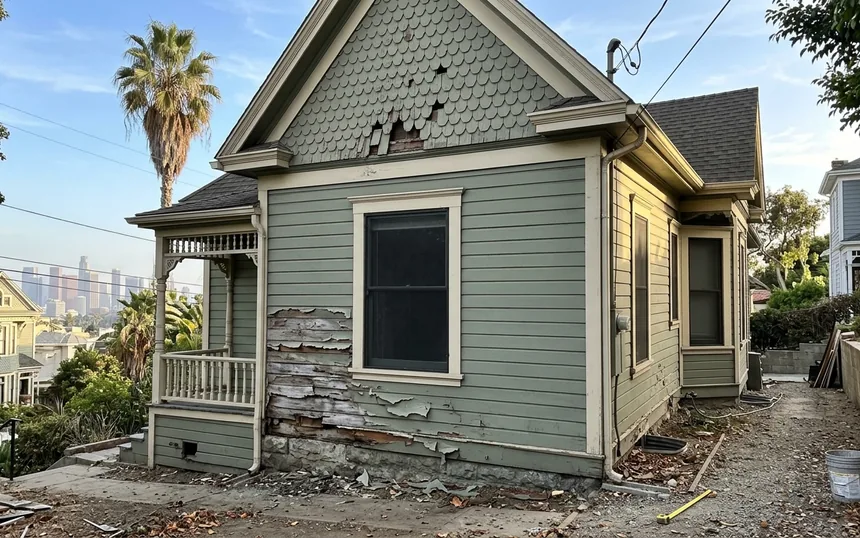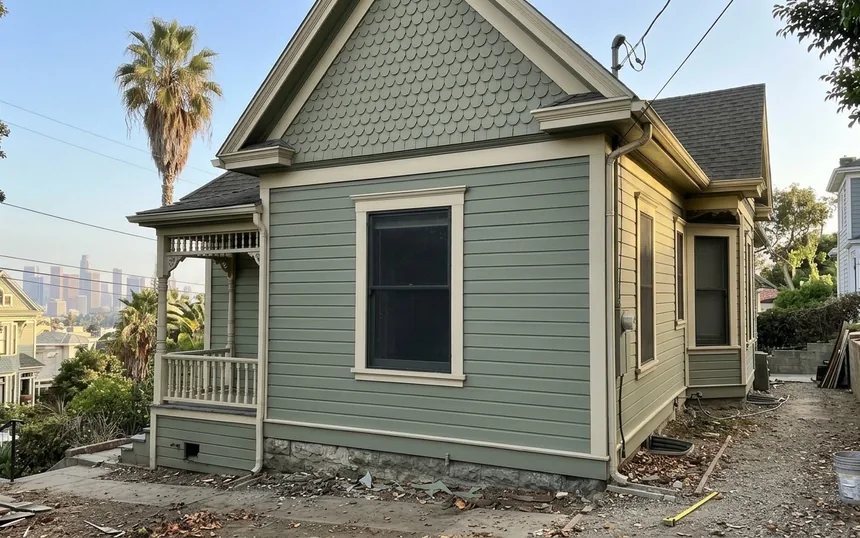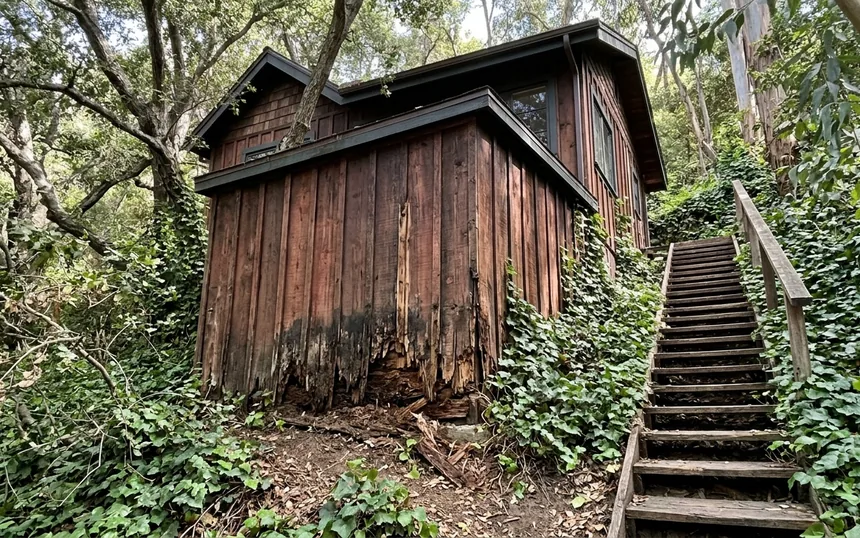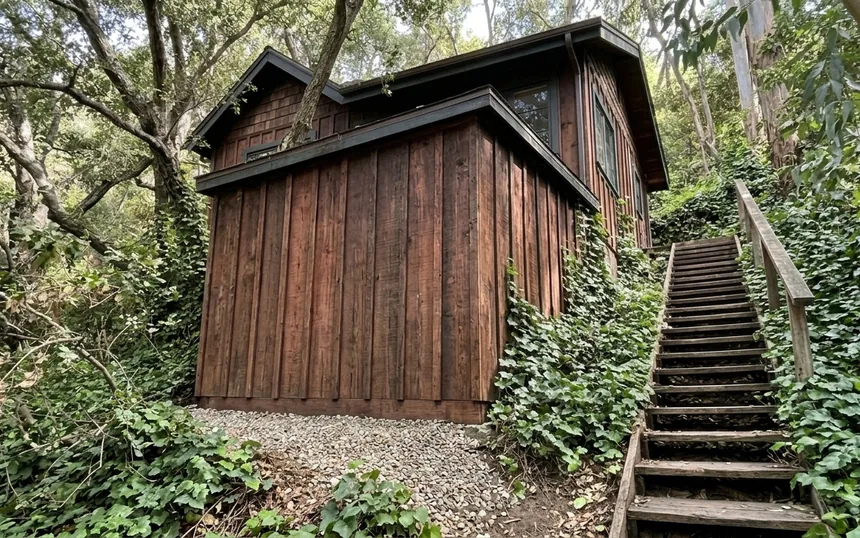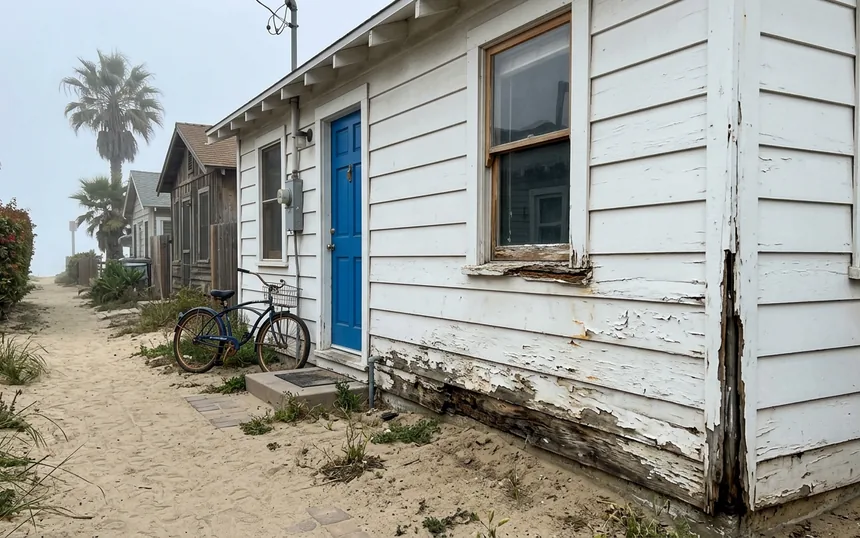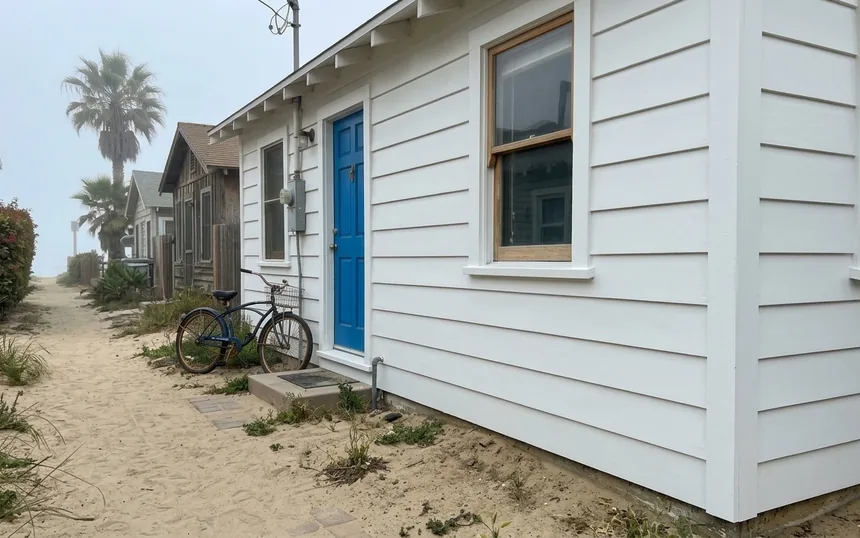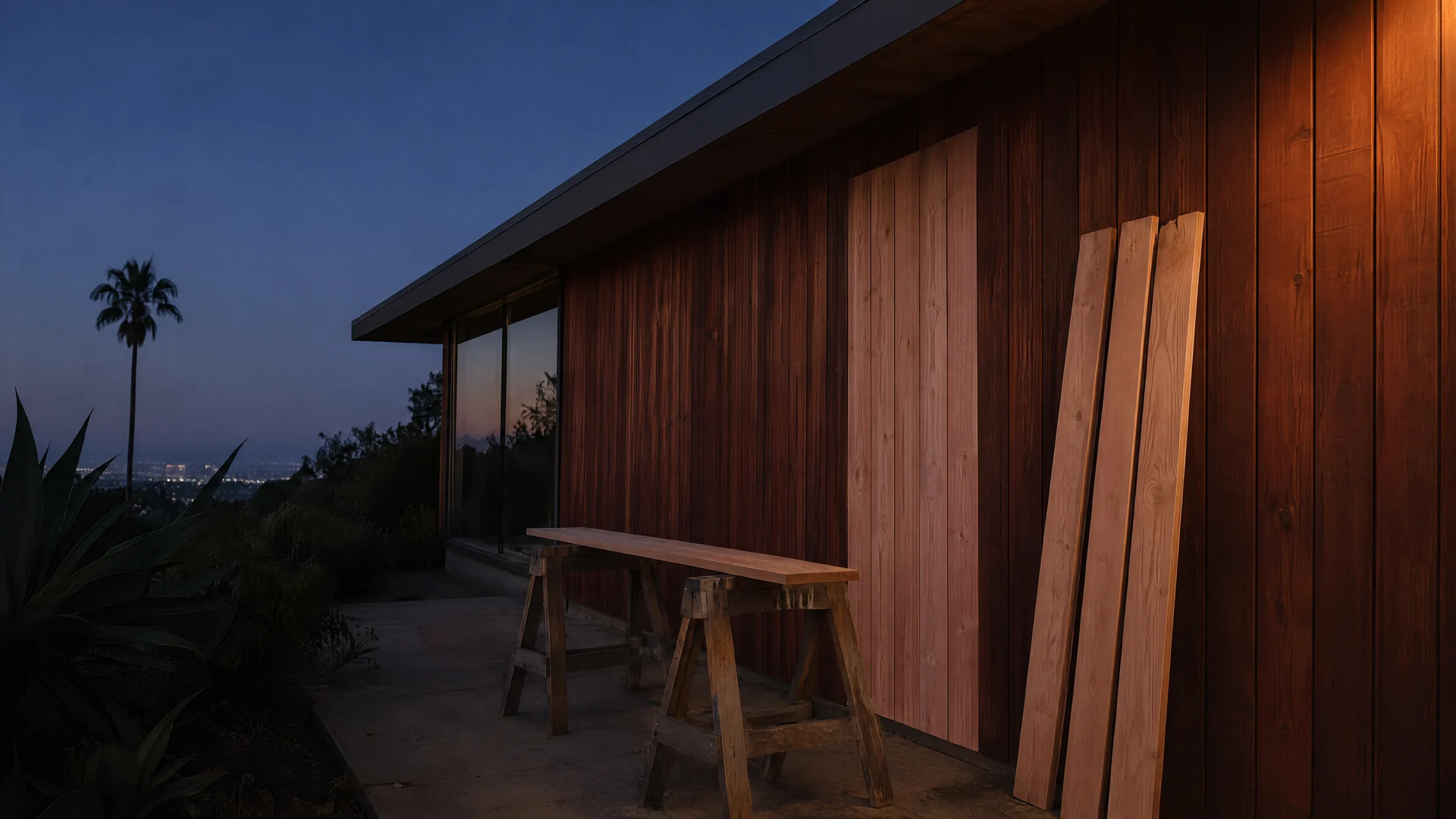
Victorian lap and fish-scale shingle, canyon board-and-batten, beach-bungalow shiplap, mid-century redwood and the Hardie on the new Westside builds: replaced board for board, flashed, and painted or stained so the wall reads as it did.
 BBBAccredited Business
Kaminskiy Care and Repair repairs and replaces siding across Los Angeles: the narrow lap and fish-scale shingle of the Victorians, the board-and-batten of the canyon houses, the shiplap of the Venice and Mar Vista bungalows, the vertical redwood of the mid-century hillside homes, and the fiber cement (Hardie) going up on the Westside. Failed boards are cut out to sound wood, the paper and flashing behind them lapped so the wall drains, and new material milled or stocked to the original profile, primed on every face and finished to match. A licensed siding contractor (CSLB #1106209) and an EPA Lead-Safe Certified firm, from our office on Wilshire Boulevard in Beverly Hills, every repair priced in writing on the call: 310-928-6211.
 From the Victorians to the new Westside builds.
A hundred years of Los Angeles building means a wall rarely takes a board off the shelf. A Victorian's lap is narrower than today's stock, a canyon cabin's battens were ripped on site, a mid-century wall is tongue-and-groove redwood that has not been sold at a lumberyard in decades. We measure the exposure and the profile, mill or source the match, back-prime every piece, and carry the paint or the stain to a corner so the repair belongs to the house.

 AFTERBEFORE
 Victorian Lap & Shingle
 Board-and-Batten & T1-11
 Fiber Cement & Hardie
 Craftsman Trim & Sills
 Dry Rot & Termite Damage
 Vinyl Siding Repair
 Paper, Flashing & Paint
 Walk-Through & Warranty
Every one of these is a call we take every week from Venice to Silver Lake. Text a photo and most siding repairs are priced on the call, in writing; when a soft spot may reach the sheathing, we look first and put the scope on paper before anything is scheduled.

We name the siding and the era, tell you whether an overlay zone or the city has a say, and price the repair in writing.

The bad boards or shingles come off, the sheathing and paper are read with a moisture meter, and you see the photos before new wood goes on.

New siding milled or stocked to the profile, primed on every face, flashed so it drains, then painted or stained to the wall.
Every job is backed in writing by our workmanship warranty and done by a Kaminskiy-certified, background checked technician.
Victorian lap is narrow, often four inches to the weather, with drop or novelty siding on some walls and fish-scale shingles in the gables. Board-and-batten is wide vertical boards with thin strips over the joints, common on canyon cabins and ranch homes. Shiplap overlaps with a rabbet and shows a crisp shadow line on the bungalows. Mid-century homes used vertical tongue-and-groove redwood. Fiber cement on the newer builds is heavy, smooth or grained, and cracks instead of rotting. We name yours from a photo.
On an older Los Angeles house the answer is almost always repair in kind: the original wood is denser than anything sold today, the profile is part of the house, and in a historic overlay zone it is what the board expects. Re-siding makes sense on one face of a house where the sheathing has failed, or on a later addition clad in T1-11, and we price both in writing.
Three tells: a modern board with a wider exposure than the original, a fresh coat next to a wall the sun has chalked for years, and stain over new redwood that has not weathered at all. We match the exposure and the profile, back-prime or pre-stain every board, and on a faded face finish the whole elevation to a corner.
Pull the ivy and the soil off the base of a hillside wall, keep the sprinklers off the siding in the flats, clear the downspouts, and renew the caulk at the trim before the paint over it cracks. Restain vertical redwood before it goes gray, not after. A board this year is a wall in five.
Los Angeles is a stucco city with whole neighborhoods built in wood: the Victorians around downtown, the Craftsman and storybook streets of the twenties, the canyon cabins, the beach bungalows and the mid-century hillside houses. Each era used its own siding, and each fails in its own way.
Victorians and Craftsman homes from the 1880s to the 1920s with narrow lap, drop siding and fish-scale shingles under a century of paint. Several of these streets are historic preservation overlay zones, where a repair in kind needs no review and a new material does. Every one of these houses is older than 1978, so the paint is tested first and the work is done lead-safe by an EPA Lead-Safe Certified firm.
Board-and-batten cabins, mid-century houses in vertical redwood and post-and-beam homes on steep lots, the uphill walls pressed by soil and ivy and the downhill walls in full sun. The hillside streets have been a very high fire hazard zone since 1999, so a repaired board is maintenance and a re-sided wall is built in an ignition-resistant material such as fiber cement.
Beach bungalows in shiplap and lap under the marine layer, the Mar Vista Tract's modernist houses in vertical wood, courtyard buildings in West Hollywood, and new builds in fiber cement panel and lap. Salt and fog take the ocean-facing courses first and rust the old nails; the new builds crack at corners and nails. Beverly Hills and West Hollywood run their own building counters, and we check theirs before a larger job.
Most of it. Old-growth redwood and fir on a Los Angeles house outlasts anything sold today, and it fails at the bottom courses, at the sills and wherever a gutter or a planter has kept it wet. We cut back only to sound wood, splice in a matching piece and save the rest. When the sheathing behind a whole face has gone soft, that face is opened, rebuilt with new paper and flashing, and re-clad to the original profile.
On three counts. The profile: lap exposure, drop or novelty pattern, shingle shape, batten width or tongue-and-groove width, milled to match where stock does not. The texture: smooth or rough-sawn, painted or stained. The finish: color-matched from a chip and carried to a corner or trim line, or stain blended into weathered redwood. In an overlay zone the in-kind repair is the simple case, and we photograph before and after for the file.
It is priced on the call, in writing, from a photo. Four things move the number: how much siding has failed, whether the profile is stocked or has to be milled, how the wall is reached (a hillside stair or a second story is a different day), and how much painting or staining it takes to make the repair disappear. The materials are named on the quote, with no percentage markups.
An unlicensed handyman may take a job only when labor and materials together come to less than one thousand dollars and no permit is needed (Business and Professions Code 7048, raised by AB 2622 in 2025). In the City of Los Angeles most siding work beyond a small repair also needs a permit, which takes it past that line twice. Kaminskiy Care and Repair holds a B general building license (CSLB #1106209), is bonded and insured, and the number checks on the CSLB site.
We name the siding, check whether the street is in an overlay zone or a fire zone, and price the repair in writing. A large soft area gets a look first.
The failed boards come off, the sheathing and paper are read with a moisture meter, old paint is tested on a pre-1978 house, and you get the photos.
Paper and flashing lapped so water runs out, boards milled or stocked to the profile, primed or pre-stained on every face, fastened to hold in the salt air.
Paint or stain carried to a break, the site and the hillside stairs cleaned, the photos and the one-year workmanship warranty in your inbox.
The City of Los Angeles reads the code tightly: LADBS needs no permit for painting and similar finish work, or for regulated work under a small set value that does not touch structural stability, and asks for a permit to alter or repair a building beyond that. A few boards painted to match sit on the first side of that line; a run of siding, a re-sided face or anything that reaches the framing sits on the second, and we pull the permit. Beverly Hills and West Hollywood keep their own exempt lists, and we check them rather than guess.
In a historic preservation overlay zone, such as Angelino Heights, Highland Park-Garvanza, Jefferson Park or the Mar Vista Tract, ordinary repair in kind needs no review while a new material, profile or window opening goes through the zone's board first. In Beverly Hills a landmark or a contributing house needs a Certificate of Appropriateness before the outside changes, and in West Hollywood a designated cultural resource does too. A matched repair is the case those rules are written to protect.
The hillside streets of Los Angeles have been a very high fire hazard zone since 1999, and Beverly Hills north of Sunset is in it too: a board-for-board repair stays maintenance, and a re-sided wall there is built in an ignition-resistant material such as fiber cement. A house built before 1978 may carry lead paint. Kaminskiy Care and Repair is an EPA Lead-Safe Certified firm: the paint is tested before boards are cut, the work area is contained and the cleanup is checked before we leave.
In the middle of the Westside. Our Los Angeles crew works from Wilshire Boulevard in Beverly Hills and covers the city from the beach bungalows to the canyon houses and the old neighborhoods around downtown. Call 310-928-6211, text a photo of the siding, or send the form, and we answer in under three rings. Since 2023 our technicians have completed 598 repair visits on 344 homes in Los Angeles, Beverly Hills and West Hollywood.
Can't find your answer? Call 310-928-6211 and ask us anything.
Call 310-928-6211Repaired, on most Los Angeles houses. The original redwood and fir fail at the bottom courses, at the sills and where water has been allowed to sit, while the rest of the wall is sound. We cut back to sound wood, splice in matching pieces, check the paper and sheathing behind them and finish to match. A face is re-sided only when the sheathing behind it has failed, or on a later addition clad in T1-11, and we say so on the call.
Yes. A few lap boards by a porch, a row of fish-scale shingles in a gable, the battens at the bottom of a canyon wall, two vertical redwood boards beside a window. Where the profile is no longer sold we mill it, then back-prime or pre-stain every piece and finish it so the repair does not show. Call 310-928-6211 or text a photo and we price it in minutes.
It is priced on the call, in writing, from a photo of the wall. The number moves with how much siding has failed, whether the profile is stocked or has to be milled, how the wall is reached on a hillside lot or a second story, and how much painting or staining it takes to make the repair disappear. The materials are named on the quote, with no percentage markups.
In the City of Los Angeles, painting needs none and neither does regulated work under a small set value that does not affect structural stability; most siding work past a few boards is a building permit, and we pull it. In a historic preservation overlay zone, repair in kind needs no review but a new material does. Beverly Hills and West Hollywood keep their own exempt lists, and we check them before quoting a larger job.
Only a small job. California lets an unlicensed handyman take work when labor and materials together are less than one thousand dollars and no permit is needed (Business and Professions Code 7048, as raised by AB 2622 in 2025). In Los Angeles most real siding repairs pass that line. Kaminskiy Care and Repair is a licensed B general building contractor (CSLB #1106209), bonded and insured.
Yes. We measure the exposure, the profile and the shingle shape, mill what is not stocked, and match the paint from a chip or blend the stain into weathered wood. In an overlay zone or on a landmark, the in-kind repair is what the rules protect, and we photograph before and after so the file shows the work matched the original.
It depends on the era. Victorians and Craftsman homes around downtown carry narrow lap and shingle that fail at the bottom courses and the sills. Canyon houses carry board-and-batten that rots where soil and ivy meet it. Beach bungalows carry shiplap that swells on the ocean side, mid-century hillside homes carry vertical redwood that splits in the sun, and new Westside builds carry fiber cement that cracks at nails and corners. We tell you which you have on the call.
The City of Los Angeles and its neighbors from our office in Beverly Hills, including West Hollywood, Bel Air, Westwood, Brentwood, Pacific Palisades, Venice, Mar Vista, Palms, Hancock Park, Silver Lake, Echo Park, Los Feliz and the Hollywood Hills. Call 310-928-6211 with the address and we confirm it on the call.
Tell us the neighborhood, the siding and roughly how much has failed. We'll call back with a price and a day. Calling is still the fastest way: 310-928-6211.
Original profiles matched and finished, a one-year workmanship warranty, from one licensed Los Angeles team.
We answer in under three rings, 24/7.No price games. You get a clear written quote before any work begins, backed by our workmanship warranty.