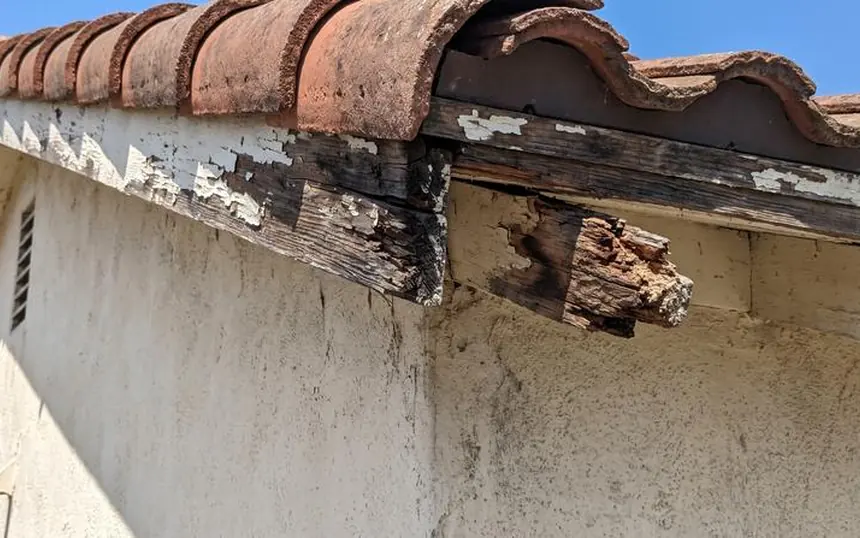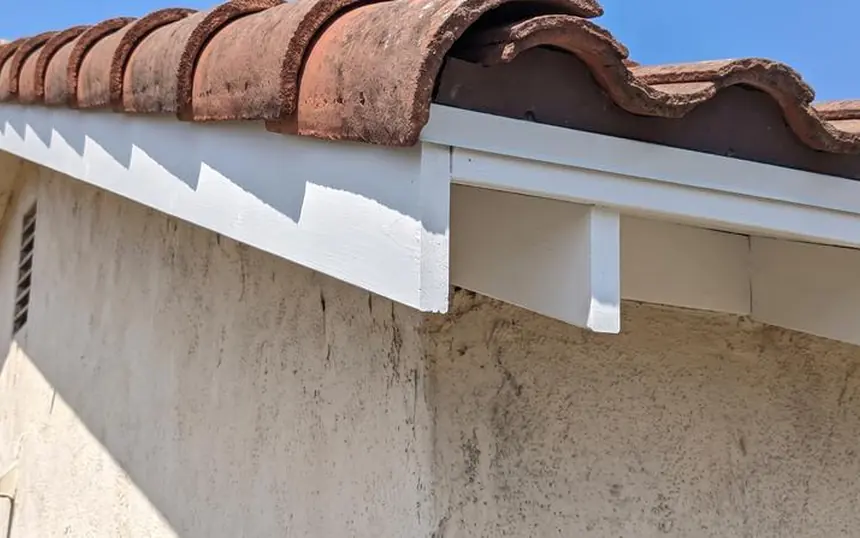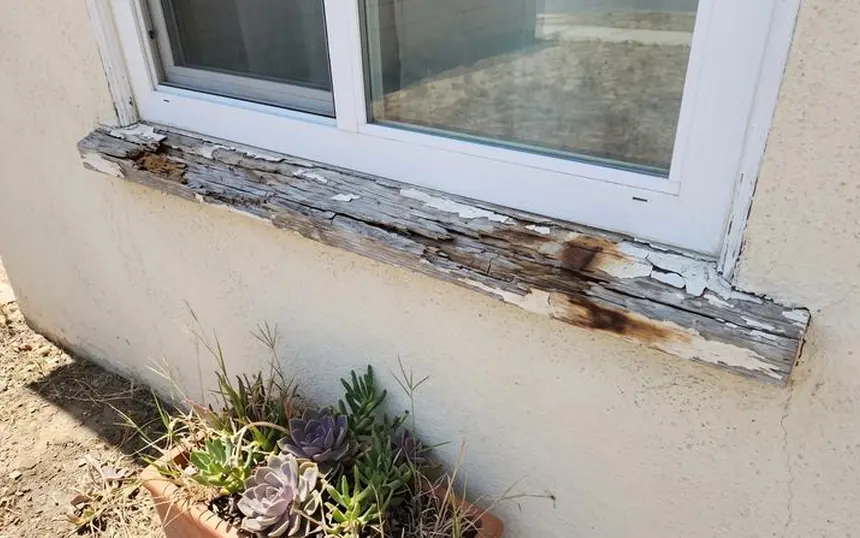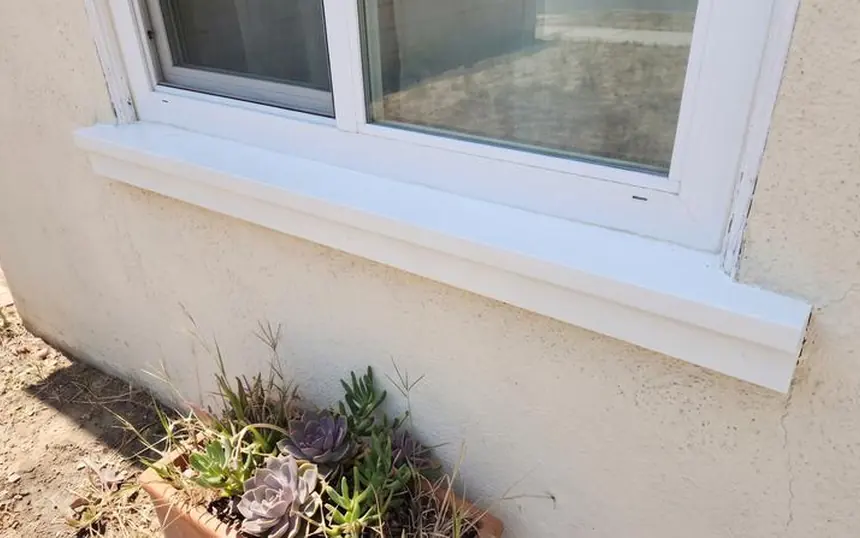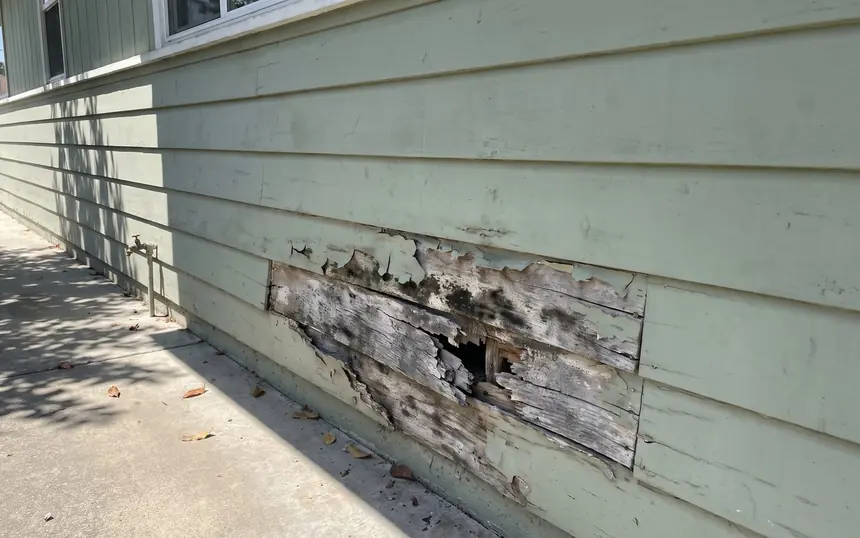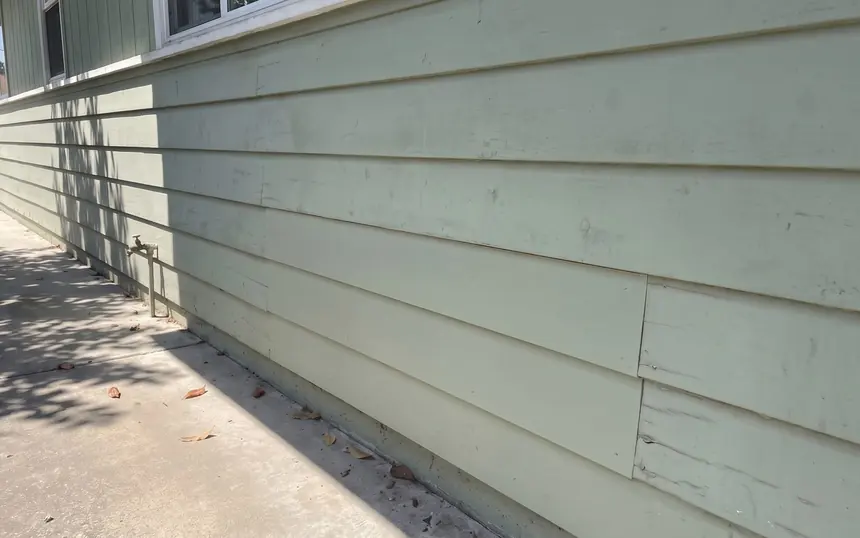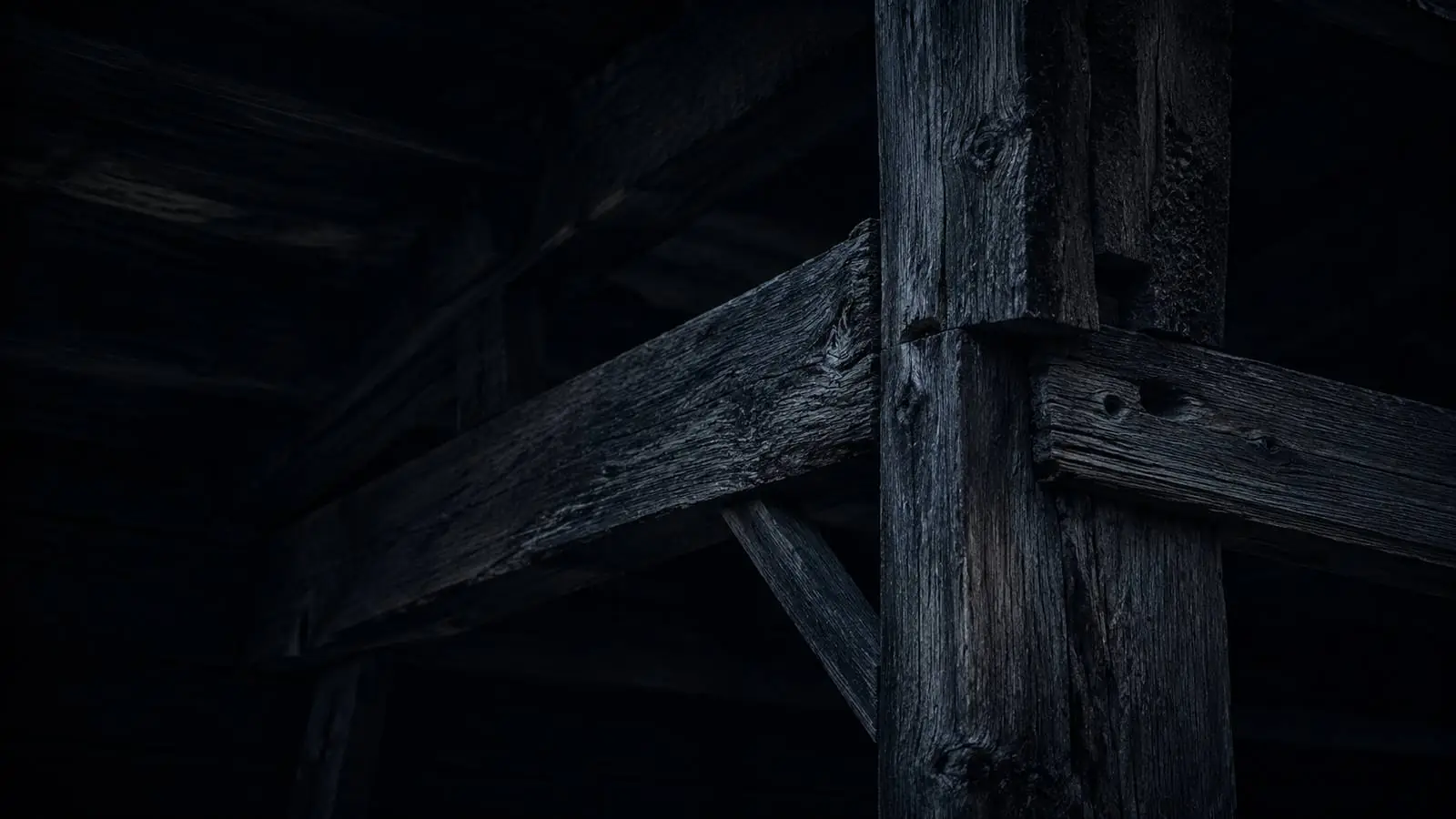
Rafter tails, fascia, wood-sash sills, siding and deck boards cut out and rebuilt with sound wood, painted to match the house. Priced in writing before we start.
 BBBAccredited Business
Kaminskiy Care and Repair rebuilds rotted and termite-damaged wood across Los Angeles, from the Westside and the Palisades to Mid-City, Los Feliz, Silver Lake and the hillside streets above Sunset: the exposed rafter tails and fascia on the 1920s Spanish homes, the wood-sash sills in Hancock Park, the lap siding on the Mar Vista and Venice bungalows, the deck boards and railings on the canyon lots. Cut back to sound wood, rebuilt, primed, painted and sealed, with the gutter end or the sprinkler head that caused it fixed. A licensed pest company treats the termites; we rebuild what they ate. The price is in writing before anything starts, from our office on Wilshire Boulevard. Since 2023 our technicians have completed 494 repair visits on 287 Los Angeles homes, rot among them.
 Eight repairs, one crew, priced in writing before we start.
Ninety-year-old exposed rafter tails, a marine layer on the Westside, baking sun on the hillsides and drywood termites in every eave: that is how Los Angeles wood goes soft. We open it up, cut back to sound wood, rebuild with the same profile, prime, paint and fix the drip that started it.
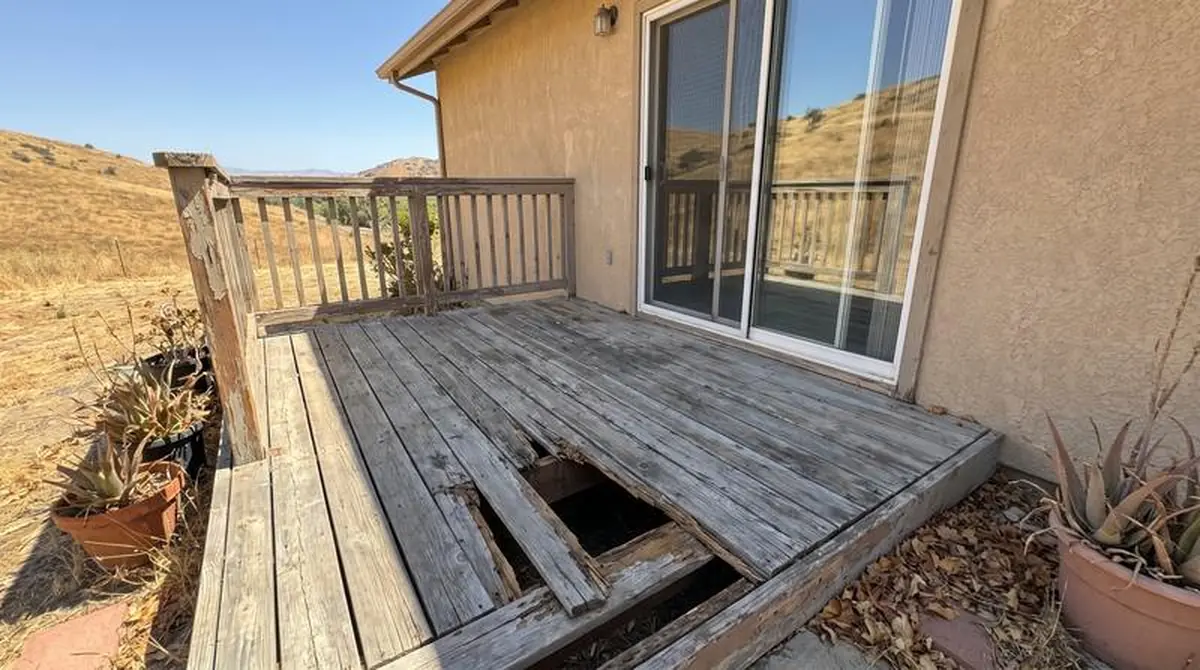
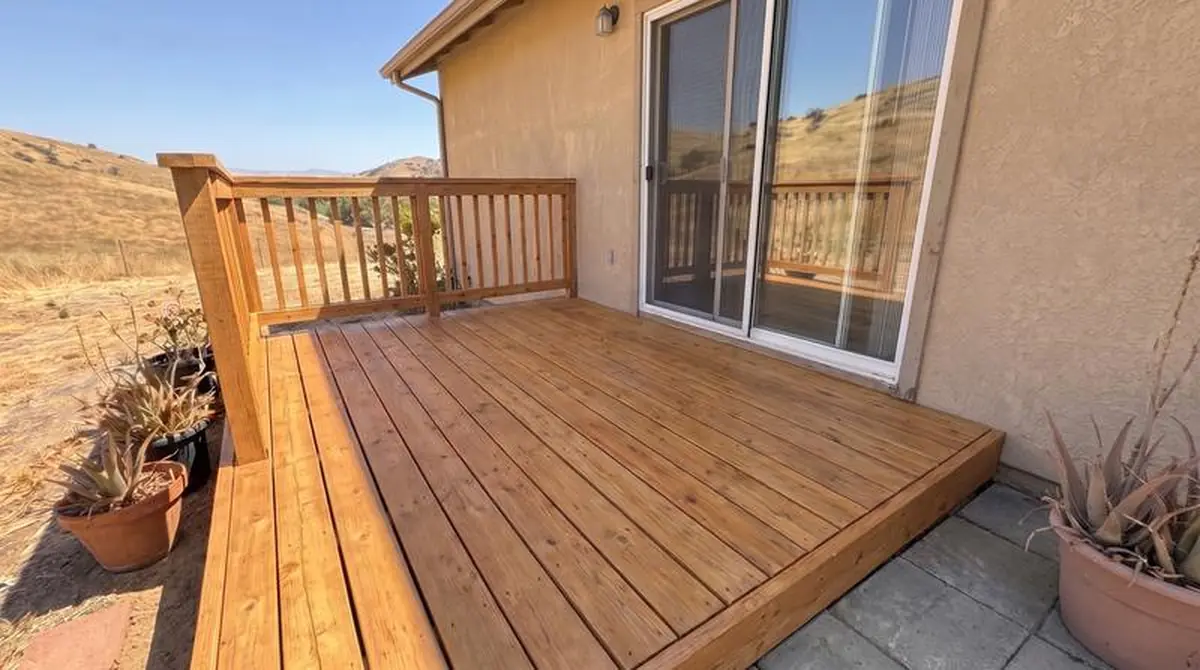 AFTERBEFORE
 Fascia & Eaves
 Window Sills
 Door Jambs & Casings
 Trim & Siding
 Termite Damage Rebuilds
 Deck Boards & Railings
 Stairs & Posts
 Primed, Painted & Sealed
A rafter tail or a sill is an afternoon of carpentry if you call this season; a rebuilt eave is not. A Kaminskiy-certified technician prices most Los Angeles fascia, sill, trim and siding repairs on the call, in writing, and a bigger rebuild gets a written scope after a look.

We answer in under three rings and get you priced and scheduled in minutes.

A clear, written quote with upfront pricing. You approve before work begins.

Kaminskiy-certified pros finish the job with a workmanship warranty.
Every rot and termite damage repair carries our one-year workmanship warranty, in writing, and is done by a Kaminskiy-certified, background checked technician.
Age and exposure. Most of the city's houses went up between 1920 and 1960 with the wood on the outside: exposed rafter tails under Spanish tile, wood-sash windows, redwood fascia and lap siding. The Westside sits under the marine layer until June, the hills bake from July to October, and the winter storms find every joint where the paint and the caulk gave up. Add a sprinkler head aimed at the stucco and the same corner board is wet every morning for thirty years. Rot in Los Angeles is a joint-by-joint problem, and we look at the rafter tails and the sills first.
The termite in most Los Angeles eaves is the drywood kind: it lives inside the rafter tail or the fascia, needs no soil, swarms in late summer and fall and pushes hard six-sided pellets out through pinholes. Subterranean termites come up from the dirt in mud tubes where the stucco or the siding meets the ground, and the canyon lots with shade and irrigation see more of them. A licensed pest company treats the colony; we rebuild the board after, and we schedule the two in the right order.
A rafter tail filled with putty and painted looks fine from the driveway for one winter. Rot keeps working behind the filler, and the tail that was repairable becomes a rafter that is not. We cut back until the probe stops sinking, splice or replace the tail with the same profile, back-prime the new wood, set it, caulk the joint and paint it to the house, so the repair reads as original from the street.
Extend the downspouts so they do not empty at the corner of the house, turn the sprinkler heads away from the stucco, keep the caulk at every sill-to-stucco joint unbroken, and repaint the south and west walls before the paint fails. On a 1920s house the paint film is the only thing between the rain and the end grain.
1920s and 1930s Spanish and Tudor homes with exposed rafter tails, wood-sash windows and redwood trim that has taken ninety years of weather. The tails go soft at the ends behind a dripping gutter, the sills rot at the corners, and drywood termites take the dry eaves. We splice new tails to the same profile, rebuild the sills to shed water and paint to match.
Decks, balconies and railings facing the weather, 1950s and 1960s post-and-beam homes with beam ends open to the sun, and canyon lots where the shade and the irrigation keep the base of every post damp. Deck boards go soft at the ends, railing posts rot at the base, and a ledger can hide damage behind the stucco. We rebuild boards and rails where they stand and name a ledger problem before anyone opens the wall.
Closer to the water the marine layer keeps the ocean-facing sills and the lap siding on the bungalows damp half the year, and the salt air eats the paint film. The bottom courses of siding, the sills and the sashes go first. We replace the rotted run, match the profile and the reveal, back-prime the new boards and carry the paint over the joint.
A fascia board, a sill or a trim piece is priced on the call, in writing. A bigger rebuild gets a look first and a written price before anything starts.
We cut back to sound wood and probe how far the rot really goes. If it runs further than the photo showed, you hear it before we go further, with the price.
New wood primed on all sides, caulked, painted to match, and the water path that caused it fixed: the drip edge, the flashing, the gutter end, the sprinkler.
The work area is cleaned before we leave, and every rot repair carries our one-year workmanship warranty.
The City of Los Angeles reads the rule tightly. LADBS needs no permit for painting and similar finish work or for a low platform or walk, and exempts regulated work under a small set value unless it affects structural stability; beyond that the Building Code asks for a permit to alter or repair a structure. A fascia board, a sill or a trim piece painted to match is usually the first kind; a rebuild into rafter tails or wall framing is the second, and we tell you which on the call rather than guess.
A Los Angeles sale runs on the termite report, written by a licensed structural pest control company. Section 1 is the active infestation and the damage it caused; Section 2 is the conditions likely to lead to it. Treating and certifying is their trade. The rafter tails, sills, siding and deck boards on that list are ours, and the company reinspects when we are done. Send the report with the address and the price comes back from it, in writing.
Most of Los Angeles has no association. The condo buildings along Wilshire and the Westside now carry California's balcony inspection law, and apartment owners carry their own version of it: an engineer or architect inspects the balconies, decks, walkways and railings. When the report flags a soft board, a rotted railing post or damaged trim, that is our lane and we put the scope in writing for the board or the owner; a rotted ledger or a structural member goes to the engineer first.
Can't find your answer? Call 310-928-6211 and ask us anything.
Call 310-928-6211We answer in under three rings, and most rafter tail, fascia, sill and trim repairs are priced on the call and scheduled within days from our Wilshire office. A deck, a run of siding or a rebuilt eave gets a look first and a written scope before anything starts.
Yes. After a licensed pest company treats the colony, we cut out what the termites ate in the rafter tails, fascia, trim, siding and the framing we can reach, and rebuild it. Treatment, fumigation and the inspection report are the pest company's; the carpentry is ours, and we schedule after them so the eave opens once.
Yes. Rafter tails, sills, trim, jambs, siding and deck boards are carpentry, and Kaminskiy is licensed, bonded and insured, so a splice into a rafter or a stud is fine too. If the rot has reached a beam that carries the roof or a deck ledger, we say so first and tell you who needs to look at it.
Three things: how much wood comes out once it is opened, how high it is (a rafter tail on a two-story Spanish house is a ladder job; a sill at the slab is not), and the profile and the finish it has to match. Text a photo and the price is in writing before anything is scheduled; if the rot runs further than the photo showed, you hear it before we go further.
No. Paint and filler seal the water in and the rot keeps going behind them, and on a rafter tail the delay turns a splice into a rafter. We cut back to sound wood, rebuild to the same profile, prime on all sides, caulk and paint to match.
Not for painting and finish work, and not for small work under the city's set value that does not touch structural stability; a fascia board, a sill or a trim piece painted to match is usually that. Rot in rafter tails, a beam or wall framing is a permit, and we tell you on the call when a job needs one.
The wood-damage items, yes: rafter tails, fascia, sills, door frames, siding, deck boards. The pest company treats what needs treating and reinspects our repairs. Email the report and the address and the repairs come back priced, in writing, usually the same week.
The City of Los Angeles from our Beverly Hills office, including Mid-City, Hancock Park, Larchmont, Los Feliz, Silver Lake, Mar Vista, Cheviot Hills, Brentwood and Pacific Palisades, plus Bel Air, Westwood, the Hollywood Hills, Beverly Hills, West Hollywood and Culver City. Call 310-928-6211 to confirm your address and get on the schedule.
Tell us where the wood has gone soft, or text us a photo. We'll call you back with a price and a time. Calling is still the fastest way: 310-928-6211.
Priced in writing before we start. Kaminskiy-certified technicians. A one-year workmanship warranty on every job.
We answer in under three rings, 24/7.No price games. You get a clear written quote before any work begins, backed by our workmanship warranty.