 BBBAccredited Business

Kaminskiy Care and Repair repairs water damage and mold damage on drywall, ceilings, trim and cabinets: the leak confirmed stopped, wet material removed, the area dried and treated, then rebuilt and painted to match. Large scale remediation and air testing are referred to a licensed specialist, and we handle the rebuild after. We serve Sunnyvale and the surrounding California communities.
Our office is on Murphy Avenue. Flat-roof scuppers and slab lines lead the Sunnyvale water list.
Sunnyvale is Eichler and ranch-tract country, and its water damage comes from the roof and the floor. A flat or low roof shows a slow scupper as a ceiling stain after the first storm; a supply line poured into a radiant slab shows as a warm spot and a dark baseboard. Add sixty-year-old tub walls. We find which, schedule the licensed roofer or plumber who closes it, cut out the wet ceiling, drywall and trim, dry the cavity, and rebuild it to read as original.
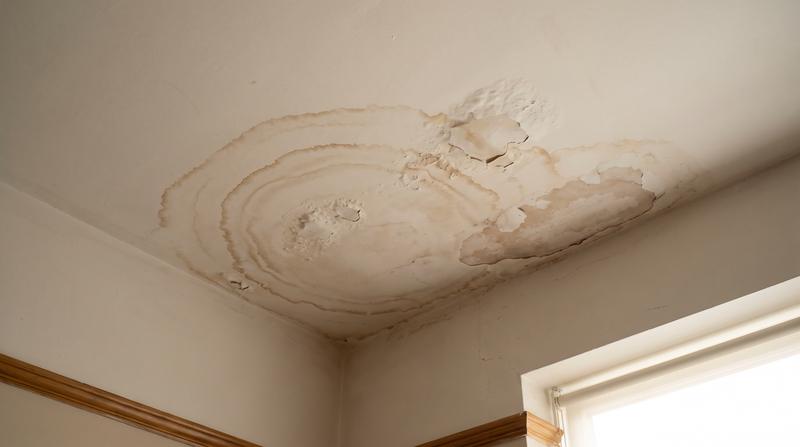
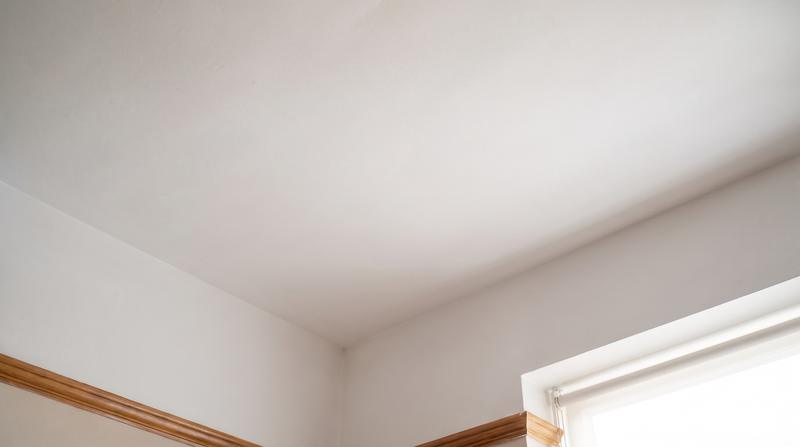 AFTERBEFORE
Our office is minutes from every one of these. A Kaminskiy-certified technician meters it, names the source and writes the scope at the look.

Priced and on the calendar during the first call.

A written quote you approve before anyone drives out.

One crew, the whole list, warranty in writing.
A one-year workmanship warranty, in writing, on every Sunnyvale water damage repair.
Paint hides a stain for a few weeks; it does not stop one. Tannin and minerals follow the water to the surface, and they keep coming as long as the route is open. In Sunnyvale the route is often a flat roof that drains to a scupper, so the stain grows with each storm and stops in April, and the owner forgets it until November. Or it is a slab line that never stops at all. We find the route first, meter the cavity dry, and only then seal, texture and paint.
A firm, stained board or sheet with nothing growing behind it can be dried, sealed with a stain-blocking primer and refinished. Drywall that is soft, sagging or crumbling comes out to sound edges, with the insulation behind it and the baseboard that swelled. An Eichler tongue-and-groove ceiling board or a mahogany panel that has cupped is replaced in kind and finished to match the run, because a patch reads from across the room on a ceiling like that. Subfloor that delaminated comes out to the joists. The written scope says which, board by board.
California licenses no mold trade, so the line we hold is the EPA's: surface growth of about ten square feet or less is removed, treated and rebuilt over by the technician; more than that, growth inside the wall cavities of more than one room, a sewage backup, or anyone in the home with breathing trouble means a remediation company with containment and a written protocol, and that is not our lane. Air and surface sampling is a testing specialist's. They clear it, then we rebuild.
On a flat roof, clear the scuppers and the drains before the first storm and look at the ceiling under each one after it; on a radiant slab, note a warm spot or a jump in the water bill and call before the baseboard shows it. Look under every sink once a season, replace the dishwasher and washer hoses when they stiffen, put a pan under the garage water heater, and recaulk the tub corners the year the bead cracks. Most of the water damage we rebuild in Sunnyvale had been going for a month before the stain showed.
Post-and-beam houses with flat or low roofs that drain to scuppers, radiant slabs with the supply and drain lines poured in, tongue-and-groove ceilings and mahogany paneling, beside ranch tracts with the same 1950s and 1960s tub walls and sink supplies. A slow scupper or a failed roof membrane stains the ceiling; a failed slab line warms the floor and darkens the base; the original tub wall lets go into the hall. We dry the ceiling cavity, replace what is wet, and rebuild the paneling and the ceiling boards to the original lines, with the licensed plumber re-running a slab line overhead rather than cutting the floor.
The oldest houses in the city, some from the 1900s to the 1930s with lath and plaster, wood windows and raised floors, beside 1960s and 1970s stucco tracts with pop-out sills and a water heater in the garage. The old houses leak at the roof and the wood sill into plaster; the tracts leak at the sill corner, the water heater and the dishwasher hose. We cut plaster back to sound lath or set a patch finished to the same plane, rebuild the subfloor over the joists, and keep the Heritage District look on anything that shows.
Compact 1950s homes with builder baths and kitchens, and 1970s and 1980s condos and townhomes where the leak is the unit upstairs, a shared stack or a balcony door. A ring on the ceiling under a neighbor's tub, a soft wall at a shared stack, a swollen base at the slider to the balcony. We dry and rebuild your side, scope it in writing with the source named for the association, and the licensed plumber the association books closes the stack.
Call 408-916-4022 or text a photo of the stain and the roof, the bathroom or the floor nearest it. Small repairs get a range on the call and a date for the look, which from Murphy Avenue is usually soon.
A technician meters the ceiling, the wall and the slab, follows the wet path to a scupper, a roof membrane, a slab line, a tub wall or a sink supply, and writes the scope: what comes out, which licensed trade closes the source, what we rebuild, the price.
The licensed roofer or plumber we schedule stops the water; we cut out the wet drywall, ceiling boards, insulation, baseboard and subfloor, set fans and a dehumidifier, treat the framing and meter it until it reads dry.
Drywall, ceiling boards or paneling replaced in kind, texture, trim and paint matched to the room, the dust gone with us, and the one-year workmanship warranty on the invoice.
Under California law a job below a set small amount may be done without a contractor license, but only when it needs no permit and no one is employed on it; a water damage rebuild, ceiling, drywall, insulation, trim and paint, is past that line before lunch. Kaminskiy Care and Repair is a licensed California contractor (License #1106209), bonded and insured, with Kaminskiy-certified, background-checked technicians. The roof is the licensed roofer's and the line the licensed plumber's; we schedule both and do the tear-out, the drying and the rebuild.
Sunnyvale publishes a sheet of work that needs no building permit, with painting and similar cosmetic work on it and a note that the list is not all-inclusive, and a separate sheet that makes replacing water supply piping a plumbing permit. The state residential code the city builds to needs no application for an ordinary repair to a structure, as long as no wall, beam or bearing post is cut and no supply, drain or waste pipe is replaced or moved. So drywall, ceiling boards, baseboard and a subfloor patch in the same place are ours with no permit; a re-run slab line is the licensed plumber's permit; a roof membrane is the licensed roofer's; and a rotted beam end or joist is a permit and an engineer. We say which at the look.
Most California homeowner policies pay for sudden water, a burst line, a failed water heater, an overflow, and exclude slow seepage, a roof that has leaked for three winters, and flood, which is a separate policy. A slab leak is its own question on many policies: the line itself is often not covered, the damage it did often is, and the policy decides, not us. We photograph before and after, log the meter readings, keep the cut-out material until the adjuster has seen it, and write the scope line by line; we do not adjust claims, and a public adjuster is a licensed trade of its own. In the north-side condos the inside of your unit is usually yours and the stack, the roof and the balcony the association's under the governing documents, so we put the source in writing for the board.
Our office is downtown on Murphy Avenue. The South Bay crew starts the day at 100 S Murphy Avenue, a few minutes from any Sunnyvale street, which is why a Sunnyvale call is usually the first stop on the calendar. Call 408-916-4022, text a photo, or send the form.
Can't find your answer? Call 408-916-4022 and ask us anything.
Call 408-916-4022Not ours; a remediation company does that work. We remove and treat small surface growth on drywall, ceiling boards, trim and framing as part of the rebuild, about the EPA's ten square feet or less. Larger growth, growth through the wall cavities of more than one room, a sewage source or anyone in the house with breathing trouble goes to a remediation company with containment and a written protocol, and sampling to a testing specialist. California licenses neither, so we name companies we have rebuilt behind and come back when they clear it.
Nearly always. A technician meters the ceiling, the wall and the slab, follows the wet path to its high point and matches it to what is there: a scupper or a roof membrane, a slab line, a tub wall, a sink supply, the unit upstairs. In Sunnyvale a stain that grows only when it rains is the roof; a warm floor and a dark baseboard with no rain is the slab. The scope names the source and the licensed roofer or plumber who closes it.
Yes, and on an Eichler that matters more than anywhere. Tongue-and-groove ceiling boards and mahogany panels are replaced in kind and finished to the run, drywall gets the texture matched and feathered past the cut, plaster in the Heritage District gets a patch finished to the same plane, and the paint goes corner to corner so there is no edge to find.
It depends on how much got wet and for how long. A firm stain that needs drying, sealing and paint is a short visit; a ceiling that comes down with its insulation, or a slab-edge wall with the baseboard and the paneling, is a few days with fans running between. Text a photo and you get a range on the call; after the look, a written scope with the tear-out, the drying, the licensed trade and the rebuild priced before anything starts.
Often, when the water was sudden: a burst line, a failed water heater, an overflow. A scupper that has leaked for three winters, and flood, usually are not, and a slab leak is its own clause on many policies. Your policy and your adjuster decide, not us. We give you what the claim needs, dated photos, meter readings, the cut-out material kept until the adjuster has seen it, and a scope written line by line. We do not adjust claims.
Usually nothing is cut. The original supply lines were poured into the slab, and the licensed plumber re-runs a failed line overhead through the walls and the ceiling cavity rather than breaking the floor. Our part is the wall and the ceiling that line runs through, and the baseboard, paneling and drywall the leak darkened: dried, replaced in kind and finished to the house.
Not for drywall, ceiling boards, baseboard or a subfloor patch in the same place; the city's sheet exempts cosmetic work and the state code calls that an ordinary repair. A re-run supply line is the licensed plumber's permit, a roof membrane is the licensed roofer's, and a rotted beam end or joist is a permit and an engineer. We tell you which at the look, before anything is cut.
All of Sunnyvale from Murphy Avenue, including Cherry Chase, Fairbrae, Birdland, Las Palmas, the Heritage District, Ponderosa Park, Raynor, Lakewood and San Miguel, plus Mountain View, Cupertino, Santa Clara and Los Altos. Call 408-916-4022 to confirm your address.
Tell us where the stain or soft spot is. We'll call you back with a price and a time. Calling is still the fastest way: 408-916-4022.
Dried out, rebuilt and painted to match, warranted in writing.
We answer in under three rings, 24/7.No price games. You get a clear written quote before any work begins, backed by our workmanship warranty.
