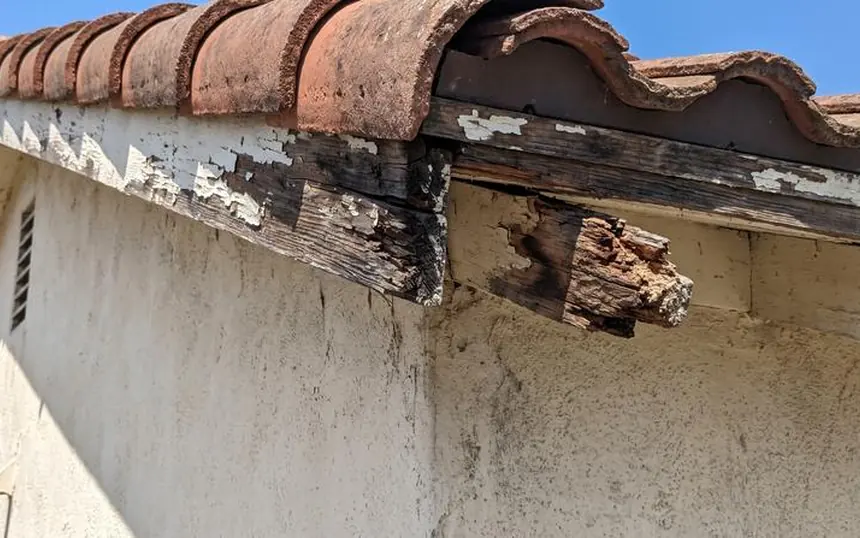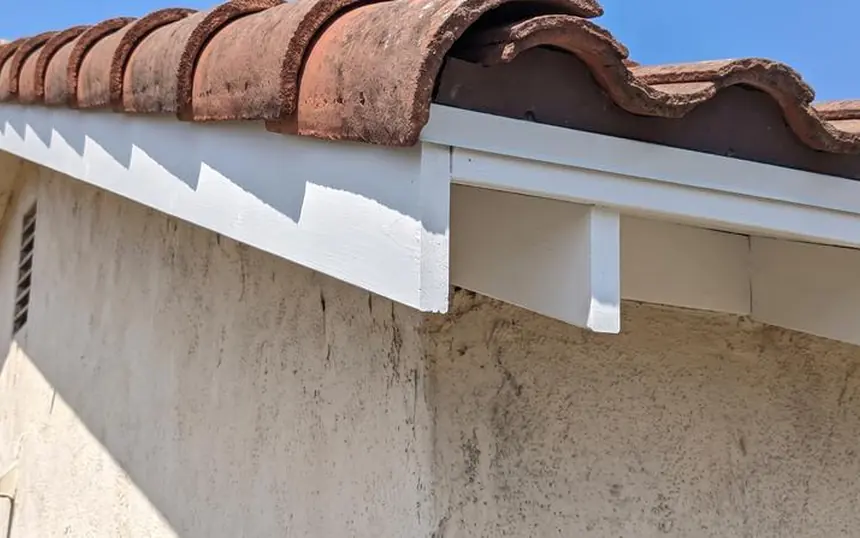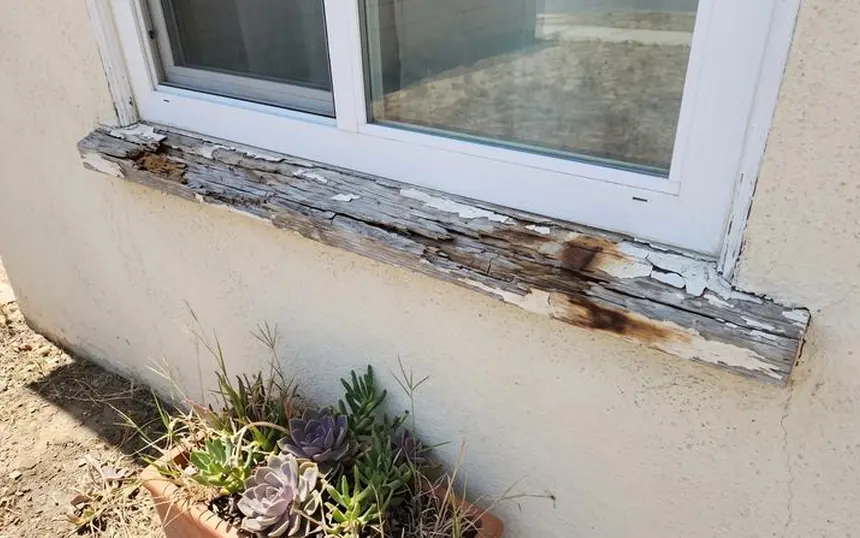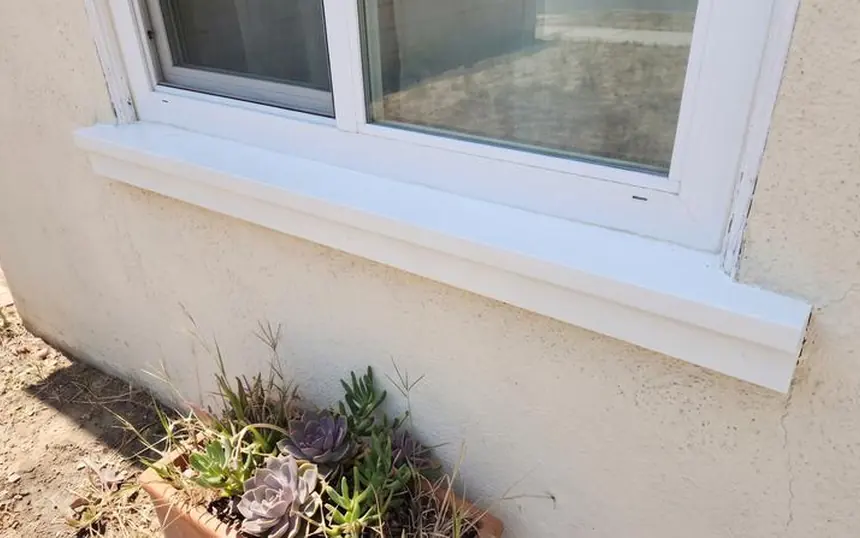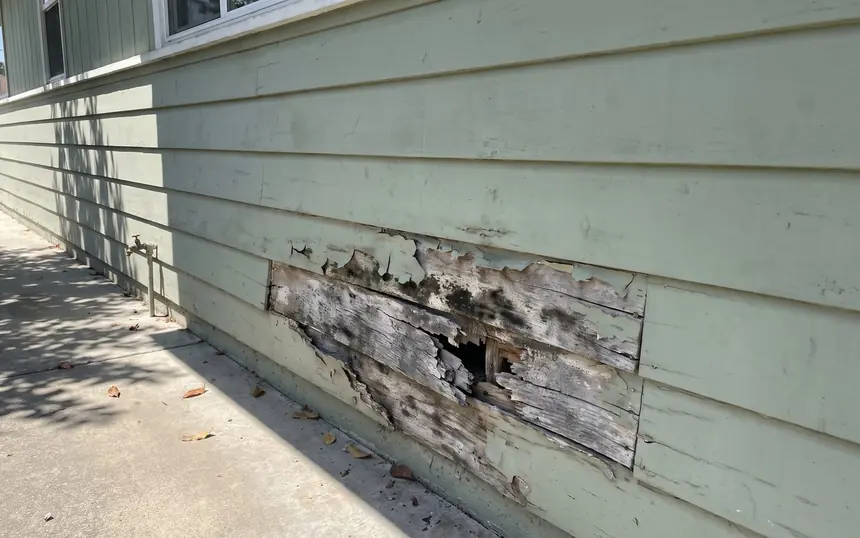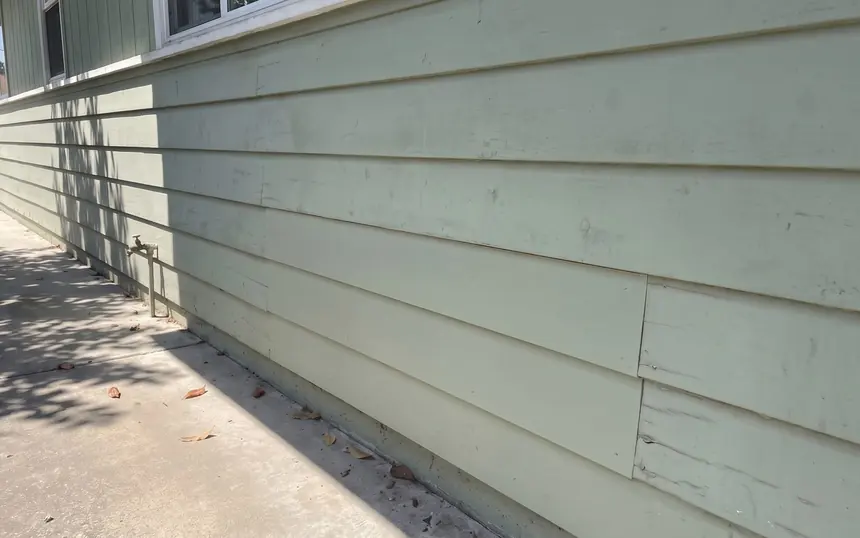
Rafter tails, wood sills, fascia, foothill deck boards and condo balcony trim cut out and rebuilt with sound wood, from an office downtown. Priced in writing before we start.
 BBBAccredited Business
Kaminskiy Care and Repair rebuilds rotted and termite-damaged wood on Glendale homes from an office on North Brand Boulevard, in the middle of the city: the exposed rafter tails and wood-sash sills on the 1920s to 1950s houses in Rossmoyne, Adams Hill and Glenwood, the deck boards and railings on the Chevy Chase Canyon and Verdugo foothill lots, the sun-split fascia in North Glendale, and the balcony trim and railings on the downtown condos after the inspection report. Cut back to sound wood, rebuilt to the same profile, primed, painted and sealed, with the gutter end or the sprinkler head fixed. A licensed pest company treats termites; we rebuild after them. The price is in writing before anything starts. Since 2023 that office has sent technicians on 59 repair visits to 46 Glendale homes.
 Eight repairs, one crew, priced in writing before we start.
Hot valley summers that check the paint, 1920s rafter tails and wood sash on the older streets, foothill decks in the shade and drywood termites in the eaves: Glendale rot starts at the ends of the wood. We cut it back to sound wood, rebuild, prime and paint, and close the gap the water used. Our office is on Brand, so we are never far.
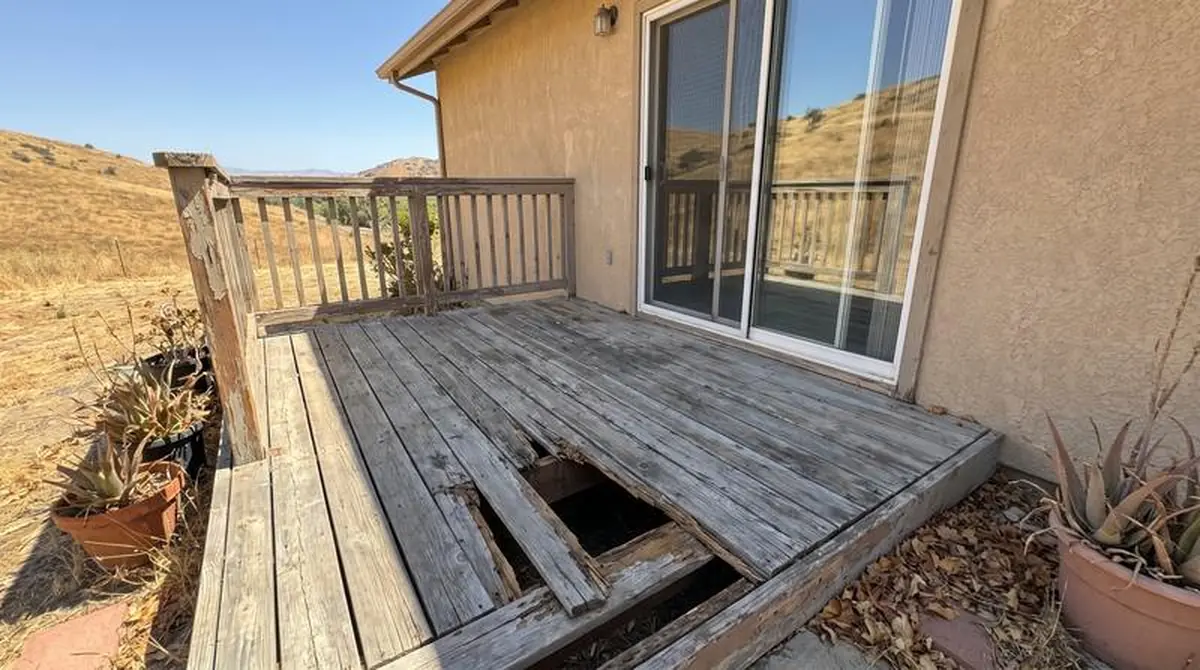
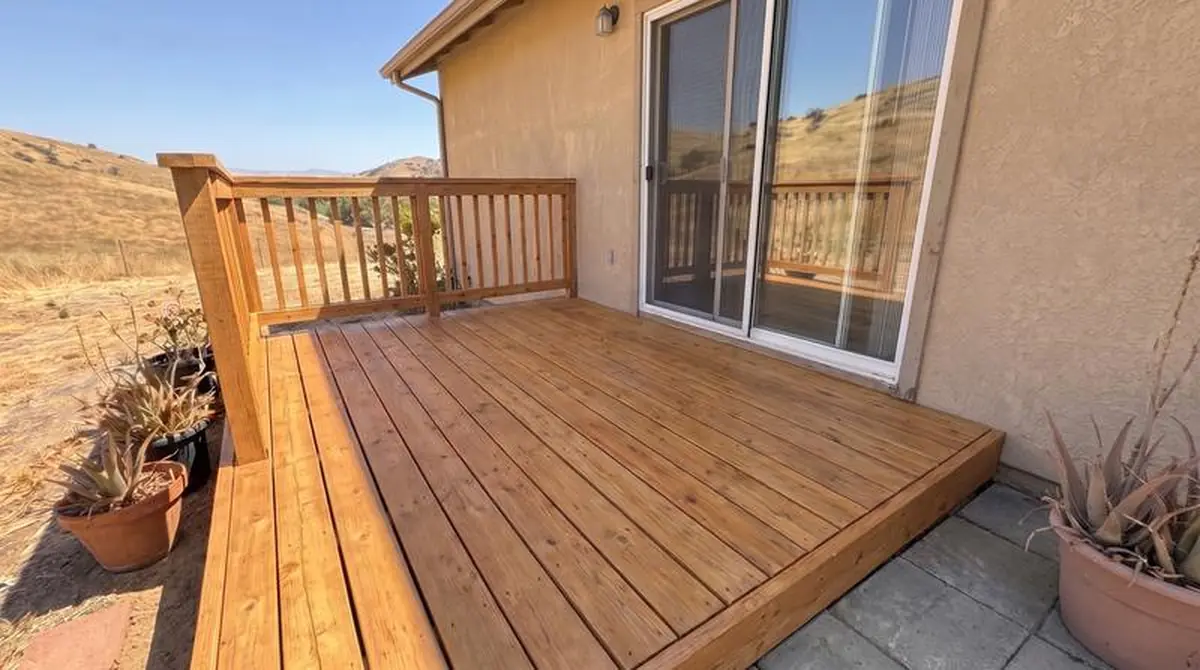 AFTERBEFORE
 Fascia & Eaves
 Window Sills
 Door Jambs & Casings
 Trim & Siding
 Termite Damage Rebuilds
 Deck Boards & Railings
 Stairs & Posts
 Primed, Painted & Sealed
With the office ten minutes away, a technician can look this week and price it in writing. A rafter tail, a sill or a fascia board is priced on the call; a deck, a long eave run or a condo balcony list gets a written scope after a look.

We answer in under three rings and get you priced and scheduled in minutes.

A clear, written quote with upfront pricing. You approve before work begins.

Kaminskiy-certified pros finish the job with a workmanship warranty.
Every rot and termite damage repair carries our one-year workmanship warranty, in writing, and is done by a Kaminskiy-certified, background checked technician.
Heat first, then water, then age. Glendale summers bake the paint on fascia, rafter tails and sills until it checks and the caulk pulls away from the stucco, and the first winter storm runs water straight into the end grain. The older streets were built in the 1920s to 1950s with the wood on the outside, so there is a lot of end grain. In the foothills the canyon shade and the irrigation keep deck posts and jamb bottoms damp all year. We look at the sunny walls on the flats and the shaded side in the canyons, because that is where the rot is.
The termite in most Glendale eaves is the drywood kind: it lives inside the rafter tail or the fascia, needs no soil, swarms in late summer and fall and pushes hard six-sided pellets out through pinholes. Subterranean termites come up in mud tubes where the stucco or a post meets the dirt, and the irrigated foothill lots see more of them. A licensed pest company treats the colony; we rebuild the board after, scheduled so the eave opens once.
A rotted rafter tail filled and painted is a rafter problem in three years. We cut the tail back until the probe stops sinking, square the cut, splice new wood to the same profile, back-prime it, set it, caulk the joint and paint it to the house. A filler patch skips every step but the last, which is why it fails.
Water the lawn, not the house: move the heads that spray the stucco. Clear the gutters in October, before the first storm, and make sure the gutter ends do not drip on the fascia. Recaulk the sill-to-stucco joints on the sunny walls when the line cracks, and repaint those walls before the paint fails rather than after.
1920s to 1950s Spanish and Craftsman homes with exposed rafter tails, wood-sash windows, redwood fascia and corner boards on their original paint schedule. The tails go soft at the ends, the sill corners rot, and drywood termites take the dry eaves. We splice the tails to the same profile, rebuild the sills to shed water and match the finish.
Slope lots with decks, balconies and railings facing the weather, canyon shade that keeps the post bases damp, and 1950s to 1970s homes with beam ends open to the sun. Deck boards go soft at the ends, railing posts rot at the base, and a ledger can hide damage behind the stucco. We rebuild boards and rails where they stand and name a ledger problem before anyone opens the wall.
Newer homes with less exposed wood, so the rot hides at wood-clad sills, garage door jambs on the slab and fascia split by the sun; and downtown, condominium buildings whose balconies, walkways and railings now get inspected by law. We rebuild the boards, posts and trim the report flags and scope it in writing for the board.
The Brand Boulevard office covers the whole basin with the office on Wilshire; the Los Angeles dry rot and wood rot repair page has the basin-wide picture, the City of Los Angeles permit rule and the termite report in plain words.
A fascia board, a sill or a trim piece is priced on the call, in writing. A bigger rebuild gets a look first and a written price before anything starts.
We cut back to sound wood and probe how far the rot really goes. If it runs further than the photo showed, you hear it before we go further, with the price.
New wood primed on all sides, caulked, painted to match, and the water path that caused it fixed: the drip edge, the flashing, the gutter end, the sprinkler.
The work area is cleaned before we leave, and every rot repair carries our one-year workmanship warranty.
Glendale keeps its own Building and Safety Code, which adopts the California codes with the city's amendments and keeps the state's list of work exempt from a permit. That code needs no application for ordinary repairs to a structure and exempts painting and similar finish work, which is where a rebuilt sill, a fascia board or a rafter tail splice falls; it draws the line at cutting a structural beam or a load-bearing support, and rot that deep gets a permit and an engineer. We check with the counter on Broadway before a bigger job rather than guess.
A Glendale sale carries a termite report from a licensed structural pest control company: Section 1 is the active infestation and damage, Section 2 the conditions that lead to it. Treatment and certification stay with the pest company; the rafter tails, sills, fascia and deck boards on the list are our work, reinspected by them when it is done. Send the report and the address and the price comes back from it, in writing.
The condominium buildings downtown and along Brand carry California's balcony inspection law: an engineer or architect inspects the balconies, decks, walkways and railings, and the wood the report flags is our lane, scoped in writing for the board; a rotted ledger goes to the engineer first. In the foothills the city's hillside design review is for anything new on a slope lot; a repair that matches what is there is maintenance, and we check before anything bigger. Oakmont and a few hillside communities have associations that rarely need to see a matching repair.
Can't find your answer? Call 747-298-8227 and ask us anything.
Call 747-298-8227Our office is on Brand Boulevard, so a technician can usually look this week. A rafter tail, a sill or a fascia board is priced on the call, in writing, and scheduled within days; a deck or a condo balcony list is sized after a look.
Yes. After a licensed pest company treats the colony, we cut out what the termites ate in the rafter tails, fascia, trim and the framing we can reach, and rebuild it. Treatment, fumigation and the report are the pest company's; the carpentry is ours.
Yes. Rafter tails, sills, fascia, trim, jambs, siding and deck boards are carpentry, and Kaminskiy is licensed, bonded and insured, so a splice into the rafter itself is fine too. If the rot has reached a beam or a ledger, we say so first and tell you who needs to look at it.
How many tails or boards, how far the rot runs once each is opened, how high it is, and the profile it has to match. A sill at the slab and a rafter tail on a two-story house are different visits. Text a photo and the price is in writing before anything is scheduled.
If the report flagged soft boards, a rotted railing post or damaged trim, yes, and we put the scope in writing for the board. A rotted ledger or a structural member goes to the engineer first, and we tell you that on the call.
Not for an ordinary repair: the code Glendale builds to asks for no application for ordinary repairs or finish work, which covers a rebuilt sill, a fascia board or a rafter tail splice. Rot that reaches a structural beam or a load-bearing support is past that line and gets a permit and an engineer, which we tell you on the call.
All of Glendale from our office on North Brand Boulevard, including Rossmoyne, Adams Hill, Glenwood, Chevy Chase Canyon, the Verdugo foothills, Sparr Heights and Oakmont, plus Burbank, Pasadena, La Cañada Flintridge, Eagle Rock, Atwater Village and La Crescenta. Call 747-298-8227 to confirm your address.
Tell us where the wood has gone soft, or text us a photo. We'll call you back with a price and a time. Calling is still the fastest way: 747-298-8227.
Priced in writing before we start. Kaminskiy-certified technicians. A one-year workmanship warranty on every job.
We answer in under three rings, 24/7.No price games. You get a clear written quote before any work begins, backed by our workmanship warranty.